
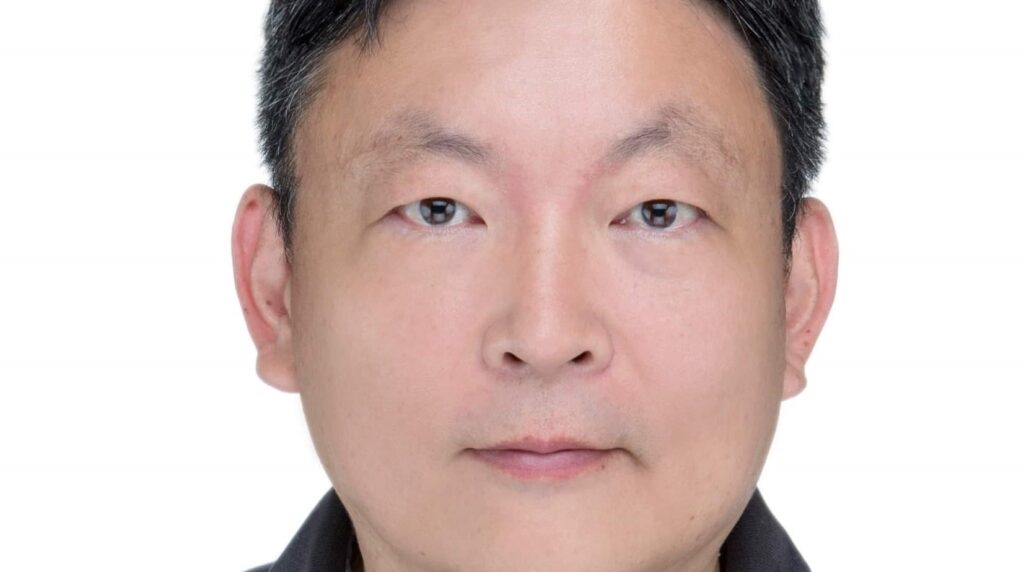
Yung-Jong Shiah is a Chinese psychologist who has carried out ESP research, including experiments in collaboration with American parapsychologist Dean Radin. Combining cross-cultural psychology with unconventional laboratory studies, he has explored whether directed intention can affect mood, biological systems and the interpretation of anomalous perception.
- Yung-Jong Shiah has collaborated with Dean Radin on experiments involving distant intention and healing-like effects.
- In a double-blind study, participants drinking intention-infused tea showed a greater uplift in mood than controls.
- His broader programme connects Confucian, Buddhist and Taoist ideas with psychological and parapsychological theory.
Life and Career
Yung-Jong Shiah was born in Taiwan and was drawn to the intersection of Eastern philosophy and Western psychology at an early stage of his academic education. These early interests dictated the trajectory of Shiah’s research program and academic output. After completing his undergraduate and early postgraduate work in Taiwan — where he also served as a full-time counsellor and director of counselling centres at Taiwanese universities from 1997 to 2002 — he moved to Scotland to undertake doctoral research.1Shiah (n.d.-a).
Shiah received his PhD degree in psychology from the University of Edinburgh in 2008.2Shiah (2021). He works at the Graduate Institution of Counseling Psychology and Rehabilitation Counseling, National Kaohsiung Normal University, Taiwan, and holds a second affiliation at Hui Lan College, National Dong Hwa University, Shoufeng Township, Taiwan.3Shiah et al. (2022). Shiah carries out research in understanding Chinese cultural heritage (Confucianism, Buddhism and Taoism) within a scientific framework. Shiah has published more than 80 peer-reviewed articles.4Shiah (n.d-.b). He helped establish the Chinese Indigenous Social Science Association in Taiwan in 2018, later serving as its president, and was deputy secretary-general of the Taiwan Guidance and Counselling Association from 2015 to 2016.5Shiah (n.d.-a).
Research
Intention Infused Tea
Shiah and Dean Radin carried out a rigorously designed, double-blinded experiment to test the idea that tea that had been ‘infused’ with good intentions might improve mood. They arranged that, on seven consecutive evenings, participants recorded their mood and that on certain days they drink the tea twice. Half of the participants received intention infused tea and the other half received ordinary tea, blinded to which was which. Participants were paired by age, gender, psychological trait of neuroticism, and the amount of tea they consumed on average per day. They were then randomly placed in either the treated or no-treated group.
The researchers found that those who drank treated tea showed a greater uplift in mood than those who drank untreated tea (p = 0.02). The improvement was greater among those who believed they were drinking treated tea than among those who did not believe (p = 0.00002). However, this difference was driven mainly by those believers who were actually receiving the treated tea, underlining the role of belief in any paranormal healing effect, even in a blinded experiment.6Shiah & Radin (2013).
Intention Imprinted Water
Shiah and Radin followed up the tea experiment by investigating whether Arabidopsis thaliana seeds hydrated with intentionally treated water would show differences in three standard biological measures: hypocotyl length, anthocyanin level, and chlorophyll level. Three Buddhist monks were instructed to focus intention on commercially bottled water with the goal of improving the growth of seeds. Untreated bottled water from the same source served as a control. The seeds were hydrated with treated or untreated water by a technician who was unaware of the nature of the water that was being handled, following which they were placed in random positions in an incubator. This germination process was repeated three times in each experiment, and the entire experiment being repeated four times, making it sufficiently powerful to detect relatively small healing effects. The results across the four experiments showed an astronomically significant decrease in hypocotyl length (p = 10 x 10-14); a highly significant increase in anthocyanin levels (p = 10 x 10-4); and a modest increase in chlorophyll (p = 0.05).7Shiah et al. (2017).
Shiah and Radin attempted to replicate their 2017 study, adding a condition where the seeds as well as the water were intentionally treated. Arabidopsis seeds were used as these contain a photosensitive flavoprotein called cryptochrome, which has been proposed as a possible mediator of paranormal influences because it is governed by quantum processes and might be sensitive to the consciousness of an observer. As in the first study, Shiah and Radin arranged for three Buddhist monks to direct their attention toward commercially bottled water and Arabidopsis seeds, while holding the intention to improve the growth of the plant. Under the same highly controlled conditions as before, highly significant effects for treated water were found, indicating growth promotion healing influences: shorter hypocotyl length (p = 0.04); higher chlorophyll levels (p = 0.0005); and higher anthocyanin levels (p = 2 x 10⁻⁶). Directly treated seeds resulted in greater amounts of chlorophyll (p = 0.04), longer hypocotyl length (p = 0.0004) and lower anthocyanin levels (p = 0.01). Shiah and Radin concluded that intentionally treated water improved the growth of the Arabidopsis, but a more complex relationship and lower effect with treated seeds than with treated water.8Shiah & Radin (2020).
In a third study done in collaboration with Radin and funded by the Bial Foundation, Shiah continued to investigate the effect of intention treated water on human mesenchymal stem cells (MSCs).9Shiah et al. (2022). Water was imbued with healing intention from the focused meditation of three Buddhist monks. Under double-blind conditions, the expression of several genes associated with cell growth were measured. Shiah and coworkers found highly significant differences in cell growth favouring those treated with intention imbued water over the controls (p = 0.0008). It was concluded that intentionally treated water appeared to have some biological effects on the growth of human mesenchymal cells. Treated cells did not consistently show superior growth and Shiah cautions against over interpreting this exploratory study, especially given that adjusting for multiple testing would reduce the significance levels; nevertheless, significant findings from a double-blind protocol justify further research.
In a fourth study, published in EXPLORE in 2025, Yu, Radin, Chu and Shiah investigated the effect of intentionally treated water on glioblastoma, an aggressive brain cancer whose particular danger lies in its rapid migration through the brain.10Yu et al. (2025). Under double-blind conditions, glioblastoma cells grown in a medium with water treated by Buddhist monks showed significantly reduced migration compared with those grown in control water (p < 0.005). The authors noted that the result, if replicable, could have implications for complementary approaches to cancer treatment, despite the preliminary nature of the finding.
Understanding Visual Paranormal Perception
Shiah developed a model to explain processes underlying paranormal perception. In a typical ganzfeld or remote viewing session the participant who acts as ‘receiver’ of images being telepathically transmitted describes a visual image, which may or may not match the actual target. Little is known about the process involved in generating these images. Shiah proposes a model in which the anticipation of seeing a target image leads to a priming effect in the brain. Initially, the visual cortex binds the various colours and forms of the target into a complete whole. Then the frontal lobe processes this information in the memory to arrive at a recognized object.11Shiah (2011).
Although the evidence for psi is strong,12Cardeña (2018) theories that are neurologically oriented are only recently becoming prominent. 13Marwaha & May (2015). In concert with this shift among theoreticians, Shiah has outlined a mechanism for the initial stages of psychic perception. In this model he proposes that ESP information triggers a chemical reaction in cryptochromes, which then propagates, ultimately resulting in a signal sent to the brain where it is decoded and perceived. Cryptochromes are recently discovered light-sensitive proteins distributed in body tissues including the retina and pineal gland, which has a long history of association with psi phenomena 14Luke (2010).
Finger Reading in Taiwanese Children
The ‘finger-reading’ effect refers to paranormal identification of flat target numbers, colours, words, or symbols on paper by touch only. Work in Taiwan over a decade appears to show promising results in training children in a method developed by Si Chen-Lee. However, Shiah notes that these claims are weakened by a lack of rigorous controls that rule out fraud, and describes highly controlled trials to address concerns of potential fraud, sensory leakage and recording errors. He concludes that replications under controlled conditions would encourage greater resource allocation for finger-reading research and, potentially, academic recognition of these abilities.15Shiah (2005).
However, Shiah’s own attempts to replicate the effect failed. In the first experiment, eighteen children were tested to see if they could identify a two-digit number and the print colour by touch alone. There was no significant finger-reading effect, nor any significant relationships between finger-reading scores and questionnaire responses concerning imagery ability and paranormal beliefs. In the second experiment, an attempt was made to screen talented participants, but this too failed to produce any evidence. Shiah concluded that such abilities, if they exist, are hard to observe under controlled conditions.16Shiah (2008).
Religiosity and Spirituality in Chinese Culture
In three studies, Shiah systematically compared the spiritual and paranormal orientations of five Chinese religious groups. In the first study, a Chinese version of the Index of Core Spiritual Experiences was developed. In the second and third studies, spirituality and religious involvement were found to be greatest among Christians, followed by Buddhists, and then Taoists. A concern for practical benefits of religion was highest among Taoists, followed by Buddhists, then Christians. Shiah concludes that the results are consistent with the conclusion that Christianity offers the most support for a spiritual or religious orientation and the least for a practical expression. Conversely, Buddhism displayed the reverse pattern.17Shiah et al. (2013).
Revised Chinese Paranormal Belief Scale
Shiah investigated the relationship between paranormal belief and religiosity among Chinese college students of different religious faiths, including atheists. A Chinese version of the Revised Paranormal Belief Scale was developed, including testing the veracity of the new psychological measures, and found to be reliable. Chinese religious believers scored higher on paranormal belief than Christians and atheists. Shiah concluded that the paranormal practices incorporated in Chinese religious belief systems might contribute to greater levels of paranormal belief compared to the minority Christian population. The results support the idea that Christianity may offer the least support for paranormal belief.18Shiah et al. (2010).
Proposed ESP Training Model
Shiah proposed a Three-Stage ESP Training Model as a means to achieve more reliable results in experiments. The model is designed to help novices to achieve progressive development over a number of trials and takes place in three stages. In the first, the focus is on achieving the quiet and/or drowsy state of consciousness that is thought to be conducive to ESP experience. Since this can take years to achieve, shortcuts can be to use participants who have extensive experience of meditation, or to use ganzfeld, relaxation, biofeedback or other methods. In the second stage, the participant is exposed to a remote ESP target being ‘sent’ from a distant location. No feedback is given, and the participant is encouraged to wait patiently until some accurate mentation occurs. Only participants who are successful in both stages (achieving a quiet state of consciousness in EEG measures and achieving some accurate mentation) go on to the third stage, in which feedback is given to help the participant distinguish ESP awareness from other awareness. Once this ability has been developed, participants can be presented with more difficult and complex tasks. To test this model, researchers can choose one type of ESP performance to run while being cautious about feedback, along with a control group which receives no training.19Shiah (2009).
Theoretical Models
Nonself Theory
A core practice of Buddhism is ego-dissolution, or surrendering of the self in order to attain a pure state of consciousness. Shiah has defined this state as the nonself and it is here where psi abilities are manifested. Shiah draws a clear distinction between everyday egoic consciousness in which the person’s self or identity are strengthened and the nonself in which desires are supplanted by compassion and seeking wisdom. The ego engages in psychological activities to strengthen the self, seeking desire-driven pleasure. In contrast, a nonself approach involves self-cultivation in three ways: giving up desires, displaying compassion and practising meditation. This also provides a comprehensive framework to account for experiences such as altruism, mindfulness, mediation, mysterious/peak experiences, elimination of death anxiety, and moral conduct.20Shiah (2016).
In a report published in 2022, Shiah and coauthors describe two studies examining the relationships among renunciation of desires, death anxiety, and mental health.21Kuo et al. (2022). In the first study, Shiah constructed a Desire Questionnaire (DQ), which measures success in renouncing certain desires. In the second study, 501 adults from a Chinese society ranging in age from 17 to 84 years completed the Desire Questionnaire, the Death Anxiety Scale (DAS), and the Chinese Health Questionnaire (CHQ), which measures mental health and the presence of psychiatric symptoms. Correlations found between these measures suggest that the negative effect of poor desire control on mental health is caused, in part, by death anxiety. Shiah concludes that these results support the relevance of Nonself Theory to death anxiety, as an egoless nonself is not focused on desires.
Cryptochrome Theory
Evidence of psi phenomena indicates that consciousness is energy-based as well as information-based, transcending boundaries of space and time. Shiah’s Cryptochrome Theory hypothesizes that cryptochrome, a flavoprotein that is present in all living systems and that has the characteristics of quantum biological molecules, is a ‘transducer’ of psi.22Shiah (2012). Shiah proposes that psi information triggers chemical reactions in the cryptochromes, influencing the spin states of paired radical ions. This process activates the cryptochromes and then spreads their summed signal throughout the brain, creating a meaningful synthesis. Because cryptochromes are highly concentrated in the inner retina and the pineal gland, the chemical reactions that mediate ESP should be most active in these locations. This new concept also might explain certain mystical, transcendental, or paranormal phenomena such as seeing gods or ghosts and distant healing, assuming they are energy-based. Another hypothesis is that cryptochromes not only receive the psi signals but also send them, like an antenna.
Jun-zi Self-Cultivation Model
The I-Ching (Book of Changes), the most important ancient source of information on traditional Chinese culture and cosmology, provides the metaphysical foundation for this culture, especially Confucian ethics and Taoist morality. In a 2022 article,23Xu et al. (2022). Shia and co-authors describe four previous Tai-Chi models based on the I-Ching and their limitations.
To overcome the limitations of the four previous Tai-Chi models, the authors transform I-Ching cultural system into a psychological theory by applying the cultural system approach. Specifically, they propose the Jun-zi (君子) self-cultivation model (JSM), which argues that an individual (小人, xiao-ren) can become an ideal person, or jun-zi, through the process of self-cultivation, leading to good fortune and the avoidance of disasters (趨吉避凶, qu-ji bi-xiong). The state of jun-zi is that of the well-functioning self, characterized by achieving one’s full potential and an authentic, durable sense of wellbeing. They also examine possible theoretical directions, clinical applications, and avenues for future research.
Contentless Consciousness Theory
In a 2023 paper,24Shiah (2023). Shiah describes his contentless consciousness theory (CCT), specifying two types of consciousness: delusional and contentless. Contentless consciousness is the true consciousness. The consciousness most of us have is delusional consciousness. We can eliminate the delusions of consciousness and their psychological structures by pursuing self-enlightenment. Eventually the delusional consciousness is transformed into contentless consciousness, a state of total liberation and authentic happiness. The three kinds of empirical evidence for supporting CCT are also described which are near death experiences, mediumship, and reincarnation. The paper concludes by providing possible applications and topics for future research.
Chinese Culture and Western Psychology
A long-standing concern of Shiah’s is the extent to which mainstream psychology — dominated by research conducted on Western, Educated, Industrialised, Rich and Democratic (WEIRD) populations — fails to reflect the wider tapestry of human experience. In a 2024 editorial in Frontiers in Psychology, co-edited with the late Professor Kwang-Kuo Hwang of National Taiwan University (who passed away in July 2023), Shiah argued that an autonomous tradition of social science in Chinese cultures requires theoretical models constructed from within those cultures rather than imported wholesale from the West.25Shiah (2024). The editorial introduced a special issue bringing together research on Chinese culture and psychology from across the Taiwanese and Chinese diaspora. Shiah had previously co-edited an earlier Frontiers special issue with Hwang on Eastern philosophies and psychology (2017), and the two projects together represent a sustained effort to give Chinese indigenous social science an international platform.
Selected Works
Book
In Foundations of Chinese Psychotherapies: Towards Self-Enlightenment (2021), Shiah provides an overview of the foundations of Chinese psychotherapy, based on a consideration of Confucian, Taoist, and Buddhist teachings. This book is intended to serve as a practical guide to coping with life’s adversities, guiding readers towards authentic happiness by means of novel approaches to mental health problems.
Articles
A list of articles by Shiah can be found here.
Michael Duggan
Works Cited
Cardeña, E. (2018). The experimental evidence for parapsychological phenomena: A review. American Psychologist 73/5, 663-77. [Abstract.]
Kuo, Y.-F., Chang, Y.-M., Lin, M.-F., Wu, M.-L., & Shiah, Y.-J. (2022). Death anxiety as mediator of relationship between renunciation of desire and mental health as predicted by Nonself Theory. Scientific Reports 12/1, 10209. [Full paper.]
Luke, D. (2010). The pineal gland and the possible neurobiology of psi. In Proceedings of Papers to the 6th Psi Meeting: Neuroscience & Parapsychology, 142-49. Curitiba, Brazil. [Request PDF.]
Marwaha, S.B., & May, E.C. (2015). The multiphasic model of precognition: The rationale. Journal of Parapsychology 79/1, 5-19. Academia.edu. [Full text.]
Shiah, Y.-J. (n.d.-a). Academia.edu profile. [Web page.]
Shiah, Y.-J. (n.d.-b). ResearchGate profile. [Web page.]
Shiah, Y.-J. (2005). Toward a replication of the finger-reading effect. Journal of Parapsychology 69/2, 353-75. ResearchGate. [Full paper.]
Shiah, Y.-J. (2008). The finger-reading effect with children: Two unsuccessful replications. Journal of Parapsychology 72, 109-32. ResearchGate. [Full paper.]
Shiah, Y.-J. (2009). Can ESP be learned? A proposed ESP training model. Journal of the Society for Psychical Research 73/4, 231-43. ResearchGate. [Full paper.]
Shiah, Y.-J. (2011). A proposed process for experiencing visual images of targets during an ESP task. Journal of Parapsychology 75/1, 129-43. ResearchGate. [Full paper.]
Shiah, Y.-J. (2012). A possible mechanism for ESP at the initial perceptual stage. Journal of Parapsychology 76/1, 147-59. [View PDF.]
Shiah, Y.-J. (2016). From self to nonself: The nonself theory. Frontiers in Psychology 7, 124. PubMed Central. [Full paper.]
Shiah, Y.-J. (2021). Foundations of Chinese Psychotherapies: Towards Self-Enlightenment. Cham, Switzerland: Springer International Publishing.
Shiah, Y.-J. (2023). The nature of consciousness: Contentless Consciousness Theory. World Futures 79/6, 616-34. [Full paper.]
Shiah, Y.-J. (2024). Editorial: We are not WEIRD: Chinese culture and psychology. Frontiers in Psychology 15, 1384290. [Downloadable PDF.]
Shiah, Y.-J., Chang, F., Tam, W.C., Chuang, S.-F., & Yeh, L.-C. (2013). I don’t believe but I pray: Spirituality, instrumentality, or paranormal belief? Journal of Applied Social Psychology 43/8, 1704-16. ResearchGate. [Full paper.]
Shiah, Y.-J., Hsieh, H.-L., Chen, H.-J., & Radin, D.I. (2017). Effects of intentionally treated water on growth of Arabidopsis thaliana seeds with cryptochrome mutations. EXPLORE: The Journal of Science and Healing 13/6, 371-78. ResearchGate. [Full paper.]
Shiah, Y.-J., & Radin, D.I. (2013). Metaphysics of the tea ceremony: A randomized trial investigating the roles of intention and belief on mood while drinking tea. EXPLORE: The Journal of Science and Healing 9/6, 355-60. ResearchGate. [Downloadable PDF.]
Shiah, Y.-J., & Radin, D.I. (2020). Effects of intentionally treated water and seeds on the growth of Arabidopsis thaliana. EXPLORE: The Journal of Science and Healing 17/1, 55-59. ResearchGate. [Full paper.]
Shiah, Y.-J., Shan, L., Radin, D.I., & Huang, G.T.-J. (2022). Effects of intentionally treated water on the growth of mesenchymal stem cells: An exploratory study. EXPLORE: The Journal of Science and Healing 18/6, 663-69. Science Direct. [Abstract.]
Shiah, Y.-J., Tam, W.C., Wu, M.-H., & Chang, F. (2010). Paranormal beliefs and religiosity: Chinese version of the Revised Paranormal Belief Scale. Psychological Reports 107/2, 367-82. ResearchGate. [Full paper.]
Xu, J., Chang, N.-S., Hsu, Y.-F., & Shiah, Y.-J. (2022). Comments on previous psychological Tai-Chi models: Jun-zi self-cultivation model. Frontiers in Psychology 13, 871274. [Full paper.]
Yu, C.-T.R., Radin, D.I., Chu, C.-Y., & Shiah, Y.-J. (2025). Effects of intentionally-treated water on cell migration of human glioblastoma cells. EXPLORE: The Journal of Science and Healing 21/1, 103-08. Science Direct. [Abstract.]