
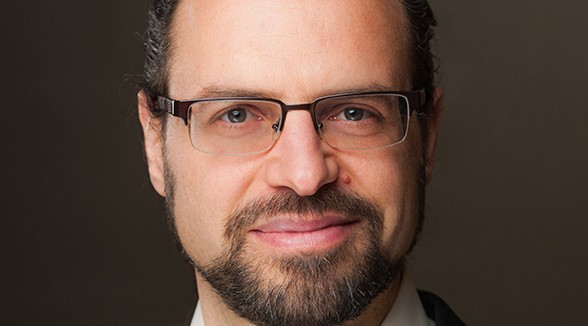
Contemporary consciousness research sometimes approaches psi through neuroscience, online screening and healing studies rather than through older card-guessing paradigms alone. Arnaud Delorme, working across the US and France, has examined mediumship, biofield effects, perception and candidate selection in an effort to connect anomalous claims with measurable brain and behavioural data.
- An online platform for identifying possible psi talent yielded above-chance results in some tasks, especially remote viewing and card-based tests, before weaker outcomes in retesting.
- Work on a participant reporting ‘upsight’ suggested neural patterns more like ordinary vision than imagination or hallucination.
- A study of telephone telepathy found above-chance performance in telepathic trials but not in more stringent precognitive trials, leaving interpretation open.
Contents
Career
Arnaud Delorme is a neuroscientist who has studied human consciousness for over 20 years. He serves as a researcher at the Institute of Noetic Sciences (IONS), a CNRS research director in Toulouse, France, and a senior research scientist at the University of California, San Diego.
Delorme completed his PhD thesis in 2000, on visual categorization in humans, monkeys, and machines. He subsequently conducted postdoctoral research at the Salk Institute in the laboratories of Terry Sejnowski and Francis Crick, where he focused on statistical analysis of electroencephalographic (EEG) signals recorded during cognitive tasks. During this period, he developed EEGLAB software in collaboration with Scott Makeig—a free tool for advanced EEG signal analysis that became among the most widely used in EEG research worldwide. His contributions to EEG research earned him both a Brettencourt-Schueller young investigator award and a 10-year anniversary ANT young investigator award.
A long-time Zen meditator with keen interest in consciousness and spirituality studies, Delorme taught on neural correlates of conscious experience in a Master’s degree program at India’s Birla Institute of Technology. Beginning in 2002, he investigated brain dynamical changes underlying extraordinary states of consciousness including meditation, psycho-active agents, and mediumship. His research on evidential mediumship and brain activity of mediums ranked among the top 1% of articles viewed on Research Gate. Delorme has authored over 160 publications and the book Why Our Minds Wander: Understand the Science and Learn to Focus Your Thoughts. His research also explored applications of multi-channel neurofeedback technology to assist meditation practice.
Biofield Therapy Cellular Outcomes
Delorme, together with Lorenzo Cohen at the prestigious MD Anderson Cancer Center, conducted a case study in which a biofield therapy (BT) practitioner participated in 60 treatment and control sessions under double-blind conditions. BT treatment was provided from approximately 12 inches away from human pancreatic cancer cells, alternating with rest phases. Cell activity and the practitioner’s brain activity (EEG) and heart rate were monitored during treatment of live cells versus dead cells or no cells (controls).
Significant changes (p<0.01) in the practitioner’s brain waves during BT treatment in all measured frequencies were observed, along with heart rate changes (p<0.01). Different brain patterns occurred when treating live versus control cells (p=0.02). Calcium uptake increased over time in both BT and sham conditions, but significantly less in the BT group (p=0.03). Statistical analysis showed significant two-way causal effects between brain measurements and cell activity, especially for tubulin and calcium levels (p<0.000001), suggesting complex relationships between the practitioner’s physiological responses and cellular effects during BT sessions.1Cohen et al. (2024).
Upsight
Delorme and colleagues investigated ‘upsight’, an unusual visual experience in which an individual constantly perceives detailed holographic images overlaid on his visual field. The study assessed how this phenomenon relates to visual mental imagery (VMI), imagination, or visual hallucinations like Charles Bonnet Syndrome.
Brain activity (64-channel EEG) was collected while the participant alternated between 30-second trials of upsight and VMI conditions (200 trials each). Results showed that compared to VMI, upsight was characterized by strong alpha and delta power decreases (peak in posterior regions) and gamma power increase (29-45 Hz) in right frontal and left posterior regions, indicating increased engagement of cognitive and visual processes. Strong decreases in both spectral power and functional connectivity in the alpha band were observed in brain areas involved in visual processing, spatial orientation, and sensory integration.
Upsight involves heightened engagement and processing in visual and cognitive networks relative to VMI, and resembles normal vision more than VMI, imagination, or visual hallucinations.2Cannard et al. (2025).
Carpal Tunnel Syndrome
A 2020 report by Delorme, Garret Yount and co-workers describes an exploration of healing intention on carpal tunnel syndrome. This multi-faceted study, which also included probing the ESP experiences and abilities of healers,20 involved 190 adults receiving treatment from 17 energy medicine practitioners at close range. Analysis of three weeks of data collection revealed a highly significant reduction in self-reported pain (p = 5 x 10⁻⁶) that was not influenced by expectancy effects. Furthermore, well-being, negative emotion and sleep quality all improved significantly on follow-up.3Yount et al. (2020).
Telephone Telepathy
Delorme and colleagues carried out experiments in which 177 participants attempted to identify a telephone caller using psi. Trials were designed to distinguish between telepathy or precognition, with callers chosen before or after guesses, respectively. Telepathic trials significantly exceeded chance even when a more conservative test accounting for response bias was used (50.4% vs. 45% p = 0.02), whereas precognitive trials did not exceed chance (31.9% vs. 33.3%). Genetic relatedness notably impacted accuracy, with 25% genetic relatedness linked to 2.88 times higher odds of identifying the caller (p = 0.04).
Communication frequency correlated positively (p = 0.03) with correctly identifying the caller, while emotional closeness and physical distance between caller and callee did not significantly affect outcomes. Although the telepathy results favoured the psi hypothesis, the failure to find psi in more stringent precognition testing left open more conventional explanations like cheating and sensory leakage.4Wahbeh et al. (2024).
Consistency in Psi Ability
Delorme and coauthors developed an online platform to identify individuals with potential psi talent, testing 1,014 participants across eight psychophysics tasks including remote viewing, card guessing, and psychokinesis. In Phase 1, statistically significant above-chance performance was observed in remote viewing (p = 0.0012) and card tasks (p = 0.0008), with overall performance across tasks showing significance (p = 0.0001). The top 50 performers were retested in Phase 2, where remote viewing (p = 0.0284) and psychokinesis (p = 0.0347) showed above-chance trends, though these did not withstand Bonferroni correction. Personality correlations revealed that conscientiousness was positively associated with performance in the full sample (p = 0.05) but negatively in the selected group (p = 0.02), while agreeableness positively correlated with remote viewing performance (p = 0.03).5Delorme et al. (2025).
Psi Experiences among Scientists
Delorme and colleagues studied psi experience prevalence among scientists and engineers to test whether it would be lower in a population characterized by rational thinking. Of 1,216 individuals invited to participate in a survey on ‘unique human experiences’, 899 completed it, drawn from three categories: general population, scientists/engineers, and IONS members (paranormal ‘enthusiasts’).
Some 93% of scientists and engineers reported at least one meaningful experience, comparable to the general population (94%) and slightly fewer than enthusiasts (99%). Excluding experiences attributable to empathy and intuition, figures remained high at 89% for both groups. Self-selection bias was mitigated by masking the study purpose; only 25% of scientists/engineers dropped out after beginning, compared with 42% and 32% of general population and enthusiasts respectively. The authors concluded that ‘psychic’ experiences are reported by scientists and engineers to a surprisingly large degree, despite academic bias against investigating such experiences.6Wahbeh et al. (2018).
Michael Duggan
Works Cited
Cannard, C., Vieten, C., Yount, G., Vega, M., Kayale, F., & Delorme, A. (2025). Investigating the brain processes underlying an unusual visual experience: A case study. Journal of Anomalous Experience and Cognition 5/2, 136-67.
Cohen, L., Delorme, A., Cusimano, A., Chakraborty, S., Nguyen, P., Deng, D., Iqbal, S., Nelson, M., Wei, D., Fields, C., & Yang, P. (2024). Examining the effects of biofield therapy through simultaneous assessment of electrophysiological and cellular outcomes. Scientific Reports 14, Art. 29221.
Delorme, A., Cannard, C., Radin, D., & Wahbeh, H. (2020). Accuracy and neural correlates of blinded mediumship compared to controls on an image classification task. Brain and Cognition 146, Art. 105638.
Delorme, A, Wahbeh, H., & Radin, D. (2025). Testing the robustness of accurate intuitive abilities and assessment of reproducibility with a group of potentially talented individuals. Journal of Consciousness Studies 32, 26-49.
Wahbeh, H., Cannard, C., Kriegsman, M., & Delorme, A. (2023). Evaluating brain spectral and connectivity differences between silent mind-wandering and trance states. Progress in Brain Research: Neurophysiology of Silence 277, 29-61.
Wahbeh, H., Cannard, C., Okonsky, J., & Delorme, A. (2019). A physiological examination of perceived incorporation during trance. F1000Research 8, 67.
Wahbeh, H., Cannard, C., Radin, D., & Delorme, A. (2024). Who’s calling? Evaluating the accuracy of guessing who is on the phone. EXPLORE: The Journal of Science and Healing 20/2, 239-47.
Wahbeh, H., Radin, D., Cannard, C., & Delorme, A. (2022). What if consciousness is not an emergent property of the brain? Observational and empirical challenges to materialistic models. Frontiers in Psychology 13, 5596.
Wahbeh, H., Radin, D., Mossbridge, J., Vieten, C., & Delorme, A. (2018). Exceptional experiences reported by scientists and engineers. EXPLORE: The Journal of Science and Healing 14/5, 329-41.
Yount, G., Delorme, A., Radin, D., Carpenter, L., Rachlin, K., Anastasia, J., Pierson, M., Steele, S., Mandell, H., Chagnon, A., & Wahbeh, H. (2020). Energy medicine treatments for hand and wrist pain: A pilot study. EXPLORE: The Journal of Science and Healing 17/1, 11-21.