
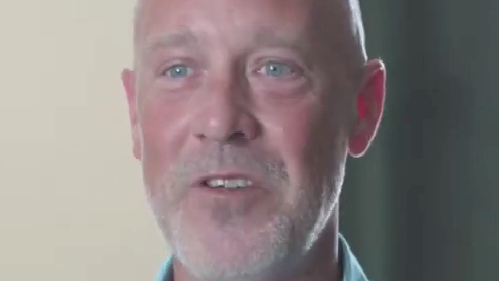
Current haunting research increasingly blends psychology, environment and lived experience, and Brian Laythe has been prominent in that movement. His work examines how geomagnetic variation, belief, personality, social context and setting may combine in reports of hauntings, while leaving room for anomalies not easily absorbed by standard sceptical models.
- Laythe’s studies linked both subjective and objective paranormal reports with small fluctuations in electromagnetic fields.
- He helped develop Haunted People Syndrome as an interactional model joining environment, personality, belief and social dynamics.
- Later modelling suggested that a substantial minority of reported paranormal experiences remain unexplained under conservative sceptical assumptions.
Contents
Career
Brian Laythe is founder and director of the Institute for the Study of Religious and Anomalous Experience in Indiana. He is the owner of Iudicium, a forensic psychology consultancy. His research spans the psychology of religion, ideology, haunting phenomena, and paranormal beliefs and experiences.
Laythe earned a Master’s and PhD in Social Psychology from the University of New Hampshire. Academic appointments have included associate professor at Ivy Tech Community College and teaching roles at the University of New Hampshire, the University of Louisville, Indiana University East, and Indiana University Southeast. He served as managing editor of the Journal of Scientific Exploration from 2023–25. In 2022 he coauthored Ghosted! Exploring the haunting reality of paranormal encounters.
The Haunted Environment and Paranormal Phenomena
Major Theoretical Work
Laythe and colleagues have closely examined environmental and physical variables thought to contribute to paranormal phenomena. This includes assessments of the current degree of explanatory power that environmental variables have in hauntings,1Dagnall et al. (2020). and gestalt influences (‘the whole is greater than the sum of its parts’) which contribute to haunting environments.2Houran et al. (2023); Jawer et al. (2020).
Earlier in his career Laythe published studies which demonstrated that both objective (recordable external paranormal phenomena) and subjective (internally sensed or perceived paranormal phenomena) were both highly and significantly associated with micro-contractions or micro-expansions of EM-fields, both in the geomagnetic and mains frequency range.3Laythe & Owen (2013); Laythe et al. (2017); Laythe & Houran (2019).
In subsequent work Laythe contributed to large mathematical model analysis demonstrating that even under conservative models that strongly favour scepticism, nearly 40% of reported paranormal experiences cannot be accounted for by standard mainstream explanations.4Houran et al. (2023); Laythe & Houran (2022); Rock et al. (2023).
Haunted People Syndrome
Laythe and colleagues have developed an interactionist based model of Haunted People Syndrome,5Houran & Laythe (2022); Laythe et al. (2021). which highlights that environment, traits, belief systems, social interactions, along with reported paranormal phenomena, collectively collaborate within the context of a haunting. Underpinning HP-S is a transliminal dis-ease model (that is, dysfunction mediated through loose mental boundaries), a recognition that individuals high in transliminality (thin boundary functioning) are significantly and repeatedly prone to paranormal experiences,6Ventola et al. (2019). and these experiences can cause distress and anxiety both in acute episodes and over time.7Laythe et al. (2021).
HP-S is belief neutral (its predictive model works with haunting phenomena regardless of beliefs regarding skepticism or pro-paranormal beliefs). Use of this theory with established Rasch-scaled measures shows that HP-S has been successfully applied to previously published case studies and retroactive accounts,8Houran et al. (2022); Lange et al. (2020); O’Keeffe et al. (2019, 2025). as well as analysis of imaginary friends and gang-stalking accounts.9Laythe et al. (2021); Little et al. (2021).
Other Investigations
Magick Practitioners and Transliminality
Laythe examined over 300 well educated, trained, and active magickal practitioners in order to examine the role of transliminality, paranormal experience, ritual practice and ESP performance. Results as predicted indicated that magick practitioners were high in transliminality, that various daily ritual practices were related to transliminality and paranormal experience, and that ESP performance with this sample was significant (albeit in an opposite psi-missing direction). Laythe theorizes that magical ritual and the necessary mental and imaginal exercises necessary for magical practice represents a means to mediate transliminal imagery, facilitating paranormal experiences and ESP performance.
Enchantment-Psi Loop Studies
Lange and colleagues tested situational-enchantment as a mental state conducive for psi-related experiences in a preregistered study. Hit rate on a mobile application test of putative psi was examined after participant exposure to two competing conditions in counterbalanced order – an ‘enchanted’ immersive tour in a ‘haunted’ house museum versus a ‘disenchanted’ outdoor tent session with a video that allegedly debunked the paranormal. A convenience sample of 31 volunteers completed counterbalanced testing. Measures of transliminality and paranormal belief were completed. High levels of both transliminality and paranormal belief, as well as the ‘haunted (enchanted)’ versus ‘sceptical (disenchanted)’ conditions significantly shifted overall hit rates and above-chance performance. More than a 10% shift in both hit rate and tests against average psi guessing rate was represented by these effects in the majority of analyses.10Lange et al. (2023).
Houran and colleagues extended this work in a preregistered replication. A vetted sample of thin-boundary participants (n = 22) completed measures after counterbalanced exposure to three ‘enchanted’ conditions (sacred, haunted, augmented reality) and ‘disenchanted’ environments. Mixed support was received by hypotheses. Participants’ scores on both encounter experiences and psi performance increased in enchanted vs disenchanted conditions though statistical significance was not reached by many predicted effects. Both emotional, motivational, and environmental factors influenced results differentially. Credence to aspects of the enchantment-psi loop was lent by results. Support for an interactionist (environment-person) model of certain parapsychological phenomena was provided.11Houran et al. (2024).
Limits of Science
Laythe analyzed various commentaries on Tramont’s spirit releasement therapy work to demonstrate how ideology affects scientific evaluation. Several limits of science were outlined – no perfect measurement exists, no absolutes exist in science, and claims may only be made based on observable (or indirectly observable) evidence. A lack of evidence holds no value in science and does not validate a claim.
Human interpretation was distinguished from observation of phenomena. The interpretation of stimuli is guided by schemas, group interaction, and cognitive structures influenced by the sum of experience. Confirmation bias driven by cognitive biases creates issues of interpretation when beliefs are used to give meaning to data.
Various commentaries were examined. Castro’s agnostic position and acknowledgment of assumptions was praised. Maraldi’s call for methodological agnosticism was discussed. Brugger’s commentary was criticized as faith-based condemnation of Tramont’s work lacking scientific objectivity. Hunter’s anthropological comparisons were noted though considered to be lacking in critical reflection.
Transparency about where boundaries of evidence and assumptions meet was advocated as the most honest policy. Dogmatic absolutism in belief systems – whether spiritual or materialistic – was identified as problematic and a violation of the philosophy and methods of science. Spiritual ontologies could potentially be examined scientifically if assumptions of discarnate agency possibility were transparently professed allowing individuals to assess the evidence in context of researcher’s theological or philosophical assumptions.12Laythe (2023).
AI-Generated ‘Entity Encounter’ Narratives
Houran and Laythe used ChatGPT-3.5 artificial intelligence to compare twelve types of mystical, supernatural, or anomalous entity encounter narratives constructed from publicly available information. Details were compared to the phenomenology of spontaneous accounts via the Survey of Strange Events (SSE) and the grounded theory of Haunted People Syndrome (HP-S).
Structured content analysis by two independent masked raters explored whether composite AI-narratives would cover each encounter type, map to SSE’s Rasch hierarchy, show average SSE score, and reference HP-S recognition patterns.
Moderate evidence of a core encounter phenomenon underlying AI-narratives was found. Every encounter type was represented by an AI-generated description that readily mapped to the SSE. Contents showed only fair believability though, and low but generally positive correlations with each other. Below-average SSE scores were corresponded to by the narratives. At least one HP-S recognition pattern was referenced.
Prototypical depictions of entity encounter experiences based on popular source material certainly approximate but do not fully match phenomenology of real-life counterparts. Mainstream consciousness ‘knowledge’ about real-life entity encounters is quite limited according to implications. ChatGPT seemingly had little access to spontaneous case reports or survey research in academic literature.13Houran & Laythe (2023).
South Shields Poltergeist
Houran and colleagues used a mixed-methods approach to re-examine key information from a published poltergeist-like outbreak comprised of various subjective and objective anomalies, called the South Shields Poltergeist. Responsive communications on a toy doodle-board from a presumed ‘ghost’ or childhood imaginary friend were included. Three hypothesis-driven analyses were conducted.
Study 1 compared phenomenology of reported events to established norms using codings from the Survey of Strange Events instrument. Above-average intensity was shown by anomalies. Fantasy condition was most closely matched by phenomenology though secondary congruencies with Spontaneous and Illicit conditions existed.
Study 2 explored temporal patterns of anomalies as documented by the family’s event diary. A nonlinear wave form rather than linear pattern was better approximated by temporal patterns characteristic of contagion effects.
Study 3 scrutinized features of mysterious doodle-board messages using handwriting analysis. Marc’s handwriting as most similar to anomalous messages was independently identified by graphology and QDE analysts.
Previous speculations that the focus person was the family’s father figure (Marc) under notable distress were supported by results. A modest fit to the concept of Haunted People Syndrome was shown by findings. Spontaneous ‘ghostly episodes’ are modelled as interactionist phenomenon involving heightened somatic-sensory sensitivities exacerbated by dis-ease states, contextualized with paranormal belief, and reinforced via perceptual contagion.14Houran et al. (2022).
Michael Duggan
Works Cited
Dagnall, N., Drinkwater, K., O’Keeffe, C., Ventola, A., Laythe, B., Jawer, M.A., Massullo, B., Caputo, G.B., & Houran, J. (2020). Things that go bump in the literature: An environmental appraisal of “haunted houses.” Frontiers in Psychology 11, 1328.
Houran, J., & Laythe, B. (2022). Case study of recognition patterns in haunted people syndrome. Frontiers in Psychology 13, Ar879163.
Houran, J., & Laythe, B. (2023). Phenomenology of AI-generated “entity encounter” narratives. Journal of Anomalous Experience and Cognition 3/2, 335-68.
Houran, J., Laythe, B., Lange, R., Hanks, M., & Ironside, R. (2023). Immersive study of Gestalt variables in uncanny geographies. Journal of the Society for Psychical Research 87, 65-100.
Houran, J., Laythe, B., & Little, C. (2024). Confirmatory study of anomalous experiences in enchanted spaces. Journal of Anomalistics 24, 396-426.
Houran, J., Little, C., Laythe, B., & Ritson, D.W. (2022). Uncharted features and dynamics of the South Shields Poltergeist. Journal of the Society for Psychical Research 86/3, 129-64.
Houran, J., Rock, A.J., Laythe, B., & Tressoldi, P.E. (2023). Dead reckoning: A multiteam system approach to commentaries on the Drake-S equation for survival. International Journal of Transpersonal Studies 42/1, 80-105.
Jawar, M.A., Massulo, B., Laythe, B., & Houran, J. (2020). Environmental “gestalt influences” pertinent to the study of haunted houses. Journal of the Society for Psychical Research 84, 65-92.
Lange, R., Houran, J., Sheridan, L., Dagnall, N., Drinkwater, K., O’Keeffe, C., & Laythe, B. (2020). Haunted people syndrome revisited: Empirical parallels between subjective paranormal episodes and putative accounts of group-stalking. Mental Health, Religion, & Culture 23, 532-49.
Lange, R., Laythe, B., & Houran, J. (2023). Preregistered field test of an ‘enchantment–psi’ loop. Journal of Parapsychology 87/1, 11-32.
Laythe, B. (2023). Data versus belief: Interpretation, ideology, and the limits of science: Afterword to the special subsection. Journal of Scientific Exploration 37/4, 765-73.
Laythe, B., & Houran, J. (2019). Concomitant object movements and EMF-spikes at a purported haunt. Journal of the Society for Psychical Research 83, 212-29.
Laythe, B., & Houran, J. (2022). Adversarial collaboration on a Drake-S equation for the survival question. Journal of Scientific Exploration 36/1, 130-60.
Laythe, B., Houran, J., Dagnall, N., & Drinkwater, K. (2021). Conceptual and clinical implications of a “Haunted People Syndrome”. Spirituality in Clinical Practice 8/3, 195-214.
Laythe, B., Houran, J., & Little, C. (2021). The ghostly character of childhood imaginary companions: An empirical study of online accounts. Journal of Parapsychology 85, 54-74.
Laythe, B., & Owen, K. (2013). A critical test of the EMF-paranormal phenomena theory: Evidence from a haunted site without electricity-generating fields. Journal of Parapsychology 77/2, 212-36.
Laythe, B., Roberts, N., White, G., & Houran, D.J. (2024). Trained transliminals: Exploring anomalous experiences and psi in magical practitioners. Journal of Scientific Exploration 38/2, 233-57.
Little, C., Laythe, B., & Houran, J. (2021). Quali-quantitative comparison of childhood imaginary companions and ghostly episodes. Journal of the Society for Psychical Research 85, 1-30.
O’Keeffe, C., Houran, J., Houran, D.J., Drinkwater, K., Dagnall, N., & Laythe, B. (2019). The Dr. John Hall story: A case study of putative “haunted people syndrome.” Mental health, Religion, and Culture 22, 910-29.
O’Keeffe, C., Massullo, B., Laythe, B., Dagnall, N., Drinkwater, K., & Houran, J. (2025). Haunted People Syndrome redux: Concurrent validity from an independent case study. Journal of Scientific Exploration 39/1, 85-100.
Rock, A.J., Houran, J., Tressoldi, P.E., & Laythe, B. (2023). Is biological death final? Recomputing the Drake-S equation for postmortem survival of consciousness. International Journal of Transpersonal Studies 42 9-26.
Ventola, A., Houran, J., Laythe, B., Storm, L., Parra, A., Dixon, J., & Kruth, J. G. (2019). A transliminal ‘dis-ease’ model of poltergeist ‘agents.’ Journal of the Society for Psychical Research 83, 144-71.