
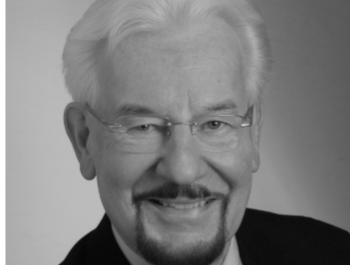
German psychologist Dieter Vaitl helped bring altered states, meditation, and exceptional experiences into serious psychophysiological study. Bridging parapsychology, clinical psychology, and neuroscience, he shaped modern German research on consciousness and guided IGPP through a difficult but productive period of institutional change.
- Vaitl’s landmark 2005 review helped define altered-states research by surveying spontaneous, induced, and pathological changes in consciousness within a psychophysiological framework.
- As director of IGPP from 2001 to 2020, he preserved a major German centre for frontier psychology through a period of severe financial retrenchment.
- His work on meditation, trance, relaxation, and exceptional experiences linked subjective states to measurable brain and bodily processes.
Contents
Background
Dieter Vaitl was a German psychologist and consciousness researcher. He was born in 1940 and died in January 2026.1Bauer & Kornmeier (2026). Vaitl made significant contributions to psychophysiology and the study of altered states of consciousness. He directed the Institute for Frontier Areas of Psychology and Mental Health (IGPP) in Freiburg for nearly two decades.
Education and Career
Vaitl studied philosophy and theology at the Pontifical Gregorian University in Rome, obtaining his licentiate in philosophy in 1962.2IGPP (n.d.). Vaitl then studied psychology at the University of Freiburg, graduating in 1967. He completed his doctorate at the University of Münster in 1973. That same year he received a professorship in psychophysiology and research methodology.
Vaitl was a student and colleague of Hans Bender. Bender founded the IGPP in 1950 and was the leading figure in post-war German parapsychology. Vaitl maintained contact with Bender throughout his career.3Bauer & Kornmeier (2026).
In 1975, Vaitl accepted a chair in clinical and physiological psychology at Justus Liebig University Giessen. He held this position until his retirement in 2005.4IGPP (n.d.). He established the Bender Institute of Neuroimaging (BION) in 2000.
Vaitl was founding president of the German Society for Psychophysiology from 1982 to 1988.5IGPP (n.d.). He was president of the Federation of European Psychophysiology Societies from 1994 to 1996. He received the German Psychology Prize in 1997. The prize recognized his clinically relevant psychophysiological research.
Together with Renate Frank, Vaitl developed a continuing education programme in 1983. The programme provided accreditation for aspiring psychological psychotherapists.6IGPP (n.d.). It served as a national model for postgraduate programmes in behavioural therapy.
Research on Altered States of Consciousness
Vaitl’s most influential work concerned altered states of consciousness. In 2005, he published a major review article in Psychological Bulletin.7Vaitl et al. (2005). The article was co-authored with leading researchers including Niels Birbaumer and John Gruzelier. It reviewed current knowledge on altered states occurring spontaneously, induced by physical stimulation, produced by psychological means, and caused by diseases.
The review identified four dimensions characterising altered states. These were activation, awareness span, self-awareness, and sensory dynamics.8Vaitl et al. (2005). Different states of consciousness arise from compromised brain structure, changes in brain dynamics, and neurochemical processes. Environmental stimuli, mental practices, and self-control techniques can also temporarily alter brain functioning.
Vaitl established an international research network on altered states of consciousness. The network was funded by IGPP.9IGPP (2025). A research project on rhythmic trance induction ran from 1998 to 2003. The project used dancing, shamanic drumming, and rocking to induce trance states. After founding BION, research shifted to techniques compatible with brain imaging. The institute studied meditation, trance, and other altered states using functional MRI.10Ott (2012).
His research on meditation practitioners revealed structural brain differences. A 2008 study found increased grey matter in brain regions associated with attention and sensory processing.11Hölzel et al. (2008). This work contributed to the growing neuroscience literature on meditation effects.
Director of IGPP
In 2001, Vaitl became director of the Institute for Frontier Areas of Psychology and Mental Health. He succeeded Eberhard Bauer in this role.12Bauer & Kornmeier (2026). At that time, the IGPP was well funded through grants from the Holler Foundation. Soon after Vaitl took over, the annual grants were drastically reduced. Cutbacks and savings became necessary.13Bauer & Kornmeier (2026). Vaitl led the institute through these challenging financial times with prudence and foresight for nearly 20 years.
Vaitl retired as director of IGPP in 2020. To mark the institute’s 70th anniversary and his departure, he published a major research volume.14Vaitl (2020). The book was titled An den Grenzen unseres Wissens – Von der Faszination des Paranormalen (At the Frontiers of Our Knowledge – The Fascination of the Paranormal). The volume contained approximately 30 chapters. It summarised the multidisciplinary work of the institute over the previous two decades.
Major Publications
Vaitl authored numerous books throughout his career. His 2012 book Veränderte Bewusstseinszustände: Grundlagen – Techniken – Phänomenologie (Altered States of Consciousness: Foundations – Techniques – Phenomenology) became a standard reference.15Vaitl (2012). With Franz Petermann, he co-authored multiple editions of Entspannungsverfahren: Das Praxishandbuch (Relaxation Techniques: The Practical Handbook).16Vaitl & Petermann (2014). This influential text reached its fifth edition in 2014.
In 2020, Vaitl published Ganz normale Verrückte: Das Spektrum außergewöhnlicher Erfahrungen (Completely Normal Crazies: The Spectrum of Extraordinary Experiences).17Vaitl (2020). This work explored the range of exceptional human experiences from a psychological perspective.
Vaitl’s research encompassed psychophysiology, altered states of consciousness, and exceptional human experiences. He conducted clinically relevant basic research addressing hypertension, anxiety disorders, and other clinical conditions.18IGPP (n.d.). He investigated relaxation techniques and their therapeutic applications. The IGPP under his direction examined reported psi experiences from psychological and neuroscientific perspectives.19Vaitl (2020).
Legacy
Vaitl’s colleagues remembered him fondly after his death. They noted his handsome appearance and positive demeanour.20Bauer & Kornmeier (2026). He would respond to compliments by saying ‘The drake shows off his plumage’. His colleagues described him as far from the hostility toward happiness that characterises many older people.
Vaitl’s leadership sustained the IGPP through difficult financial circumstances. His prudent management ensured the institute’s continuation.21Bauer & Kornmeier (2026). His work advanced the biological and neuroscientific study of consciousness in Germany. He trained numerous students and established important research programmes.
Vaitl’s colleague Eberhard Bauer reflected on the question of survival after death. He noted that if death is not the end, Vaitl may now have an answer to questions about the world formula.22Bauer & Kornmeier (2026). Bauer stated he would miss Vaitl in this life. The sentiment reflected the high regard in which Vaitl was held by his colleagues and students.
Works Cited
Bauer, E., & Kornmeier, J. (2026). Obituary to Prof. Dieter Vaitl (1940–2026). Institut für Grenzgebiete der Psychologie und Psychohygiene. [Web page, 2 February 2026.]
Hölzel, B.K., Ott, U., Gard, T., Hempel, H., Weygandt, M., Morgen, K., & Vaitl, D. (2008). Investigation of mindfulness meditation practitioners with voxel-based morphometry. Social Cognitive and Affective Neuroscience 3/1, 55-61.
IGPP (2025). Altered states of consciousness – meditation research. Institut für Grenzgebiete der Psychologie und Psychohygiene. [Web page.]
IGPP (n.d.). Dieter Vaitl. Institut für Grenzgebiete der Psychologie und Psychohygiene. [Web page.]
Ott, U. (2012). Psychophysiologie veränderter Bewusstseinszustände – Studien mit funktioneller Magnetresonanztomographie. In Experimentelle Psychophysiologie in Grenzgebieten, ed. by W. Ambach, 79-95. Stuttgart, Germany: Ergon.
Vaitl, D. (2012). Veränderte Bewusstseinszustände: Grundlagen – Techniken – Phänomenologie. Stuttgart, Germany: Schattauer.
Vaitl, D. (2020a). An den Grenzen unseres Wissens: Von der Faszination des Paranormalen. Freiburg im Breisgau, Germany: Herder.
Vaitl, D. (2020b). Ganz normale Verrückte: Das Spektrum außergewöhnlicher Erfahrungen. Stuttgart: Steiner.
Vaitl, D., Birbaumer, N., Gruzelier, J., Jamieson, G.A., Kotchoubey, B., Kübler, A., Lehmann, D., Miltner, W.H.R., Ott, U., Pütz, P., Sammer, G., Strauch, I., Strehl, U., Wackermann, J., & Weiss, T. (2005). Psychobiology of altered states of consciousness. Psychological Bulletin 131/1, 98-127.
Vaitl, D., & Petermann, F. (2014). Entspannungsverfahren: Das Praxishandbuch (5th ed.). Weinheim: Beltz Psychologie Verlags Union.