
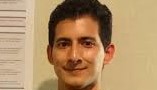
A younger generation of Latin American researchers has worked to make experimental psi studies cheaper, more scalable and more technically accessible. Ramsés D’León Macías has focused on presentiment, psychokinesis and related topics while building local research infrastructure and low-cost tools for laboratories with limited resources.
- His wider programme has also included psychokinesis, direct vision, near-death experience studies and institution-building through UPIDE and related initiatives.
- He has aimed to lower barriers to presentiment research by creating software and methods compatible with inexpensive psychophysiological equipment.
- In a double-blind study using visual stimuli, he reported anticipatory differences in skin conductance and heart-rate variability before emotional images were shown.
Contents
Career
Ramsés D’León Macías is a graduate student at Mexico’s Universidad UTEL working toward a masters degree in data science. He is studying physiological anticipation and psychokinesis. He is chief researcher at Unidad Parapsicológica de Investigación, Difusión y Enseñanza (UPIDE), now part of the Centro de Investigación de la Sintergia y la Consciencia, which aims to become a major psi research centre in Mexico, and of which he is co-founder. He was program chair of the Parapsychological Association’s 2019 international convention in Paris. His research has expanded to include near-death experience studies, direct vision investigations, and novel applications of psi phenomena to environmental challenges.1Álvarez & D’León Macías (2022); Bar et al. (2024); Ventola et al. (2022).
Presentiment Research
D’León Macías is developing low-cost presentiment testing materials for use by researchers who would otherwise struggle to fund such activity. Despite accumulating evidence in support of presentiment effects in human physiology – termed predictive anticipatory activity (PAA) – there is still significant resistance from mainstream scientists to even consider this evidence. D’León Macías conjectures that this largely relates to obstacles in the way of replicating the effects: expensive equipment, expertise and protracted statistical analyses. His goal is to develop PAA software with a high-quality design that is compatible with low-cost psychophysiological equipment, allowing testing of a wide range of stimuli.
In furtherance of this aim, in 2019 D’León Macías reported the results of his own presentiment research using visual stimuli. In this double-blind experiment 39 participants were randomly exposed to images that were variously neutral or arousing, and possible anticipatory reactions observed by measuring their skin conductance and heart rate using inexpensive psychophysiological hardware and a simple exercise device. Sixteen hundred trials were carried out. Images were divided into either calm (neutral or mildly pleasant) or excitatory (erotic or violent) categories.
When D’León Macías analyzed the results he found evident differences prior to the shown stimuli, both in skin conductance level and in heart rate variability, indicating a presentiment effect.
In skin conductance, a significant difference between calm and death-danger trials was found in all participants (p = 0.0418). In heart rate, a significant difference was found between calm and erotic trials in males (p = 0.0239), between calm and fearful trials in females (p = 0.0455), and between calm and ‘animal-injury’ trials in females (p=0.0384). D’León Macías found stark differences in gender responses in that fear negatively reduces presentiment in females, while it aids the physiological prediction in males. The general difference between calm and excitatory images in all participants, both in skin conductance (p = 0.07) and heart rate (p= 0.28), were non-significant, emphasizing the cancelling effect of opposite gender presentiment responses to stimuli valence.
D’León Macías further explains that ‘arousal and valence, as the orienting and defence response, seem to play fundamental roles on physiological activity in the anticipation of any event, as it also happens in normal physiology studies when the stimuli are presented.’ He concludes that independent replication of previous research has been successful and paves the way for the use of inexpensive psychophysiological materials in further presentiment research, expediting dissemination to other interested research groups.2D’León Macías & Izara (2019).
His broader investigations of anomalous experiences have examined the aftereffects of near-death experiences in Spanish-speaking populations, finding that deeper NDEs correlate with fewer PTSD symptoms, greater transliminality, and enhanced reported psychic abilities including remote viewing and aura perception.3Álvarez & D’León Macías, (2022).
Spontaneous Psychokinesis
D’León Macías is collaborating with members of UPIDE on a case of spontaneous psychokinesis in Mexico City. This concerns a married couple – a 56-year-old man and a 45-year-old woman, in whose presence small objects appear frequently to materialize – the ‘apport’ phenomenon that was commonly reported in the context of late nineteenth and early twentieth century spiritualism. The apported objects are usually well-preserved coins from Mexico and other countries, but medals, dead flowers, and even apples have been reported to appear as well.
The phenomena seem to be mostly linked to the husband, although apports have also been documented when only the wife is present. The case has been explored through two phases and presented in both of the last Society for Scientific Exploration-Parapsychological Association (SSE-PA) conventions in 2021 and 2022. Between June 2021 and July 2022, researchers documented 42 spontaneous coin apports using a Cooperative Inquiry Group approach, with several events visually recorded without conventional explanation. Clinical assessment revealed the husband showed normal neurological function despite previous mild brain injury, though he experienced depressive episodes and ADHD history. Apported coins frequently appeared in mint condition and disproportionately included rare commemorative types, suggesting psychological links to the husband’s childhood collection and past financial stress, with evidence pointing toward unconscious psychokinetic processes tied to emotional states.4D’León et al. (2022).
The methodological approach involved several qualitative and quantitative measurements including:
- installation of six high-definition cameras, all with fifteen metres infrared and audio recording capabilities
- video analysis of recordings and supplementary videographic material. including thirty minutes before and fifteen minutes after each event
- a numismatic (the study of coins and tokens) analysis of the Mexican coins
- unstructured interviews with the agents, family and employees
- neurological, psychological, and clinical studies of the supposed main agent
- documentation of most of the phenomenology of each apport
- a clinical parapsychological approach, requesting the help of three mediums and a shaman, due to an additional agency seemingly unrelated to the agents
The most relevant videos of the analyses include two where a camera records the procedure of the coin being apported in real time, which can be seen here and here.
Building on this apport research, D’León Macías has explored potential environmental applications through investigations examining whether consciousness-based interventions can transfer carbon dioxide molecules between airtight chambers. The experimental protocol monitors CO₂ levels alongside temperature, humidity, and air pressure, with participants receiving guided training for macro-PK tasks framed as climate action interventions.5Ventola et al. (2022).
Brain Entanglement
In 2022, UPIDE members started a project involving the replication of the Transferred Potential. This is a telepathic protocol proposed by Jacobo Grinberg-Zylberbaum in the 1990s, in which simultaneous brain responses in the electroencephalographs (EEGs) of paired participants in different rooms were sometimes found when one of the pair was exposed to an unexpected light flash.
The replication is currently in progress in a main hospital of México City, using EEG between pairs of participants and measuring psychological traits such as transliminality and anxiety.
Recent results from seven emotionally-bonded or consanguineous pairs (ages 24-49) who underwent 21-channel EEG monitoring while separated in adjacent rooms revealed no visual or clinical evidence of transferred potential correlations. Following mindfulness coherence training and random photostimulation cycles, qualitative analysis showed preliminary findings suggesting non-replication of Grinberg’s original observations, with quantitative results and personality trait findings still awaiting presentation.6D’León et al. (2024a).
Other Research
D’León Macías has also investigated Direct Vision – purported extra-ocular vision – in nine children aged seven to eleven following meditation-based training. Using controls including nose-peek-proof blindfolds, pupil dilation tests, and multi-camera monitoring, participants completed card-matching tasks with highly significant results, including color identification (p=0.021) and card matching (p=0.00000000011251). Two girls demonstrated reading ability with fully dilated pupils, suggesting potential permanent perceptual changes from training, while EEG monitoring explored associated brain activity patterns.7Bar et al. (2024).
Michael Duggan
Works Cited
Álvarez, A., & D’León Macías, R. (2022). Near death experiences, post-traumatic stress disorder, and psychic phenomena in a Latin American sample: A preliminary study. Journal of Parapsychology 86/2, 267-70.
Bar, N., Álvarez, A. A., Arriola, R., Barbakow, G-V., Quintero, E., Martínez, J., Silva, A., López-Miranda, C. I., & D’León Macías, R. (2024). Direct vision: A research program exploring extra-ocular vision in children. Journal of Parapsychology 88, 11-14.
D’León Macías, R., Álvarez, A. & Silva, A. (2022). Coin-based apports: Advancements on multiple agency anomalous events. Journal of Parapsychology 86/2, 218-20.
D’León Macías, R., & Izara, N. (2019). Development of predictive anticipatory activity (PAA) software: A first step towards a medium-term goal. Proceedings of the 61st Annual Convention of the Parapsychological Association, Petaluma, California, USA (IONS campus).
D’León Macías, R., Quintero, E., Arriola, R., Álvarez, A. & Martínez, J. (2024). Replication of Jacobo Grinberg’s transferred potential through electroencephalography. Journal of Parapsychology 88, 18-20.
Dullin, E., & Jamet, D. (2018). A methodology proposal for conducting a macro-PK test on light spinning objects, in a non-confined environment. Journal of Scientific Exploration 32/3, 514-54.
Ventola, A., Boccuzzi, M., D’León Macías, R., Álvarez, A., & Totaro Jr., M. (2022). An exploration of air CO2 sequestration using consciousness-based interventions for climate action. Journal of Parapsychology 86/2, 263-64.