
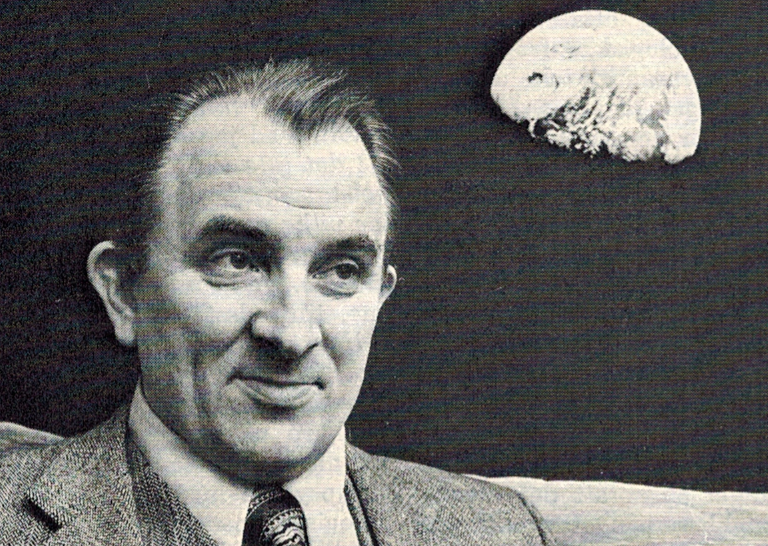
A leading European experimental parapsychologist, Martin Johnson (1930–2011) helped build the University of Utrecht’s laboratory into a centre of cautious, methodologically self-critical research. His career linked academic psychology and experimental parapsychology. His work on the Defense Mechanism Test and publication standards left durable marks on parapsychology.
- Johnson helped found the European Journal of Parapsychology and insisted on publication policies that did not privilege positive results.
- His Utrecht laboratory became a hub for international researchers including Susan Blackmore, Richard Broughton, John Palmer, and WG Roll.
- Apparent links between the Defense Mechanism Test and ESP performance initially looked promising, but later evaluation suggested an experimenter effect.
Contents
Life and Career
Early Years
Martin Johnson was born in Malåliden, a remote farm close to Malå in Sweden, on 19 February 1930. Johnson’s father was a woodcutter and his mother stayed home to care for Johnson and his older brother. The home was spartan and only eight books were available. Johnson was exposed to folklore, influenced by Sami beliefs, as he grew up.1Johnson (1995). His grandmother was reputed to be psychic and his mother’s foster mother could often be heard arriving before she appeared (vardøger). Johnson had precognitive dreams, and they contributed to his interest in the paranormal.2Björkhem & Johnson (1986); Roll (1976).
As a teenager, Johnson became interested in chemistry and took a correspondence course. He then found work as a laboratory assistant at Boliden Gruvaktiebolag’s laboratories in Skelleftehamn, remaining there for about two years. During that time, he read John Björkhem’s parapsychology book3Björkhem (1939). and dissertation.4Björkhem (1942). Johnson then began to conduct his own improvised parapsychological and hypnotic experiments. He was also interested in astronomy and moved to Lund.5Johnson (1982b, 1995).
In Lund, Johnson became assistant to the famous Knut Lundmark. Lundmark, Professor of Astronomy, became almost like a father to him. Together they founded the popular scientific Swedish journal Värld och Vetande (1951–98), and Johnson worked on editing it for a total of about 25 years. Lundmark suggested that Johnson could perhaps become a professor in parapsychology one day and urged him to study psychology properly.6Johnson (1995). After Lundmark’s death, Johnson edited a memorial volume about him.7Johnson (1961).
Johnson studied psychology during the 1950s and 1960s, including during his delayed military service at the Military Psychological Institute in Stockholm. He came to know John Björkhem, who supported him. Thanks to his help, Johnson received a grant from the Sydney Alrutz Foundation in 1956. The grant allowed Johnson to spend a month in Utrecht, in the Netherlands, and conduct an experiment with Gerard Croiset (without Wilhelm Tenhaeff’s permission).8Johnson (1995).
After his military service, Johnson returned to Lund to work at the Psychological Institute. J.B. Rhine learned about Johnson’s experiment with Croiset years later and asked for a report. Rhine then invited Johnson and his wife to visit the USA and the Institute of Parapsychology.9Johnson (1982b). He returned there several times during the summers. Johnson took a Phil. Lic. in psychology in 1969, long after he had begun working as a research psychologist.10Jacobson (1998).
By 1969 Johnson had already begun to establish a reputation as a careful and conservative parapsychologist.11Magnusson (1969). He acknowledged that anomalies unlikely to be due to normal factors had been found. However, Johnson always expressed himself carefully in public, regarded Uri Geller as a magician, and remained unsure whether life after death could be proven. He disliked sensationalistic newspaper articles about the paranormal and called them parapornography.12Hövelmann & Michels (2017). The word was included in a Swedish handbook for sceptics.13Wallström (1999).
Professor in Parapsychology
In 1969 Utrecht University asked for help to select candidates for a position as professor in parapsychology. Rhine, Gertrude Schmeidler, and J. Gaither Pratt served as experts. The first two placed Johnson first, and Pratt placed him second. Johnson was invited to Utrecht to discuss the matter in 1970. He then learned that Tenhaeff opposed him and continued doing so, at one point even trying to make it seem suspicious that Johnson had changed his last name (from Jonsson). Johnson also received unpleasant letters14Johnson (1982a). and found that the Dutch media seemed to be against him.15Hoebens (1983–84).
Eventually, it was decided that Johnson would serve as temporary professor at Utrecht University for two semesters, 1971–72, and have his work evaluated by a committee. During this time, Johnson and Sybo Schouten started Research Letter of the Parapsychological Division of the Psychological Laboratory University of Utrecht (1971–84), a publication sent to members of the Parapsychological Association (PA) and subscribers to the European Journal of Parapsychology.16Boerenkamp et al. (1977).
The committee was satisfied with Johnson, and he was formally appointed professor in parapsychology in October 1973.17Johnson (1995). However, Johnson was busy with a project for the Swedish army concerning Robotsystem 70, and so did not start until 1 April 1974. Johnson became President of the PA the next year.
Schouten understood the bureaucracy within the university. He dealt with the economy and with local issues, such as Dutch newspapers; Johnson dealt with international issues. They agreed to keep a low profile. Schouten and Johnson founded the European Journal of Parapsychology (1975–2010),18Johnson (2000). notable for its publication policy, which discouraged selective publication of only positive results.19Johnson (1976); Johnson & Schouten (1975). They also arranged for researchers to spend time at the laboratory. These included Susan Blackmore, Richard Broughton, John Hartwell, Brian Millar, and John Palmer.
Johnson supervised PhD students, including Johannes Attevelt, Hendrik Boerenkamp, Joop Houtkooper, Christa Lübke, Miranda Ollf, William Roll, and Jerry Solfvin. Johnson wrote a Swedish book about parapsychology, which was translated into Danish and Dutch.20Johnson (1980). He also co-wrote a book with Örjan Björkhem.21Björkhem & Johnson (1986). In 1988, after the closure of the Parapsychological Laboratory, Johnson returned to Sweden and worked for Lund University. His wife had remained in Sweden and developed Parkinson’s disease. Johnson cared for her until she died in 1996. Some years later he met Wera Wernerheim and remained fond of her.22Rydhagen (2011).
Johnson became isolated and never got used to the internet. In 2000, when he turned 70, newspapers interviewed him, and when asked about his life motto he replied, ‘Never give up’.23Tell (2000). Johnson died on 17 March 2011, aged 81. His few surviving letters and papers went to the Archives for the Unexplained (AFU) in Norrköping, Sweden.
Johnson’s Research
The experiment with Gerard Croiset in 1956 involved examining whether blank cards could somehow be influenced by the people carrying them. Four sets of cards, six cards in each set, identifiable by magnetic recording tape, were placed in envelopes. The envelopes were then placed in plastic bags. Four persons with whom Croiset felt a special rapport each walked around with a bag for a day. One card from each set of cards was then removed and Croiset’s task was to sort the remaining cards, attempting to group all cards that had been carried by a person together. The result was statistically significant.24Roll (1989); Svahn (2006).. Inspired by this, Johnson later conducted a follow-up experiment on psychometry.25Johnson (1972b)..
Johnson is best remembered for his work involving the Defense Mechanism Test, developed primarily by Ulf Kragh in the 1950s.26Kragh (1960). Kragh taught Johnson how to use the test, and Johnson introduced it into parapsychology in the 1960s. For a while it seemed as if the test results could be used to predict which participants would perform well in ESP tests. However, Adrian Parker’s replication attempt failed,27Parker (1995). and an evaluation of all the work suggested an experimenter effect, due to Johnson, as the source of the correlations.28Haraldsson et al. (2002).
Also notable is one of Johnson’s early studies, which could be said to test Rex Stanford’s Psi-mediated Instrumental Response (PMIR) model. However, the PMIR model was developed after Johnson had conducted the experiment in question.29Johnson (1972).
Schouten summarised the research conducted at the Parapsychology Laboratory in Utrecht, 1974–1988.30Schouten (1989). Others such as Blackmore,31Blackmore (1996). Millar,32Parker (2017). and Wim Kramer33Kramer (2011). have shared their recollections of Johnson and the laboratory.
Selected Articles and Book Chapters
Variation in the scoring behavior of a “psychic” subject (1972, with Bertil Nordbeck). Journal of Parapsychology 36/2, 122-32.
ESP and subliminality (1975). European Journal of Parapsychology 1, 9-18.
Models of control and control of bias (1975). European Journal of Parapsychology 1/1, 36-44.
Some reflections after the P. A. Convention (1976). European Journal of Parapsychology 1/3, 1-6.
Parapsychology and education (1976). In Education in Parapsychology, ed. by B. Shapin & L. Coly, 130-51. New York: Parapsychology Foundation.
Who is a parapsychologist? (1977). European Journal of Parapsychology 2/1, 1-3.
Problems, challenges and promises (1977). In Research in Parapsychology 1976, ed. by J.D. Morris, W.G. Roll, & R.L. Morris, 231-49. London: Scarecrow Press.
Murderous ESP — A case of story fabrication (1981, with Rolf Ejvegård). European Journal of Parapsychology 4/1, 81-98.
Nemo C Mörck
Works Cited
Boerenkamp, H., Johnson, M., & Schouten, S.A. (1977). Information Booklet. Utrecht: Independently published.
Björkhem, J. (1939). Det Ockulta Problemet [The Occult Problem]. Uppsala, Sweden: Lindblad.
Björkhem, J. (1942). De Hypnotiska Hallucinationerna [The Hypnotic Hallucinations]. Lund, Sweden: Gleerup.
Björkhem, Ö., & Johnson, M. (1986). Parapsykologi och Övertro [Parapsychology and Overbelief]. Stockholm: Forum.
Blackmore, S. (1996). In Search of Light: The Adventures of a Parapsychologist. Amherst, New York, USA: Prometheus Books.
Haraldsson, E., Houtkooper, J.M., Schneider, R., & Bäckström, M. (2002). Perceptual defensiveness and ESP: reconstructed DMT ratings and psychological correlates in the first German DMT-ESP experiment. Journal of Parapsychology 66/3, 249-70.
Hövelmann, G.H., & Michels, H. (2017). Legitimacy of Unbelief: The Collected Papers of Piet Hein Hoebens. Münster, Germany: LIT Verlag.
Jacobson, N.-O. (Ed.). (1998). Svensk Parapsykologi [Swedish Parapsychology]. Stockholm: John Björkhem Memorial Foundation.
Johnson, M. (ed.). (1961). Knut Lundmark and Man’s March into Space. Göteborg, Sweden: Värld & Vetande Förlag.
Johnson, M. (1972a). A new technique of testing ESP in a real-life, high-motivational context. Research Letter of the Parapsychological Division of the Psychological Laboratory University of Utrecht (November), 23-35.
Johnson, M. (1972b). Three papers on the token-object phenomenon. Research Letter of the Parapsychological Division of the Psychological Laboratory University of Utrecht (June), 1-35.
Johnson, M. (1973). A new technique of testing ESP in a real-life, high-motivational context. Journal of Parapsychology 37/3, 210-17.
Johnson, M. (1976). On publication policy regarding non-significant results. European Journal of Parapsychology 1/2, 1-5. [PDF Download.]
Johnson, M. (1980). Parapsykologi: Försök till Forskning i Upplevandets och Kunskapens Gränsmarker [Parapsychology: The Attempt to Research the Limits of Experience and Knowledge]. Göteborg, Sweden: Zindermans.
Johnson, M. (1982a). Att vara professor i parapsykologi. En dag i mitt arbete [To be professor in parapsychology. A day in my work]. Sökaren /3-4, 22-25 & 31. [PDF Download.]
Johnson, M. (1982b). J.B. Rhine and European parapsychology. In J.B. Rhine: On the Frontiers of Science, ed. by K.R. Rao, 158-76. Jefferson, North Carolina, USA: McFarland.
Johnson, M. (1995). Från folklore i Lappland till professor i parapsykologi i Nederländerna [From folklore in Lappland to professor in parapsychology in the Netherlands]. Proceedings of the Swedish Society for Psychical Research 15, 16-23.
Johnson, M. (2000). Professor Martin Johnson: Min tid som ordinarie professor i parapsykologi vid Utrecht universitet [Professor Martin Johnson: My time as ordinary professor in parapsychology at Utrecht University]. Proceedings of the Swedish Society for Psychical Research 18, 1-21.
Johnson, M., & Schouten, S.A. (1975). To the reader. European Journal of Parapsychology 1, 1-3. [PDF Download.]
Hoebens, P.H. (1983–84). Sense and nonsense in parapsychology. Skeptical Inquirer 8 (Winter), 121-32. [Full paper.]
Kramer, W.H. (2011). Obituary of Martin Johnson. Mindfield 3/3, 5-6.
Kragh, U. (1960). The Defense Mechanism Test: A new method for diagnosis and personnel selection. Journal of Applied Psychology 44/5, 303-9.
Magnusson, S. (1969). Martin Johnson berättar om parapsykologin [Martin Johnson talks about parapsychology]. Sökaren 7, 10-11 & 14. [PDF Download.]
Parker, A. (1995). The Defense Mechanism Test and extrasensory perception: A replication attempt. In Proceedings of Presented Papers, Parapsychological Association 38th Annual Convention, Durham, North Carolina, USA, 5-8 August, 295-98.
Parker, A. (2017). The occult life of an extraordinary ex-parapsychologist: an interview with Brian Millar. Paranormal Review 81 (Winter), 11-15.
Roll, W. G. (1976). An interview with Martin Johnson. THETA 4/1, 1-4.
Roll, W. G. (1989). This World or That. An Examination of Parapsychological Findings Suggestive of the Survival of Human Personality After Death. Lund, Sweden: Studentlitteratur.
Rydhagen, M. (2011, 14 February). Personligt med Maria Rydhagen. Den fenomenale professorn [Personal with Maria Rydhagen. The phenomenal professor]. Expressen, 102.
Schouten, S.A. (1989). The end of the parapsychology laboratory of the University of Utrecht. European Journal of Parapsychology 7/4, 95-116. [PDF Download.]
Svahn, C. (2006). På jakt efter våra okända världar [On the hunt for our unknown worlds]. UFO-Aktuellt /2, 4-8.
Tell, L. (2000, 19 February). Med tillgång till det inre [With access to the inner]. Dagens Nyheter, 19.
Wallström, T. (1999). Handbok för Skeptiker: Vidskepelser och Villfarelser [Handbook for Sceptics: Superstitions and Misconceptions] (2nd ed.). Stehag, Sweden: Gondolin.