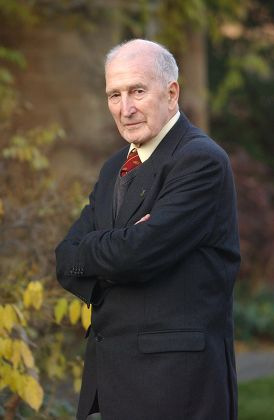
Antony Flew (1923–2010) was a British analytic philosopher known for his influential critiques of theism, postmortem survival and parapsychology. Although he adopted a form of deism late in life, he remained sceptical of postmortem survival and precognition, whilst arguing that psychical research deserved rigorous philosophical scrutiny rather than easy dismissal.
- Flew’s early work treated psychical research as a legitimate inquiry into anomalous claims, provided normal explanations were carefully excluded.
- He argued that reports of psi challenge basic limiting principles rather than necessarily violating known scientific laws.
- His critique of survival centred on whether a bodiless entity could be meaningfully identified with a formerly living person.
Life and Career
Antony Garrard Newton Flew was born in London on 11 February 1923 into a family of religious ministers and theologians. He received his early education at St Faith’s School, Cambridge, and later at Kingswood School, Bath, both private Christian institutions. During the Second World War he served in several capacities, notably as an intelligence officer for Bletchley Park and the Royal Air Force.1This section is based on Steffon (2026); Berger & Berger (1991), 139; Pleasants (1964), 107-8; and Shepard & Lewis (1991), 597.
In 1947, Flew graduated with first-class honours in Literae Humaniores at St John’s College, Oxford, where he also earned the John Locke Scholarship in Mental Philosophy a year later. He was a student of philosopher Gilbert Ryle, whose conceptions of language became fundamental to his own thought. During the 1950s he began to publish articles, essays, books and edited volumes. In the following two decades he produced works that gave him worldwide recognition as an analytic philosopher and critic of certain theistic doctrines.
Flew was a lecturer and professor of philosophy at several universities in the United Kingdom, including Oxford, Keele and Reading, and in Canada at York University. In the United States, he was Distinguished Research Fellow at the Social Philosophy and Policy Center at Bowling Green State University, Ohio.
By the turn of the century, after retiring from teaching, Flew was taking part in media discussions on political and social affairs. His ideological standpoint on such matters was that of a libertarian conservative. During the 2000s many of his views on political philosophy, economics and questions concerning European and British domestic and foreign relations, especially immigration, were controversial.
Flew died on 8 April 2010 in Reading, England.
Atheism and the Conception of God
Flew was interested in theological issues from early youth. He thought that the notion of a good and almighty God as creator of the universe was indefensible, in the sense that it could not be conceived as a falsifiable hypothesis. Given the philosophical and logical difficulties of finding adequate evidence to test such a hypothesis, the presumption should be that the traditional Christian conception of a God both good and all-powerful was false. This presumption is the leading analytical principle of Flew’s ‘negative theism’.
It was during the 1950s in Oxford that Flew began to trace and discuss the major consequences of this presumption. In the 1955 paper ‘Theology and falsification’, which he first read at a meeting of the Socratic Club of Oxford, directed by CS Lewis, and which was later published in several places and translated into many languages, he set out the basis for suggesting that not only the concept of ‘God’ but all propositions of theology should be considered false until confirmed through proper evidence.2Flew & MacIntyre (1955), 96-98; Flew (2000b).
It is fair to note that Flew did not strictly conclude that atheism was the only sound position to adopt about theological matters. Rather, he was interested in determining whether there could be a way to make a case in favour of theism. To do this, the first task was to explain the sense of the term ‘God’ and prove that it could be articulated as a coherent concept. Once this was done, he wrote:
we shall really be in a position to see how such a Being could be identified, and what possible evidence would settle the question of His or Her or Its existence. In connection with this … question of meaning and conceptual legitimacy it does not matter whether such evidence is in fact humanly attainable. But if there is no conceivable way in which the question of existence could be rationally decided, then it becomes exceedingly hard to maintain that the Mosaic theist has propounded a concept of God which could … have application.3Flew (1986a), xi.
Flew debated these questions publicly with a number of scholars and persuaded Christians, earning his reputation as a resilient atheist. This is an exaggeration, to say the least. He always maintained a philosophical scepticism regarding the existence, attributes and powers of God, as well as the idea of a Final Judgement with all its ethical implications.
By 2004, Flew had decided that there were good arguments to make a concession to Deism and admit that God, probably, acted as a First Cause of the Universe and created the laws of Nature according to his own design. Commenting on a debate about evolutionary theories and atheism, he proposed that Darwin’s statement about the descent, based on analogical thinking, of all organic beings from a single prototype could be interpreted as an inference from Darwin’s possible belief on a miraculous creation of life by God, although ‘not the revealed God … who had predestined so many of Darwin’s friends and family to an eternity of extreme torture’.4Flew (2004), 47. This means that, for Flew, Darwin could have been willing to surrender to some form of Deism, as long as the God involved would not be identified with the Christian God of the Western tradition.
But if the result would be to open the way to argue in favour of a natural instead of a revealed theology, the effort to find strong evidence is now more complex than ever, since Watson and Crick made (in 1953) their breakthrough exposition of the double helix structure of DNA. In the face of that discovery, writes Flew, a purely naturalistic theory of how the Darwinian prototype of life evolved is hard even to conceive.5See, for instance, his conversation with Gerald Schroeder and others in the video ‘Has Science discovered God?’.
However, Flew never embraced any Christian confession.
On David Hume: Causality and Miracles
Flew examined in detail the sceptical tenets of the Scottish philosopher David Hume. He believed that Hume’s opinions concerning necessary connection and causality were full of logical and philosophical problems. However, he asserted that Hume’s scepticism on these issues offered important insights into the methods and assumptions appropriate for the investigation of subjects outside the physical sciences, notably history.6Flew (1986b), chap. 5.
The critical historian, for instance, has to assume whatever he or she knows about what is probable or improbable, possible or impossible. This is not irrational or vague, but perhaps the best way to find out what could be the case during research into a given problem. Historical propositions are singular and in the past tense. They cannot be directly verified or falsified. To develop a sound argument about what actually happened, the historian must find something present that can be interpreted as evidence and assess what and how much it shows.
For that critical assessment, it is reasonable for the historian to employ all available confirmed nomological propositions as ‘canons of exclusion’: guides or rules to reject seemingly well-evidenced events as practically impossible. These propositions state that causal connections imply relevant knowledge about ‘practical necessity’ and ‘practical impossibility’, to use Hume’s distinctive moralist vocabulary. They are open and, in principle, can be tested for truth or falsity without restrictions of time and place.
The appeal to such canons is also fruitful in parapsychology. Hume, in section X of his Enquiry Concerning Human Understanding (1757, revised), tried to establish a rule or check to measure the amount of probability for and against the occurrence of an alleged miracle, based on criticism of the available evidence. He was less interested in the supposed fact than in defining the nature of evidence from a logical and practical standpoint.7Flew (1986b), 80. By defining a miracle, put briefly, as ‘a transgression of a law of nature by a particular volition of the Deity’, his particular goal was to dispute the notion that alleged miracles, such as divine revelations, can really warrant the authenticity of a given ‘system of religion’ in opposition to any other. Still, he believed that his check could legitimately be applied to cases where an apparent impossibility took place without the intervention of any deity, as in a case of poltergeists or ghosts of the living or dead.8Flew (1986b), 82.
Hume’s check therefore represents a ‘canon of exclusion’, and with proper modifications can, and has, been taken into account by researchers of the paranormal.
Psychical Research
Another major field of philosophical interest for Flew was psychical research. In the 1950s he proposed a new approach to this field combining a ‘resolute, yet not invincible, scepticism’ with ‘a constant awareness’ of the descriptive and explanatory parts of language.9Flew (1953), 2.
In his view, the object of study of psychical research is formed by:
things which apparently do not fit into our familiar categories, or seem to conflict with accepted ideas: one of its functions is to provide for the study of what is left over by, or is incompatible with the fundamental presuppositions of, the established sciences … psychical research is a science … or at least an intellectual discipline trying to develop into a science. Its work has value even if its results are entirely negative.10Flew (1953), 9-10.
The purpose of these investigations is to discover and explain facts. Special methods are required to treat facts in such a way ‘that they may turn out to be significant and explained in a not normal way’. For this reason, they cannot be hastily dismissed as the product of coincidence. To show, says Flew, that the odds against the observed material occurring by chance alone are enormous does not prove that a paranormal factor is at work. This can be done only if a normal explanation is also excluded.11Flew (1953), 11, 19-21.
As suggested above, reports of psi phenomena can be studied with an eye on Hume’s canon. According to Flew, such phenomena represent not necessarily a violation of accepted scientific laws but of certain ‘basic limiting principles that constitute a framework for all our thinking about and investigation of human affairs’. Suppose that a piece of secret information is stolen from a government office: the security guards would think of every possible conduit of leakage except anything related to psi-gamma talents.12i.e., some form of clairvoyance or telepathy, in contradistinction to psi-kappa, which refers to forms of psychokinesis (PK). However, it might eventually turn out that something of the kind had indeed happened, thus forcing a renewed assessment of our limiting principles.13Kurtz (1985), 521-27.
Repeatability is a major experimental condition in this field of investigation. In its absence, psychical research cannot face the ‘Humean challenge’. To do this, ‘we have to interpret and assess the available evidence in the light of all we know, or think we know, about what is probable or improbable, possible or impossible’. Psi phenomena are ‘implicitly defined in terms of the violation of some of our most fundamental and best evidenced notions of contingent impossibility’.14Kurtz (1985), 529.
The philosophy of parapsychology should proceed as ‘the purest of pure inquiries, quite independent and regardless of whether any parapsychological phenomena do in fact occur’. To prove or disprove and, more importantly, explain the reality of ‘psychic’ mental phenomena, controlled experiments are needed. Only by repeating the same experimental procedures sufficiently often can researchers establish statistically that successes are not mere flukes and learn more about the paranormal factors involved.15Flew (1953), 23; Flew (1987), 18.
Flew stressed the importance of advances in ESP research. This, he believed, would help us understand ‘what goes on in séances’.16Flew (1953), 75. It would also disclose its value for inquiries into postmortem survival and precognition. He was very sceptical about this ‘backward causation’. He wrote:
Is such foreknowledge compatible with an insistence that the people whose conduct is thus foreknown are in that conduct truly agents, able to do other than they do do? If the expression “paranormal precognition” is to be construed, as in fact it almost always is construed, as implying that future events—events, that is, that have yet to occur—cause precognizers [sic] to [have] necessarily present and anticipatory precognitions, then the expression [becomes incoherent] … For such backward causation would have to involve the possibility of making things that had happened not to have happened, and of making to have happened things that have not happened.17Flew (1987), 13.
In Flew’s opinion, such causation involves a self-contradiction and therefore cannot serve as a description of a possible phenomenon. After its occurrence, it cannot ‘be made either not to have occurred at all or to have occurred differently from how it did occur’.18Flew (1987), 199.
Postmortem Survival
According to Flew, the original Society for Psychical Research (SPR) prized highly the idea that it would be possible to find adequate evidence in support of a ‘Platonic-Cartesian’ view of man: the belief that humans are a composite of corporeal and incorporeal elements, and that what they really are is the incorporeal part, which survives the dissolution of the body. However, the progress of the established sciences provided more support for an ‘Aristotelian view of man’, that is, that we are mortal creatures of flesh and blood. If the former view could be sustained, ‘it would become an open question whether some or many or all of us survive death’.19Flew (1987), 15.
Flew was a champion of the Aristotelian conception. ‘Person-words’, as he called them, such as ‘you’, ‘I’, ‘people’ and ‘woman’, refer in one way or another to objects ‘which you can point at, touch, hear, see, and talk to’. This being so, can such objects as people survive physical dissolution?20Foreword to Berger (1987), ix; Flew (1953), 76.
Flew argued that if someone were to discover that people contain a ‘controlling component’, such as a soul, which is incorporeal, this would not show that we are those components, but only ‘the constitution and workings of the particular kind of essentially corporeal creatures that in truth we are’. In that sense, ‘any suggestion either that some of us survive death or that we are all immortal must be either self-contradictory or factually false’.
We would then need a method by which ‘immaterial surviving subjects’, considered as objects, might be identified in separation from the people with whom they supposedly had a previous connection.21Flew (2000a), ix-xiii; cf. Kurtz (1985), 523-24, for a similar case considering psi-gamma factors. But humans tend, tacitly or explicitly, ‘to take spirit existence to be some sort of desubstantialized replica of the world we live in’. However, ‘it is almost impossible to realize that our supposed bodiless beings really would be bodiless, and all that this involves’.22Flew (2000a), 78.
But there is another way to make the possibility of survival easier to understand, although the philosophical jargon cannot be completely taken out. Flew calls it the ‘astral body’ way. It supposes that a sort of shadow of the dead person comes back in the same form as his physical embodiment. This shadow may be conceived as a different being, but still as representing the very person who has passed away. The difference with the Platonic-Cartesian view is that this astral body is essentially corporeal, although constituted of a different and somehow ‘more shadowy and etherial sort of stuff than familiar … matter’. Besides, the shadow as characterized here should be able to answer to questions about normal material, worldly relations, such as ‘Where is it?’, or ‘How big is it?’. This version of the dead person, says Flew, ‘would be visible only sometimes and to some [people], detaching itself from a [dead person] and thereafter continued to participate in the developing action at one time discernibly and at another time not …’.23Flew (1987), 349-50.
A significant problem with this alternative is that ‘the protagonist will find it difficult to find some positive characterization [in such a manner that] an astral body really [could be considered as] a sort of body in a way in which an imaginary …, or nonexistent …, or incorporeal body are not sorts of body’, and one of such nature that the hypothesis that he is, or has, an astral body ‘is not shown to be false by any presently available facts’. Given the possibility that the facts of the case become available, he will try to adjust the nature of his body to qualify (philosophically speaking) as a corporeal thing, thus escaping falsification – on the event of an experiment designed to prove the truth or falsity of this particular hypothesis.
However, according to Flew, in this process of qualification, ‘the protagonist’ would become less of an astral body than an incorporeal Platonic-Cartesian soul, precisely because of his inability to foresee a conceivable experiment which, parting from the proper available evidence at a given point of time, could prove that his supposed astral body is really a non-body or even less than that. This means that the more he would try to prevent his nature from becoming incorporeal, the less he would succeed.
But regarding such speculations there is also something to say about the spirit of research, so to speak, concerning the matter. It is important to consider the present level of experimental technologies. Maybe one day we will profit from an instrument especially built to detect astral bodies. An expectation such as this is warranted, says Flew,
only if we [think] … that the survival evidence cannot be interpreted in terms of various ESP ongoings among ordinary corporeal people, and if we also believe … [as I think we should] that the Platonic-Cartesian way will not go. It would also be much encouraged if evidence for levitating, apporting, and generally rip-roaring mediumship were better than [what we have at present].24Flew (1987), 359-360. Consider that Flew wrote this nearly 40 years ago.
In addition to this, and as a result of his analyses of the doctrines of John Locke, Hume, Bishop Butler, and other philosophers concerning personal identity in its relation to memory (human, not cosmic), Flew concludes that an obstacle to believe in survival is:
not that our possible future life would be so different from anything we know that we cannot hope to describe or imagine it: but that these spirits, if we gave determinate meaning to this term, might, precisely because of their incorporeality, be so different from what we now mean by ‘people’ that we could not identify them with people who had once lived, even though they might possess peculiar knowledge and other characteristics reminiscent of our dead friends.25Flew (1953), 83; Flew (1987), 357-58.
This also suggests that ESP capacities could not be attributed to immaterial entities of some human source, since they appear to be ‘non-physical in the … sense of being outside the range of today’s physical theories’. For Flew, indeed, the core concepts of ESP seemed to be just ‘as much involved with the human body as are those of other human capacities’.26Flew (1987), 356.
Selected Works
The following selected works pertaining to parapsychology, atheism and philosophical scepticism are not listed under Works Cited.
Flew, A. (ed.) (1964). Body, Mind and Death. New York: Macmillan.
Flew, A. (1972). Is there a case for disembodied survival? Journal of the American Society for Psychical Research 66, 129-44.
Flew, A. (1984). God, Freedom, and Immortality: A Critical Analysis. New York: Prometheus Books.
Flew, A. (1998). Could we survive our own deaths? The Secular Web. [Web page.]
Flew, A., & Miethe, T.L. (1991). Does God Exist? A Believer and an Atheist Debate. San Francisco: HarperSanFrancisco.
Roberto R Narváez
Works Cited
Berger, A.S. (1987). Aristocracy of the Dead: New Findings in Post-Mortem Survival. Jefferson, North Carolina: McFarland.
Berger, A.S., & Berger, J. (1991). The Encyclopedia of Parapsychology and Psychical Research. New York: Paragon House.
Flew, A. (1953). A New Approach to Psychical Research. London: Watts & Co. [Web page.]
Flew, A. (1986a). God: A Critical Enquiry. La Salle, Illinois, USA: Open Court. [Web page.]
Flew, A. (1986b). David Hume: Philosopher of Moral Science. Oxford/New York: Basil Blackwell.
Flew, A. (ed.) (1987). Readings in the Philosophical Problems of Parapsychology. Buffalo, New York, USA: Prometheus Books.
Flew, A. (2000a). Merely Mortal? Can You Survive Your Own Death? Amherst, New York, USA: Prometheus Books.
Flew, A. (2000b). Theology and falsification: A golden jubilee celebration. Philosophy Now 29 (October/November), 28-29. [Web page.]
Flew, A. (2004). Letter on Darwinism and theology. Philosophy Now (August/September).
Flew, A., & MacIntyre, A. (eds.) (1955). New Essays in Philosophical Theology. New York: Macmillan.
Kurtz, P. (ed.) (1985). A Skeptic’s Handbook of Parapsychology. Buffalo, New York, USA: Prometheus Books.
Pleasants, H. (ed.) (1964). Biographical Dictionary of Parapsychology. New York: Garrett Publications/Helix Press.
Shepard, L., & Lewis, S. (1991). Encyclopedia of Occultism & Parapsychology. Detroit: Gale Research.
Steffon, M. (2026, 4 April). Antony Flew. Encyclopaedia Britannica. [Web page.]
Wallace, S.W. (ed.) (2003). Does God Exist? The Craig-Flew Debate. Burlington, Vermont, USA: Ashgate.