This case concerns a mediumistic communication to Isaac K Funk about a borrowed ancient coin thought to have been returned years earlier. It is considered evidence of postmortem survival because neither Funk nor the medium knew that the coin had been misplaced and because Funk later referred to it in communications through another medium.
- In 1903, a Brooklyn medium’s communicator told Funk that a widow’s mite coin borrowed for a dictionary illustration had not been returned.
- Funk’s office search found two coins in a safe drawer under papers, and later verification indicated that the darker coin was genuine.
- James Hervey Hyslop regarded the case as difficult to explain normally and later reported communications ostensibly from Funk through Minnie Meserve Soule.
The Initial Communications
Mediumistic communications involving facts not known to either mediums or sitters are of particular interest to investigators because, if well documented, they are hard to explain in naturalistic, materialistic ways. When the motive to communicate lies on the side of the spirits, moreover, the information conveyed cannot readily be dismissed as acquired by the medium though extrasensory means directly, and such cases therefore contribute to the evidence for postmortem survival.
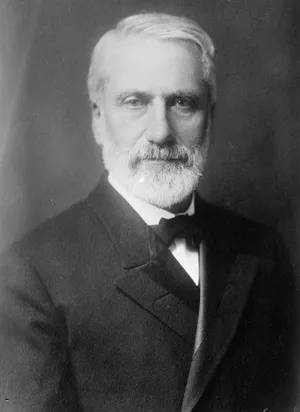
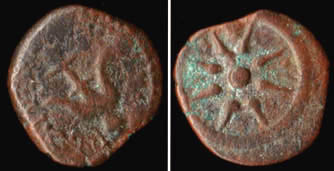
This article describes an instance of this sort, relating to an ancient Roman coin called a widow’s mite. The case was contributed by Isaac K Funk, co-founder of Funk & Wagnalls, publishers of The Standard Dictionary of the English Language. Funk began his professional career as a Lutheran minister and late in life became interested in psychical research. He authored two books on the subject, the first of which1Funk (1904). includes a chapter concerning a misplaced ancient Roman coin called a widow’s mite.2Funk’s second book on his investigations, The Psychic Riddle, appeared three years later.
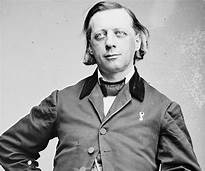
Sometime during 1894, Funk borrowed the coin from Charles E West, principal of a lady’s school in Brooklyn Heights, New York, for an illustration in The Standard Dictionary. He had heard about the coin a few years earlier from the clergyman and social reformer Henry Ward Beecher, who had introduced him to West. As Funk was to recall in The Widow’s Mite and Other Psychic Phenomena, he gave the borrowed coin and a replica to his brother, Benjamin, the company’s business manager, asking him to return them to West after having a photographic plate made. Benjamin gave the coins in a sealed envelope to the company’s head cashier for safe keeping. The cashier placed them in the drawer of a large safe where they remained forgotten for some nine years.
In February 1903 Funk was told about an apparently gifted medium in Brooklyn and arranged to sit with her and her small group. As the medium was strictly an amateur and wanted no publicity, Funk did not give her name in his book, describing her only as a 68-year-old widow ‘of little school education, refined in manners’.3Funk (1904), 157. She had three spirit controls – a deceased son named Amos; a deceased niece, Mamie, who died at age 7; and George Carroll, the deceased friend of a member her circle.
As a guest, Funk did not feel he could impose test conditions on the medium. ‘It was all “upon honor”,’ he wrote. ‘After considerable investigation, however, and fuller acquaintance with the family, I am morally certain that this confidence in the integrity of the medium and family at the time of this mite incident was not misplaced’.4Funk (1904), 158-59.
The medium was of the direct-voice type, that is, spirit voices did not emanate from her vocal cords but from somewhere near her, through a floating trumpet while she was entranced. Occasionally there were raps and lights appearing on the curtains. The medium appeared to be in trance throughout the proceedings and remembered nothing about them afterwards. Funk noted,
The voices are of a great variety. I counted in a single evening as many as twenty – some apparently the voices of children, and others of middle-aged persons and old men and women; a few of these are the voices of Indians, and one of a jolly, typical, Virginian Negro. Each voice maintains its individuality during the evening and from one evening to another.5Funk (2004), 158.
Most of the communications came from deceased members of the family, especially from the brother’s deceased wife and daughter, Mamie. On Funk’s third sitting, George Carroll spoke up in ‘his usual strong masculine voice’ and said: ‘Has any one here got anything that belonged to Mr. Beecher?’ Beecher had died in 1887, 16 years before. Funk spoke up, acknowledging that he was likely the only person present who had known him. He had in his pocket a letter from Beecher’ successor. Was it that which was meant? Carroll bellowed:
No; I am told by a spirit present, John Rakestraw, that Mr. Beecher, who is not present, is concerned about an ancient coin, the ‘Widow’s Mite.’ This coin is out of its place and should be returned. It has long been away, and Mr. Beecher wishes it returned, and he looks to you, doctor, to return it.6Funk (2004), 159; italics in original.
Funk recalled borrowing the coin to photograph for the Standard Dictionary but told Carroll that it had been promptly returned. ‘This one has not been returned,’ Carroll insisted. Funk pressed for more information. ‘I am impressed that this coin is in a large iron safe, that it has been lost sight of; it is in a drawer in this safe under a lot of papers, and that you can find it, and Mr. Beecher wishes you to find it.’7Funk (2004), 160.
At his office the next day, Funk questioned his brother about the coin. Benjamin said that he was sure he had returned it to the owner. Funk then questioned the head cashier, who also said it had been returned to the owner. However, they then searched the safe and found two coins, both widow’s mites, one darker than the other, in a drawer under a lot of papers.
Upon examining the coins, Funk concluded that the lighter one was the genuine widow’s mite. It was the one displayed in The Standard Dictionary. On the following Wednesday, he attended the weekly Brooklyn circle. Toward the end of the session, George Carroll began talking and Funk informed him that he had found the widow’s mite – in fact, had found two of them. He asked Carroll if he knew which was the genuine coin. ‘The black one,’ Carroll replied without hesitation. Funk checked with the Philadelphia mint and found that Carroll was right and he was wrong. In fact, they had used the wrong coin in the dictionary illustration. The light one was simply a replica.
As a test of Carroll (or the medium), Funk then asked Carroll if he knew from whom he had borrowed the coin. Carroll responded that it was Beecher’s friend, but he could not give a name. Carroll further reported, however, that he was being shown a picture of a college, which he identified as a lady’s college in Brooklyn Heights. Funk also asked Carroll to whom the coin should be returned. ‘I can not tell you; I do not know; for some reason Mr. Beecher does not tell,’ Carroll said.8Funk (2004), 163.
At a circle with another medium the following week, Funk heard directly from Beecher, who said that he was not concerned about the return of the coin; ‘what he was concerned about was to give me a test that would prove the certainty of communication between the two worlds, and since that has been accomplished in my finding the coin, he cared nothing further about it’, Funk related.9Funk (2004), 163. As Charles West had died by this time, the coin was returned to his son.
In his discussion of this case, Funk ruled out fraud, coincidence and telepathy, concluding that spirit communication was the most likely explanation. Further reporting on the sitting with the second medium, Funk was told that Beecher was there and wanted to speak with him. ‘Sure enough, when the curtains were parted, there was the Beecher face, wonderfully life-like,’ Funk wrote. Beecher then spoke to Funk in a deep, husky voice, explaining to him that that the efforts on his side were an attempt to put an end to materialism on earth. ‘Do you see my face clearly?’ Beecher then asked, adding,
It is with great difficulty that we come back into visible form. You have no adequate thought of the nature, the largeness, and the complexity of the difficulties that must be surmounted by the spiritual world in order to return in this way, but we can surmount these fully, so our scientific leaders assure us. We have surmounted them in part; your side can largely help by supplying the proper thought and heart conditions. Do not smile when we speak of magnetism and vibrations and waves. There is such a thing as mind or soul ether. To this ether your thought and feeling and will and ours are disturbing and controlling forces – very real. You must study on your side these psychic forces and their laws.10Funk (1904), 179-80.
Funk reported that the image of Beecher, whatever it was, slowly sank to the floor and disappeared. Before it sank, a hand was placed on his shoulder, although no one was beside him.11Funk (1904), 180.
Sequelae
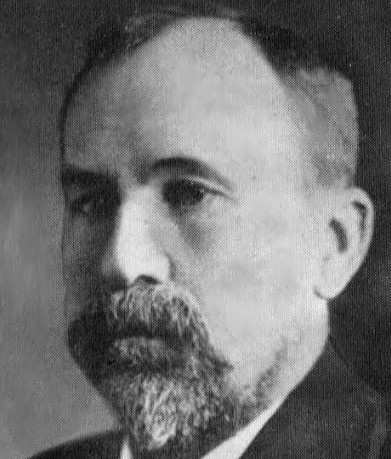
‘This case, certainly, represents one that has very possible claims to supernormal knowledge, to the say the least of it,’ wrote James Hervey Hyslop of the American Society for Psychical Research when he read Funk’s report of the case. ‘I see no way to impeach it positively. I could imagine a theory to explain it without supposing the supernormal, but I would have no possible evidence in favor of what I can imagine.’12Hyslop (1919), 299. In fact, Hyslop, a friend of Funk, had accompanied him to one sitting with the Brooklyn medium and agreed that she was genuine.
On 2 October 1912, a communicator purporting to be Funk (who had died on 4 April) began addressing Hyslop through the automatic writing of ‘Mrs. Chenoweth’ (later identified as Minnie Meserve Soule). ‘Funk’ provided Hyslop with much evidential information relative to his identity and informed him that communication was not as easy as he had expected when alive. ‘Thought produces images and unless the thought is concentrated on some particular thing, the image quickly melts into other images, a kaleidoscope movement’, ‘Funk’ wrote through Mrs. Chenoweth’s hand while she was in trance.13Hyslop (1919), 285.
‘Funk’ communicated several more times over the next few months, then broke off until 14 June 1916, nearly four years later, on which occasion he referred to the time Hyslop had accompanied him to the sitting with the Brooklyn medium. This was especially evidential to Hyslop as he was certain that Mrs Chenoweth knew nothing of the visit.
On 27 June 1916, ‘Henry Ward Beecher’ appeared and also referred to the ‘money’ message. However, neither ‘Beecher’ nor ‘Funk’ could get the words ‘widow’s mite’ through Mrs Chenoweth’s mind or hand. The words came out either as ‘money’ or as ‘bronze medal’. Then, on 14 February 1917, a communicator identifying herself as Funk’s mother wrote:
I know that the idea of medals and medallions and all articles which suggest such form is a left-over impression of his most striking evidence, and he is the receiver of so many suggestions of that nature from the living and the dead, because of his known interest in the ancient coin, and it always comes with force as he attempts to write.14Hyslop (1919), 307.
In his communication of 28 June 1916, ‘Funk’ said, referring to the Widow’s mite coin, that ‘the British Museum holds nothing better’.15Hyslop (1919), 299.
Michael Tymn
Works Cited
Funk, I.K. (1904/1911). The Widow’s Mite and Other Psychic Phenomena. New York and London: Funk & Wagnalls. [Reproduced from 3rd ed., 1911, by Lagare Street Press.] [Internet Archive. Download PDF.]
Hyslop, J.H. (1919). Contact with the Other World: The Latest Evidence as to Communication with the Dead. New York: The Century Co. [Internet Archive.[Download PDF.]
Tymn, M. (2022). After-death communication: The mystery of the widow’s mite. [Blog post. Full text.]