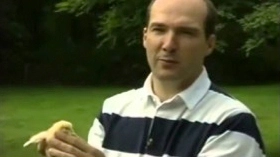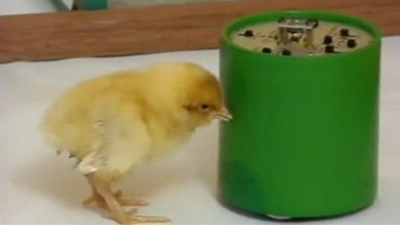

Experiments with a small random-moving robot made René Peoc’h one of the most discussed figures in animal psychokinesis research. His studies with imprinted chicks and other subjects suggested intention might bias random systems, while critics argued that methodological flaws and weak replication left the claims unresolved.
- Peoc’h’s best-known experiments used imprinted chicks and a REG-driven robot called a tychoscope.
- Reported effects were strongest when the chicks appeared motivated, as by imprinting or attraction to a candle’s light.
- Critics argued that edge effects, protocol ambiguities, statistical problems, and possible experimenter influence weakened the evidential value of the findings.
Contents
Life and Career
René Peoc’h is a French researcher best known for a series of psychokinesis experiments conducted from the mid-1980s to the early 2000s.
Peoc’h was born on 19 January 1958 in Nantes. He attained three doctorates before he was 30 – a PhD in Sociology from the Sorbonne in June 1984, a PhD in Medicine from the University of Nantes in June 1986, and a PhD in Natural Sciences (Ethology) from the University of Nantes in November 1998.1Forum Sceptique (2004); Les Lectures de Florinette (2018); and personal communication from Peoc’h. The thesis for his medical doctorate concerned a study using a tychoscope with imprinted chicks2Mise en évidence d’un effet psychophysique chez l’homme et le poussin sur le tychoscope (‘Demonstration of a psychophysical effect in humans and chicks using the tychoscope’). formed the basis of his best-known work.3Peoc’h (1986).
Peoc’h was a former student of the biologist and entomologist Rémy Chauvin (1913–2009), a prominent figure in psi research in France. Chauvin was Honorary Professor Emeritus at the Sorbonne and had a longstanding interest in parapsychology. He conducted early animal psi experiments using mice and random event generators, sometimes publishing under the pseudonym Pierre Duval.4Gissurarson & Haraldsson (1989). Peoc’h has also been described as an authority on animal behaviour.5Peoc’h (1988). He established his own research facility in Nantes and later worked in association with the Fondation Odier de Psycho-Physique, a Swiss foundation that funded consciousness research.6Peoc’h (2002); Les Lectures de Florinette (2018).
Research
The Tychoscope
The tychoscope was a small self-propelled robot invented by the French engineer Pierre Janin in the late 1970s.7Janin (1977); Peoc’h (2002). It measured approximately ten centimetres in diameter. A random event generator (REG) governed its movements, producing random outputs that determined both direction and the length of each segment of travel. The resulting path resembled Brownian motion.8Peoc’h (2002).
A felt-tip pen mounted vertically at the centre of the device traced its trajectory on paper, providing a permanent visual record of each run. Later versions allowed electronic recording of movement data for analysis.
Chauvin had previously used an earlier version of the tychoscope in experiments with mice. Those results suggested that the mice could influence the device’s movement away from them, apparently to avoid the stress of an unknown stimulus.9Chauvin (1968). Peoc’h adopted the instrument but pursued more ambitious experiments involving chicks, rabbits, and human subjects.
The Imprinted Chick Experiments
Peoc’h’s best-known experiments exploited filial imprinting, the behavioural mechanism by which newly hatched birds adopt the first moving object they encounter as a mother figure. Konrad Lorenz described this phenomenon systematically in his classic ethological work.10Peoc’h (1988).
Newly hatched chicks were exposed to the tychoscope for about one hour per day over several days following birth. The chicks imprinted on the robot and treated it as a maternal substitute. They displayed distress when separated from it.11Peoc’h (1986); Peoc’h (1988).
The protocol was straightforward. Imprinted chicks were placed in a transparent cage at one edge of a rectangular arena. The tychoscope was placed at the centre and its movement recorded over a set period. The procedure was then repeated with non-imprinted chicks and with an empty cage as controls.12Peoc’h (1988).
Peoc’h reported that the tychoscope spent 2.5 times more time in the half of the arena nearest the imprinted chicks than it did under control conditions. Non-imprinted chicks produced no significant deviation from random trajectories, and an empty cage likewise produced no effect (Figure 1). Statistical significance was reported at p < 0.001.13Peoc’h (1988).
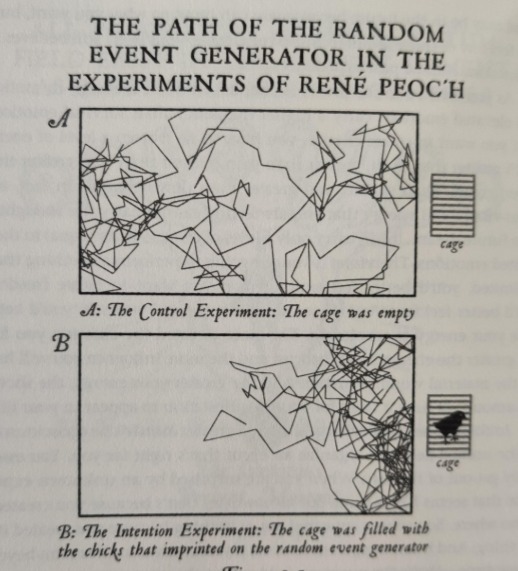
Figure 1. The path of the random event generator in the experiments of René Peoc’h.14from Arnold (n.d.).
These findings appeared in the Journal of the Society for Psychical Research in 1988 under the title ‘Chicken Imprinting and the Tychoscope: An ANPSI Experiment’. An editorial note described the study as ‘a genuinely innovative parapsychological experiment’.15Peoc’h (1988).
The Candle Experiments
A follow-up study appeared in the Journal of Scientific Exploration in 1995. This experiment did not rely on imprinting but on a simpler motivation. Chicks were placed in a darkened room with a candle mounted on the tychoscope as the only source of light.16Peoc’h (1995).
Eighty groups of fifteen chicks were tested. In 71% of cases, Peoc’h reported that the tychoscope spent significantly more time near the chicks than chance would predict (p < 0.01). Without chicks present, the robot followed random trajectories. Under normal daylight conditions, and without a candle, the chicks produced no significant effect on the robot’s movement.17Peoc’h (1995).
Peoc’h interpreted this as evidence that the animals’ psychological state was crucial. The chicks appeared to want the light, and that motivation seemed to influence the REG output and therefore the robot’s trajectory. When neither imprinting nor a desire for light was present, the effect disappeared.18Peoc’h (1995).
Distant Psychokinesis and Further Experiments
Peoc’h subsequently tested whether the effect could operate at a distance. The candle protocol was repeated, but this time the random event generator was located 23 kilometres away from the robot, the two being connected by telephone line.19Peoc’h (n.d.).
In 66.25% of 80 trials, the tychoscope reportedly moved preferentially towards the chicks. This was described as highly significant (p < 0.00001) relative to control conditions. The paper describing the experiment was not published in a peer-reviewed journal, however, and appears to be available only through the author’s research-group website.20Peoc’h (n.d.). The chicks had no knowledge of the generator’s location. If the effect were genuine, this would imply an influence acting directly on the REG regardless of spatial separation.
Peoc’h also conducted experiments with rabbits. At first the rabbits appeared to repel the robot to the far side of the arena, but after habituation this reportedly reversed and the robot moved towards them.21Peoc’h (2002).
Human subjects were tested as well. Participants attempted to attract the tychoscope through intention alone, and Peoc’h reported deviations from chance in the intended direction.22Peoc’h (2002). One striking variation involved REG output that had been generated six months earlier and recorded on a compact disc. The robot was driven by this pre-recorded data rather than by a live generator. According to a secondary source, Peoc’h found that the robot was still influenced as if the data were being generated contemporaneously, and that the portion of code actually used was non-random while the unused portion remained random.23Paranormal.se (n.d.). This claim does not appear to have been reported in a peer-reviewed publication. If confirmed, it would imply a retroactive effect, but it should be treated cautiously.
Peoc’h summarized his cumulative findings in a paper presented at the 2002 Parapsychological Association convention and later published in the Journal of Parapsychology.24Peoc’h (2002).
Criticisms
The experiments attracted substantial criticism. Damien Triboulot, writing for the Cercle Zététique, argued that the results could be explained by an ‘edge effect’. Because the arena was bounded, the tychoscope was forced to reverse direction when it encountered a wall. This could produce clusters of movement near the edges and so mimic attraction towards the chick cage.25Triboulot (1995).
Pierre Macias disputed this critique. He argued that an edge effect could not explain the difference between experimental and control conditions. If it were the sole cause, he maintained, it should appear equally in both, yet it did not.26Macias (n.d.). Others pointed to errors in Peoc’h’s statistical calculations and ambiguities in his protocols. Some suggested that a larger arena or a suspended chick cage would help eliminate the confound.27Forum Sceptique (2004).
The question of experimenter psi was also raised. The editorial introduction to the 1988 Journal of the Society for Psychical Research paper acknowledged the possibility explicitly. If the experimenter rather than the chicks was the source of the effect, the results would have a very different interpretation. Peoc’h stated that a colleague obtained similar results in his absence from Nantes, but this does not appear to have been independently verified in published form.28Peoc’h (1988).
The Fondation Odier reportedly replicated Peoc’h’s results using a revised design that addressed some criticisms. These replications were not published in peer-reviewed journals, however, which limits their evidential weight.29Forum Sceptique (2004).
The Princeton Engineering Anomalies Research (PEAR) laboratory later conducted related experiments with REG-driven robots. Its random-robot studies yielded small but statistically significant effects in the intended direction, offering a conceptual parallel to Peoc’h’s tychoscope work under more formal experimental conditions.30Jahn et al. (2008).
Contemporary Status
Peoc’h’s experiments remain among the most frequently cited studies in animal psychokinesis and are regularly mentioned in broader overviews of animal psi research.31Duggan & Matlock (2018). They are especially important in that they confirmed the findings reported earlier by Chauvin,32Chauvin (1968). working in a different laboratory with a different animal (mice). Additionally, Peoc’h’s research was conducted over an extended period.33Peoc’h (2002). Unfortunately, this line of investigation has not been taken up by others since Peoc’h.
Michael Duggan
Works Cited
Arnold, R. (n.d.). Dr. Rene Peoc’h and the evidence of mind over matter. Confirmed Source. [Blog post.]
Chauvin, R. (1968). A PK experiment with mice. Journal of the Society for Psychical Research 53, 348-51.
Duggan, M., & Matlock, J.G. (2018). Animals in psi research. Psi Encyclopedia. [Web page, last updated 4 February 2026.]
Forum Sceptique (2004). L’expérience bidon de Péoc’h. [Discussion forum, accessed 26 February 2026.]
Gissurarson, L.R., & Haraldsson, E. (1989). The Icelandic physical medium Indridi Indridason. Proceedings of the Society for Psychical Research 57, 53-148.
Institut Métapsychique International (2017). Rémy Chauvin. [Web page, retrieved 12 April 2026.]
Jahn, R.G., Fassassi, E.B., Valentino, J.C., & Hoeger, E.S. (2008). Random robot redux: replications and reflections. [Technical note PEAR 2008.01.[ [PDF Download].
Janin, P. (1977). [Tychoscope apparatus unpublished technical specifications.]
Les Lectures de Florinette (2018). Dr René Peoc’h: L’esprit et la matière…. [Web page, retrieved 12 April 2026.]
Macias, P. (n.d.). René Péoc’h: Critique de la critique. [Web page, retrieved 12 April 2026.]
Paranormal.se (n.d.). PK-experiment med djur. [Web page, retrieved 12 April 2026.]
Peoc’h, R. (1986). Mise en évidence d’un effet psychophysique chez l’homme et le poussin sur le tychoscope. Doctoral thesis, University of Nantes, France. [PDF Download].
Peoc’h, R. (1988). Chicken imprinting and the tychoscope: An ANPSI experiment. Journal of the Society for Psychical Research 55, 1-9.
Peoc’h, R. (1995). Psychokinetic action of young chicks on the path of an illuminated source. Journal of Scientific Exploration 9/2, 223-29.
Peoc’h, R. (2002). Psychokinesis experiments with human and animal subjects upon a robot moving at random. Journal of Parapsychology 66/3, 229-36.
Peoc’h, R. (n.d.). Chicks’ distant psychokinesis (23 kilometres). [Web page, retrieved 27 February 2026.]
Triboulot, D. (1995). Les contes de Peoc’h Le petit poussin. Cercle Zététique. [Web page, retrieved 26 February 2026.]