
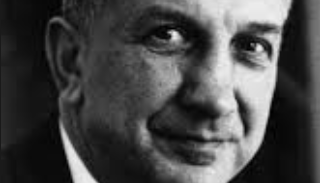
Postwar sceptical criticism of parapsychology found one of its best-known academic voices in this British psychologist. His books argued that fraud, poor controls and error could account for celebrated ESP results, influencing generations of critics even as parapsychologists strongly disputed several of his specific objections.
- Hansel moved from a critique of SG Soal’s experiments to a career attacking the evidential basis of ESP.
- His criticisms of Soal gained retrospective weight when later analysis indicated data tampering.
- Other claims, including parts of his critiques of Pearce-Pratt and Stepanek, were rejected as misleading or mistaken.
Contents
Life and Career
Charles Edward Mark Hansel was born in 1917 in Bedford, England and was educated at Bedford School. From 1938 until 1946 he served in the Royal Air Force reaching the rank of squadron leader. After demobilization he attended Bournemouth Municipal College of Technology and Commerce and Fitzwilliam College, Cambridge, where he studied moral sciences and psychology. He lectured in psychology at the University of Manchester from 1949 and was later appointed professor of experimental psychology at University College, Swansea.
Hansel’s principal research interests were in the field of visual perception and the critical analysis of the experimental basis of claims for extra-sensory perception (ESP). He was a fellow of the Committee for Skeptical Inquiry (CSI), formerly known as the Committee for the Scientific Investigation of Claims of the Paranormal (CSICOP).
Critiques of Parapsychology
Hansel became involved in parapsychology in 1949, coordinating telepathy experiments by SG Soal and F Bateman in his capacity as secretary of the Cambridge University Society for Psychical Research.1Anon (1950), 287.
In 1966 he published ESP: A Scientific Evaluation, presenting a view of parapsychology that accounted for its evidence claims in terms of fraud and methodological flaws. An expanded version, ESP and Parapsychology: A Critical Re-evaluation, was published in 1980, taking account of new lines of research. A third version, The Search for Psychic Power: ESP and Parapsychology Revisited, appeared in 1989. All three were published by Prometheus Books, the in-house publisher of the CSI.
The book begins with a brief overview of early research that was mainly carried out by investigators affiliated to theSociety for Psychical Research and its American counterpart, the American Society for Psychical Research. He attributes early claims with regard to table tipping (or turning) to unconscious muscular movements, as apparently demonstrated by Michael Faraday, and claims of experimental evidence to such things as mental habits, recording errors and poor randomization. He notes that early experiments to which much significance was attached, notably those carried out with the Creery sisters and with Smith and Blackburn, were discredited by revelations of fraud and that John E Coover’s large-scale telepathy experiments resulted in chance scores. He explains apparitions with reference to a case that was discredited and to various normal causes. With regard to mediums, he focuses on revelations of fraud concerning the Fox sisters and Eusapia Palladino, while Leonora Piper, he objects, produced information that was garbled, incomplete or merely gibberish, and failed to convince some researchers that she was in touch with departed spirits.
Hansel then analyses key researches carried out in the laboratory of JB Rhine, arguing that, to invalidate an experiment, it was not necessary to show that fraud had taken place as long as fraudulent method could be described that was at least potentially successful. For instance, in one particularly successful series of experiments, the subject (Hubert Pearce) guessed cards that were being turned up by an experimenter (Gaither Pratt) located in a different building. Hansel argued that the layout of these premises was such that Hubert could have surreptitiously left his post, crossed to the other building and spied on Pratt as he was turning over the cards, either through a window or from an overhead trapdoor in the ceiling.2Hansel, 1980, 111-123. With regard to telepathy experiments carried out with two Welsh schoolboys, he suggests that they might have given the appearance of telepathic communication by whistling through their teeth or by using dog whistles that they knew adults would be unable to hear.3Hansel (1966), 149.
Hansel also takes aim at successes reported with Pavel Stepanek, a high-scoring Czech subject, claiming that Stepanek used sleight of hand to see inside envelopes without being observed to do so.4Hansel, 1980, 268-71. Other targets include Ted Serios and Uri Geller.
With regard to laboratory experiments, Hansel expresses suspicions of strongly positive results claimed by SG Soal in ESP tests5Hansel (1960), 1-42. and follows with critical analyses of the work of other parapsychologists, including Helmut Schmidt’s experiments in micro-psychokinesis.6Hansel (1981), 26-33. He critiques the successful series of experiments carried out in 1967 at the Maimonides Medical Center in New York, in which Robert van de Castle acted as the main subject. He also examines other ESP testing methods, claiming that fraud and misinterpretation cannot be ruled out with regard to otherwise adequately designed experiments.7Hansel (1959), 457-59.
Hansel concludes that ‘after 100 years of research, not a single individual has been found who can demonstrate ESP to the satisfaction of independent investigators. For this reason alone it is unlikely that ESP exists’.8Hansel (1980), 314.
Reception
Hansel’s critiques have been influential, with several scientists and sceptics commenting favourably, including Martin Gardner9Gardner (1966). and Antony Flew.10Flew (1968), 183-84. Robert Sheaffer described them as ‘concise, compelling, and, if correct, utterly devastating to the claim that parapsychology as we know it represents a legitimate scientific endeavor’.11Sheaffer (1980), 61-68.
Some of Hansel’s concerns were shared by parapsychologists, notably the claims made by Soal with regard to the Jones boys, also to high-scoring ESP experiments, where Hansel’s suspicions were vindicated when a posthumous computer study uncovered indications of data tampering.
However, other of Hansel’s claims were rejected. Regarding the Pearce-Pratt experiments, it was pointed out that the diagram of the layout of the premises provided by Hansel to support his contentions was marked ‘not-to-scale’, and that the actual layout could not support his claim, since the window through which the subject was supposed to have looked was some distance from where Pratt was situated.12Honorton (1967), 80; Stevenson (1967). Furthermore, discrepancies which Hansel claimed to have found in reports of the experiment were said to be variously inconsequential, exaggerated, or the result of Hansel’s own erroneous calculations.13Rao, 1981..
With regard to Stepanek, Pratt claimed that Hansel ‘made at least nine seriously misleading or erroneous statements’. He corrects Hansel’s description of the procedure and points out that his statements ignore ‘significant series in which PS neither saw nor touched the objects’ and also ‘conditions used to control explicitly against bent or warped cards’. He adds:
The testing was not the casual affair that Hansel implies, but was carefully planned and carried out by experimenters who had full control over the materials and the conditions for excluding sensory cues.14Pratt (1973).
Parapsychologists and sympathetic commentators rejected Hansel’s view that psi effects were impossible in nature, and should be ruled out a priori.15Beloff (1966). They also contested his claim that an apparently successful psi experiment must be considered invalid if a fraudulent method could potentially have been used, regardless of whether it was demonstrated to have happened in fact.16Inglis (1986), 241. A common complaint was that Hansel ignored valid counter-arguments to his positions and refused to acknowledge his own mistakes.17Inglis (1986), 244; West (1981), 27-28. Stephen Braude reproached him for adopting the ‘inexcusably thick-headed contention that if people have ESP, they ought to be able to demonstrate it on the spot by telling Hansel what he is thinking’.18Braude (1994), 202.
However, some parapsychologists argued that some points raised by Hansel’s critique would help investigators and experiments become more rigorous.19Owen (1998), 179. Donald West stated that he ‘does have some comments of substance which challenge any complacency one might feel about standards of evidence in our subject [and that he] can be credited with giving us good cause to reflect on our standards for evaluating evidence’.20West (1981), 27-28.
Works
Books
ESP: A Scientific Evaluation (1966). New York: Scribner.
ESP and Parapsychology: A Critical Re-evaluation (1980). Buffalo, New York, USA: Prometheus Books.
The Search for Psychic Power: ESP & Parapsychology Revisited (1989). Buffalo, New York, USA: Prometheus Books.
Articles
Experiments on telepathy (1959). The New Scientist 26 February, 457-59.
Letters (1959). The New Scientist 26 March, 713; 30 April, 983-84; 4 June, 1257-58;
Experimental evidence for Extra-Sensory-Perception (1959). Nature 184, (7 November), 1515-16.
A critical review of the experiments on Mr. Basil Shackleton and Mrs. Gloria Stewart as sensitives (1960, with a reply by S.G. Soal) Proceedings of the Society for Psychical Research 53, 1-42, 43-82.
Experiments on telepathy in children: A reply to Sir Cyril Burt (1960). British Journal of Statistical Psychology 13/2, 175-58.
A critical analysis of the Pearce-Pratt experiment (1961). The Journal of Parapsychology 25/2, 87-91.
A critical analysis of the Pratt-Woodruff experiment (1961). The Journal of Parapsychology 25/2, 99.
Review: The Founders of Psychical Research by A. Gauld (1968). Nature 219 (31 August), 986-87.
ESP: Deficiencies of experimental method (1969). Nature 221 (22 March), 1171-72.
Review: The Challenge of Chance by A. Hardy, R. Harvie and A. Koestler (1973). New Scientist 27 December, 919.
Letters (1974). New Scientist 7 February, 366.
Review of New Directions in Parapsychology, ed. by J. Beloff (1974). New Scientist 25 July, 205-206.
A critical analysis of H. Schmidt’s PK experiments (1981). Skeptical Inquirer 5/3, 26-33.
Follow-up quantim PK experiments: Reply to Hyman (1982). Skeptical Inquirer 6/3 (Spring(.
The evidence for ESP: A Critique (1984). Skeptical Inquirer 8/4 (Summer), 322-28.
Fact or fiction? (1986). Nature 322 (7 August), 505-6.
Book Chapters
Parapsychology: The views of a critic (1971). In A Century of Psychical Research: The Continuing Doubts and Affirmations, ed. by A. Angoff & B. Shapin. New York: Parapsychology Foundation.
Melvyn Willin
Works Cited
Anon (1950). Long-distance experiments in telepathy by F. Bateman and S.G. Soal. Journal of the Society for Psychical Research 35, 287.
Beloff, J. (1966). Review of ESP: A Scientific Evaluation by C. E. M. Hansel. American Journal of Psychology 79/4, 662-64.
Braude, S.E. (1994). Psi and the nature of abilities. Research in Parapsychology 1991. Lanham, Maryland, USA, & London: Scarecrow Press.
Flew, A. (1968). Review of ESP: A Scientific Evaluation by C. E. M. Hansel. The Philosophical Quarterly 18, 71, 183-84.
Gardner, M. (1966). Funny coincidence. The New York Review 26 May.
Hansel, C.E.M. (1959). Experiments on telepathy. The New Scientist 26 February, 457-59.
Hansel, C.E.M. (1960). A critical review of the experiments on Mr. Basil Shackleton and Mrs. Gloria Stewart as sensitives. Proceedings of the Society for Psychical Research 53, 1-42.
Hansel, C.E.M. (1966). ESP. A Scientific Evaluation. New York: Scribner.
Hansel, C.E.M. (1980). ESP and Parapsychology: A Critical Re-evaluation (1980). Buffalo, New York: Prometheus Books.
Hansel, C.E.M. (1981). A critical analysis of H. Schmidt’s PK experiments. Skeptical Inquirer 5/3, 26-33.
Honorton, C. (1967). Review of ESP and Parapsychology: A Critical Re-evaluation by C.E.M. Hansel. Journal of Parapsychology 31, 76-82.
Inglis, B. (1986). The Hidden Power. London: Jonathan Cape.
Owen, A.R.G. (1998). Parapsychological methods and miracles. In Research in Parapsychology 1993. Lanham, Maryland, USA, & London: Scarecrow Press.
Pratt, G. (1973). Decade of research with a selected ESP subject: An overview and reappraisal of the work with Pavel Stepanek. Proceedings of the American Society for Psychical Research, 30 September.
Rao, K.R. (1981). Correspondence in re: West’s Review: ESP and Parapsychology. Journal of Parapsychology 51, 191-92.
Sheaffer, R. (1980). Demythologizing ESP. Reason (November), 61-68.
Soal, S.G. (1960). Reply to ‘A critical review of the experiments on Mr. Basil Shackleton and Mrs. Gloria Stewart as sensitives’ (1960). Proceedings of the Society for Psychical Research 53, 43-82.
Stevenson, I. (1967). An antagonist’s view of parapsychology. Journal of the American Society for Psychical Research 61, 254-67.
West, D.J. (1981). Review of ESP and Parapsychology: A Critical Re-evaluation. Journal of the Society for Psychical Research 51, 27-28.