
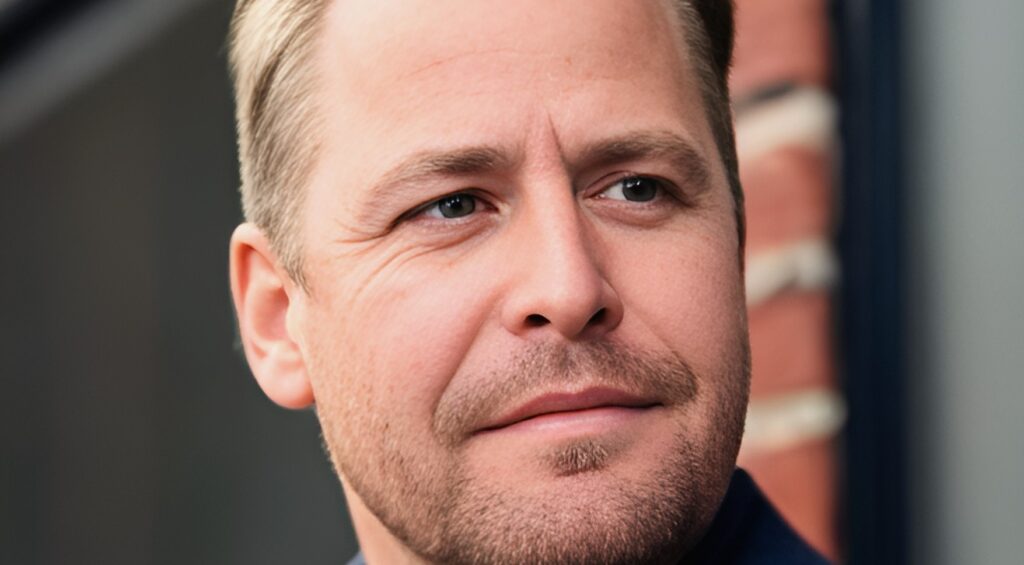
Damon Abraham represents a newer strand of psi research in which parapsychology meets artificial intelligence, machine-mediated experimentation and open-source research tools. His work ranges from remote-viewing methods and random event analysis to a large image database designed to improve free-response studies and clarify what makes an effective target.
- Psi research may advance not only through theory, but through better tools, cleaner datasets and more systematic target materials.
- An open-source repository evaluating about 3,000 images across eighteen psychological dimensions aims to identify what makes a strong free-response target.
- Abraham’s AI work treats large language models both as tools for frontier science and as possible subjects of psi experiments.
Life and Career
Damon T Abraham was born on 17 January 1978. He completed his PhD studies at the University of Denver, focusing his formal research on emotion, emotional self-regulation and mental construal. Abraham is actively involved in several parapsychological research projects, including novel machine-mediated techniques for remote viewing and random event generator data analysis. His research aims to improve the effectiveness and reliability of psi experiments and to explore the intersection of psi and technology. He has presented his work at the International Congress on Consciousness, the Society for Scientific Exploration (SSE), the International Remote Viewing Association (IRVA), the International Association for Near-Death Studies (IANDS) and the Parapsychological Association (PA).
Abraham serves on the SSE’s elected council and is a researcher at Meta. He was previously an adjunct professor of psychology at the University of Denver and a founder of the Consciousness Technologies student organisation there. He was a founding board member of Consciousness Hacking Colorado, a non-profit exploring the convergence of meditation, technology, psychedelics and spirituality.
Psi Research
Picture Database
Abraham is leading the development of a large open-source repository of images for use in free-response parapsychology experiments, in collaboration with Julia Mossbridge at the Institute for Love and Time (TILT) and Cédric Cannard and Helané Wahbeh at the Institute of Noetic Sciences (IONS). The project, sponsored by IONS, aims to study correlations between psi functioning and picture content by evaluating approximately 3,000 unique images across eighteen psychological dimensions. It may help researchers identify what makes an effective target image for parapsychological studies.1Abraham et al. (2023a).
Macro and Micro PK
In a joint presentation for the Society for Scientific Exploration and IRVA conference in 2018,2See here. Abraham shared preliminary findings from his exploration of macro-PK effects. Using a technique developed by Sean McNamara, Abraham trained himself to influence the movement of a foil object balanced on a needle within a glass enclosure. Throughout the experiments, data were collected from a nearby random number generator (RNG) and analysed for significant deviations from randomness. No statistical correlation between the foil movement and RNG output was observed, although patterns appeared to emerge at peak moments.
AI and Psi
Abraham has developed a growing interest in the intersection of artificial intelligence and psi research, both as a methodological tool and as a potential subject of investigation in its own right. In a 2023 paper co-authored with Adam M Curry, he introduced UnityGPT, a custom large language model trained on a corpus of frontier science literature, as an alternative to mainstream AI tools such as ChatGPT, which he argued inherit systematic biases against heterodox subjects through their reliance on mainstream internet sources such as Wikipedia.3Abraham & Curry (2023b).
At the IRVA conference in 2024, Abraham presented findings from a project funded by an IRVA research grant investigating whether artificial intelligence can exhibit psi functioning independently of human operators. The study used generative AI models and a random event generator to automate remote-viewing tasks, producing both image- and text-based transcripts. The image database developed in collaboration with IONS served as the target pool. Advanced embedding techniques were used for automated judging, with the aim of reducing human bias and improving replicability. The research raises the question of whether psi functioning, if real, is confined to biological systems or might extend to non-biological ones.4Abraham (2024).
Current Activity
Abraham serves as Principal Research Scientist at Entangled, a psi-based mobile application inspired by the Global Consciousness Project (GCP). The platform uses a quantum random event generator to analyse individual users’ and aggregated random data streams for deviations from randomness associated with meaningful personal and global events. Entangled seeks to provide a scalable infrastructure for both personal exploration and scientific investigation of psi at the population level.
Michael Duggan
Works Cited
Abraham, D. (2024). AI-RV: Automated protocols for remote viewing utilizing artificial intelligence. Presentation at the IRVA Conference, 2024. [Web page.]
Abraham, D., & Curry, A. (2023b). UnityGPT vs. ChatGPT: A comparative review for frontier scientists. Journal of Scientific Exploration 37/3, 440-47. [Full paper.]
Abraham, T.D., Mossbridge, J., Cannard, C., & Wahbeh, H. (2023a). Uncovering subjective meaning: Developing an open-sourced database of images for psi research and beyond. Proceedings of the 41st Annual Meeting of the Society for Scientific Exploration, 23-26. Indiana University, Bloomington, Indiana, USA.