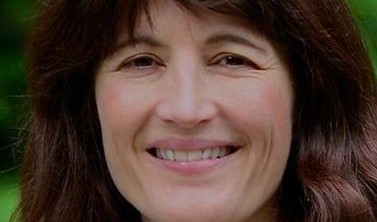
Clinical psychiatry, neuroscience and parapsychology come together in the work of Diane Hennacy, formerly Diane Hennacy Powell. A psychiatrist with training in neurology and internal medicine, Hennacy has conducted research connecting consciousness and psi with autism, trauma treatment, and the limits of conventional materialist models.
- Hennacy trained in neuroscience, internal medicine, neurology and psychiatry, and later joined the Harvard Medical School faculty.
- Her psi research focuses on non-verbal autistic children who may use telepathy as an alternative route to communication.
- In controlled sessions, Haley reportedly achieved strikingly accurate responses, prompting calls for larger blinded studies.
Life and Career
Diane M Hennacy was born 21 October 1955 in Sidney, Ohio, USA. She studied neuroscience at Ohio State University (OSU), graduating with a BS in 1977, then was enrolled in the OSU School of Continuing Education, 1977–79. After obtaining her MD from Johns Hopkins University in 1983, she received training from the same institution in neurology and psychiatry. She was on the faculty of the Harvard Medical School from 1987 to 1989. In 1996–97, she was a member of the La Jolla Group for Understanding the Origin of Humans, a think tank at the Salk Institute. She served as Director of Research at the John E. Mack Institute in 2005, after John Mack, a former Harvard colleague, died in 2004.1Powell (2024).
From 1984 until 2022, Hennacy published under the name Diane Hennacy Powell but in recent years she has reverted to Diane M Hennacy, which she prefers.
Hennacy’s medical licence was suspended in late 2010, she believes because of her book about ESP,2Powell (2009). but was reinstated at the following board meeting in January 2011. In 2024 she retired from psychiatric practice to focus on research full time.
Hennacy notes that the anomalous abilities of autistic savants share intriguing parallels with psi phenomena, and is currently investigating savants who also report psi experiences. She is collaborating with her brother, theoretical physicist and artificial intelligence expert Ken Hennacy, PhD, to create a model for understanding consciousness and the quantum world.
Hennacy is a signatory of a manifesto for a Post-Materialistic Science, together with Gary Schwartz and other active figures in parapsychology and frontier science. She has served as Treasurer of the professional Parapsychological Association in 2019–20, Secretary in 2020–21, and Treasurer again in 2021–23 and 2024–26.
Late in 2025, Hennacy founded the Hennacy Institute, a non-profit research organization based in Oregon dedicated to consciousness research, with a particular focus on neurodivergence as a window onto extraordinary cognition. The Institute hosts a growing research community, provides training and shares research on anomalous experiences and human potential. Hennacy’s next book, tentatively titled Wired for the Impossible, proposes a model of consciousness to account for anomalous phenomena including telepathy, precognition and OBEs. It is scheduled for release in the autumn of 2027.3Hennacy (2026). Unless otherwise referenced, information in this section derives from personal communications with Hennacy.
Telepathy and Autistic Children
Background
A major part of Hennacy’s psi research programme explores the potential telepathic abilities of autistic children. Savant skills, which are displayed by a significant minority of such children, demonstrate an ability to acquire knowledge and/or abilities without having either any exposure to them or the necessary skills. Hennacy and others have argued that such abilities support the contention that savant skills are actually a manifestation of underlying psi ability, which also entails acquisition of information that should otherwise be unavailable. She has focused on reports of telepathy in non-verbal autistic children who may employ telepathy as a default mechanism for communication. A strong desire to communicate with caregivers, combined with the severely disrupted language development seen in nonverbal autism, could lead them to use telepathy as a potential and alternative avenue.
Early Home Testing
In 2013, Hennacy travelled to India to evaluate autistic savants whose parents reported that, in addition to other savant skills, they were ‘precognitive’ and ‘telepathic’, obtaining significant results in informal conditions. Between 2013 and 2018, she tested three children in the US under controlled conditions, employing randomized words, letters, numbers, and pictures. The children’s answers were ‘astoundingly accurate’, although the sub-optimal protocol caused by filming constraints discouraged strong conclusions. Following publicity of the investigations, Hennacy has been contacted by dozens of parents and clinicians from around the world who have attested to potential telepathic communications with autistic children.
Formal Study
Despite the obvious parallels between autistic savant skills and psi ability, there has been no formal research in the area. In 2013, Hennacy received three homemade videos that appeared to show telepathic ability in a non-verbal nine-year-old autistic girl – Haley. This led to controlled sessions being carried out with Haley, each with a therapist involved with her care. Randomized numbers, sentences, fake words, and visual images were presented to the therapist out of view of Haley, who was asked to ‘read the therapist’s mind’. The therapist was asked to write verbal descriptions of the images that could be compared to Haley’s answers, which were registered by means of a pointer and letter stencil. Additionally, random numbers were generated for mathematical equations. Using time synchronized and time-stamped cameras, as well as several microphones, Haley achieved astounding hit rates, sometimes achieving 100% accuracy with image descriptions that contained up to nine letters. She was also extremely successful at picking up the numbers used during the equations testing.4Powell (2014).
Autistic children are extremely sensitive to changes in environment, requiring Haley to be tested in the same room as the therapist, with a divider between them. Hennacy is seeking funding to continue this work under conditions that would totally eliminate cueing, situating the therapist and child in separate rooms under blinded conditions. She plans also to use Quantitative Electroencephalography (QEEG) to investigate changes from baseline in brain activity in therapists and/or parents and their children during periods of highly accurate ESP activity.5Powell (2019).
The Telepathy Tapes
In late 2024, Hennacy’s research became the subject of The Telepathy Tapes, a podcast series hosted by filmmaker Ky Dickens. The series documented Hennacy’s testing of non-speaking autistic children and briefly surpassed The Joe Rogan Experience at the top of the Spotify charts, attracting widespread media coverage including pieces in Newsweek and Forbes.6IONS (2025). The podcast brought Hennacy’s work to a mass audience, generating a large influx of collaboration requests from scientists and contact from parents of non-speaking autistic children. It also attracted sharp sceptical criticism.
A 2025 article in the Skeptical Inquirer by Stuart Vyse argued that Hennacy’s studies failed to employ controls sufficient to rule out facilitated communication – a controversial technique in which a facilitator guides an individual’s hand or arm – as the source of the children’s responses, and questioned the evidential basis for claims of telepathy.7Vyse (2025). These criticisms are echoed by Jarry (2024). IONS (2025) agrees implicitly, pointing out that Hennacy has yet to publish her results in a peer-reviewed journal. Hennacy8Powell & Williams (2014). disputes these criticisms and promises to pursue more rigorously controlled studies.
Non-Parapsychological Activities
PTSD Neurofeedback Therapy
Current treatments for Post-Traumatic Stress Disorder (PTSD) have side effects and questionable efficacy. Working with injured war veterans, Hennacy developed individualized neurofeedback therapy to assist in returning brain function to neurological baselines,9See here. although she has not used it since the COVID-19 pandemic brought an end to the practice.
Screening Would-be Mothers
The placenta contains not only concentrated nutrients but also toxic materials ingested by the mother, which means it can deliver dangerous levels of organic compounds and heavy metals to the foetus. Hennacy is encouraging aspiring mothers to get tested for toxins and undergo evidence-based therapies for detoxing, such as taking binding agents and using infrared saunas. This would improve the life chances of babies and reduce the incidence of certain cancers and auto-immune disease in the mothers.10See here.
Treating Autism
Hennacy is collaborating with other experts in establishing centres-of-excellence throughout the US for diagnosing and treating autism, including the latest brain mapping technology and knowledge about the microbiome and gut-brain connection.11See here.
Selected Works
Book
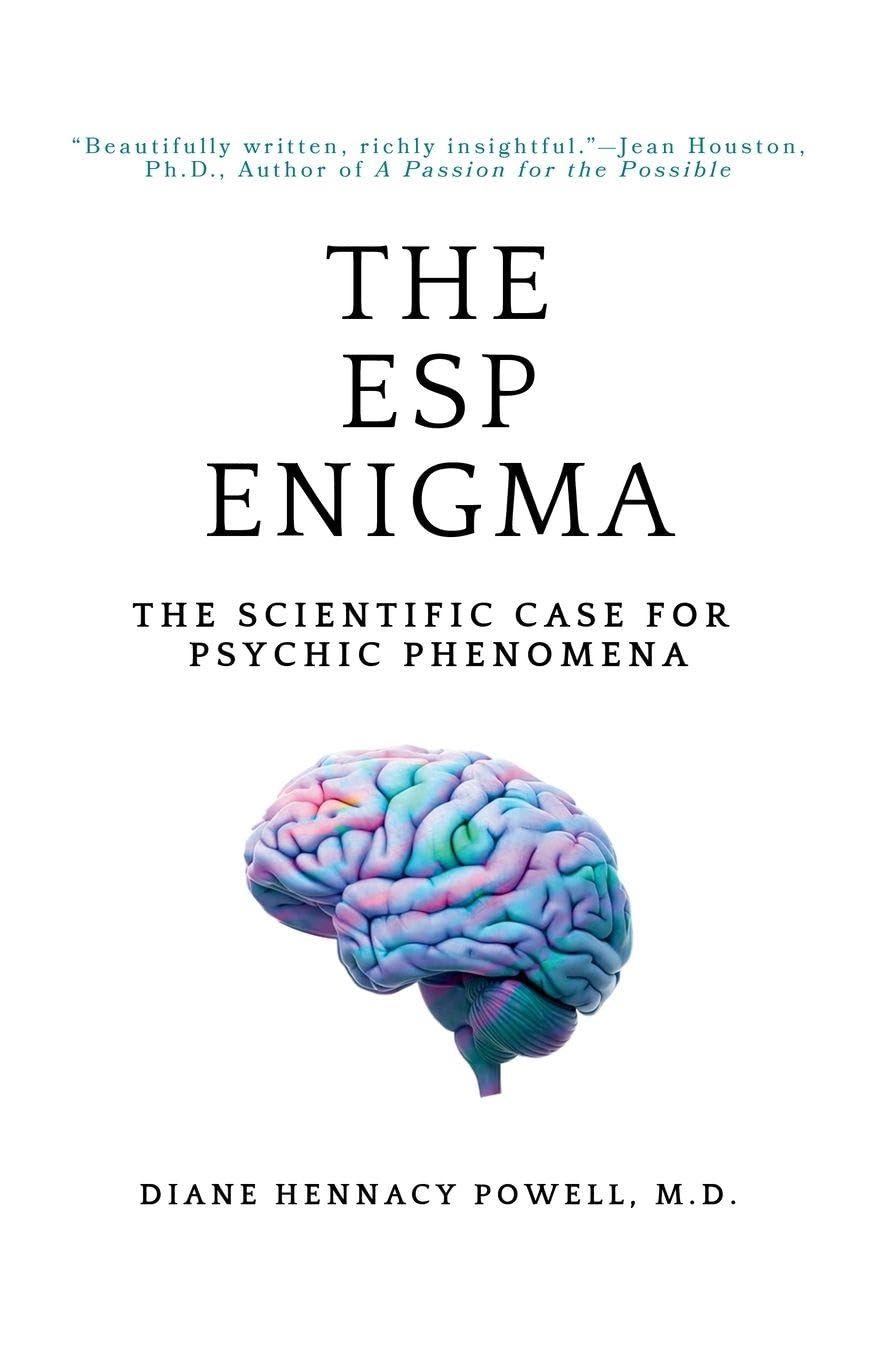
The ESP Enigma: The Scientific Case for Psychic Phenomena (2009). New York: Walker Publishing Company.
Articles
Additional articles by Hennacy are listed under Works Cited.
We are all savants (2006). Shift: At the Frontiers of Consciousness (Winter), 14-17.
The mystery of twin telepathy (2009). Shift: At the Frontiers of Consciousness (Spring), 20-25.
Psi and psychiatry: The quest for a new scientific paradigm (2012). In Seriously Strange: Thinking Anew about Psychical Experiences, ed. by S. Kakar & J. Kripal. New York: Penguin Books.
Evidence for telepathy in a nonverbal autistic child (2015). Mindfield 8/1, 30–32.
Autistics, savants, and psi: A radical theory of mind (2015). EdgeScience 23, 12–18.
Michael Duggan
Works Cited
Hennacy, D. (2026). About Dr. Diane. [Full text.] Web page.
IONS Science Team (2025, 14 January). Telepathy Tapes: Hoax or avenue for understanding psi phenomena. [Full text.] IONS. Blog post.
Jarry, J. (2024, December 13). The Telepathy Tapes prove we all want to believe: A new podcast documents a journalist’s journey to demonstrate that nonverbal autistic children have supernatural abilities. [Full text.] Office for Science and Society, McGill University, Montreal, Canada. Web page.
Powell, D.H. (2006). We are all savants. Shift: At the Frontiers of Consciousness (December-February), 14-17.
Powell, D.H. (2009). The mystery of twin telepathy. Shift: At the Frontiers of Consciousness (Spring), 20-25.
Powell, DH. (2009). The ESP Enigma: The Scientific Case for Psychic Phenomena. New York: Walker Publishing Company.
Powell, DH. (2012). Psi and psychiatry: The quest for a new scientific paradigm. In Seriously Strange: Thinking Anew about Psychical Experiences, ed. by S. Kakar & J. Kripal. New York: Penguin Books.
Powell, D.H. (2014). Evidence for telepathic communication in a nonverbal autistic child. Proceedings of the 57th Annual Parapsychological Association.
Powell, DH. (2015). Evidence for telepathy in a nonverbal autistic child. Mindfield 8/1, 30-32.
Powell, DH. (2015). Autistics, savants, and psi: A radical theory of mind. [Embedded in PDF.] EdgeScience 23, 12-18.
Powell, D.H (2024). Hacking the brain for psi: A review of Becoming Psychic: Lessons from the Minds of Mediums, Healers, and Psychics, by Jeff Tarrant. Journal of Anomalous Experience and Cognition 4/2, 276-81.
Powell, D.H., & Williams, B.J. (2024). A critical commentary on Jonathan Jarry’s (2024) article “The Telepathy Tapes prove we all want to believe”. [Full text.] Academia.edu.
Vyse, S. (2025). The Telepathy Tapes: A dangerous cornucopia of pseudoscience. Skeptical Inquirer 49/3 (May/June).