
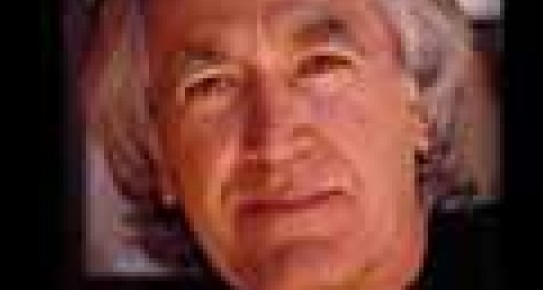
Larry Dossey (1940–2026) was an American physician and author of books about psychic experiences, healing and nonlocal consciousness. The article describes how anomalous cures, intercessory prayer research and critiques of scientism led Dossey to challenge brain-bound and strictly materialist models of human consciousness and awareness.
- Dossey became especially identified with intercessory prayer and argued that review evidence, while disputed, justified serious clinical attention to distant healing.
- He used the ‘filter hypothesis’ to argue that the brain constrains rather than produces consciousness.
- Dossey was both a populariser and a polemicist, defending controversial psi findings against what he saw as dogmatic materialism.
Life and Career
Larry Dossey was born just before midnight on 27 September 1940, in Groesbeck, Texas, USA, on a small share-cropper cotton farm. His identical twin brother Garry was born shortly after midnight on 28 September, so they had different birthdays.
The Dossey brothers later attended the University of Texas at Austin, the first in their family to attend college. They then went together to the Southwestern Medical School in Dallas, but Garry chose dentistry whereas Larry pursued a career as an MD. He completed his degree in 1967 and, following an internship, served for a year with the US Army medical corps in Vietnam, where he was decorated for valour and awarded the Bronze Star, the Air Medal, the Army Commendation Medal, the National Defense Service Medal, the US Vietnam Service Medal and the Vietnam Campaign Medal. He spent his second year in the military, 1969–70, at Fort Carson in Colorado Springs, Colorado.
Dossey completed his internal medicine residency, 1970–72, at the Dallas Veterans Administration Hospital and Parkland Memorial Hospital in Dallas. During a a rotation in the critical care unit at Baylor University Medical Center, he met a nurse, Barbara Montgomery, whom he married in 1972.
In 1974, Dossey and eight other general and specialty internists founded the Dallas Diagnostic Association (DDA) and began their practice at the newly opened Medical City Dallas Hospital. Within the DDA, Larry established a biofeedback department, making it the city’s first medical practice to do so. The DDA grew to over twenty members by 1988, when Dossey retired from clinical practice to devote full time to research and writing. The DDA later became part of the Baylor Health Care System and later, Baylor Scott and White Health Care System. It has now been in existence for more than 50 years.1Dossey, B. (2026).
Dossey was the co-chairman of the Panel on Mind/Body Interventions, National Center for Complementary and Alternative Medicine, National Institutes of Health, 1992–95. He was co-founder and executive editor of the peer-reviewed journal Alternative Therapies in Health and Medicine, 1995–2004, and co-founder and executive editor of the internationally recognized peer-reviewed journal EXPLORE: The Journal of Science and Healing, 2005–21.
Dossey was an inspired leader and visionary in the development of complementary/alternative medicine and its integration with conventional medicine. As his widow Barbara expressed it in her online obituary,
Bringing the experience of a practicing internist and the soul of a poet to the discourse, Larry offered a panoramic insight into the nature and future of medicine. With his clear understanding of the role of consciousness and spirituality in helping humans to flourish, he became an internationally influential advocate and staunch supporter of this new paradigm.
Dossey died at 85, peacefully at home in Santa Fe, New Mexico, on 25 August 2026.2Dossey, B. (2026).
Writings
Intercessory Prayer
In a 2005 paper, Dossey and David Hufford systematically address twenty criticisms of intercessory prayer experiments in clinical research. They analysed eight major reviews examining prayer and distant healing in humans, four of which yielded statistically significant results, with most showing generally positive outcomes. Criticisms ranged from methodological concerns about measuring prayer variables, such as intensity and quality, to philosophical objections regarding prayer’s supernatural nature. Theological criticisms included claims of blasphemy, while practical concerns focused on establishing controls free of extraneous prayer by family members.
The authors point out that psychotherapy research faces similar measurement challenges yet has gained acceptance. They emphasize that prayer researchers study consciousness and intentionality rather than theology and cite quantum physics developments suggesting nonlocal effects may not violate natural laws. They conclude that prayer research can proceed within established scientific principles.3Dossey & Hufford (2005).
Healing Stages
Dossey has examined distant healing through three phases: the healer’s meditative state, the ‘nonlocal gap’ between healer and recipient, and the recipient’s response. While conventional explanations describe the first and third phases, they cannot account for the nonlocal gap where healing effects traverse distances without identifiable mechanisms.
Dossey critiques imprecise terminology, particularly ‘energy’ and ‘quantum’ concepts used without scientific foundation, arguing this alienates mainstream researchers. He advocates rigorous vocabulary while acknowledging ignorance about consciousness mechanisms. Theoretical hypotheses include Rauscher and Targ’s complex Minkowski space models and May’s Decision Augmentation Theory.
Dossey argues that demonstrating nonlocal consciousness effects would fundamentally transform scientific understanding, as nonlocal consciousness implies infinitude in space and time.4Dossey (2002).
Cellular Memory, NDEs and Reincarnation
Following cases of transplant recipients reportedly acquiring donor characteristics, the ‘cellular memory’ hypothesis emerged, suggesting memories and traits are stored throughout the body’s cells rather than only in the brain. Sceptics attribute this concept to popular media rather than scientific evidence, questioning why heart transplants specifically generate such reports while kidney transplants and xenografts do not.5Carroll (n.d.). Dossey points out that the phenomenon parallels near-death experiences, which gained recognition only after becoming socially acceptable to discuss: the transplant experiences essentially represent modern reincarnation concepts, where personality traits transfer between individuals.
Meanwhile, claims that brains produce consciousness remain unsubstantiated. Dossey proposes nonlocal mind as an alternative explanation – consciousness that is infinite in space and time rather than confined to specific brains or bodies, offering a more comprehensive framework for understanding these anomalous experiences.6Dossey (2008).
PEAR Psychokinesis Findings
Dossey has examined the Princeton Engineering Anomalies Research (PEAR) programme’s investigation of consciousness-machine interactions over twenty-five years, positioning it as evidence for nonlocal mind theory. He critiques materialistic perspectives that reduce consciousness to neural activity, citing philosophers Searle and Fodor who acknowledge current ignorance about consciousness mechanisms.
The PEAR database demonstrates statistically significant effects of human intentions on physical devices, complementing distant healing research where eleven of twenty controlled trials showed positive results. Dossey again argues that nonlocal mind explains these phenomena better than conventional theories and offers benefits such as reduced death anxiety, enhanced ethical behaviour through recognition of shared consciousness, and transformation of medical practice from ‘Temporal Medicine’ focused on mortality toward ‘Eternity Medicine’ acknowledging consciousness continuity.7Dossey (2007).
Daryl Bem and Precognition
Dossey critiqued the hostile scientific reaction to Cornell psychologist Daryl Bem’s 2011 study demonstrating statistically significant precognitive effects, which elicited comments such as ‘craziness’ and ‘an assault on science’. Dossey argues this represents materialistic dogma rather than scientific scepticism, noting that quantum physicists like Brian Josephson and Gerald Feinberg see no fundamental physics violations in precognitive phenomena. He contrasts this with public readers’ thoughtful responses and surveys showing 55% of natural scientists consider ESP plausible. For Dossey, the controversy exemplifies science’s transformation into ‘scientism’, rigid adherence to materialistic assumptions that paradoxically undermines genuine scientific inquiry.8Dossey (2011).
Consciousness Filter Hypothesis
Dossey has argued in favour of the brain-as-filter hypothesis that was originally proposed by figures like Henri Bergson and William James, suggesting the brain normally limits rather than produces consciousness. According to this model, consciousness is not manufactured by the human brain but is filtered or limited by it to the level required for biological survival. He points out that creative individuals throughout history have developed methods to bypass this filter mechanism. Poet James Merrill used Ouija boards to access what he described as communications with spirits, while French psychic Hélène Smith painted acclaimed religious works during altered states. Institutionalized artist Adolf Wölfli produced extraordinary volumes of integrated art, music, and literature despite severe psychiatric conditions and minimal resources.
Dossey contrasts this openness with ‘negative hallucinations’ – the tendency to screen out evidence contradicting materialistic assumptions about consciousness. He cites PEAR findings that support nonlocal consciousness effects and quotes philosophers like Robert Almeder questioning claims that brains ‘secrete consciousness in the same way that glands produce hormones.9Dossey (2012).
Consciousness as Fundamental Model
Dossey examines the Triadic Dimensional Distinction Vortical Paradigm (TDVP) developed by neuropsychiatrist Vernon Neppe and mathematician Edward Close, who received the 2016 Whiting Memorial Award for advancing scientific understanding. TDVP proposes that Space, Time, and Consciousness (STC) are fundamental, separate yet interconnected dimensions, challenging mainstream materialism that views consciousness as brain-produced. The paradigm, which involves nine spinning dimensions and introduces ‘gimmel’, a massless, energyless property representing consciousness, is said to explain previously unsolved physics problems like the Cabibbo angle. Dossey argues this consciousness-centered model addresses humanity’s environmental crisis by countering materialistic nihilism that views humans as meaningless. He suggests TDVP’s recognition of consciousness as fundamental may prove essential for planetary survival.10Dossey (2017).
Selected Books
One Mind
In One Mind: How Our Individual Mind Is Part of a Greater Consciousness and Why It Matters. (2000), Dossey proposes that all individual minds are part of an infinite, collective dimension called the One Mind, which explains diverse phenomena from creative breakthroughs to remote healing and communication with other species. By means of engaging stories and research, he presents this consciousness theory as offering renewed hope for humanity to successfully confront current global challenges through enhanced empathy and collective awareness.11Dossey (2000).
The Power of Premonitions
The Power of Premonitions: How Knowing the Future Can Shape Our Lives was published in 2009. Dossey describes real-life episodes where accidents and disasters were seemingly previewed before their occurrence in dreams and visions and looks at the scientific evidence for precognition, before discussing the benefits of cultivating premonitions and their place in our society.12Dossey (2009).
Reinventing Medicine
In Reinventing Medicine: Beyond Mind-Body to a New Era of Healing (2014), Dossey presents scientific evidence for Era III medicine, which incorporates spiritual dimensions such as prayer, dreams, and intuition alongside conventional and mind/body approaches. He demonstrates how the ‘nonlocal mind’ can revolutionize healing through spiritual tools that have measurable effects on health outcomes, forever changing the practice of medicine.13Dossey (2014).
Michael Duggan
Works Cited
Carroll, R.T. (n.d.). Cellular memory. The Skeptic’s Dictionary. [Web page]
Dossey, B. (2026). Larry Dossey: September 27, 1940 – August 25, 2026. [Full text.] Web page.
Dossey, L. (2000). Reinventing Medicine: Beyond Mind-Body to a New Era of Healing. New York: HarperCollins.
Dossey, L. (2002). How healing happens: Exploring the nonlocal gap. Alternative Therapies in Health and Medicine 8/2, 12-16, 103-10.
Dossey, L. (2007). PEAR lab and nonlocal mind: Why they matter. EXPLORE: The Journal of Science and Healing 3/4, 347-54.
Dossey, L. (2008). Transplants, Cellular Memory and Reincarnation. EXPLORE: The Journal of Science and Healing 4/5, 285-93.
Dossey, L. (2009). The Power of Premonitions: How Knowing the Future Can Shape Our Lives.New York: Dutton.
Dossey, L. (2011). Why are scientists afraid of Daryl Bem? EXPLORE: The Journal of Science and Healing 7/3, 127-37.
Dossey, L. (2012). The brain as filter: On removing the stuffing from the keyhole. EXPLORE: The Journal of Science and Healing 8/6, 317-22.
Dossey, L. (2014). One Mind: How Our Individual Mind Is Part of a Greater Consciousness and Why It Matters. Carlsbad, California, USA: Hay House. (Now Penguin Random House).
Dossey, L. (2017). Consciousness and TDVP: Welcome to a new world. EXPLORE: The Journal of Science and Healing 13/2, 1-9.
Dossey, L., & Hufford, D.J. (2005). Are prayer experiments legitimate? Twenty criticisms. EXPLORE: The Journal of Science and Healing 1/2, 109-17.


