
Some spontaneous reincarnation cases suggest more than passive rebirth. In them, people nearing death appear to announce where they will return, which family they will join, what sex they will be, or what signs they will provide afterwards. Such cases raise unsettling questions about choice, continuity and pre-birth intention.
- Evidence may include announcing dreams, departure visions, remembered intentions, birthmarks and later recognitions by the child.
- The article distinguishes limited planning in investigated cases from New Age claims that entire lives are scripted in advance.
- Reported examples include Pacific Northwest tribal cases, the Dalai Lama succession tradition and several gender-planning cases.
Contents
Definition
A feature of some reincarnation cases is that the person of the previous life had declared one or more intentions for their next incarnation, such as the family they planned to be born into or their gender, or to remember their previous lives, talk about them and/or provide proof in the form of memories or birthmarks. In certain cases they appeared to be successful in this, to judge by evidence from their subsequent life, such as explicit memories of the previous life, behavioural signs, birthmarks, or other physical signs.
There are other types of evidence for free choice and some degree of planning in reincarnation. However, there is no evidence in spontaneous investigated cases of ‘life planning’ in the New Age sense, in which every aspect of a life is scripted in advance, even apparent accidents.1Matlock (2019), 172.
In announcing dreams, the person as a discarnate, subsequent to death, declares to a future relative, usually the mother-to-be, their intention(s), usually to become her child. Plans can also be announced in departure dreams (wherein a discarnate tells their previous family where they will be reborn), in visions or apparitions (of the discarnate person declaring their intentions) via mediums, and other ways.
The Dalai Lama
The most famous case of planned incarnations in series is that of the Dalai Lama of Tibet, currently Tenzin Gyatso, who claims to be living his fourteenth life in this role. He has announced that around 2025, when he is about ninety years of age, he will decide in consultation with a high council of other lamas whether the institution of the Dalai Lama will continue or give way to democracy. If the former, he promises to leave clear plans as to how his reincarnation will be recognized. On his website he explains the history of the institution, how the reincarnations are recognized, and how outside powers endanger Tibet’s culture.2Dalai Lama (2011).
Other pre-eminent Tibetan lamas, such as the Panchen and Kharmapa Lamas, are similarly claimed to be series of planned reincarnations.
Cases
Pacific Northwest Tribal Cases
The Tlingit are an indigenous First Nation that lives in southeastern Alaska, USA, and adjoining parts of Canada. The Tlingit maintain a strong belief in reincarnation, and this is integrated thoroughly in their social customs. Traditionally, people repeatedly return to the same family or clan when reborn, and every new baby is identified as their previous incarnation through announcing dreams, birthmarks, behavioural similarities and shamanic divination. The baby is then given the same name as the previous incarnation.3Veniaminov (1840), cited in Stevenson (1974), 219-20.
When studying the Tlingit, Ian Stevenson found a higher prevalence of reincarnation cases per capita than in any other culture. Of 43 cases he studied, he found nine in one five-hundred-person Tlingit village, all younger than thirty, leading him to suspect that his estimate of one in 65 people in the village was low.4Stevenson (1966), 230 n2. Ten cases of the 43 cases involved planned reincarnations, including eight in which the person named, prior to death, their future parents.5Stevenson (1966), 240.
Corliss Chotkin Jr
A Tlingit man whose English name was Victor Vincent6Contemporary Tlingit are given both an English name and a Tlingit name. was very close to his niece, who had married a man with the English name of Corliss Chotkin. About a year before his death in 1946, he told her, ‘I’m coming back as your next son. I hope I don’t stutter as much as I do now. Your son will have these scars.’ He showed her scars on his back and nose, both the results of surgery, as evidenced by the visible stitch marks. ‘I know I will have a good home. You won’t be going off and getting drunk’, he added, an allusion to a number of alcoholics in his family.
Corliss Chotkin Jr. was born about eighteen months after Vincent’s death, and had birthmarks corresponding exactly to his scars in shape and location; some stitch marks were still visible in his teens. As an infant of thirteen months he asked his mother ‘Don’t you know me? I’m Kahkody” – Vincent’s Tlingit name, which Corliss was then given. He recognized several relatives and associates of Vincent, and remembered two episodes in his life. Behaviour similarities included stuttering, left-handedness, pious Christianity, love for boating, and aptitude for engine repair.7Stevenson (1974), 259-63.
William George Jr
William George Sr was a Tlingit fisherman who, undecided about reincarnation, decided on an experiment. He told his son Reginald, ‘If there is anything to this reincarnation business, I will come back as your son, and you will recognize me because I will have birthmarks like the ones I now have,’ pointing out three large moles on his left arm and shoulder. At the age of sixty, he asked his son to save his gold watch for him. Several weeks later he died in a fishing accident. Nine months after that, his daughter-in-law gave birth to a boy with three moles in precisely the same places as the late William, and accordingly her son was named William George Jr. He had no explicit memories but claimed the gold watch as his as soon as he saw it.8Stevenson (1974), 231-41.
Bruce Peck
Richard Peck was of the Haida First Nation, which is located near the Tlingit. Its people also believe in reincarnation, though the belief is not as strongly developed as the Tlingit’s. A successful fisherman, Peck disliked the onerousness of the work. He told relatives and friends that ‘he would come back with only one hand so that he would not have to work so hard’, sometimes accompanying this with a gesture symbolizing a knife chopping off one of his hands at the forearm. He was right-handed. Peck died after falling into the water from his boat, either of drowning or a heart attack. About eight months later, his grandson Bruce Peck was born with a forearm stump rather than a right hand. The pregnancy had been normal and drug-free, the parents were not related, no one else in the family had birth defects, and Bruce had no other congenital anomalies. Peck recalled no explicit past-life memories, but showed two apparently conflicting behavioural tendencies, as are often seen in reincarnation cases: a phobia of water and a longing for fishing. He enjoyed a sedentary career in administrative positions.9Stevenson (1997b), 1361-66.
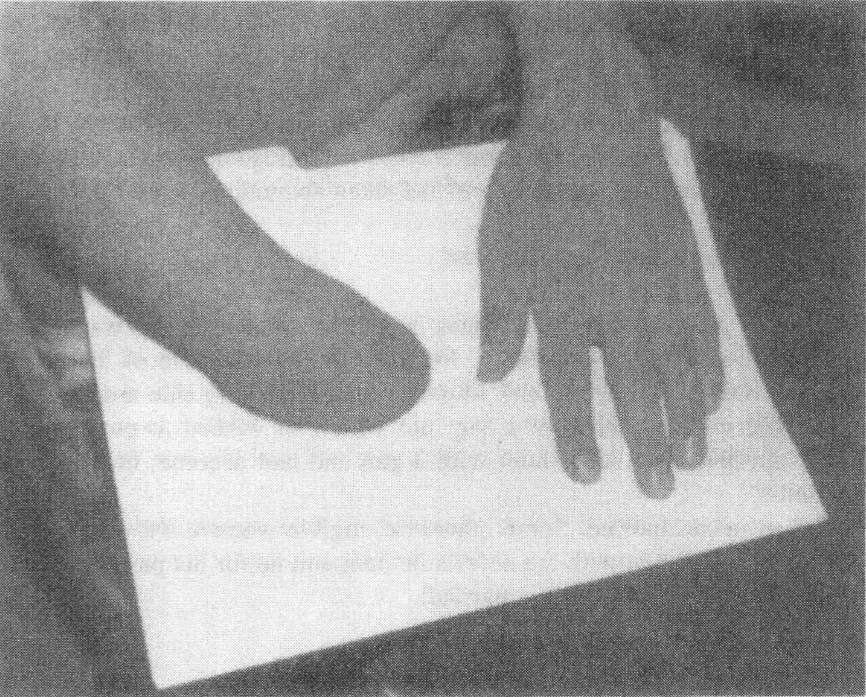
Fig 1: Bruce Peck’s forearms as they appeared when he was 32 years old. (Photo: Ian Stevenson10Stevenson (1997b, 1362.))
Marta Lorenz
Maria Januaria de Oliveiro, better known as Sinhá, was born in southern Brazil around 1890. Frustrated in love, she committed suicide at the age of 28 by catching cold which turned to pneumonia. On her deathbed she told her best friend Ida Lorenz, ‘When reborn and at an age when I can speak on the mystery of rebirth in the body of the little girl who will be your daughter, I shall relate many things of my present life, and thus you will recognize the truth.’ Ten months later, Ida gave birth to Marta Lorenz, who identified herself as having been Sinhá. True to her promise, she related many memories. This might have been the most well-evidenced reincarnation case ever documented, had copious notes made her father not been lost. A full summary can be found here.11Stevenson’s full case report can be found in Stevenson (1974), 183-203.
Wijeratne Hami
This Sri Lankan boy recalled the life of a man, Ratran Hami, who had murdered his fiancée and been hanged in punishment. Shortly before his execution, he told his brother Tileratne Hami that he would be reborn as his son. Seven months later Wijeratne was born to Tileratne’s wife and went on to remember many details of Ratran’s life. A full summary of the case can be found here.12Stevenson’s full case report can be found in Stevenson (1997b), 1366-73.
Suzanne Ghanem
Among all reincarnation cases, Stevenson considered this Lebanese Druze girl remembered the greatest number of proper names. She also remembered a six-digit telephone number with the one slight mistake of two adjacent digits transposed. Her apparent previous incarnation Saada Hatoum, while afflicted with terminal heart disease, had told her husband ‘she was going to be reincarnated and have lots to say about her previous life’.13Shroder (1999), 95. A full summary of the case can be found here.
Gender Planning Cases
In the following two cases, the previous incarnations were heard to express a wish to reincarnate as the other sex.
Paulo Lorenz
Emilia Lorenz, sister of Marta Lorenz, was an excellent seamstress who attempted suicide several times, finally succeeding at the age of nineteen. According to Stevenson, ‘she felt constrained as a girl, and some years before her death she told several of her brothers and sisters, but not her parents, that if there was such a thing as reincarnation she would return as a man’.14Stevenson (1974), 203. She made her next-life preference clear three separate times in mediumship sessions, telling her mother ‘Mamma, take me as your son. I will come as your son.’15Stevenson (1974), 204.
Paulo Lorenz was born about a year and a half later even though his mother, who had borne twelve children, was not expecting another. He related many memories of Emilia’s life, showed great skill at sewing without having to be taught, and also insisted on wearing girls’ clothes and jewellery, apparently acting on habit rather than stated preference, though eventually he grew out of it and began wearing boys’ and men’s attire. Masculinity did not bring him happiness enough, unfortunately, to prevent him from committing suicide at the age of 43.16Stevenson (1974), 203-15.
Maung Aung Cho Thein
Maung Aung Cho Thein and Maung Aung Ko Thein are Myanmarese twins who were identified as having previously been, respectively, Daw Hla May, a Myanmarese woman, and Sunder Ram, an Indian rice farmer who had sold Daw Hla May rice. It was reported to Stevenson that Daw Hla May, who had been single all her life, had told a female relative prior to her death that she wanted to return as male in her next life, being ‘fed up with being a woman’, and noting that ‘women have excessive responsibilities in looking after men’.17Stevenson (1997), 2036. In an announcing dream experienced by the twins’ mother to be, Daw Hla May jumped forcibly into bed with her and her husband. The twins retained few explicit memories, but showed many behaviours related to their previous lives and also had past-life related birthmarks. Similar to Paulo Lorenz, Maung Aung Cho Thein insisted on wearing female clothes when young, but eventually grew out of it.18Stevenson (1997), 2034-2041.
Historical Account
Dutch sinologist JJM De Groot gives an account of a planned reincarnation case dating to the seventh century CE in a book published in 1901. It concerns a child of a family named Ma who died in 649 CE. On his deathbed, he said, ‘I, your child, have connections with Chao Tsung’s family; I shall become his grandson after my death’. (His uncle was a monk whose lay surname was Chao.) His mother decided to try an experimental birthmark (a mark made on a dying person or corpse in the hope that their next incarnation will bear a similar mark), making a black spot on the child’s elbow. The mother-to-be had an announcing dream in which a child resembling the deceased child of the Ma family said ‘I must become your descendant.’ She soon became pregnant, and when the infant was born a black spot was found on his elbow. At the age of three he was able to find his way unaided to the Ma house, where he declared he had formerly lived.19De Groot (1901), 144, quoted in Matlock (2019), 88.
It should be noted that this case was not investigated and is now unverifiable. However, it is of interest, and is possibly evidential, because of multiple features that are typical of investigated cases found in reincarnation research literature: an experimental birthmark; an announcing dream had by a woman who had known the individual making the announcement, shortly followed by pregnancy; the ability of the child to find his way to the previous home; and the child recalling having been resident there at the typical peak age of past-life memory, three years. It also apparently a planned reincarnation, similar to the investigated cases above.
KM Wehrstein
Works Cited
Dalai Lama (2011). Reincarnation. [Web page.]
De Groot, J.J.M. (1901). The Religious System of China (Vol. 4). Leiden, the Netherlands: Brill.
Matlock, J.G. (2017). Reincarnation accounts from before 1900. Psi Encyclopedia. [Web page.]
Matlock, J.G. (2018). Announcing dreams and related experiences. Psi Encyclopedia. [Web page.]
Matlock, J.G. (2019). Signs of Reincarnation: Exploring Beliefs, Cases, and Theory. Lanham, Maryland, USA: Roman & Littlefield.
Shroder, T. (1999). Old Souls: Compelling Evidence from Children Who Remember Past Lives. New York: Simon & Schuster.
Stevenson, I. (1966). Cultural patterns in cases suggestive of reincarnation among the Tlingit Indians of southeastern Alaska. Journal of the American Society for Psychical Research, 60, 229-43. [Republished as a chapter in Amerindian Rebirth: Reincarnation Belief Among North American Indians and Inuit (1994), ed. by A. Mills & R. Slobodin. Toronto: University of Toronto Press.]
Stevenson, I. (1974). Twenty Cases Suggestive of Reincarnation (2nd ed., rev.). Charlottesville, Virginia, USA: University Press of Virginia.
Stevenson, I. (1997a). Reincarnation and Biology: A Contribution to the Etiology of Birthmarks and Birth Defects. Vol. 1: Birthmarks. Westport, Connecticut, USA: Praeger.
Stevenson, I. (1997b). Reincarnation and Biology: A Contribution to the Etiology of Birthmarks and Birth Defects. Vol. 2: Birth Defects and Other Anomalies. Westport, Connecticut, USA: Praeger.
Stevenson, I. (2001). Children Who Remember Previous Lives: A Question of Reincarnation (rev. ed.). Jefferson, North Carolina, USA: McFarland.
Veniaminov, I.E.P. (1840). Reports About the Islands of the Unalaska Districts. St. Petersburg, Russia: Imperial Academy of Sciences.