
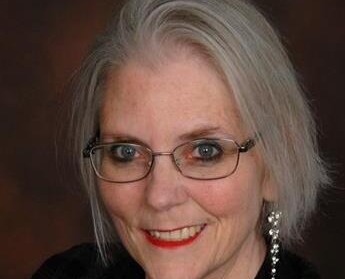
Modern organised scepticism has often combined media work, online editing, and undercover investigation. Susan Gerbic became a visible example of that activist style through campaigns against alleged psychic fraud, the building of sceptical communities, and coordinated efforts to shape public information about what she regards as ‘pseudoscientific’ claims.
- Gerbic founded Guerrilla Skepticism on Wikipedia in 2010 to organise editors working on science and scepticism-related pages.
- Her sceptical activism has prominently targeted psychic mediums whom she regards as deceptive.
- She has received awards from sceptical organisations including the Balles Prize for Critical Thinking and the Philip J. Klass Award.
Life and Career
Susan Gerbic is an American studio photographer who exposes what she believes to be fraudulent claims involving paranormality. She is the co-founder of Monterey County (California) Skeptics (MCS); a columnist for the Skeptical Inquirer magazine; and a fellow of the Committee for Skeptical Inquiry (CSI), successor to the Committee for the Scientific Investigation of Claims of the Paranormal (CSICOP).
Gerbic was born on 8 August 1962 in Salinas, California, USA, the youngest child in a Southern Baptist family, although she became an atheist early in life. She attended elementary and high school in Salinas and obtained two-year Associate of Arts (AA) degrees in general studies in 1993 and history in 1998 from Hartnell College in Salinas. In 2002, she was awarded a Bachelor of Arts (BA) in Social and Behavioral Studies by California State University, Monterey Bay.1Hale (2018).
Gerbic married Robert Forsyth in 1983. She had two sons with him, but the marriage ended in 2002.2Wikiwand (n.d). Later in life, she became Mark Edward’s partner, and credited him with coining the phrase ‘Grief Vampires’ (i.e., mediums).3Gerbic (2024).
In a 2013 interview, Gerbic described herself as ‘a 50 year-old professional portrait photographer who specializes in people who don’t want their portraits taken’.4Clint (2013). She worked at Lifetouch, a portrait studio in a mall in Salinas, California, from 1982 until its closure in 2016. 5Wikipedia (n.d.-b).
Guerrilla Scepticism
Monterey County Skeptics
Gerbic co-founded Monterey County Skeptics in 2007 after connecting with local sceptics through the James Randi Educational Foundation (JREF) online forum.6Clint (2013).
Facebook Stings
Gerbic and a group of volunteers calling themselves ‘Guerrilla Skeptics’ set up fake Facebook profiles and visit mediums, records them claiming to be receiving messages from the subjects of the profiles, and post the sessions online.7Hitt (2019).
It goes like this: Gerbic targets a high-profile, well-reviewed medium who is appearing at a show or reading. She assembles a heavily disguised team (often including her boyfriend Mark Edward, famous for the YouTube-chronicled punking of the late medium Sylvia Browne). She creates false identities and backstories, false social media profiles and false photos of “dead” relatives [on Facebook]. Then she names the sting (our favorite is “Operation Tater Tot”). When the “psychic” takes the bait, the fraud is revealed. That revelation is then pushed through skepticism outlets on the web, and leads to subsequent protests outside other venues. 8Hale (2018).
In 2019 the New York Times featured Gerbic and her Guerrila Skeptics involvement in two psychic stings, one of which captured the psychic reading Facebook pages created by Gerbic, claiming that he was getting the information from the dead.9Center for Inquiry (n.d.); Hitt (2019)
Guerrilla Skepticism on Wikipedia
A turning point for Gerbic came on a cruise sponsored by the JREF, during which software engineer Tim Farley spoke about editing Wikipedia to impose sceptical views. Gerbic says,
I thought it was interesting, but doubted that I could ever figure out how to edit (I’m not good with instructions). I took a photo of Brian Dunning on that cruise and wondered if I could add it to his Wikipedia page. Eventually I figured it out, but it still took me a while to realize the power of Wikipedia. I corresponded with Tim for a bit while he tried to instruct me on how to edit and eventually I caught on. I gave a lecture at a SkeptiCamp in Fort Collins, Colorado on editing Wikipedia, which led to another lecture in Berkeley, CA at SkeptiCal and then I gave a paper presentation at The Amazing Meeting (TAM) 9. People wanted to join up, so I started a blog. We used hidden Facebook groups for the majority of our communications, and have steadily grown.10Clint (2013).
Gerbic founded Guerrilla Skepticism on Wikipedia (GSoW) in May 2010. The group trains people to edit Wikipedia pages it considers pseudoscientific. By 2018, GSoW had grown to include 120 volunteer editors worldwide, targeting particularly high-traffic pages on topics such as UFOs, homeopathy, vaccines and flat-earth theories, but also psychics and parapsychology. The effort has involved the creation or major rewriting of more than 630 articles, which ‘has empirically improved verifiability on pseudoscience entries by increasing the proportion of citations from credible scientific literature’.11Matsakis (2018).
About Time
In 2018, Gerbic founded About Time, a non-profit organisation that manages her various sceptical initiatives. About Time is focused especially on combatting ‘Grief Vampires’ (i.e., mediums) but covers the range of her sceptical activism.
As a columnist for Skeptical Inquirer, Gerbic has written numerous articles describing her achievements and convictions, including ‘It’s Time to Talk About Psychic Medium Dean’12Gerbic (2026a). and ‘Operation Banana Cream Pie’13Gerbic (2026b). She has received numerous awards for her approach to the anomalous and her ‘critical thinking and scientific understanding’ (see below). On her Facebook page she confesses that she is ‘terrified of spontaneous human combustion’, a possibility Wikipedia places firmly in the category of the paranormal.
Through her various writings and interviews, it becomes clear that Gerbic – like many self-professed sceptics – has little appreciation for the scientific values she purports to uphold. This is crystallised in a video in which she discusses Robert McLuhan’s Randi’s Prize.14McLuhan (2010/2019). See Gerbic’s video here and, for further discussion of McLuhan’s portrayal of ‘sceptical extremism’, Taylor (2011); Taylor (2013a); and McLuhan (2013). She dislikes philosophy and has difficulty seeing shades of grey between what she considers ‘scientific’ and ‘pseudoscientific’. Things are one way or another for her, with no in-between.
Response
Gerbic’s reception by the sceptical community has been overwhelmingly positive, but not surprisingly, those targeted by her see things differently. One of the Wikipedia pages Gerbic and her team have edited is that of biologist Rupert Sheldrake, who reported that ‘a commando squad of skeptics captured the Wikipedia page about me. They have occupied and controlled it ever since, rewriting my biography with as much negative bias as possible, to the point of defamation’.15Sheldrake (2013); see also Taylor (2013b) and Weiler (2013).
The Guerrilla Skeptics are well trained, highly motivated, have an ideological agenda, and operate in teams, contrary to Wikipedia rules. The mastermind behind this organization is Susan Gerbik [sic]. … She now has over 90 guerrillas operating in 17 different languages. The teams are coordinated through secret Facebook pages. They check the credentials of new recruits to avoid infiltration. Their aim is to ‘control information’, and Ms. Gerbik [sic] glories in the power that she and her warriors wield. They have already seized control of many Wikipedia pages, deleted entries on subjects they disapprove of, and boosted the biographies of atheists.16Sheldrake (2013), quoted in Association for Skeptical Investigation (2014).
Clearly, it is not only in the deployment of teams that Gerbic is in violation of Wikipedia rules. Wikipedia’s policy states: ‘A conflict of interest (COI) occurs when editors use Wikipedia to advance the interests of their external roles or relationships.’17Wikipedia (n.d.-a). Gerbic has made no attempt to justify the apparent violation nor, like others who have acted in support of Wikipedia’s evident materialist bias18McLuhan (2010/2019)., has she suffered any consequences for it.
Works
Gerbic has published over 170 articles as a columnist for Skeptical Inquirer. These articles can be accessed here.
Awards and Honours
- “In the Trenches” award at the Committee for Skeptical Inquiry‘s 2012 Skeptic’s Toolbox workshop
- “James Randi Award for Skepticism in the Public Interest” at The Amaz!ng Meeting 2013
- 2017 Award from James Randi Educational Foundation (shared with “her team of ‘guerrilla skeptics'”)
- Appointed fellow of the Committee for Skeptical Inquiry, February 2018
- 2019 Balles Award for Critical Thinking, Center for Inquiry
- 2022 National Capital Area Skeptics Philip J. Klass Award for outstanding contributions in critical thinking and scientific understanding
Melvyn Willin and James G Matlock
Works Cited
Association for Skeptical Investigation (2014). Susan Gerbic. Skeptical About Skeptics. [Web page.]
Center for Inquiry (n.d.). Susan Gerbic. CFI: Center for Inquiry. [Web page.]
Clint, E. (2013). What is guerrilla skepticism? SIN interviews Susan Gerbic. Skeptic Ink. [Blog post, 13 February.]
Gerbic, S. (2013). Wikapediatrician Susan Gerbic discusses her Guerrilla Skepticism on Wikipedia project. Skeptical Inquirer. [Web page, 8 March.]
Gerbic, S. (2024). In memory of CSI fellow Mark Edward. Skeptical Inquirer 48 (November-December), 8.
Gerbic (2026a). It’s time to talk about psychic medium Dean. Skeptical Inquirer [Web page, 5 January.]
Gerbic (2026b). Operation banana cream pie. Skeptical Inquirer [Web page, 4 March.]
Hale (2018). The enthusiastic life of a happy skeptic. Voices of Monterey Bay. [Web page, 23 August.]
Hitt, J. (2019). Inside the secret sting operations to expose celebrity psychics. The New York Times Magazine. [Web page, 26 February. Archived from the original.]
Matsakis, L. (2018). The ‘guerrilla’ Wikipedia editors who combat conspiracy theories. Wired. [Web page, 25 July.]
McLuhan, R. (2019). Randi’s Prize: What Sceptics Say About the Paranormal, Why They Are Wrong, and Why It Matters. Guildford, UK: White Crow Books. Original work published 2010.
McLuhan, R. (2013). Guerrilla sceptics. Paranormālia. [Blog post, 26 March.]
Sheldrake, R. (2013). Wikipedia under threat. [Blog post.]
Taylor, E. (2011). Paranormalia: New anti skeptic movement with Robert McLuhan. Provocative Enlightenment. [Web page, 26 July.]
Taylor, G. (2013a). Guerrila skepticism on Wikipedia. Daily Grail. [Web page, 27 March.]
Taylor, G. (2013b). Maverick biologist Rupert Sheldrake criticizes attacks by ‘Guerrila Skeptics’ on Wikipedia. Daily Grail. [Web page, 10 October.]
Weiler, C. (2013). The Wikipedia battle for Rupert Sheldrake’s biography. The Weiler Psi. [Blog post, 1 October.]
Wikipedia (n.d.-a). Conflict-of-interest editing on Wikipedia. Wikipedia. [Web page.]
Wikipedia (n.d.-b). Susan Gerbic. Wikipedia. [Web page.]
Wikiwand (n.d.). Susan Gerbic. Wikiwand. [Web page.]