
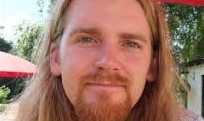
Anthropology has increasingly challenged the reflex to treat extraordinary experience as mere error, superstition or pathology. British anthropologist Jack Hunter works across mediumship, religion and ecological thought, and argues for more open, culturally informed accounts of trance and spirit communication, while pressing for closer contact between anthropology and parapsychology.
- Hunter argues that paranormal experience deserves ethnographic attention rather than automatic reduction to error, pathology or superstition.
- His Bristol circle research shifted his focus from why people believe in spirits to how communication with spirits may be experienced.
- By linking anthropology, ecology and parapsychology, he presses for more ontologically open accounts of trance, mediumship and spiritual agency.
Contents
Life and Career
Jack Hunter is from Llangynog, Wales. He pursued postgraduate work in the Department of Archaeology and Anthropology at the University of Bristol and has been a visiting lecturer in the Department of Theology and Religious Studies at the University of Chester. He is a research fellow with the Parapsychology Foundation and an honorary research fellow with the Alister Hardy Religious Experience Research Centre at the University of Wales Trinity Saint David.
Hunter’s research interests are focused on developing an ethnographic and ecological approach to understanding psi phenomena, especially mediumship and trance states, for which he was awarded a PhD in 2018. A leitmotif of his work is to reconsider the mainstream ontological assumptions underlying these phenomena and cultivate a more open-minded approach. He is a tutor on the MA in Ecology and Spirituality and the MA in Cultural Astronomy and Astrology with the Sophia Centre for the Study of Cosmology in Culture at the University of Wales Trinity Saint David, a lecturer on the Alef Trust’s MSc in Consciousness, Spirituality and Transpersonal Psychology, and an Access to Higher Education lecturer in the Humanities and Social Sciences at Newtown College.
In 2010 he established Paranthropology: Journal of Anthropological Approaches to the Paranormal, and he is co-editor with Tina Paphitis of the peer-reviewed Time and Mind: Journal of Archaeology, Consciousness and Culture. He is also a professional member of the Parapsychological Association and has received several awards from the Parapsychology Foundation, including the Eileen J. Garrett Scholarship (2010), a research grant from the Society for Psychical Research (2011), the Gertrude Schmeidler Outstanding Student Contribution Award from the Parapsychological Association (2011), the Scholarly Incentive Award (2015), and the Frances P. Bolton Fellowship (2019).
Research
Religious Education and the Paranormal
Work by Martin1Martin (1994). and others suggests that teaching the paranormal and parapsychology encourages critical thinking skills. Hunter suggests that such skills could also be employed to evaluate religious material.2Hunter (2017a). As a means to engage students more fully, he includes the paranormal in religious education classes, reviewing paranormal themes in culture and the arts, then sharing personal psychic experiences and encouraging a similar openness towards religious experiences and teachings.
Mediumship Research
Hunter carried out research with a spiritualist circle in Bristol, England, in which a group of trance mediums regularly became possessed by sixteen spirit entities. Some entities seemed like caricatures of deceased individuals, but most revealed distinct and well-developed personalities and developed relationships with regular attendees. In one incident, he lost control of his left arm to an external agency. For Hunter, explanations in terms of complex aberrant psychological processes failed to explain object movements, levitations, unusual light phenomena and accurate, but hitherto unknown, information about the deceased. As a result of this research, he moved from asking why people believe in spirits to asking how they communicate with spirits.3Hunter (2015).
Anthropology and Psi
In his writings, Hunter emphasises the importance of understanding the prevalence of psi experiences and spirituality in pre-modern societies. (See Anthropology and Psi Research.) Anthropology’s conception of spiritual agency evolved from the early nineteenth-century reductionist view of spirit beings as social constructs of primitive intellects to more holistic ethnographic approaches, and eventually to the ontologically open constructs of contemporary anthropology. He traces the development of anthropology in this regard from the late nineteenth century (EB Tylor, James Frazer and Andrew Lang), to early twentieth-century research by Bronislaw Malinowski and post-World War II work by Julian Huxley, Carlos Castaneda and Margaret Mead, culminating in psi experiments by Robert Van de Castle, Patric Giesler and others.4Hunter (2019a). Hunter seeks a synthesis of anthropology and parapsychology, with a model that views psi as fundamental to consciousness and modulated by cultural influences.5Hunter (2014).
High Strangeness and Parapsychology
In a 2022 paper in Mindfield: Bulletin of the Parapsychological Association, Hunter argued that the most anomalous aspects of psi phenomena deserve greater analytical attention rather than less. Drawing on the concept of high strangeness, he suggested that parapsychology’s focus on its most laboratory-amenable results has come at the cost of engaging with the full range of reported phenomena, and that a more ecologically minded approach might be better placed to accommodate the genuinely strange.6Hunter (2022). The paper served as a theoretical foundation for the subsequent anthology Deep Weird (2023).
Spirit Releasement Therapy
A 2023 commentary in the Journal of Scientific Exploration engaged with a special issue on the work of Charles Tramont, a practitioner of spirit releasement therapy – a therapeutic approach that attributes certain psychological difficulties to the influence of discarnate entities. Rather than dismissing or pathologising the practice, Hunter suggested it was better approached through the lens of gothic psychology, and called for a lowering of what he terms the boggle threshold – the point at which anomalous claims are set aside as too strange to merit engagement.7Hunter (2023a).
Review: An Anthropological Study of Spirits
In a 2024 review essay in the Journal of the Society for Psychical Research, Hunter assessed a recent contribution to the anthropology of spirit belief and practice. The review situated the work within the broader trajectory of anthropological engagement with spirits – from early dismissals of spirit claims as primitive error to the ontological turn in which indigenous and practitioner categories are taken seriously on their own terms, a position Hunter has long advocated.8Hunter (2024).
Books
Talking With the Spirits: Ethnographies From Between the Worlds (2014), edited by Hunter and David Luke, is an anthology of contemporary spirit mediumship across cultures, from séances in the UK to psychedelic-induced manifestations in the Amazon region. The book finds commonalities of experiences and argues for a worldview more sympathetic to these activities.
Greening the Paranormal: Exploring the Ecology of Extraordinary Experience (2019) draws parallels between ecology and the emerging science of anomalistics, which includes parapsychology, paranthropology, cryptozoology and religious studies. Hunter hopes to use this synthesis to expand the intellectual territory of both fields through cross-pollination, and also engender a change in perspective towards the planet.9Hunter (2019a).
Engaging the Anomalous: Collected Essays on Anthropology, the Paranormal, Mediumship and Extraordinary Experience (2017) also urges a non-reductive anthropology of the paranormal.10Hunter (2017b).
Manifesting Spirits: An Anthropological Study of Mediumship and the Paranormal (2020) describes Hunter’s fieldwork with the Bristol Spirit Lodge, including his personal experiences of mediumship development, and seeks to develop a non-reductive anthropology of the paranormal.
Mattering the Invisible: Technologies, Bodies and the Realm of the Spectral (2021, co-edited with Diana Espírito Santo) is a collection of essays exploring the ways that material bodies express the intangible, and how technology is used to “capture” invisible worlds. It explores how spirits, UFOs, discarnate entities, spectral energies, atmospheric forces and particles might be brought or “mattered” into existence by human minds.
Deep Weird: The Varieties of High Strangeness Experience (2023) is a collection of essays exploring the interconnectedness of anomalous phenomena, suggesting that the most unusual aspects of the paranormal – often referred to as high strangeness aspects – deserve greater attention by researchers despite their apparently incredible nature.
Folklore, People and Place: International Perspectives on Tourism and Tradition in Storied Places (2023, co-edited with Rachael Ironside) presents international case studies from different cultural and ecological contexts. It shows how folklore, sometimes pertaining to the supernatural, mediates human relationships with people and place, potentially offering a foundation for sustainable tourism.
Ecology and Spirituality: A Brief Introduction (2023, Sophia Centre Press) provides an accessible account of the intersections between ecology and spiritual thought, ranging across animism, ecopsychology, parapsychology and sacred geography. It draws on the work of Alister Hardy, Freya Mathews and Robin Wall Kimmerer to argue for a re-enchanted relationship with the natural world.
Sacred Geography: Conversations with Place (2024, co-edited with Bernadette Brady) is a collection exploring the sacred dimensions of landscape and place across cultures, examining how spiritual experience and paranormal encounter are shaped by the environments in which they occur.
The Folklore of the Tanat Valley: Chwedlau Gwerin Dyffryn Tanat (2025) gathers the folk traditions, fairy lore and supernatural accounts of the Mid-Wales valley where Hunter lives, exploring the relationship between place, ecology and local belief.
Website
Hunter’s website is here.
Michael Duggan
Works Cited
Espírito Santo, D., & Hunter, J. (eds.) (2021). Mattering the Invisible: Technologies, Bodies and the Realm of the Spectral. New York: Berghahn Books. [Book excerpt.]
Hunter, J. (2014). Paranthropology: Towards a parapsychological anthropology. Anomaly: Journal of Research into the Paranormal 47, 102-12. [Full paper.]
Hunter, J. (2015). Spirits are the problem: Anthropology and conceptualising spiritual beings. Journal for the Study of Religious Experience 1/1, 76-86. [Full paper.]
Hunter, J. (2017a). Teaching the paranormal and the occult: Religious education and the paranormal: Reflections on discussing anomalous experiences in the classroom. Spotlight on Teaching. Religious Studies News, October. [Full paper.]
Hunter, J. (2017b). Engaging the Anomalous: Collected Essays on Anthropology, the Paranormal, Mediumship and Extraordinary Experience. Burbank, CA: August Night Press. [Web page.]
Hunter, J. (2019). Greening the Paranormal: Exploring the Ecology of Extraordinary Experience. Burbank, CA: August Night Press. [Web page.]
Hunter, J. (2020). Manifesting Spirits: An Anthropological Study of Mediumship and the Paranormal. London: Aeon Books. [Web page.]
Hunter, J. (2022). Parapsychology and the varieties of high strangeness experience. Mindfield: Bulletin of the Parapsychological Association 13/3, 7-11. [Full paper.]
Hunter, J. (2023a). Confronting the boggle threshold of Tramont’s spirit releasement therapy. Journal of Scientific Exploration 37/4, 737-39. [Abstract.]
Hunter, J. (2023b). Ecology and Spirituality: A Brief Introduction. Lampeter: Sophia Centre Press. [Web page.]
Hunter, J. (ed.) (2023c). Deep Weird: The Varieties of High Strangeness Experience. Milton Keynes: August Night Press. [Web page.]
Hunter, J. (2024). Review: An anthropological study of spirits. Journal of the Society for Psychical Research 88/4, 251-56. [Full paper.]
Hunter, J. (2025). The Folklore of the Tanat Valley: Chwedlau Gwerin Dyffryn Tanat. Llanfyllin: Plenty Wenlock Press. [Web page.]
Hunter, J., & Ironside, R. (eds.) (2023). Folklore, People and Place: International Perspectives on Tourism and Tradition in Storied Places. Abingdon: Routledge. [Abstract.]
Luke, D., & Hunter, J. (eds.) (2014). Talking With the Spirits: Ethnographies From Between the Worlds. Brisbane: Daily Grail Publishing. [Web page.]
Martin, M. (1994). Pseudoscience, the paranormal and science education. Science & Education 3/4, 357-71. [Abstract.]