
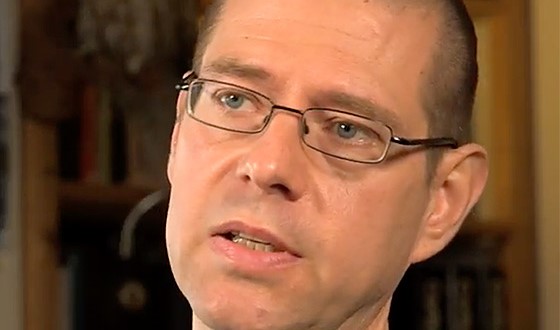
Michael Nahm has ranged widely across modern parapsychology, but a single thread runs through much of his work: the possibility that mind cannot be reduced to brain alone. His studies connect end-of-life phenomena, reincarnation evidence, biological theory and critiques of scientific misconduct in modern research.
- With Bruce Greyson, Nahm popularised the modern term terminal lucidity for unexpected mental clarity shortly before death.
- He has argued that childhood reincarnation cases matter not only for survival research but also for broader theories of evolution.
- In 2021 he published a major exposure of plagiarism and data misrepresentation by Alejandro Parra.
Contents
Life and Career
Michael Nahm credits a broad-minded high-school biology teacher for encouraging his interest in philosophy and biological questions such as the origin of life and genetic mutation. In the 1990s he discovered the works of Rupert Sheldrake and, enthralled by Sheldrake’s pushing of the limits of established science, began attempting experiments himself on dogs mysteriously knowing when their owners would return, waking a person from sleep telepathically and other topics. Nahm credits Sheldrake for fostering in him the ‘confidence that one can contribute to researching so-called anomalies also privately without belonging to the in-group of responsible experts, and without affiliation to a relevant academic institution’.1Cited in Alvarado (2017).
Nahm completed his studies in biology with examinations in zoology, botany, genetics and palaeontology, and a diploma thesis on the roosting behaviour of migratory songbird species. His doctoral dissertation discussed the physiological responses of beech trees to drought stress. He went on to conduct international research projects in forestry science.
Writing a book on unsolved riddles of evolution2Nahm (2007). triggered a permanent strong interest in parapsychology for Nahm, as he realized that paranormal phenomena posed the greatest challenge to the reigning materialistic and neo-Darwinian paradigm of biological processes, including evolution.3Alvarado (2017). This led him to investigate a wide range of anomalous biological phenomena, his lines of inquiry altering over time, although he has developed a holistic approach to evidence for post-mortem survival, as he describes in a 2011 paper.4Nahm (2011a).
For many years this work was avocational, but in 2018 he accepted an appointment at the Institut für Grenzgebiete der Psychologie und Psychohygiene (IGPP) (Institute for Frontier Areas of Psychology and Mental Health) in Freiburg, Germany, where he is now able to pursue his parapsychological work professionally in an academic institution. He has published six monographs and more than 150 scientific articles. In 2023, he received the Parapsychological Association’s Outstanding Contribution Award.5Parapsychological Association (2023). He served as Program Chair of the 67th Annual Convention of the Parapsychological Association, held at the IGPP in Freiburg in 2025.6Nahm (2025). Outside parapsychology, Nahm is a committed ornithologist, with a particular dedication to the protection of owls and birds of prey.
Nahm sees parapsychology not as a rogue child on the margins of science, but actually as the key to gaining a full understanding of biology. While reductionist materialism works for studying classical physics and the simplest biological processes, and what some term ‘organicism’ is appropriate for more complex living systems, he explains in an interview:
When it comes to studying even more complex living systems, including human beings, the unfolding of consciousness, psi, postmortem survival, or possibly evolution as a whole, I think that ultimately, only a kind of neo-vitalistic and dualistic approach is appropriate. Finally, when we look at the fundamental levels of reality with a metaphysical slant, we might apply a holistic and monistic approach in which the dualistic properties present on lower levels of biological organization are regarded as complementary and as originating in an initially unified source at the heart of being.7Cited in Alvarado (2017).
Parapsychological Research
Terminal Lucidity
The term terminal lucidity was coined by Nahm with Bruce Greyson in 2009. It is currently defined as an unexpected surge of mental clarity in dull, unconscious, or mentally disabled patients shortly before death.8Nahm & Greyson (2009). These unexpected episodes of lucidity can occur in people without or with brain conditions such as dementia diseases, tumors or strokes. Nahm is probably best known for this work, having written several papers9 Nahm et al. (2012); Nahm & Greyson (2014). and authored or edited two books about the topic.10Nahm (2012b); Nahm et al. (2025).
Nahm has also contributed to research in a related phenomenon that he and co-authors have termed ‘paradoxical lucidity’. This refers to instances of unexpected lucidity displayed exclusively by people with severe neurological brain damage, but that don’t necessarily occur before death.11Mashour et al (2019). Where patients with severe neurological damage display an unexpected surge of mental clarity, the two types of lucidity overlap, and such episodes may be regarded as ‘paradoxical terminal lucidity’.12Nahm (2022b).
A 2024 paper co-authored by Nahm and colleagues, including Chris Roe, reported a case series of terminal lucidity observed in a paediatric oncology clinic, documenting instances in children with severe neurological impairment.13Roehrs et al. (2024). Nahm also contributed a letter to the editor of the Journal of Near-Death Studies in 2024, that urged for greater precision in how terminal lucidity is defined in the growing clinical literature.14Nahm (2024b).
Nahm concludes that these phenomena, if confirmed by more rigorously controlled research, challenge standard neurological models of memory function and consciousness, carrying potentially profound implications for the treatment of severe brain conditions and for elucidating the nature of the human mind. In order to advance studies in these directions, he has advocated taking seemingly unusual and exceptional experiences into account.15Nahm (2022c).
Near-Death Experiences
Nahm’s research of the literature of near-death experiences (NDEs) has resulted in numerous publications. In the aforementioned 2011 paper, he draws attention to the relationships and similarities between NDEs and unexplained physical changes during NDEs, reciprocally confirmed out-of-body experiences/crisis apparitions, shared NDEs and shared dreams, common content in NDEs, death-bed visions, reincarnation cases with intermission memories and after-death communications through mediums, terminal lucidity and some other phenomena related to death, showing how these phenomena all point at a single process.16Nahm (2011a).
In 2020, Nahm co-authored a paper which used the existing NDE literature as well as an online survey on autoscopy in NDEs – seeing one’s body from a viewpoint outside it, usually above – to test the hypotheses that brain oxygen deprivation makes it impossible for NDEs to be experienced in real time and therefore they must be reconstructed after the brain has at least partially recovered. The findings suggested otherwise, and the authors recommended that future discussion and research on NDEs explanations should focus on two possible models: a neurophysiological model allowing for real-time NDEs, or one which allows that ‘NDEs occur in relative independence from the prevailing neuro-physiological processes in the brain’.17Nahm & Weibel (2020).
Nahm found that NDEs reported in ancient Rome share some features with current Asian cases, such as the subject learning their NDE was being caused by the wrong person having been designated to die, as well as featuring xenoglossy and an apparently correct precognitive prediction in one case.18Nahm (2009). (See also Medieval Near-Death Experiences.)
Nahm has also addressed the similarities and differences between typical Western NDEs and Muslim NDEs, as well as the experiences described in the Tibetan Book of the Dead.19Nahm & Nicolay (2010). Regarding the latter, he concluded that, for historical and phenomenological reasons, much of the contents can barely be regarded as revelations of universal truth, as is sometimes argued by adherents of Tibetan Buddhism.20Nahm (2011b).
Normal Cognitive Functioning in Compromised Brains
Neuroscience posits that human mental functions are generated by brain structures, notably cell layers and tissues in the neocortex. Nahm and co-authors discuss cases in which significant physical deficiencies are found in the brains of individuals who outwardly perform normally or who even display special abilities. These include cases of hydrocephalus – in which accumulating cerebral fluid pushes the brain to the extreme margins close to the skull – and hemispherectomy – in which an entire hemisphere was removed because of conditions such as epilepsy. Nahm and co-authors also consider the abilities of ‘savants’ who display remarkable talents in the presence of compromised brain function. Explanatory models based on extreme brain plasticity and non-reductionist accounts of consciousness are discussed.21Nahm et al. (2017).
Evolution and Reincarnation
In a contribution to James G Matlock’s Signs of Reincarnation (2019), Nahm discusses the importance of childhood reincarnation evidence for understanding evolution. He argues that, since such evidence tends to contradict standard materialism, a more holistic view of evolution needs to be available. Nahm describes an organismically oriented and vitalist view, where evolutionary processes tap into a fundamental fabric of reality – the same foundations that drive the evidence for past lives.22Nahm (2019a).
Animal Homing Ability
Despite extensive scientific interest, the homing abilities of animals remain largely mysterious. In a 2015 paper, Nahm discusses the work of two hitherto little-known researchers that include remarkable instances of dogs who repeatedly returned to their owners or home from unknown locations. One archive details the research of Edwin H Richardson with messenger dogs in World War I. The other concerns more systematic experiments performed by Bernhard Müller between 1953 and 1962 involving 75 dogs. Both authors refute normal sensory explanations for their observations. Nahm finds little consensus among animal experts for bird and mammal homing and argues that some underlying psi component should not be ruled out.23Nahm (2015).
Physical Mediumship
Nahm has a longstanding interest in physical mediumship and published about several past and present mediums.24Nahm (2012a, 2018a). In particular, he reported on the activities of German physical medium Kai Mügge and the Felix Experimental Group (FEG), describing his observations during 21 sittings over a period of more than four years. The phenomena typically included unusual movements of a table, raps on the room walls and the ceiling, luminous and psychokinetic phenomena, and the appearance of putative ‘ectoplasm’ and apports. He concluded that most if not all of the phenomena that occur while Mügge rests in alleged trance were fraudulently produced. 25Nahm (2014, 2016). Additionally, Nahm has established that the supposed table levitations are most likely performed with a simple trick.26Nahm (2023b).
In a 2023 paper in the Proceedings of the Society for Psychical Research, Nahm turned his attention to one of the most remarkable mediums of the early twentieth century, the Polish banker Franek Kluski (1873–1943). Kluski’s séances, attended by prominent researchers including Gustave Geley and Charles Richet, were notable for the apparent materialisation of human and animal forms and the production of paraffin wax casts. Nahm’s paper provides a detailed analysis of the phenomena, followed by recapitulations of little-known past discussions about the significance of apparitions and materializations for the survival question and biology.27Nahm (2023d).
Hauntings and Poltergeists
Nahm has recently published a detailed case study about haunting and poltergeist phenomena that started in 1835 and continued almost daily for several months inside a well-secured prison in Weinsberg, Germany.28Nahm (2019b).He has also contributed to a richly illustrated book about such phenomena that has been recorded in the city of Freiburg since the eighteenth century.29Schellinger & Nahm (2024).
Sudden Hair Whitening
Nahm discusses the phenomenon of sudden hair whitening occurring within hours or days of emotionally traumatic experiences. Since developed hair has no metabolism, it should be impossible for such changes to occur through normal biological processes. He discusses 212 cases published in the medical literature in the last 200 years, of which 46 are first-hand accounts by physicians who observed rapid decolourations of developed hair in person. Nahm finds evidence for an anomalous process that may be tantamount to psychokinesis in the face of intense emotions or pain.30Nahm (2018b).
End-of-life Experiences
Besides terminal lucidity and NDEs, there are many other so-called ‘end-of-life experiences’ (ELEs). Nahm has participated in studies surveying ELEs in humans, and, together with Rupert Sheldrake, has published the first systematic paper introducing ELEs in vertebrate animals, particularly pets such as dogs and cats. The authors found many similarities between human and non-human ELEs. They concluded that this might be a sign of a common physiology underpinning such experiences, also that it might increase the recognition that animals share an inner life similar to that of humans during all life phases.31Sheldrake et al. (2023).
In a 2024 paper extending this line of inquiry, James Matlock, Bethany Hilton, Rupert Sheldrake, Pam Smart and Nahm examined apparent after-death communications (ADCs) from non-human animals and compared them with human ADC accounts.32Matlock et al. (2024). The authors found that non-human animal ADCs share many phenomenological features with human ADCs, including visual, auditory and tactile impressions, and that the experiences frequently provided comfort to bereaved owners. The paper argues that the parallels strengthen the case for taking such accounts seriously as a focus for systematic research.
In another publication, Nahm, together with the late Carlos Alvarado, discuss accounts of perceptions of luminous phenomena – mists, lights and ‘spirit bodies’ – floating over persons close to death.33Alvarado & Nahm (2021).
UAP and Psi
In a 2023 paper in the Journal of Anomalistics, Nahm addressed the growing scientific interest in unidentified anomalous phenomena (UAP) – commonly referred to as UFOs – and their relationship to parapsychology.34Nahm (2023e). The paper first surveys the shift in public and academic attitudes towards UAP since the early 2000s, a process accelerated by official disclosures from the US government. The second part identifies numerous phenomenological similarities between UAP and the phenomena studied in parapsychology, including apparent violations of physical laws, associations with altered states of consciousness, poltergeist-like physical effects and the involvement of apparent non-human entities. Nahm argues that these commonalties — which he terms ‘concordant deviance’ — suggest that UAP and psi phenomena may ultimately share underlying mechanisms, and that UAP cannot be properly understood when their parapsychological facets are ignored.
Theory Construction
Nahm has commented on the philosophical implications of psi phenomena, arguing for the need to develop a single overarching theory that integrates the commonalities of existing models. He suggests as an example of such an endeavour the so-called ‘evolutionary synthesis’ that was developed by evolutionary biologists in the 1930s.35Nahm (2022d).
For an essay contest on theories of non-local consciousness or psi, Nahm elaborated these and other considerations that has been published as a monograph, The Arcane Nexus: Assessing the Roots of Non-local Consciousness.36Nahm (2024a).
Previously, Nahm critiqued a model of psi proposed by physicists Edwin May and Sonali Marwaha,37Marwaha & May (2015). which posits that precognition is the only form of psi, all other psi ‘phenomena’ being derivative of it (for instance, a subject who is acting as telepathic receiver in an experiment is actually precognizing the future target picture rather than using telepathy in the present moment). Nahm draws attention to phenomena that appear to resist this interpretation, notably apparitions of a deceased person reported by multiple witnesses and cases of putative reincarnation in children. He also highlights problems the theory runs into when explaining the specificity, timing and emotional salience of regular precognition experiences.38Nahm (2019c).
Biology and Vitalism
In 2007, Nahm published a book on unsolved riddles of evolution and their relation to parapsychological phenomena,39Nahm (2007). He has continued to write on matters related to vitalism, which holds that phenomena of life and consciousness cannot be attributed solely to physical and chemical processes governing the behaviour of inanimate matter. With co-authors, he published a monograph on Driesch, a German biologist philosopher who was one of the most prominent proponents of the vitalist notion of biology and who also made influential contributions to parapsychology.40Krall et al. (2021). He has also written about the Austrian biologist Paul Kammerer, arguing that his claims to have found experimental proofs of Lamarckism, which aroused considerable controversy, have been grossly misrepresented.41Nahm (2021b).
Plagiarism Exposure
In September 2021, Nahm published a paper revealing massive and longstanding plagiarism and data misrepresentation on the part of Argentinian parapsychologist Alejandro Parra. Parra had been suspected of plagiarism and urged to cease and desist by colleagues as far back as 1991, but it was not until Nahm’s carefully and extensively researched paper was published that his dishonesty was fully exposed, dating back even to his PhD dissertation. Contacted privately by Nahm prior to publication, Parra offered various excuses and even blamed his students for including stolen texts published under his own name, but continued to promote his books. Nahm concluded that none of Parra’s work is to be trusted unless very carefully checked.42Nahm (2021a).
Parapsychologist Etzel Cardeña, in a commentary in the same journal issue as Nahm’s paper, pointed out how damaging Parra’s fraud was in a field upon which sceptics frequently pounce with accusations of fraud. Consequences for Parra have been severe: the Bial Foundation cancelled a grant to Parra, the Parapsychological Association, of which he had been president and board member, expelled him, his employer the Universidad Abierta Interamericana fired him from all positions, and the publication of at least some of his future books was cancelled.43Cardeña (2021).
Nahm earlier discovered another plagiarism case during his research of unusual brain-related findings. He noted that a Brazilian team of physicians, while reporting findings of a new hydrocephalus case in a mainstream medical journal, used previously published brain scans of a man with severe hydrocephalus that were freely available in the internet.44Evrard & Nahm (2019).
Selected Works
Nahm has published four German-language books and numerous articles in German and English about the above topics and others in psychical research. A complete list of his works may be found on his website here.
Books
Evolution und Parapsychologie [Evolution and Parapsychology] (2007). Norderstedt, Germany: Books on Demand.
Wenn die Dunkelheit ein Ende findet. Terminale Geistesklarheit und andere Phänomene in Todesnähe [When Darkness Comes to an End: Terminal Lucidity and other Phenomena in Near-Death States] (2012b). Amerang, Germany: Crotona.
Journal Papers and Book Chapters
Near-Death Experiences
Reflections on the context of near-death experiences (2011). Journal of Scientific Exploration, 25, 453-478.
The Tibetan Book of the Dead: Its history and controversial aspects of its contents (2011). Journal of Near-Death Studies 29, 373-98.
The significance of autoscopies as a time marker for the occurrence of near-death experiences (2020, with A. Weibel). Journal of Near-Death Studies 38, 26-50.
Terminal Lucidity
Terminal lucidity in people with mental illness and other mental disability: An overview and implications for possible explanatory models (2009). Journal of Near-Death Studies 28, 87-106.
Terminal lucidity: A review and a case collection (2012, with B. Greyson, E.W., Kelly, & E. Haraldsson). Archives of Gerontology and Geriatrics 55, 138-42.
Paradoxical lucidity: A potential paradigm shift for the neurobiology and treatment of advanced dementias (2019, with G.A. Mashour, F.L. Batthyany, A.M. Kolanowski, D. Schulman-Green, B. Greyson, S. Pakhomov, J. Karlawish, & R.C. Shah). Alzheimer’s & Dementia 15, 1107-1114.
Terminal lucidity in a pediatric oncology clinic (2024, with P. Roehrs, P. Fenwick, B. Greyson, A. Kellehear, K. Kothe, C., Roe, N. Tassell-Matamua, & M. Woollacott. Journal of Nervous and Mental Disease 212/1, 57-60.
Reincarnation Studies
Thoughts about thought bundles: A commentary on Jürgen Keil’s paper ‘Questions of the reincarnation type’. (2011, with D. Hassler). Journal of Scientific Exploration 25, 305-18.
Implications of reincarnation cases for biology (2019). In Signs of Reincarnation. Exploring Beliefs, Cases and Theory by J.G. Matlock, 273-87. Lanham, Maryland, USA: Rowman & Littlefield.
Physical Mediumship and Hauntings
Apport phenomena of medium Herbert Baumann (1911-1998): Report on personal experiences (2016, with I. von Ludwiger). Journal of Scientific Exploration 30, 337-58.
Further comments about Kai Mügge’s alleged mediumship and recent developments (2016). Journal of Scientific Exploration 30, 56-62.
Selected aspects of Carlos Mirabelli’s mediumship (2017). Journal of Scientific Exploration 31, 457-66.
Out of thin air? Apport studies performed between 1928 and 1938 by Elemér Chengery Pap (2019). Journal of Scientific Exploration 33, 661-705.
Historical perspective: Justinus Kerner’s case study into the ‘prison spook’ in Weinsberg and spooky actions at a distance in 1835–1836 (2019). In N equals 1. Single Case Studies in Anomalistics, ed. by G. Mayer. Zürich: LIT Verlag, 153-200.
Phenomena of Franek Kluski’s mediumship and the significance of materialisations for the survival question (2023). Proceedings of the Society for Psychical Research 61/225, 10–39.
UAP and Psi
Concordant deviance: Commonalties of unidentified anomalous phenomena (UAP) and psi phenomena (2023). Journal of Anomalistics 23/2, 270–90.
Vitalism and Biology
Ganzheitsbiologische Strömungen im Umfeld der Philosophie von Hans Driesch [Currents of holistic biology in the context of Hans Driesch’s philosophy] (2021). In Hans Driesch und die Natur des Lebens [Hans Driesch and the Nature of Life], ed. by S. Krall, M. Nahm, & H-P. Waldrich. Zug: Graue Edition, 143-201.
Miscellaneous
Canities subita: A reappraisal of evidence based on 196 case reports published in the medical literature. (2013, with A.A. Navarini & E.W. Kelly). International Journal of Trichology 5, 63-68.
Mysterious ways: The riddle of the homing ability in dogs and other vertebrates (2015). Journal of the Society for Psychical Research 79, 140-55.
Discrepancy between cerebral structures and cognitive functioning: A review. With , B. (2017, with D. Rousseau & B. Greyson). Journal of Nervous and Mental Disease 205, 967-72.
Prize Essays
BICS Essay (Postmortem Survival)
Nahm was a runner-up in the 2021 Bigelow essay contest on evidence for postmortem survival, with an entry that draws attention to the stigma attached to such research within the academic community. Against the assumption that consciousness has been shown to be produced by brain chemistry, he points to the lack of any widely-accepted theory of how consciousness can emerge from physical structures and also the large body of parapsychological data pointing towards independence of mind from brain. Considering the different categories, he concludes that reincarnation cases involving small children provide the most compelling evidence.45Nahm (2023a). Responding to a critique by NDE skeptic Keith Augustine.46Augustine (2022). Nahm criticizes Augustine’s omission of high-level reincarnation evidence, along with what he considers to be multiple misstatements and misattributions.47Nahm (2022a).
IONS Prize Essay
Nahm was a runner-up in the 2024 Linda G. O’Bryant Noetic Sciences Research Prize, administered by the Institute of Noetic Sciences (IONS). His entry, The Arcane Nexus: Assessing the Roots of Non-local Consciousness, offered a wide-ranging assessment of the evidential and theoretical foundations of non-local consciousness, ranging across near-death experiences, reincarnation, physical mediumship and the biology of psi.48Nahm (2024a). First prize in that competition was awarded to Michael Daw and Chris Roe.
Selected Media Mentions
Bering, J. (2014). One last goodbye: The strange case of terminal lucidity. Scientific American, 25 November.
Tsakiris, A. (2015). Alzheimer patient rises from deathbed, regains memory to recite poem, then passes away. Posted on Skeptiko: Science and Spirituality, 9 June. [Podcast, with transcripts of excerpts.]
Jolis, A. (2016). The medical mystery of hair that whitens overnight. The Atlantic, 20 September 20.
Peskin, S.M. (2017). The gentler symptoms of dying. New York Times, 11 July 11.
Mendoza, M.A. (2018). Life’s last rally: Terminal lucidity. A mystery at the deathbed. Psychology Today, 10 October.
Godfrey, A. (2021). ‘The clouds cleared’: What terminal lucidity teaches us about life, death and dementia. The Guardian, 23 February.
KM Wehrstein & Michael Duggan
Works Cited
Alvarado, C. (2017). People in parapsychology: XXXII: Michael Nahm. [Blog post. Full text.]
Alvarado, C.S., & Nahm, M. (2021). Luminous phenomena at death: The case of the Monk family. Journal of Anomalistics 21/2, 466-79.
Augustine, K. (2022). How “not” to do survival research: Reflections on the Bigelow Institute essay competition. Journal of Scientific Exploration 36/2, 366-98.
Cardeña, E. (2021). Alejandro Parra and Dante’s eighth circle of Hell. Journal of Scientific Exploration 35/3, 639-41.
Evrard, R., & Nahm, M. (2019). Findings along the way in psychical research: A non-existent hydrocephalus patient. Journal of the Society for Psychical Research 83/1, 31-35.
Krall, S., Nahm, M., & Waldrich, H.-P. (2021). Hinter der Materie: Hans Driesch und die Natur des Lebens. Dietzenbach, Germany: Graue Edition.
Marwaha, S.B., & May, E.C. (2015). Rethinking extrasensory perception: Toward a multiphasic model of precognition. SAGE Open, 5/1.
Mashour, G., Frank, L., Batthyany, A., Kolanowski, A., Nahm, M., Schulman-Green, D., Greyson, B., Pakhomov, S., Karlawish, J., & Shah, R. (2019). Paradoxical lucidity: A potential paradigm shift for the neurobiology and treatment of severe dementias. Alzheimers & Dementia 15, 1107-14.
Matlock, J.G., Hilton, B., Sheldrake, R., Smart, P., & Nahm, M. (2024). After-death communications (ADCs) from non-human animals: Parallels with human ADCs. Journal of Scientific Exploration 38/1, 61-78.
Nahm, M. (2007). Evolution und Parapsychologie [Evolution and Parapsychology]. Norderstedt, Germany: Books on Demand.
Nahm, M. (2009). Four ostensible near-death experiences of Roman times with peculiar features: Mistake cases, correction cases, xenoglossy, and a prediction. Journal of Near-Death Studies 27, 211-22. [Ful text.]
Nahm, M. (2011a). Reflections on the context of near-death experiences. Journal of Scientific Exploration 25, 453-78. [Download PDF.]
Nahm, M. (2011b). The Tibetan Book of the Dead: Its history and controversial aspects of its contents. Journal of Near-Death Studies 29, 373-98. [Full text.]
Nahm, M. (2012a). The sorcerer of Cobenzl and his legacy: The life of Baron Karl Ludwig von Reichenbach, his work and its aftermath. Journal of Scientific Exploration 26, 381-407. ResearchGate. [Full text.]
Nahm, M. (2012b). Wenn die Dunkelheit ein Ende findet. Terminale Geistesklarheit und andere Phänomene in Todesnähe [When darkness comes to an end. Terminal lucidity and other phenomena near death]. Amerang: Crotona.
Nahm, M. (2014). The development and phenomena of a circle for physical mediumship. Journal of Scientific Exploration 28, 229-83. [ResearchGate. Full text.]
Nahm, M. (2015). Mysterious ways: The riddle of the homing ability in dogs and other vertebrates. Journal of the Society of Psychical Research 79, 144-55. [ResearchGate. Full text.]
Nahm, M. (2016). Further comments about Kai Mügge’s alleged mediumship and recent developments. Journal of Scientific Exploration 30, 56-62. [ResearchGate. Full text.]
Nahm, M. (2018a). Investigating “physical mediums” via audio signal processing: A Comment on a recent approach. Journal of Scientific Exploration 32, 579-95. [ResearchGate. Full text.]
Nahm, M. (2018b). Plötzliches und ungewöhnlich rasches Weißwerden von Haaren: Eine Übersicht über 212 Fallberichte aus der medizinischen Literatur der letzten 200 Jahre. Zeitschrift für Anomalistik 18, 248-76. [Full text.]
Nahm, M. (2019a). Implications of reincarnation cases for biology. In Signs of Reincarnation: Exploring Beliefs, Cases, and Theory by J.G. Matlock, 273–87. Lanham, MD: Rowman & Littlefield.
Nahm, M. (2019b). Historical perspective: Justinus Kerner’s case study into the “prison spook” in Weinsberg. In N equals 1: Single case studies in anomalistics, ed. by G. Mayer, 153-200. Zürich: LIT Verlag.
Nahm, M. (2019c). Assessing the problem space of precognition: Can it be the only form of psi? Zeitschrift für Anomalistik 19, 57-67. [Full text.]
Nahm, M. (2021a). A new case of scientific dishonesty in the field of parapsychology. Journal of Scientific Exploration 35/3, 623-38. [ResearchGate. Full text.]
Nahm, M. (2021b). Paul Kammerer and epigenetics – a reappraisal of his experiments. Contributions to Zoology 90, 318-43.
Nahm, M. (2022a). A guardian angel gone astray: How not to engage in scientific debates. Journal of Scientific Exploration 36/4, 783-93. [ResearchGate. Full text.]
Nahm, M. (2022b). Terminal lucidity versus paradoxical lucidity: A terminological clarification. Alzheimer’s & Dementia 18, 538-39. [ResearchGate. Request PDF.]
Nahm, M. (2022c). The importance of the exceptional in tackling riddles of consciousness and unusual episodes of lucidity. Journal of Anomalous Experience and Cognition 2, 264-96. [ResearchGate. Full text.]
Nahm, M. (2022d). Toward a “parapsychological synthesis”: proposals for integrating theories of psi. Journal of Parapsychology 86, 299-321. [Free Online Library. Full text.]
Nahm, M. (2023a). Climbing Mount Evidence: A strategic assessment of the best available evidence for the survival of human consciousness after permanent bodily death. In Winning Essays. Proof of Survival of Human Consciousness Beyond Permanent Bodily Death (vol. 3), ed. by BICS, 107–203. Las Vegas: BICS. [Full text.]
Nahm, M. (2023b). Kommentare zur Video-Dokumentation von Kai Mügges Tisch-Levitationen. [ResearchGate. Full text.]
Nahm, M. (2023c). Vom unvergleichlichen Zauber blumengleicher Tiere. In Science und séance. Die Biologin und Parapsychologin Fanny Moser (1872–1953), ed. by I. Schmied-Knittel, 115-50. Baden-Baden: Ergon.
Nahm, M. (2023d). Phenomena of Franek Kluski’s mediumship and the significance of materialisations for the survival question. Proceedings of the Society for Psychical Research 61/225, 10-39. [ResearchGate. Request PDF.]
Nahm, M. (2023e). Concordant deviance: Commonalties of unidentified anomalous phenomena (UAP) and psi phenomena. Journal of Anomalistics 23/2, 270-90. [Full text.]
Nahm, M. (2024a). The Arcane Nexus: Assessing the Roots of Non-Local Consciousness. (Runner-up essay, Linda G. O’Bryant Noetic Sciences Reserarch Prize, Institute of Noetic Sciences.) [ResearchGate. Full text.]
Nahm, M. (2024b). Defining terminal lucidity: Taking the need for accuracy and integrity seriously. Letter to the editor. Journal of Near-Death Studies 42/1, 72-75. [Download PDF.]
Nahm, M. (ed.) (2025). Abstracts of presented papers. 67th Annual Convention of the Parapsychological Association, Freiburg, Germany, July 14–18. [Full text.]
Nahm, M., & Greyson, B. (2009). Terminal lucidity in patients with chronic schizophrenia and dementia: A survey of the literature. Journal of Nervous and Mental Disease 197, 942-44. [Full text.]
Nahm, M., & Greyson, B. (2014). The death of Anna Katharina Ehmer. A case study in terminal lucidity. OMEGA – Journal of Death and Dying 68, 77-87. [ResearchGate. Full text.]
Nahm, M., Greyson, B., Kelly, E.W., & Haraldsson, E. (2012). Nahm, M., Greyson, B., Kelly, E.W., & Haraldsson, E. (2012). Terminal lucidity: A review and a case collection. Archives of Gerontology and Geriatrics 55, 138-42. [ResearchGate. Full text.]
Nahm, M., & Nicolay, J. (2010). Essential features of eight published Muslim near-death experiences: An addendum to Joel Ibrahim Kreps’s “The search for Muslim near-death experiences”. Journal of Near-Death Studies 29, 255-63. [ResearchGate. Full text.]
Nahm, M., Rousseau, D., Greyson, B. (2017). Discrepancy between cerebral structure and cognitive functioning: A review. Journal of Nervous and Mental Disease 205, 967-72. ResearchGate. [Full text.]
Nahm, M., & Weibel, A. (2020). The significance of autoscopies as a time marker for the occurrence of near-death experiences. Journal of Near-Death Studies 38, 26-50. ResearchGate. [Full text.]
Nahm, M., Woollacott, M., & Tassell-Matamua, N. (eds.) (2025). On the Banks of the River Styx: New Perspectives on Terminal Lucidity and Other Near-Death Phenomena. Battle Ground, Washington, USA: AAPS Press.
Roehrs, P., Fenwick, P., Greyson, B., Kellehear, A., Kothe, K., Nahm, M., Roe, C., Tassell-Matamua, N., & Woollacott, M. (2024). Terminal lucidity in a pediatric oncology clinic. Journal of Nervous and Mental Disease 212/1, 57-60. [Abstract]
Schellinger, U., & Nahm, M. (2024). Freiburgs Gespenster. Spuk und Geister in der Stadt von 1800 bis heute [Freiburg’s Ghosts. Hauntings and Spectres in Town from 1800 until Today] (3rd ed.). Freiburg, Germany: Institut für Grenzgebiete der Psychologie und Psychohygiene.
Sheldrake, R., Smart, P., & Nahm, M. (2023). Experiences with dying animals: parallels with end-of-life experiences in humans. Journal of Scientific Exploration 37, 42-58. [Full text.]