Questions about whether diet, fasting and abstention from animal products might affect anomalous experience have moved from spiritual tradition into laboratory research. British parapsychologist Michael Daw has examined veganism, vegetarianism and fasting as possible correlates of psi and spiritual experience, while testing whether such practices are associated with better ganzfeld performance.
- Interview and survey work suggests that people who fast or reduce meat and dairy intake report more spiritual and paranormal experiences.
- A small ganzfeld remote-viewing study did not reach statistical significance, but vegetarians and especially vegans showed better-than-chance trends.
- Daw and Chris Roe won the 2024 Linda G. O’Bryant Noetic Sciences Research Prize for their review of non-local consciousness theories.
Life and Career
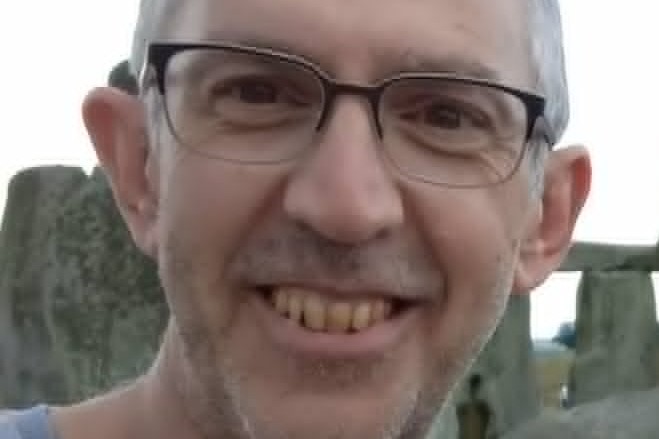
Michael Daw worked in software engineering and in professional and managerial roles supporting scientific research at the universities of Manchester, Leeds and Manchester Metropolitan. In 2021 he retired from paid work to focus on parapsychology research and environmental activism. Daw has been a vegan since 2016. He began his PhD at the University of Northampton in March 2020, supervised by Chris Roe and Callum Cooper, examining potential links between psi and spiritual experiences and dietary practices, especially veganism, vegetarianism and fasting. Having completed his doctorate, he has continued research in this area through the University of Northampton’s Exceptional Experiences and Consciousness Studies (EECS) group.
Outside parapsychology, Daw has been active in environmental causes for more than thirty years. He is a trustee of Climate Action Ilkley and a founding member of Transition New Mills. He stood for parliament for the Green Party in 1992.
Research: Diet and Psi
Spiritual traditions contain frequent accounts of psi abilities attributed to fasting and vegetarian practices. Interviews carried out by Daw together with Roe and Cooper found that seven psi adepts believed these practices led to improved psi abilities through improved cognitive abilities, health and/or subtle energies that may be present in food.1Daw et al. (2023a).
A subsequent pair of surveys, again with Roe and Cooper, found that individuals who fast or reduce meat and dairy consumption tend to report more spiritual and paranormal experiences. However, it remained unclear whether these practices directly enhance psi abilities, as opposed to people who tend to have these experiences being drawn to such diets.2Daw et al. (2023b).
Daw, again with Roe and Cooper, conducted a ganzfeld remote-viewing experiment to explore the impact of diet on psi abilities directly by comparing vegetarians with meat eaters. The results did not reach statistical significance because the study was relatively small (40 participants, 20 meat eaters and 20 vegetarians). However, vegetarians displayed a trend of improved performance and vegans notably achieved a 47% hit rate compared with a mean chance expectation of 25%.3Daw et al. (2023c).
As a direct result of these findings, items related to dietary practices have been included in an ongoing international multisite ganzfeld study that aims to disambiguate the various factors that might affect ESP hitting.4Marcusson-Clavertz et al. (ongoing).
Theories of Non-Local Consciousness
In 2024, Daw and Roe entered the second annual Linda G. O’Bryant Noetic Sciences Research Prize, administered by the Institute of Noetic Sciences (IONS), which invited comparative reviews of theories of non-local consciousness. Their essay, ‘Theories of Non-local Consciousness: A Review and Framework for Building Rigour’5Daw & Roe (2024). was awarded a prize of $50,000. The essay challenges physicalist theories of mind – those that equate consciousness with brain activity – by presenting evidence from anomalous phenomena including free will, psychophysiological effects, acquired savantism, psychic experiences and post-mortem survival, arguing that such phenomena are incompatible with a purely physicalist account. It then reviews non-local consciousness theories across a range of philosophical frameworks, from dualism and idealism to dual-aspect monism, evaluating field consciousness, hyperspatial models, quantum consciousness, cosmo-panpsychism and idealism for their strengths, weaknesses and capacity to account for the anomalous evidence. The essay also proposes empirical tests to help discriminate between rival theories and advocates using parapsychological research as a resource for building more rigorous and testable models.6Daw & Roe (2024).
Michael Duggan
Works Cited
Daw, M.J., & Roe, C.A. (2024). Theories of non-local consciousness: A review and framework for building rigour. First-prize essay, Linda G. O’Bryant Noetic Sciences Research Prize, Institute of Noetic Sciences. [PDF Download.]
Daw, M.J., Roe, C.A., & Cooper, C.E. (2023a). How fasting and vegetarianism is perceived to support psi among adepts. Journal of Transpersonal Psychology 55/1, 111-33. [Full paper.]
Daw, M.J., Roe, C.A., & Cooper, C.E. (2023b). Two surveys to explore associations between spontaneous anomalous experiences, and fasting and vegetarianism. Journal of Parapsychology 87/2, 128-50. [Full paper.]
Daw, M.J., Roe, C.A., & Cooper, C.E. (2023c). Vegetarians and meat eaters: Testing relative performance in a precognitive ganzfeld remote viewing task. PA Convention 2023: Abstracts of Presented Papers, 21-25.
Marcusson-Clavertz, D., Simmonds-Moore, C., Cardeña, E., Roe, C., Wittmann, M., Dechamps, M., & Wahbeh, H. (ongoing). Trait x state predictors of performance in Ganzfeld: An international multisite study. BIAL Foundation grant 2022/208. [Web page.]