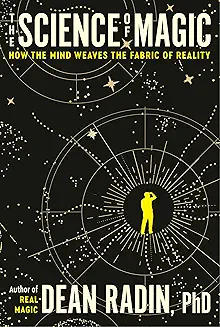

Dean Radin is known for innovative experiments in the study of consciousness and psi phenomena, notably covering presentiment, mind-matter interaction, healing, intention effects and wider consciousness debates. He is also in the forefront of communicating psi research to the public, having written several well-received books.
- Radin’s presentiment experiments tested whether physiological arousal appears before randomly selected emotional images, with reported effects later replicated by other researchers.
- He has published widely on optical and mind-matter experiments, while also writing accessible books that helped popularise modern parapsychology.
- Some scientists have challenged his statistical results and interpretations, but others have treated his work as a serious empirical programme.
Life and Career
Early Life
Dean I Radin was born on 29 February 1952 to Jerome and Hilda Radin. His father was a commercial artist, sculptor and fine artist, who also earned advanced degrees in English literature, philosophy and law. His mother was one of the women dubbed ‘Rosie the Riveters’, who worked in factories during WWII: she was a welder and built the metal frame for gliders.
Radin trained as a classical violinist, and played professionally for five years. He graduated from the University of Massachusetts (Amherst) with a degree in electrical engineering, magna cum laude with senior honors in physics and later earned a masters in electrical engineering focusing on cybernetics and control systems from the University of Illinois, Urbana-Champaign (UIUC). In 1979 he was awarded a PhD in psychology, also from UIUC. For his dissertation he developed and tested what may have been the first computer-based, artificial-intelligence enhanced, touch typing training system.1https://www.deanradin.com/bio
He then worked at AT&T Bell Laboratories (1979-1986) (now Bell Labs) and later at GTE Laboratories (1990-1993) (now Verizon) on advanced telecommunications R&D. At Bell Labs he helped design human interfaces for network operations centers in the US and Japan, and developed rapid prototyping systems for complex human-computer interfaces (before there were personal computers). At GTE he studied ways to enhance brainstorming and creativity in industry.
Beginnings in Parapsychology
During his time at Bell Labs, Radin also started to publish some of his psi experiments, then to present his work at the annual meetings of the Parapsychological Association and the Society for Scientific Exploration. He eventually gained appointments at Princeton University, the University of Edinburgh, the University of Nevada, Interval Research Corporation, and SRI International on what is popularly known as the Star Gate project, which was conducting classified research on psychic phenomena for the US government (see Remote Viewing).
In 2001, he joined the staff at the Institute of Noetic Sciences (IONS). He has also held a volunteer faculty position in the psychology department at Sonoma State University, served on dissertation committees at Saybrook University and at the California Institute of Integral Studies, where he is currently Associated Distinguished Professor of Transpersonal and Integral Psychology.
Radin served as president of the Parapsychological Association in 1988, 1993, 1998, 2005 and 2019. He was co-editor-in-chief for 15 years and now serves on the editorial board of EXPLORE: The Journal of Science and Healing.
Radin is currently chief scientist at the Institute of Noetic Sciences and Associated Distinguished Professor at the California Institute of Integral Studies. He is author or co-author of more than 350 scientific, technical, and popular articles, four dozen book chapters, and five books. He has given over 850 talks worldwide, and as of 2026 has appeared in more than 40 film and television documentaries. He is a co-inventor on 35 issued or pending patents involving genetic engineering and mind-matter interaction. His books have been translated into over a dozen languages. In December 2023 he was interviewed at CERN for a documentary on consciousness and quantum theory, and in October 2025 he gave an invited lecture at Harvard Medical School.2IONS profile (2026). In 2026 at the 44th annual meeting of the Society for Scientific Exploration, Radin was awarded the Dinsdale Award for his substantial lifetime contributions in parapsychology.3Society for Scientific Exploration (2026).
Radin’s 175+ scientific articles have appeared in peer-reviewed journals ranging from Foundations of Physics and Physics Essays to Psychological Bulletin and Journal of Consciousness Studies; he was featured in a New York Times Magazine article; and he has appeared on dozens of television shows ranging from the BBC’s Horizon to PBS’s Closer to Truth. He has given invited presentations at Harvard, Stanford, Cambridge, Princeton, and the Sorbonne, for industries including Google and Johnson & Johnson, for US government organizations including the US Navy, the US Army, the US Naval Postgraduate School, and DARPA, and for government and business organizations in India, Malaysia, and Australia.4http://noetic.org/profile/dean-radin His recent work has expanded to include theoretical explorations of dual-aspect monism and the nature of observation in quantum mechanics, surveys of academic attitudes toward survival research, and investigations into mind-matter interactions with electrical plasma and hidden factors in online testing.5Radin et al. (2022–2023).
Beliefs and Motivations
Radin was raised agnostically Jewish and holds no religious beliefs. He maintains a daily meditation practice for its health benefits.
As a child, Radin writes, he felt ‘overriding fascination about the outer limits of inner space – the depths and capacities of the human mind’.6https://www.deanradin.com/bio He read widely in mythology, eastern and western psychology, and science fiction, and in his early teens, as his interests in science and engineering continued to grow, he started to carry out experiments on hypnosis and psi phenomena. He writes:
My interest in psi was originally motivated out of a child’s intuitive sense that the mind is far more mysterious and powerful than we know. Through education and experience I’ve also come to appreciate that these experiences are also responsible for most of the greatest inventions, artistic and scientific achievements, creative insights, and religious epiphanies throughout history.
Understanding this realm of human experience thus offers more than mere academic interest – it touches upon the very best that the human intellect and spirit have had to offer. I discovered while working on these topics that I enjoy the challenge of exploring the frontiers of science, and that I am comfortable tolerating the ambiguity of not knowing the ‘right answer’, which is a constant companion at the frontier.7https://www.deanradin.com/bio
Radin acknowledges that many people who claim to have unfailingly accurate psychic abilities may be delusional, mentally ill or fraudulent. But he has become convinced by the accumulation of empirical evidence – gathered by himself and by other qualified scientists, under well-controlled conditions and published in peer-reviewed scientific journals – that some claims of high psi talent are genuine, and as a result that there are important aspects of the prevailing scientific worldview that are seriously incomplete.8https://www.deanradin.com/bio His reflections on Charles Tart’s contributions to parapsychology emphasise the importance of pioneering experiments in out-of-body experiences and psi-training that helped establish the field’s empirical foundations.9Radin (2023a).
Parapsychological Research
Radin has carried out experiments, alone and in collaboration with other scientists, studying mind-matter interaction (using optical systems and random event generators, water structure, plant and cell growth), distant healing, telepathy, presentiment, and mediumship. He has also taken part in ‘field consciousness’ research that suggests that the mental response of millions of people to dramatic world events can influence aspects of the physical environment. His recent investigations have extended into novel areas including Twitter sentiment analysis for predictive purposes and reanalyses of Global Consciousness Project (GCP) data revealing background consciousness effects on non-event days.10Radin (2023b).
Presentiment
Anecdotal and experimental evidence exists to support the idea of precognition, that humans may in certain circumstances – notably dreams and trance states – access knowledge of future events. From this comes the idea of presentiment, that we constantly (and unconsciously) scan our future and prepare to respond to it. In 1997 Radin began to investigate this, adapting a commonly used method in psychophysiological experiments in which a subject is exposed to an external stimulus – such as an image flashed on a computer screen – and any resulting unconscious arousal of their nervous system is identified by measuring changes in the autonomic or central nervous system.
Typically, such arousal is clearly observed as a result of exposure to emotional images and less so to calm images. Radin hypothesized that if presentiment occurs, then arousal will also occur before the subject is exposed to emotional images. His experiments briefly showed participants photographs, selected by a truly random process, that were variously emotive (erotic or violent) or calm (landscapes, nature scenes). In an initial experiment, the presentiment effect was observed with odds against chance of 500:1. The combined results of four experiments were 125,000 to one in favour of a genuine presentiment effect.11Radin (2006), 169.
As is now generally always the case in parapsychology the experiments were double-blind, and possible loopholes were identified and controlled for, including sensory or statistical cues about the upcoming targets, data collection errors, measurement or analytical artifacts, selective reporting biases, participant or experimenter fraud and a variety of conscious or unconscious anticipatory strategies.
The experiments were first successfully replicated by psychologist Dick Bierman at the University of Amsterdam and then by many others, using a variety of physiological measures such as heart rate and pupil dilation. Twitter sentiment data across 11 languages also revealed significant predictive capacity for unforeseen events, suggesting broader applications of presentiment phenomena in social media analysis.12Radin (2023c).
A 2025 study co-authored with Alibalaei and colleagues at a yoga research institute in India tested for precognitive ability in beginning yoga practitioners.13Alibalaei et al. (2025). The study found weak but nonsignificant trends for improved performance in the yoga group compared with controls, adding to the literature on meditation experience and psi performance. The result is consistent with earlier findings from IONS suggesting that sustained contemplative practice is associated with improved psi scoring.
Optical Physics
Since 2008, Radin has designed and carried out experiments to test the idea that consciousness can influence aspects of quantum interference in optical systems, as proposed by John von Neumann and other physicists’ interpretations of how quantum possibilities become our everyday reality. These studies explored the role of consciousness in some interpretations of quantum mechanics. Another motivation for these studies is an interest in the nature of intuition. Does the information in intuitive hunches come from an unmediated or direct means of acquiring knowledge, and if so, could that acquisition process be detected in a suitably devised optical interference experiment?14Horrigan (2007).
In a 2012 study, participants were invited to direct their awareness toward or away from a double-slit optical system (sealed and located at a distance), and were given real-time feedback based on the amount of wave-like behaviour measured in the interference pattern.15Radin et al. (2012). Radin postulated that if focused attention could gain information about the path of the photons, then the interference pattern should be modified when attention was directed toward the double slit, as compared to when it was directed away. A small effect size but statistically highly significant change was found in the relative intensities of light and dark bands. Data contributed by 137 participants in six experiments, in a total of 250 test sessions, showed an averaged spectral ratio decrease, as predicted (z = -4.36, p = 6×10⁻⁶).
A follow up experiment (2013–14) was conducted online, with around 1,500 people from 77 countries contributing three thousand test sessions. Nearly twice as many sessions were run as controls by a computer programmed to simulate human participants.16Radin, Michel, & Delorme (2016). The results showed that with human observers the fringe visibility at the center of the interference pattern deviated from a null effect by 5.72 sigma (p = 1.05×10⁻⁸), with the direction of the deviation conforming to the observers’ intentions. The same analysis applied to the control data resulted in an overall deviation of -0.17 sigma. Extending this research into other physical systems, recent experiments with electrical plasma balls have demonstrated significant effects of focused intention on electrical plasma behavior, with rigorous controls addressing potential artefacts.17Radin & Anastasia (2023).
A further 250 sessions were conducted as controls without observers present, testing for potential artefacts in the hardware, software and analytical procedures, but none were identified. Variables such as temperature were also tested, and no spurious influences were identified. Factors associated with consciousness such as meditation experience, electrocortical markers of focused attention, and psychological factors including openness and absorption, significantly correlated in predicted ways with perturbations in the double-slit interference pattern.
Advanced Meta-Experimental Protocol (AMP)
The Advanced Meta-Experimental Protocol (AMP) was developed by Jan Walleczek at Phenoscience Laboratories (a research program investigating the links between physics, biology, and consciousness research) with the aim of introducing robust controls into scientific testing. A particular focus of the AMP is testing for false positives – a result that indicates the presence of an effect that does not actually exist.
Between February 2012 and February 2013, Radin and colleagues at the Institute of Noetic Sciences ran 25 participants – who had either demonstrated previous PK ability in the lab or practised a meditative discipline – through 250 sessions directing their attention towards (PK influence trials) or away from (control trials) a double-slit optical system – an established set up in Radin’s experiments18Radin et al. (2016).. In accordance with Walleczek’s Advanced Meta-Experimental Protocol, sham trials, in which participants were replaced by a lamp with a 60 watt bulb (to simulate the influence of human body temperature) were also run. Data were decrypted by Walleczek (who held the encryption keys, preventing data tampering by Radin or his colleagues) in 2013.
Walleczek eventually published his version of the study in 2019.19Walleczek J., & von Stillfried, N. (2019).. In this publication, Walleczek draws parallels with the OPERA collaboration20Adam et al. (2013). that claimed to find evidence of faster-than-light (superluminal) neutrinos, over several years of experimentation. The effects were small (0.0001%) but highly significant (6 sigma, 10 x 10-9); however, careful analysis by other groups found them to be the result of tiny biases in the experimental set-up. Returning to the double-slit (DS) work, the decrypted results showed a non-significant effect of intention on the behaviour of the optical DS system. Walleczek then analysed the sham trial data which found statistically significant evidence of false positives (p = 0.021). He concluded that the result failed to replicate the Radin DS work under stringent conditions and furthermore cast doubt over the entire DS project.
In a commentary published in Frontiers in Psychology, Radin and his colleagues addressed the negative conclusions in Walleczek’s report. 21Radin et al. (2020). They pointed out only one comparison in the sham experiment was statistically significant. After correcting for multiple testing among eight possible outcomes, this result is quite likely at 34%, providing no evidence for the production of false positives in the DS method. Furthermore, Jessica Utts, applied a False Discovery Rate algorithm to Walleczek’s p-values and found that none of the eight tests were significant. Radin also draws attention to 11 statistically significant replications of his DS work that did not require adjustment for multiple comparisons. Finally, Radin explains the failure to find a main effect of intention as possibly due to the randomization protocol that sometimes produced strings of influence trials bunched together, requiring long periods of concentration, which might have been a challenge for some of the participants.
Further Analyses
In a paper published in 2021 in Physics Essays, Radin and his DS team report exploratory hypotheses based on the 2012 experimental results.22Radin et al. (2021).
Performance consistency: This hypothesis predicted that talented participants would continue to do well across their sessions, whereas less talented participants would continue to do poorly. Comparing results for the first five and last five sessions for the top five participants revealed a continuation of high scoring in their last five sessions (p = 0.0006). The worst performing five participants continued to perform just as poorly in their last sessions. This hypothesis was confirmed.
Spectral Metric and Fringe Visibility: Although the original directional hypothesis failed to find an effect of intention, two other analyses that were more sensitive to the DS interference pattern produced strong evidence with the spectral metric measure (p = 0.0003); seven of 22 Fringe Visibility measures reached beyond 0.01 significance level. These measures are more sensitive to changes in the interference pattern which explains the high levels of significance.
Photon Polarisation
In a 2021 publication, Radin, together with Cedric Cannard and Loren Carpenter describe experiments investigating the effects of intention on an optical physics system: photon polarization. A laser beam was passed through horizontal and vertical polarizers while participants were asked to focus their intention for the beam’s polarization to rotate so that photons would reach the detector. Against prediction, two exploratory experiments showed decreasing illumination with intention (p = 0.05). This motivated a third experiment where subjects were asked to decrease the intensity of light being directed through a reflective sphere. Analysis of the data revealed an increase in photon counts with intention – again, contrary to prediction. These data underscore the difficulty in isolating the location of a PK effect, be it in the photon behaviour, the detectors or other experimental aspects. These unexpected outcomes argue against a ‘psi – experimenter effect’ explanation for the significant findings.23Carpenter et al. (2021).
Von Neumann-Wigner Test
A 2025 paper published in Physics Essays – a journal that has published several parapsychological papers over the years – reported a pre-registered experiment designed to test a specific prediction of the von Neumann-Wigner consciousness-collapse interpretation that states that human observation can act like a weak quantum measurement, steering towards quantum collapse but retaining some degree of superposition. Forty-seven participants, selected for their experience in focused attention were provided with a custom-made optical interferometer inside a box that they were instructed to use at home. To guard against tampering and environmental artifacts, rigorous safeguards including internal sensors and real-time data encryption were employed. Although the combined data did not support the three primary preregistered hypotheses, a subgroup scoring high in outward-directed attention showed significant interference reduction (p = 0.008). Most strikingly, an exploratory analysis revealed a progressive decline in interference specifically during observation periods compared to the unobserved control (p = 5.9 × 10⁻¹⁴), a trend entirely absent during no-observation periods (p = 0.77).24Radin (2025a).
Intention Imprinting
Parapsychologists have often tested the ability of objects and materials to absorb and store human mental intention.25Tiller et al. (2000). Radin and colleagues have carried out experiments testing the notion that water or food can be ‘influenced’ by positive thoughts to give it healing properties.
Chocolate
In a 2007 study, sixty participants were asked to fill in a daily questionnaire rating their mood for seven consecutive days. On three days of the seven they were asked to eat a half ounce of dark chocolate in the morning and afternoon, of which some had been exposed to mental intention by three methods – two by experienced meditators and a third by a Mongolian shaman. Neither the participants nor the experimenters knew whether they were eating the intentionally imprinted chocolate or the control chocolate. The results showed that participants who ate the intentionally ‘imprinted’ chocolate rated their mood improving to a significant degree compared with those that ate the control chocolate. The improvement was much stronger in participants who rarely ate chocolate, with odds of about 1000 to 1 against chance.26Radin, Hayssen, & Walsh (2007).
Water and Seeds
In 2017, Radin, along with Chinese psychologist Yung-Jong Shiah,27Shiah et al. (2017). tested if Arabadopsis thaliana seeds hydrated with intentionally treated water would show differences in three standard biological measures: hypocotyl length, anthocyanin level, and chlorophyll level. Three Buddhist monks were invited to focus their intention on commercially bottled water with the goal of improving the growth of seeds. Untreated bottled water from the same source served as a control. The seeds were hydrated with treated or untreated water by a technician who was unaware of the nature of the water that was being handled, following which the seeds were placed in random positions in an incubator. This germination process was repeated three times in each experiment, and the entire experiment was repeated four times, making it sufficiently powerful to detect relatively small healing effects. The results across the four experiments showed an astronomically significant decrease in hypocotyl length (p = 10 x 10-14); a highly significant increase in anthocyanin levels (p = 10 x 10-4); and a modest increase in chlorophyll (p = 0.05).
Radin and Shiah28Shiah & Radin (2020). attempted to replicate their 2017 study, adding a condition where the seeds as well as the water were intentionally treated. Arabidopsis seeds were again used, as these contain a photosensitive flavoprotein called cryptochrome, which Shiah had proposed as a possible mediator of paranormal influences, being governed by quantum processes, and might therefore be sensitive to the consciousness of an observer.
As in the first study, Radin and Shiah arranged for three Buddhist monks to direct their attention toward commercially bottled water and Arabidopsis seeds, while holding the intention to improve the growth of the plant. Under the same double-blind conditions as before, highly significant effects for treated water were found, indicating growth promotion healing influences: shorter hypocotyl length (p = 0.04); higher chlorophyll levels (p = 0.0005); and higher anthocyanin levels (p = 2 x 10⁻⁶). Directly treated seeds resulted in greater amounts of chlorophyll (p = 0.04), longer hypocotyl length (p = 0.0004) and lower anthocyanin levels (p = 0.01). Radin and Shiah concluded that intentionally treated water improved the growth of the Arabidopsis, but a more complex relationship and smaller effect size was observed with seeds that were treated directly as opposed to untreated seeds grown in treated water.
In a third study, Radin and Shiah continued to investigate the effect of intention treated water, this time on human mesenchymal stem cells (MSCs).29Shiah et al. (2022). Water was imbued with healing intention from the focused meditation of three Buddhist monks. Under double-blind conditions, the expression of several genes associated with cell growth was measured. The experimenters found highly significant differences in cell growth, favouring cells treated with intention imbued water over the controls (p = 0.0008). It was concluded that intentionally treated water appeared to have some biological effects on the growth of human mesenchymal cells. Treated cells did not consistently show superior growth and the authors caution against over-interpreting this exploratory study, especially given that adjusting for multiple testing would reduce the significance levels; nevertheless, significant findings from a double-blind protocol justify further research.
A fourth study, published in 2024 in EXPLORE and co-authored with Yu, Chu and Shiah, extended the intention-treated water paradigm to human glioblastoma cells.30Yu et al. (2024). Glioblastoma is an aggressive brain cancer whose particular danger lies in its rapid migration through brain tissue. Under double-blind conditions, cells cultured in water treated by three Buddhist monks showed significantly reduced migration compared with those grown in control water (p < 0.005). The authors noted that this result, if replicable, might have implications for complementary approaches to cancer treatment, while acknowledging the preliminary nature of the finding. A follow up study exploring possible underlying mechanisms for this finding, published in 2026, found changes in the genetics of glioblastoma cells exposed to the intention-treated water, which was consistent with reduction of motility. 31Yu et al. (2026).
Non-Local Acidity Changes in Water
In a study published in 2025, Radin independently replicated an ‘excess correlation’ effect in the pH of isolated beakers of water that was first reported by Canadian neuroscientist Michael Persinger’s team in 2014.32Rouleau et al (2014). The Canadian team reported a small but statistically significant anomalous correlation in pH fluctuations between physically separated and unconnected beakers exposed to a series of magnetic pulsations derived from biophysical models. Radin’s replication, conducted under controlled conditions, confirmed the effect (p < 0.0005).33Radin (2025b). In a replication published in 2026, Radin and Brinsmead provided confirmation of non-local pH correlations between separated water samples (p = 0.005) using an automated experimental apparatus. The underlying mechanism of these excess correlation effects remains unknown. 34Radin & Brinsmead (2026). These studies are of interest because Persinger’s team used similar methods to reportedly enhance brain-to-brain correlations between isolated individuals, offering the possibility of a technological means of enhancing telepathic-like connections.35Persinger et al. (2010)..
Psi and Healing
Distant Healing
With Marilyn Schlitz and others, Radin has tested the possibility that a person’s autonomic nervous system can be influenced by a person at a distance, and the extent to which motivation and training might increase these effects. In a 2008 study,36Radin et al. (2008). the skin conductance level of 36 couples was measured while one was directing intention towards the other in a distant shielded room for thirty minutes, for repeated ten-second periods. In 22 of the couples, one of the pair was a cancer patient. For three months prior to the experiment, twelve of these couples were given a training program for a Tibetan meditation technique for ‘sending compassion’.
As predicted, there was increased skin conductance during the ‘sending’ periods as compared with randomly selected periods in-between used as controls. Peak deviations were largest among the trained individuals.
Radin has also carried out experiments with experienced practitioners of Johrei, a Japanese spiritual healing practice.37Radin, Taft, & Yount (2004). At random periods, they directed healing intentions at a flask containing human brain cells (used in preference to living subjects in order to rule out placebo effects).There was a strongly significant correlation with growth in the treated cells as the experiment progressed, while none was observed with control cells not exposed to treatment. It was also found in the same experiment that three independent random event generators located in the same testing chamber peaked in unison during the healing periods, suggesting that healing intentions might also influence the environment.
Recent telephone telepathy experiments with IONS colleagues have shown that genetic relatedness significantly impacts accuracy in identifying callers, with 25% genetic relatedness yielding 2.88 times higher odds of success.38Wahbeh, Cannard, et al. (2023).
Energy Medicine
A study published in 2020, by Radin with his colleagues from the Institute of Noetic Sciences in collaboration with a team from nearby Sonoma Pain Management Clinic, investigated the effects of energy healing for carpal tunnel pain.39Yount et al. (2020). The team recruited a large cohort of 190 adults experiencing carpal tunnel pain who received an energy medicine treatment. Self-reported pain was reduced after healing sessions; the effect was highly significant (p <0.000005) and was not influenced by levels of expectancy. Further analyses found that well-being and sleep quality were significantly improved. It was concluded that preliminary evidence for pain relief from a single healing session was observed, warranting further controlled research.
As part of the above study, quantum noise generators (QNGs) were used as healing energy detectors.40Carpenter et al. (2020). The QNGs derived their random output from quantum tunneling in back-biased Zener diodes. This is in contrast to random number generators (RNGs) that process quantum noise into random binary strings (using “whitening” techniques such as exclusive-OR gates that ensure an equal distribution of 1 and 0 bits, thus cancelling out any inherent biases from the final binary sequence). Here, quantum noise generators made by Loren Carpenter (1947–2025) acted as proxy detectors of mental intention and were continuously operated during the healing sessions. Using a “spacetime” metric that captured both spatial and temporal variables, it was found that the peak deviation from chance occurred at 24 minutes into the half-hour healing session (p = 0.00003). Control measurements eight hours after healing sessions gave chance deviations only. Focused healing intent appears to induce order (described as ‘negentropy’) in random physical systems.
In a further exploration of implicit healing influences on physical systems, Radin and John Ives deployed a network of 1,000 custom-made quantum noise generators (QNGs) — again based on electron tunneling in Zener diodes — as sensors during six biofield healing sessions with anxious volunteers. Compared to matched control periods, the devices showed significant deviations in average noise levels during healing (with peaks around 4 sigma) pointing to transient increases in negentropy. These studies collectively support the hypothesis that biofield practices may induce detectable negentropic or organizing effects in the local environment.41Radin & Ives (2026).
Water Changes
Previously reported experiments42Schwartz et al. (1990). indicate that healing effects on in the structure of water molecules can be detected with spectroscopy. This claim was explored in a second element of the energy healing study that was divided into two parts: a direct and an indirect test.43Radin et al. (2920). In the direct test, samples of water were handled and treated by the healers; in the indirect test, aliquots attached to lanyards were worn by healers during the healing sessions. Both directly (p < 0.03) and indirectly (p = 0.0004) treated samples produced significant changes in the infrared spectrum at wavenumber 3200 cm-1, corresponding to changes in the O-H bond. These results replicate previously positive studies showing an anomalous effect of mental intention on physical aspects of water.
Subtle Energy Perception
In a study published in 2022,44Kayale et al. (2022). Radin and colleagues at the Institute of Noetic Sciences investigated the possibility of ‘subtle energy’ perception. Four self-identified professional clairvoyants were asked to use psi to detect the presence of subtle energy emanating from a Buddha relic (these crystal-like objects are reportedly found among the cremated remains of some Buddhist masters). The clairvoyants were permitted to hold their hands close to the opaque containers without touching them. Ten sessions were completed in which attempts were made to distinguish the container containing a Buddha Relic from nine dummies. The number of correct identifications was at or below chance for all four clairvoyants. The study concluded that either it was not possible to detect subtle energy or the experimental conditions were unfavourable. Complementing this work, surveys of academic attitudes toward survival research have revealed that research probing near-death occurrences, mediumship, and reincarnation garner the highest persuasiveness ratings among scholars.45Wahbeh, Delorme, & Radin (2023).
Online Testing
Radin has been at the forefront of online testing for psi abilities.
In 2000 he developed Gotpsi – a suite of online games allowing users to test their psychic ability in three types of experiments: forced-choice, spatial tests, and remote viewing. With over 350 million trials involving 420,000 people, this represents the largest body of psi data ever collected. Beginning in 2017 these data were being studied for subtle patterns suggestive of psi.
In a location test, the user is asked to guess where on a a blank screen a dot will be placed. After the choice has been made, the web-server randomly picks a location and calculates a probability value for the subject’s guess. After 18 years the data were analysed for inclusion in Radin’s fourth book Real Magic; nearly 600,000 sessions totalling 48.5 million trials were included. Radin reports a large positive influence of belief in psi on the outcomes to a significant degree, with a z-score in excess of 5 (p = 10 x10-7).46Radin (2018).
In a remote viewing test, the user imagines what image will be presented later and completes a simple binary questionnaire for the presence or absence of features such as people, open spaces and water features. The image is presented and a probability value calculated for the trial. After 18 years a total of 1.2 million trials have been collected, and again, a hugely significant relationship with belief in psi was found (p = 10 x10-7). 47Radin (2018).
Two forced-choice tests were also conducted: a card test in which a target card was chosen from 5 possible options and a simple 3-choice picture guessing task.48Radin (2019). Over 100 million trials that involved an estimated 200,000 individuals around the world were collected. The direct hit rate combined across both experiments came close to the expected 20% chance level, but a planned secondary analysis based on previous research resulted in an extremely significant deviation (p = 10 x 10-26.) In this analysis, a pattern in the hitting and missing that had been camouflaged by standard significance tests emerged strongly. Control tests found no evidence for optional stopping, response biases, target sequence dependencies, learning of subtle cues, or other potential artifacts.
In 2021, Radin with Julia Mossbridge reported an investigation into the possibility of capturing psi ability with an iPhone app.49Mossbridge & Radin (2021). Between 2017 and 2020, participants were tested for PK and precognition. Analysis of nearly a million trials performed by 2,613 unique visitors found significant PK effects in the opposite direction to that predicted, which was repeated with a confirmatory pre-registered replication (p < 0.02). Interestingly, randomly generated reference bits (used as a kind of control) showed marked deviations from chance (p = 2 x 10⁻¹⁰), that were repeated in a preregistered analysis (p = 0.001). Radin and Mossbridge speculate about either an unknown source of bias or PK influence to explain these extreme deviations. Additionally, psi performance was found to be correlated with psi belief on all three tasks and gender influenced performance on two of the three tasks. Recent investigations into hidden factors in online testing have revealed that biases and feedback mechanisms can significantly impact remote perception performance, emphasizing the role of unconscious factors in psi experiments.50Radin & Delorme (2023).
A preprint circulated in late 2024, co-authored with Delorme and Wahbeh, described an online attempt to identify reliably psi-talented individuals from a large sample (n = 1,014).51Delorme, Wahbeh, & Radin (2024). The top 50 scorers were invited for further testing to see whether their results could be reproduced under controlled conditions. The findings broadly supported the view that psi ability is concentrated in a narrow portion of the population, with a small number of individuals showing consistently above-chance performance across repeated trials, though the authors note the exploratory nature of the work.
In 2026, Radin launched Noetic Adventure, a web and mobile game acting as the front end for an experiment exploring the quantum observer effect. Participants spend ten minutes in alternating blocks of focused attention and relaxation while the game records responses relevant to the quantum interference paradigm, enabling mass testing of the observer effect hypothesis in a publicly accessible format.52IONS profile (2026).
A paper published in 2026, co-authored with Delorme and Wahbeh, described an online attempt to identify reliably psi-talented individuals from a large sample (n = 1,014).53Wahbeh et al. (2026). The top 50 scorers were invited for further testing to see whether their results could be reproduced under controlled conditions. The findings broadly supported the view that psi ability is concentrated in a narrow portion of the population, with a small number of individuals showing consistently above-chance performance across repeated trials, though the authors note the exploratory nature of the work.
Sequential Card Test
In a preprint Radin and Delorme report a large-scale card-search task using the GotPsi platform. Participants attempted to find a hidden target card among five identical backs, guessing until the correct card is revealed. Across 35.9 million trials from over 106,000 participants (2002–2018), test goers located the target in slightly fewer steps than expected by chance (mean 2.9975 vs. 3.0). Although a tiny effect, because it compounds across millions of trials, it produces a z-score of 10.73, which is associated with astronomical odds against chance (p ~ 10-27). This microscopic effect survived rigorous permutation testing that preserved participant behavior and target distributions, ruling out strategic or distributional artifacts. Furthermore, additional checks excluded autocorrelation, duplicates, and pseudo-randomness issues. A later preregistered dataset on trials conducted between 2021–2026 on an independent platform showed convergent evidence, though data irregularities limited its status as a legitimate replication.54Radin & Delorme (2026).
Telephone Telepathy
Recent telephone telepathy experiments with IONS colleagues have shown that genetic relatedness significantly impacts accuracy in identifying callers, with 25% genetic relatedness yielding 2.88 times higher odds of success.55Wahbeh et al. (2023).
Global Consciousness
In a paper published in the Journal of Scientific Exploration in 2025, Radin used New Year’s Eve celebrations as a case study in what he terms ‘experimental metaphysics’.56Radin (2025c). He analysed GCP network data around the moment of midnight across successive time zones as the new year rolled around the globe from 1998 through 2025, treating this rolling wave of focused human attention as a natural experiment in collective consciousness. The GCP network showed systematic deviations from randomness tracking the wave of celebrations across time zones, consistent with the field consciousness hypothesis and adding to the body of evidence for background consciousness effects in the GCP data.
Quantum Mechanics and Consciousness
Influencing Entanglement
In a study published in the Journal of Anomalous Experience and Cognition, Radin and colleagues Arnaud Delorme and Peter Bancel report four laboratory-based experiments and an online experiment that explored for the first time the influence of mental intention on the entanglement strength of pairs of photons.57Radin et al. (2021a). Subatomic particles that are entangled experimentally or naturally are connected through space and time as if they are one object, with actions performed on one instantaneously producing complementary changes in the other, even if separated by vast distances. Subjects were seated in front of a computer screen and instructed to influence visual feedback controlled by the fidelity of entanglement strength. A statistically significant effect across both the IONS and Paris labs (p < 0.02) was found. The three studies that were conducted at the Institute of Noetic Sciences were particularly successful (p < 0.0002) whereas a study conducted in Paris was not significant. Modestly significant results (p < 0.05) were observed in an online experiment where subjects are remote from the experimental set up, unable to influence it by non-paranormal means. These outcomes appeared to indicate that the strength of entangled states can be modulated by conscious intention, with important implications for understanding quantum theory.
The authors discuss the theoretical implications of their work in detail. The increase in correlation strength was measured and found not to exceed the Tsirelson Bound – the boundary between quantum and super-quantum domains where the rules of spacetime break down. Although caution is warranted because of low measurement stability, the findings did not indicate that mind-matter interactions violate quantum theory, at least for the prediction about the Tsirelson Bound. This research connects to broader theoretical work exploring observations in quantum systems and the brain-mind correlation, proposing the existence of fundamental domains of Possibles and Actuals where an observer’s mind converts potential into reality.58Kaufmann &Radin (2022).
Von Neumann-Wigner Test
A 2025 paper published in Physics Essays – a journal that has published several parapsychological papers over the years – reported a pre-registered experiment designed to test a specific prediction of the von Neumann-Wigner consciousness-collapse interpretation that states that human observation can act like a weak quantum measurement, steering towards quantum collapse but retaining some degree of superposition . Forty-seven participants, selected for their experience in focused attention were provided with a custom-made optical interferometer inside a box that they were instructed to use at home. To guard against tampering and environmental artifacts, rigorous safeguards including internal sensors and real-time data encryption were employed. Although the combined data did not support the three primary preregistered hypotheses, a subgroup scoring high in outward-directed attention showed significant interference reduction (p = 0.008). Most strikingly, an exploratory analysis revealed a progressive decline in interference specifically during observation periods compared to the unobserved control (p = 5.9 × 10⁻¹⁴), a trend entirely absent during no-observation periods (p = 0.77).59Radin (2025a).
Psi and Genetic Engineering
Psi and Genes
A study published by the IONS team in 2021 describes an attempt to locate portions of the genome that might be associated with psychic ability.60Wahbeh et al. (2021). Over 3,000 individuals completed surveys on psychic family histories and symptoms suggestive of mental illness. Based on these responses, the most promising 13 respondents – those who had extensive family histories without evidence of mental illness – were invited for DNA sequencing. Exons – genes that code for proteins – were found to have similar variations across controls (23 individuals with no family history of paranormal ability) and psychic cases. Introns – non-protein coding regions, formally called ‘junk DNA’ – revealed significant differences between control and psychic cases.
A follow-up study published in 2026, led by Wahbeh with Radin and colleagues, extended this programme to a broader genomic analysis of self-reported psychic experiences.61Wahbeh et al. (2026). The study used genome-wide data from commercial sequencing companies (e.g., 23 and me) to look for correlations between specific genetic variants and the frequency and type of anomalous experiences reported by participants. Preliminary findings pointed toward several candidate regions of interest, though the authors emphasised the exploratory nature of the work and the need for adequately powered replication before firm conclusions could be drawn.
Cognigenics
Radin has recently expanded his professional interests beyond strict parapsychology into genetic neuroengineering. Radin is co-founder and chairman of Cognigenics, a company founded in 2019 and based in Stuart, Florida. Cognigenics uses RNA interference technology to target and down-regulate the 5-HT2A serotonin receptor, with the aim of treating neuropsychiatric and neurodegenerative conditions including anxiety, mild cognitive impairment and Alzheimer’s disease. The lead product candidate, COGN-201, employs a non-invasive intranasal delivery platform to bypass the blood-brain barrier. Preclinical trials reported in 2024 found long-lasting improvements in memory and reduced anxiety in animal models. Radin’s role as chairman connects his longstanding interest in the genetics of psychic ability — documented in his psi-genes research at IONS — to Cognigenics’s broader programme of precision medicine for the brain.62Cognigenics (2024)
Mediumship
In a study published in 2020, Radin and co-workers asked participants to look at 180 facial photographs of deceased individuals and guess the cause of death from among three possible options: heart attack; death by firearm; or car accident.63 Delorme et al. (2020). Both electroencephalogram (EEG) and electrocardiogram (ECG) data were collected. Overall evidence indicated accurate guesses by participants (p = 0.004), but, unexpectedly, this was primarily driven by the performance of control subjects not claiming any mediumistic ability (p = 0.005). EEG and ECG differences were found between the mediums and controls with control participants having larger ERP (event related potential) amplitudes following image presentation than mediums. This indicated greater attention and less response inhibition by controls as compared to the mediums – possibly explaining the difference in death classification accuracy.
Scepticism and Controversy
In common with other practitioners in the field of parapsychology, Radin is a frequent target of attacks by sceptics.
Nature
Radin’s book, The Conscious Universe, was reviewed in Nature in 1997. This is noteworthy because while several books on psychical research had been reviewed in that journal between the 1890s and 1960s, The Conscious Universe was unique in modern times because it provided a broadly affirmative, quantitative synthesis of experimental psi evidence after the field had largely disappeared from Nature’s routine book-review coverage.
In that review, British statistician IJ Good asserted that Radin’s claims of success with regard to psi experiments were vulnerable to the possibility of fraud and statistical error.64Good (1997). With regard to the first, he noted that Radin failed to mention a case of experimenter fraud by SG Soal, a British ESP experimenter, that was posthumously exposed by a parapsychologist in 1978, implying, at best, that Radin’s claims suffer by association. He mentions further possible pitfalls (of the kind routinely made against all such claims): ‘unconscious cheating, wishful thinking (which is universal), unsound experimental design and analysis, and seeing what we expect’.
More specifically, Good disputed Radin’s meta-analysis calculation that at least 3,300 unpublished failed studies would need to exist for published positive results to be cancelled out (the so-called ‘file drawer factor’). Good calls this a ‘gross overestimate’ and, adopting different criteria, recalculates the figure as just fifteen, which in his view eliminates any psi effect.
Wikipedia
Radin’s biography page in Wikipedia is written by anonymous individuals hostile to ‘fringe science’, some belonging to vigilante groups such as Guerrilla Skeptics. The page consists almost entirely of critical comment, as is now the case with almost all Wikipedia articles on psi research topics.
The article gives prominence to the Nature review of The Conscious Universe. It further adds objections by career sceptics such as psychologist Ray Hyman, physicist Victor J Stenger, and writer Robert Todd Carroll, whose complaints about psi research – variously that it is fraudulent, is unsupported by scientists and sceptics, is vulnerable to bias and statistical error, and lacks a theory of how psi operates – have in Wikipedia largely displaced factual information about the research itself.
Testimonials
Scientists defended Radin against Nature’s review of The Conscious Universe. British physicist and Nobel Laureate Brian Josephson complained to its editors about its selective criticisms of psi research, and he pointed out errors on the part of the reviewer.65http://www.tcm.phy.cam.ac.uk/~bdj10/psi/doubtsregood.html Josephson drew attention to Radin’s emphasis in the book that possibilities for fraud and unintentional error are much reduced by present day techniques. Soal’s suspected cheating in the 1940s and 1950s is irrelevant to the consideration of more recent experiments, if only because readings now are no longer recorded manually by the experimenter but recorded and analyzed automatically.
Nick Herbert, an American physicist and author of Quantum Reality, wrote to Nature that he had ‘never encountered a more intellectually dishonest treatment of another man’s careful work’.66http://www2.cruzio.com/~quanta/badgood.html Herbert challenged Good’s arbitrary recalculation of the file drawer factor, pointing out that Harvard psychologist Robert Rosenthal has suggested that a ratio of just five unpublished failed studies to one published study is sufficient to call the observed effect ‘robust’, and that to reject a file drawer factor larger than this suggests a ‘pathological need to deny the data’s validity at all costs’. Herbert adds: ‘Radin’s evidence deserves to be critically examined not “explained away” by patently foolish logical stunts’.
Neither of these letters was published by Nature (they can be read online).
Radin himself wrote to the journal contesting Good’s file drawer analysis and requesting two factual errors be corrected. One concerned Good’s estimation of the number of unpublished studies required to annul the positive findings (as mentioned by Herbert, above). The other was with regard to Good’s reference to a statistical critique by a sceptical psychologist, CEM Hansel, which Radin had quoted from in the book, but which contained an important error that Good wrongly attributed to Radin.67http://www.tcm.phy.cam.ac.uk/~bdj10/psi/doubtsregood.html#radin
Radin added that Good had not discovered any genuine flaws in his comprehensive analysis of the empirical evidence for psi phenomena, and expressed the hope that this would motivate readers to study the evidence for themselves.
Initially, Radin’s letter was not published. In a subsequent letter to Nature, Michael G Rossmann, a biophysicist at Purdue University, condemned the editors for failing to publish any of these rebuttals.68http://www.tcm.phy.cam.ac.uk/~bdj10/psi/rossman.html He charged that editors had colluded with a biased reviewer in perpetrating a fraudulent assessment, which he castigated as ‘shameful’ and ‘unconscionable’.
Rossman forcefully criticised the review itself, commenting
Radin asserts what his survey and book demonstrate – that the science of parapsychology is undergoing a deep phase-shift, from prolonged effort to satisfactorily demonstrate the mere existence of anomalous phenomena, into active inquiry into their nature. He exemplifies this in discussing his own research, presenting several novel species of remarkable experiment – including ‘anticipatory dermal response’, soundly demonstrating precognitive reactions to the content of randomly-presented pictures – on the forefront of current inquiry.
All this is news of a sort completely obscured by Good’s review, which in context amounts not simply to one man’s clumsy mis-representation of another’s work, but to dis-information about an entire field of inquiry.
Rossman’s letter too was not published. In its issue of 9 April 199869Nature, 9 April 1998, 564., the editors of Nature published a correction, but only of the misattribution to Radin of Hansel’s error, not of the incorrect file drawer figure. Following a change of editor, Radin’s letter was finally published in the magazine, some eight months following the original review.70Nature, 30 July 1998, 413. However, Radin’s concluding remark, the hope that readers would be motivated to study the evidence for themselves, had been deleted.
Other Scientists
Independently, scientists interested in consciousness have publicly expressed an interest in Radin’s work. Writing about Entangled Minds, biochemist and Nobel Laureate Kary Mullis comments that nothing in the book should be seen as alarming, considering that ‘95 percent of the energy in the universe is presently undetectable and mysterious enough to be described as dark’, but correctly anticipates that it will be ‘met with fierce controversy especially by run of the mill psychologists’.71https://www.amazon.com/gp/review/R3TRQOSGOA5SZQ?ref_=glimp_1rv_cl
In his 2016 book Humanity in a Creative Universe, Stuart Kauffman, an eminent complex systems theorist, explores the implications of the von Neumann interpretation of quantum mechanics, in which consciousness is part of the process of measurement that causes the collapse of the wave function. He frequently cites Radin’s optical physics findings as ‘tentative’ evidence in favour of this, with its implication that consciousness is nonlocal, leading him to a panpsychist view in which humans have genuine free will.72Kauffman (2016).
Radin says he corresponds regularly with many mainstream scientists, and that they privately show considerable interest in his work but insist on secrecy because of the sociopolitical sensitivities of psi research. He writes: ‘In private, I’ve heard scientists and scholars describe their own psychic experiences with the same awed expressions that non-academics adopt when relating these tales. In public, academics quickly learn to not talk about their experiences’.73https://www.deanradin.com/bio
There are other indications that scientists and academics are intrigued by Radin’s work. An article he co-authored, titled ‘Predicting the Unpredictable: Critical analysis and practical implications of predictive anticipatory activity’, has been published in Frontiers in Human Neuroscience, the most cited journal in academic psychology, where by August 2026 it had received nearly 127,000 views, among the most-viewed articles ever published in the Frontiers series.
In Loop, the impact metric site for Frontiers, Radin has more publications and views than 92% of all other authors. As of 2026, Google Scholar’s lifetime h-index of 45 and h-index of 26 since 2021 places Radin’s citation impact in the upper few percent of full-professor benchmarks across most disciplines, and one of the highest-impact scores among researchers in parapsychology.
Awards and Honours
1984: Research & Development Award, AT&T Bell Laboratories, Columbus, OH
1989: Special Merit Award, Contel Technology Center (later merged with GTE Labs), Chantilly, VA
1992: Special Merit Award, GTE Laboratories, Waltham, MA
1996: Outstanding Contributions Award, Parapsychological Association
1996:Alexander Imich Award; Rhine Research Center, Durham, NC
1997: Book of the Year Award, Scientific and Medical Network, for The Conscious Universe
2008: Alumni Leader, Dept. of Electrical and Computer Engineering, U of Illinois, Champaign
2010: National Visiting Professor, Indian Council of Philosophical Research, New Delhi, India
2010–11: Invited Speaker, Chief of Naval Operations Strategic Studies Group, Naval War College, Newport, RI
2013–14: Plenary Speaker, International Center for Leadership, Kuala Lumpur, Malaysia
2014: Silver Nautilus Book Award for Supernormal (Random House,2013), Amazon #1 Bestseller in category of Religious History
2015: Nascent Systems Innovative Research Prize, for an article published in Quantum Biosystems
2015: Charles Honorton Integrative Contributions Award, Parapsychological Association
2015: Invited Speaker, Australian Davos Connection, Leadership Retreat, Hayman Island, Australia
2025: Book of the Year Award, Scientific and Medical Network, for Science of Magic
2026: Dinsdale Award, Society for Scientific Exploration.
Books
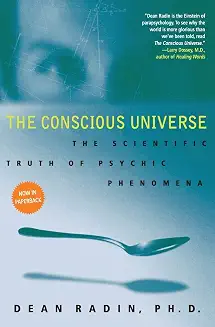
The Conscious Universe (1997)
The Conscious Universe: The Scientific Truth of Psychic Phenomena is a detailed overview of late twentieth century experimental psi research. It begins by discussing the need for evidence, replication and the uses of meta-analysis, and goes on to describe experiments in such areas as telepathy, perception at a distance, mind matter interaction, and mental interactions with living systems, also field consciousness research. It describes the history of research in each category and the development of experimental methods, and provides diagrams of meta-analysis showing large and, in some cases, overwhelming evidence of an effect.
In later chapters, Radin critiques sceptical complaints and behaviours, arguing that by trying to block responsible research, disbelieving critics have perpetuated myths about psi that parapsychologists themselves wish to dispel. He points out that informed critics such as Ray Hyman now acknowledge that experimental results are sometimes ‘astronomically significant’, shifting the debate away from whether such effects exist as to how they can be explained.74Radin (1997), 209. He discusses the effect of bias, and looks at the historical context to discover why mainstream science has vigorously resisted the experimental evidence for psi. Finally, he considers the future scientific and social implications of psi.
Entangled Minds (2006)
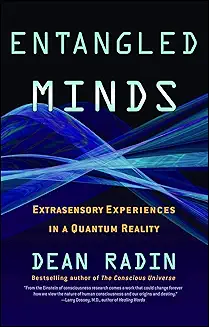
In Entangled Minds: Extrasensory Experiences in a Quantum Reality, Radin brings the psi experimental evidence up to date, and places it in the context of quantum entanglement, the phenomenon of particles appearing to be connected across distance. When first discovered, entanglement was thought to apply only to particles, but research since the 1970s suggests the effect appears also at macroscopic levels. Quantum experts such as Henry Stapp believe it could be involved in brain processes, with implications for consciousness.75Stapp (2015). For Radin, this provides a path to understanding psi phenomena. If it is possible to shift attention to focus on a memory inside one’s head, one might also be able to focus on a point at a distance, as with remote viewing. And because quantum connections are not bound by space or time, attention could also be focused on future events, as with presentiment and precognition.
Although Radin prefers to avoid mystical concepts, he has become sympathetic to the writings of the great mystics, who appear to be describing from an experiential point of view what it is like to feel entangled with the universe.
Could entanglement as a metaphor help us understand why phenomena like distant perception and distant intentionality might make sense? And what if this idea was more than a metaphor? What if the fabric of reality really was all quantum, all the time? Could there be “spooky actions” at a distance at every level of existence, and could those spooky actions take on new properties as they emerge from elementary to more complex forms? In other words, what if psychic phenomena are the human experiential version of quantum entanglement?76Horrigan (2007).
Supernormal (2013)
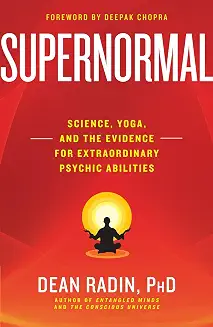
Supernormal: Science, Yoga, and the Evidence for Extraordinary Psychic Abilities investigates the nature of psi phenomena in the context of yoga and the yogic tradition of siddhis (psychic powers). In Patanjali’s Yoga Sutras, the siddhis are presented as neither magical or divine, but as the natural outcome of intense meditation practice. Radin points out that some of these abilities can be investigated in the laboratory in controlled tests. Individual chapters focus on the evidence to date for precognition, telepathy, clairvoyance and mind-matter interactions, including experiments carried out with experienced meditators.
As with Radin’s earlier books, Supernormal includes extensive critiques of sceptical views and responses. It concludes by discussing how a greater understanding of psi phenomena achieved by means of experimental research might contribute to the development of a new idea of reality in Western thought.
Real Magic (2018)
In Real Magic: Ancient Wisdom, Modern Science, and a Guide to the Secret Power of the Universe, Radin discusses traditional esoteric magic as a natural aspect of reality. He introduces the reader to a brief history of magical practices over the centuries, showing how various cultural manifestations of magical lore converge onto a worldview that mind is fundamental, then introducing scientific evidence – including unpublished analyses of online psi testing – that provide validation for this viewpoint.
The Science of Magic (2025)
The Science of Magic builds on Real Magic by presenting Radin’s most comprehensive synthesis of the experimental evidence for psi within a unified theoretical framework. It examines the historical and cross-cultural roots of magical thought and argues that the accumulated experimental evidence from parapsychology is consistent with a worldview in which mind is fundamental — a position that converges with a subset of interpretations in quantum theory. The book was awarded the Scientific and Medical Network’s 2025 Book of the Year Award.77IONS profile (2026).
Selected Articles
Presentiment/Precognition
Radin, D.I. (1982). Experimental attempts to influence pseudorandom number sequences. Journal of the American Society for Psychical Research 76, 359-74.
Radin, D.I., & Bosworth, J.L. (1985). Response distributions in a computer-based perceptual task: Test of four models. Journal of the American Society for Psychical Research 79, 453-83.
Radin, D.I. (1988). Effects of a priori probability on psi perception: Does precognition predict actual or probable futures? Journal of Parapsychology 52, 187-212.
Radin, D.I. (1990–1991). Statistically enhancing psi effects with sequential analysis:A replication and extension. European Journal of Parapsychology 8, 98-111.
Bierman, D.J., & Radin, D.I. (1997). Anomalous anticipatory response on randomized future conditions. Perceptual and Motor Skills 84 689-90.
Radin, D.I. (1997). Unconscious perception of future emotions: An experiment inpresentiment. Journal of Scientific Exploration 11/2, 163-180.
Radin, D.I. (2004). Electrodermal presentiments of future emotions. Journal of Scientific Exploration 18, 253-74.
Radin, D.I., & Lobach, E. (2007). Toward understanding the placebo effect: Investigating a possible retrocausal factor. Journal of Alternative and Complementary Medicine 13, 733-39.
Radin, D.I., & Borges, A. (2009). Intuition through time: What does the seer see? EXPLORE: The Journal of Science and Healing 5/4, 200-11.
Radin, D.I., Vieten, C., Michel, L., & Delorme, A. (2011). Electrocortical activity prior to unpredictable stimuli in meditators and non-meditators. EXPLORE: The Journal of Science and Healing 7, 286-99.
Mind-Matter Interaction
Optical Physics
Radin, D.I. (2008). Testing nonlocal observation as a source of intuitive knowledge. EXPLORE: The Journal of Science and Healing 4/1, 25-35.
Radin, D.I., Michel, L, Wendland, P., Rickenbach, R., Delorme, A., & Galdamez, K. (2012). Consciousness and the double-slit interference pattern: Six experiments Physics Essays 25/2, 157-71.
Radin, D.I., Delorme, A., Michel, L., & Johnston, J. (2013). Psychophysical interactions with a double-slit interference pattern: Experiments and a model. Physics Essays 26/4, 553-66.
Radin, D.I., Michel, .L., Pierce, A., & Delorme, A. (2015). Psychophysical interactions with a single-photon double-slit optical system. Quantum Biosystems 6/1, 82-98.
Radin, D.I., Michel, L., & Delorme, A. (2016). Psychophysical modulation of fringe visibility in a distant double-slit optical system. Physics Essays 29/1, 14-22.
Radin, D., Bancel, P., & Delorme, A. (2021a). Psychophysical interactions with entangled photons: Five exploratory experiments. Journal of Anomalous Experience and Cognition 1, 9-54.
Radin, D., Wahbeh, H., Michel, L., Delorme, A. (2021). Psychophysical interactions with a double-slit interference pattern: Exploratory evidence of a causal influence. Physics Essays 34, 79-88.
‘Influenced’ Food and Water
Radin, D.I., Hayssen, G., Emoto, M., & Kizu, T. (2006). Double-blind test of the effects of distant intention on water crystal formation. EXPLORE: The Journal of Science and Healing 2/5, 408-11.
Radin, D.I., Hayssen, G., & Walsh, J. (2007). Effects of intentionally enhanced chocolate on mood. EXPLORE: The Journal of Science and Healing 3/5, 485-92.
Radin, D.I., Lund, N., Emoto, M., & Kizu, T. (2008). Effects of distant intention on water crystal formation: A triple-blind replication. Journal of Scientific Exploration 22/4, 481-93.
Shiah, Y-J., & Radin, D.I. (2013). Metaphysics of the tea ceremony: A randomized trial investigating the roles of intention and belief on mood while drinking tea. EXPLORE: The Journal of Science and Healing 9, 355-60.
Shiah, Y.-J., Hsieh, H.l., Chen, J.H., Radin, D. (2017). Effects of intentionally treated water on growth of Arabidopsis thaliana seeds with cryptochrome mutations. EXPLORE: The Journal of Science and Healing 13, 371-78.
Shiah, Y-J., Hseih, H.-L., Chen, H.-J., & Radin, D.I. (2020). A randomized, controlled trial of the effects of intentionally treated water on growth of Arabidopsis thaliana seeds with cryptochrome mutations. EXPLORE: The Journal of Science and Healing 13/6, 371-78.
Shiah, Y.-J., Radin, D. (2020). Effects of intentionally treated water and seeds on the growth of Arabidopsis thaliana. EXPLORE: The Journal of Science and Healing 17/1, 55-59.
Radin, D., Yount, G., Delorme, A., Carpenter, L., & Wahbeh, H.. (2020). Spectroscopic analysis of water treated by and in proximity to energy medicine practitioners: An exploratory study. EXPLORE: The Journal of Science and Healing 17/1, 27-31.
Shiah, Y.-J., Shan, L., Radin, D., & Huang, G.T.-J. (2022). Effects of intentionally treated water on the growth of mesenchymal stem cells: An exploratory study. EXPLORE: The Journal of Science and Healing 18, 663-69.
Randomness
Radin, D.I., & Nelson, R.D. (1989). Evidence for consciousness-related anomalies in random physical systems. Foundations of Physics 19, 1499-514.
Radin, D.I. (1989). Searching for “signatures” in anomalous human-machine interaction research: A neural network approach. Journal of Scientific Exploration 3, 185-200.
Radin, D.I., & Utts, J.M. (1989). Experiments investigating the influence of intention on random and pseudorandom events. Journal of Scientific Exploration 3, 65-79.
Radin, D.I. (1990). Testing the plausibility of psi-mediated computer system failures. Journal of Parapsychology 54, 1-19.
Radin, D.I. (1992). Beyond belief: Exploring interactions among mind, body and environment. Subtle Energies and Energy Medicine 2/3, 1-40.
Radin, D.I. (1993). Environmental modulation and statistical equilibrium in mind-matter interaction. Subtle Energies and Energy Medicine 4/1, 1-30.
Radin, D.I. (1993). Neural network analyses of consciousness-related patterns in random sequences. Journal of Scientific Exploration 7/4, 355-74.
Radin, D.I. (1996). Towards a complex systems model of psi performance. Subtle Energies and Energy Medicine 7, 35-70.
Radin, D.I., Rebman, J.M. & Cross, M.P. (1996). Anomalous organization of random events by group consciousness. Journal of Scientific Exploration 10/1) 143-68.
Radin, D.I., & Rebman, J.M. (1998). Seeking psi in the casino. Journal of the Society for Psychical Research 62/850, 193-219.
Radin, D.I. (2002). Exploring relationships between random physical events and mass human attention: Asking for whom the bell tolls. Journal of Scientific Exploration 16/4, 533-48.
Nelson, R.D., Radin, D.I., Shoup, R., & Bancel, P. (2002). Correlation of continuous random data with major world events. Foundations of Physics Letters 15/6, 537-50.
Radin, D. I. (2006). Experiments testing models of mind-matter interaction. Journal of Scientific Exploration 20/3, 375-401.
Mason, L.I., Patterson, R.P., & Radin, D.I. (2007). Exploratory study: The random number generator and group meditation. Journal of Scientific Exploration 21/2, 295–317.
Radin, D.I., & Atwater, F.H. (2009). Exploratory evidence for correlations between entrained mental coherence and random physical systems. Journal of Scientific Exploration 23/3, 1-10.
Distant Healing
Radin, D.I., Taylor, R.D., & Braud, W. (1995). Remote mental influence of human electrodermal activity: A pilot replication. European Journal of Parapsychology 11, 19-34.
Rebman, J.M., Wezelman, R., Radin, D.I., Hapke, R.A. & Gaughan, K. (1996). Remote influence of the autonomic nervous system by focused intention. Subtle Energies and Energy Medicine 6, 111-34.
Radin, D.I., Machado, F., & Zangari, W. (2000). Effects of distant healing intention through time and space: Two exploratory studies. Subtle Energies and Energy Medicine 11/3, 207-40.
Radin, D.I., & Yount, G. (2004). Possible effects of healing intention on cell cultures and truly random events. Journal of Alternative and Complementary Medicine 10/1, 103-12.
Radin, D.I. (2004). On the sense of being stared at: An analysis and pilot replication. Journal of the Society for Psychical Research 68, 246-53.
Radin, D.I., & Schlitz, M.J. (2005). Gut feelings, intuition, and emotions: An exploratory study. Journal of Alternative and Complementary Medicine 11/4, 85-91.
Radin, D.I., Stone, J., Levine, E., Eskandarnejad, S., Schlitz, M.J., Kozak, L., Mandel, D., & Hayssen, G. (2008). Compassionate intention as a therapeutic intervention by partners of cancer patients: Effects of distant intention on the patients’ autonomic nervous system. EXPLORE: The Journal of Science and Healing 4/4, 235-43.
Schlitz, M., Hopf, H.W., Eskenazi, L., Vieten, C., & Radin, D.I. (2012). Distant healing of surgical wounds: An exploratory study. EXPLORE: The Journal of Science and Healing 8, 223-30.
Schlitz, M., Wiseman, R., Watt, C., & Radin, D.I. (2006). Of two minds: Skeptic-proponent collaboration within parapsychology. British Journal of Psychology 97, 313-22.
Mediumship
Radin, D.I., & Rebman, J.M. (1996). Are phantasms fact or fantasy?A preliminary investigation of apparitions evoked in the laboratory. Journal of the Society for Psychical Research 61/ 843, 65-87.
Delorme A., Beischel J., Michel L., Boccuzzi, M., Radin, D.I., & Mills, P.J. (2013). Electrocortical activity associated with subjective communication with the deceased. Frontiers in Psychology 4, 834.
Delorme, A., Pierce, A. Michel, L., & Radin, D.I. (2016). Prediction of mortality based on facial characteristics. Frontiers in Human Neuroscience, 10, Art. 173.
Telepathy
Radin, D.I., McAlpine, S. & Cunningham, S. (1994). Geomagnetism and psi in the ganzfeld. Journal of the Society for Psychical Research 59/834, 352-63.
Radin, D.I. (2002). A dog that seems to know when his owner is coming home: Effects of geomagnetism. Journal of Scientific Exploration 16/4, 579-92.
Radin, D.I. (2004). Event related EEG correlations between isolated human subjects. Journal of Alternative and Complementary Medicine 10, 315-24.
Others
Radin, D.I. (2019). Tricking the Trickster: Evidence for predicted sequential structure in a 19-year online psi experiment. Journal of Scientific Exploration 33, 549-68.
Yount, G., Delorme, A., Radin, D.I., Carpenter, L, Rachlin, K., Anastasia, J., Pierson, M., Steele, S., Mandell, H., Chagnon, A., & Wahbeh, H. (2020). Energy medicine treatments for hand and wrist pain: A pilot study. EXPLORE: The Journal of Science and Healing 17/1, 11-21.
Radin, D., Wahbeh, H., Delorme, A., Carpenter, L., Yount, G., & Kyle, F. (2022). Subtle energy perception: Pilot study with a Buddha relic. Current Research in Complementary and Alternative Medicine 6/3, 1-3.
Michael Duggan and Robert McLuhan
Works Cited
Adam, T., Agafonova, N., Aleksandrov, A., Anokhina, A., Aoki, S., & Ariga, A., et al. (2013). Measurement of the neutrino velocity with the OPERA detector in the CNGS beam using the 2012 dedicated data. Journal of High Energy Physics 153.
Alibalaei, H., Radin, D., Ilavarasu, J., & Nagendra, H.R. (2025). Experimental investigation of precognition in yoga practitioners. Journal of the Society for Psychical Research 89/1, 1-23.
Atmanspacher, H., & Rickles, D. (2022). DualAspect Monism and the Deep Structure of Meaning. London: Routledge.
Bierman, D.J., & Radin, D.I. (1997). Anomalous anticipatory response on randomized future conditions. Perceptual and Motor Skills 84, 689-90.
Bierman, D.J,. & Radin D.I. (1999). Conscious and anomalous non-conscious emotional processes: A reversal of the arrow of time? In Toward a Science of Consciousness III: The Third Tucson Discussions and Debates, ed. by S.R. Hameroff, A.W. Kazniak, & D. Chalmers, 367-86. Cambridge, Massachusetts, USA: MIT Press.
Carpenter, L., Cannard, C., Wahbeh, H., & Radin, D.I. (2021). Psychophysical interactions with photons: Three exploratory studies with unexpected results. Journal of the Society for Psychical Research 85/1, 31-48.
Carpenter, L., Wahbeh, H., Yount, G., Delorme, A., & Radin, D.I. (2020). Possible negentropic effects observed during energy medicine sessions. EXPLORE: The Journal of Science and Healing 17/1, 45-49.
Delorme, A., Cannard, C., Radin, D.I., & Wahbeh, H. (2020). Accuracy and neural correlates of blinded mediumship compared to controls on an image classification task. Brain and Cognition 146, Art. 105638.
Delorme, A., Wahbeh, H., & Radin, D. (2024). Testing the robustness of accurate intuitive abilities and assessment of reproducibility with a group of potentially talented individuals. Preprint, December 2024.
Good, I.J. (1997). Nature (23 October), 806.
Horrigan, B.J. (2007). Dean Radin: Consciousness and our entangled reality. EXPLORE: The Journal of Science and Healing 3/6 (November/December), 605-12.
Kayale F., Radin D., Wahbeh H., Delorme A., Carpenter L., et al. (2022). Subtle energy perception: Pilot study with a Buddha Relic. [Full text.] Current Research in Complementary and Alternative Medicine 6, 163.
Kauffman, S.A. (2016). Humanity in a Creative Universe. New York: Oxford University Press.
Kauffman, S.A., & Radin, D.I. (2022). Quantum aspects of the brain-mind relationship: A hypothesis with supporting evidence. Biosystems 223/2, 104820.
Mossbridge, J., & Radin, D.I. (2021). Psi performance as a function of demographic and personality factors in smartphone-based tests: Using a “SEARCH” approach. Journal of Anomalous Experience and Cognition 1/1-2, 78-113.
Persinger, M.A., Saroka, K.S., Lavallee, C.F., Booth, J.N., Hunter, M.D., Mulligan, B.P., et al. (2010). Correlated cerebral events between physically and sensory isolated pairs of subjects exposed to yoked circumcerebral magnetic fields.[Abstract.] Neuroscience Letters, 486, 231-234.
Radin, D.I. (1997). The Conscious Universe: The Scientific Truth of Psychic Phenomena. San Francisco: HarperSanFrancisco.
Radin, D.I. (2006). Entangled Minds: Extrasensory Experiences in a Quantum Reality. New York: Paraview Pocket Books.
Radin, D.I. (2018). Real Magic: Unlocking Your Natural Psychic Abilities to Create Everyday Miracles. New York: Harmony Books.
Radin, D.I. (2019). Tricking the trickster: Evidence for predicted sequential structure in a 19-year online psi experiment. Journal of Scientific Exploration 33, 549-68.
Radin, D.I. (2023a). Charles Tart’s contributions to parapsychology: A scientific career sparked by the Cabbage Patch Kid. Journal of Anomalous Experience and Cognition 3/2, 248-66.
Radin, D.I. (2023b). Anomalous entropic effects in physical systems associated with collective consciousness. Physics Essays 36/1, 77-86.
Radin, D.I. (2023c). Sentiment and presentiment in Twitter: Do trends in collective mood “feel the future”? World Futures June, 525-35.
Radin, D.I. (2023d). A metaphysical theory connecting mind, matter, and meaning: A review of dual-aspect monism and the deep structure of meaning. Journal of Anomalous Experience and Cognition 3/1, 194-203.
Radin, D. (2025a). Observer influence on quantum interference: Testing the von Neumann-Wigner consciousness-collapse theory. Physics Essays 38/1.
Radin, D. (2025b). Independent replication of an “excess correlation” effect in pH between isolated beakers of water. Journal of Biophysical Chemistry 16/2.
Radin, D. (2025c). New Year’s Eve as a case study in experimental metaphysics: Exploring global consciousness in random physical systems. Journal of Scientific Exploration 39/4.
Radin, D.I., & Anastasia, J. (2023). Psychophysical interactions with electrical plasma: Three exploratory experiments. PsyArXiv. [Web page.]
Radin, D., & Brinsmead, E. (2026). Excess Correlation in pH between Magnetically Stimulated Beakers of Water: A Preregistered Replication. Journal of Biophysical Chemistry, 17, 15-27.
Radin, D.I., Bancel, P., & Delorme, A. (2021a). Psychophysical interactions with entangled photons: Five exploratory experiments. Journal of Anomalous Experience and Cognition 1, 9-54.
Radin, D.I., & Delorme, A. (2023). What does remote perception see? Two online exploratory experiments with hidden features. OSF. [Web page.]
Radin, D.I., & Delorme, A. (2026). Finding an invisible target too quickly: Analysis of a sequential search task anomaly in 36 million trials. PsyArXiv..(Preprint)
Radin, D.I., Hayssen, G., & Walsh, J. (2007). Effects of intentionally enhanced chocolate on mood. EXPLORE: The Journal of Science and Healing 3/5, 485-92.
Radin, D., & Ives, J. A. (2026). Negentropic effects in quantum-based noise devices during biofield healing. EXPLORE: The Journal of Science and Healing 22/4, 103423.
Radin, D.I., Michel, L., & Delorme, A. (2016). Psychophysical modulation of fringe visibility in a distant double-slit optical system. Physics Essays 29/1, 14-22.
Radin, D.I., Michel, L, Wendland, P., Rickenbach, R., Delorme, A., & Galdamez, K. (2012). Consciousness and the double-slit interference pattern: Six experiments. Physics Essays 25/2, 157-71.
Radin, D.I., Stone, J., Levine, E., Eskandarnejad, S., Schlitz, M., Kozak, L., Mandel, D., & Hayssen, G. (2008). Compassionate intention as a therapeutic intervention by partners ofcancer patients: Effects of distant intention on the patients’ autonomic nervous system. EXPLORE: The Journal of Science and Healing 4/4, 235-43.
Radin, D.I., Taft, R., & Yount, G. (2004). Possible effects of healing intention on cell cultures and truly random events. Journal of Alternative and Complementary Medicine 10, 103-12.
Radin, D.I., Wahbeh, H., Delorme, A., Carpenter, L., Yount, G., & Kyle, F. (2022). Subtle energy perception: Pilot study with a Buddha relic. Current Research in Complementary and Alternative Medicine 6/3, 1-3.
Radin, D.I., Wahbeh, H., Michel, L., & Delorme, A. (2020). Commentary: False-positive effect in the Radin double-slit experiment on observer consciousness as determined with the advanced meta-experimental protocol. Frontiers in Psychology 11.
Radin, D.I., Wahbeh, H., Michel, L., & Delorme, A. (2021). Psychophysical interactions with a double-slit interference pattern: Exploratory evidence of a causal influence. [Full text.] Physics Essays 34/1, 79-88.
Radin, D.I., Yount, G., Delorme, A., Carpenter, L., & Wahbeh, H. (2020). Spectroscopic analysis of water treated by and in proximity to Energy Medicine practitioners: An exploratory study. EXPLORE: The Journal of Science and Healing 17/1, 27-31.
Rouleau, N., Carniello, T.N., & Persinger, M.A. (2014). Non-local Ph shifts and shared changing angular velocity magnetic fields: Discrete energies and the importance of point durations. Journal of Biophysical Chemistry, 5, 44-53.
Schwartz, S.A., De Mattei, R.J., Brame Jr, E.G., & Spottiswoode, J.P. (1990). Infrared spectra alteration in water proximate to the palms of therapeutic practitioners. Subtle Energies 1/1, 43-72.
Shiah, Y.-J., Hsieh, H.l., Chen, J.H., & Radin, D. (2017). Effects of intentionally treated water on growth of Arabidopsis thaliana seeds with cryptochrome mutations. EXPLORE: The Journal of Science and Healing 13, 371-78.
Shiah, Y.-J., & Radin, D. (2020). Effects of intentionally treated water and seeds on the growth of Arabidopsis thaliana. EXPLORE: The Journal of Science and Healing 17/1, 55-59.
Shiah, Y.-J., Shan, L., Radin, D., & Huang, G.T.-J. (2022). Effects of intentionally treated water on the growth of mesenchymal stem cells: An exploratory study. EXPLORE: The Journal of Science and Healing18, 663-69.
Stapp, H. (2015). A quantum-mechanical theory of the mind/brain connection. In Beyond Physicalism: Toward Reconciliation of Science and Spirituality, ed. by E.F. Kelly et al. Lanham, Maryland, USA: Rowman & Littlefield.
Tiller, W.A., Kohane, M.J., & Dibble, W.E. (2000). Can an aspect of consciousness be imprinted into an electronic device? Integrative Physiological and Behavioural Science 35/2, 142-62.
Wahbeh, H., Cannard, C., Radin, D.I., & Delorme, A. (2023). Who’s calling? Evaluating the accuracy of guessing who is on the phone. EXPLORE: The Journal of Science and Healing 10, 1016.
Wahbeh, H., Delorme, A., Cannard, C., Rossner, R., Yount, G., & Radin, D. (2026). Genomic correlates of self-reported psychic experiences: An exploratory analysis. EXPLORE: The Journal of Science and Healing 22.
Wahbeh, H., Delorme, A., & Radin, D.I. (2023). Rating the persuasiveness of empirical evidence for the survival of consciousness after bodily death: A cross-sectional study. Journal of Anomalous Experience and Cognition 3/1, 78-109.
Wahbeh, H., Kriegsman, M., Glick, B., Delorme, A., Radin, D. (2026). Probing top performers in a forced-choice clairvoyant task. Journal of Anomalistics 26/1, 146-76.
Wahbeh, H., Radin, D., Yount, G., Menie, M., Sarraf, M., & Karpuj, M. (2021). Genetics of psychic ability – A pilot case-control exome sequencing study. EXPLORE: The Journal of Science and Healing 18/3, 264-71.
Walleczek J., & von Stillfried, N. (2019). False-positive effect in the Radin double-slit experiment on observer consciousness as determined with the advanced meta-experimental protocol. Frontiers in Psychology 10.
Walleczek J., & von Stillfried, N. (2020). Response: Commentary: False-positive effect in the Radin double-slit experiment on observer consciousness as determined with the advanced meta-experimental protocol. Frontiers in Psychology 3.
Yount, G., Delorme, A., Radin, D.I., Carpenter, L., Rachlin, K., Anastasia, J., Pierson, M., Steele, S., Mandell, H., Chagnon, A., & Wahbeh, H. (2020). Energy medicine treatments for hand and wrist pain: A pilot study. EXPLORE: The Journal of Science and Healing 17/1, 11-21.
Yu, R.C-T., Liao, Y-T.A., Radin, D.I., Shiah, Y-J. (2026). Intention-treated water inhibits migration of human glioblastoma cells via downregulation of motility-associated proteins. [Excerpt.] EXPLORE: The Journal of Science and Healing 22/5, art. 103454.
Yu, R.C.-T., Radin, D.I., Chu, C.-Y., & Shiah, Y.-J. (2025). Effects of intentionally treated water on cell migration of human glioblastoma cells. [Excerpt.] EXPLORE: The Journal of Science and Healing 27/1, art. 103100.