
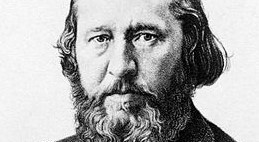
Alexander Nikolayevich Aksakov was a central figure in nineteenth-century psychical research, helping carry Spiritualist and mediumistic inquiry into Russia while linking it with wider European debates. A civil servant by profession, he became known for his investigations of mediums, his journal Psychische Studien and his careful, if often sympathetic, documentation.
- Aksakov helped organise séances in Russia in the 1860s and is generally regarded as the country’s first psychical researcher.
- His journal Psychische Studien, founded in 1874 in Leipzig, became an important forum for psychical research in continental Europe.
- Myers credited him with coining the term telekinesis, and Aksakov later left the SPR a substantial legacy.
Contents
Life and Career
Alexander Aksakov (1832–1903) was born in Russia to a land-owning family. He studied philosophy and religion, graduating from the Tsarskoye Selo Lyceum in 1851. He studied medicine at the University of Moscow, then joined the Imperial Ministry of Internal Affairs, serving as a member of His Imperial Majesty’s Own Chancellery from 1868 until 1878. He spent much time in Europe, especially Germany where he published many of his books and where he adopted the German spelling of his name ‘Aksakof’, by which he is commonly known outside Russia (also sometimes ‘Aksakoff’ in publications of the Society for Psychical Research).
Psychical Research
Aksakov was greatly impressed by the writings of Emanuel Swedenborg, first translating his Heaven and Hell from Latin into Russian,1Swedenborg (2010). then publishing his own books about Swedenborg.2Great Biographical Encyclopedia (2009). Beginning in the 1860s, together with Alexander Butlerov and Nikolai Wagner, he organized séances in Russia while continuing to translate philosophical works.
He was introduced to DD Home in 18713Petrovo-Solovovo (1903), 46. and in 1873 attended two sittings given by Florence Cook in London, which he later described in his book Animismus und Spiritismus (1894).4Aksakof (1898). Partly translated into English by Zorab (1964), 173-83. Aksakov was confident that the materialised ‘spirit’ named Katie King who habitually appeared at Cook’s séances was not Cook herself, and that he had been given every opportunity to observe the movements of both.5Zorab (1964), 174-75.
He founded the monthly journal Psychische Studien which was based in Leipzig in 1874 and continued as Zeitschrift für Parapsychologie from 1926 to 1934.
Following a visit to Russia in 1874 by Camille Bredif, a French medium, Aksakov travelled to England to search for others that he might investigate. His first choice, the Petty brothers, proved uneventful, but subsequent sittings with Mrs Clayer produced ‘strong physical phenomena in light’.6Fodor (1934), 2. The following year he joined the Theosophical Society and was appointed its international vice-president in 1881. At this time he also started contributing to Rebus, a Russian Spiritualist magazine.7Petrovo-Solovovo (1903), 47. His report on French Spiritualists8Aksakof (1875), 73-75. presented Allan Kardec’s doctrine of reincarnation.
His conclusions with regard to the mediums he investigated were mixed. He was disappointed by Henry Slade in 1878,9Petrovo-Solovovo (1903), 47. and also by AE Fay in 1889. Investigating Kate Fox-Jencken in 1883 he remained doubtful about the raps she produced, finding them ‘exactly similar’ to those produced artificially by the toes by Perovsky-Petrovo-Solovovo, a fellow SPR researcher. However, he was ultimately convinced by Fox-Jencken and also by William Eglinton three years later.
Aksakov promoted sittings with Eusapia Palladino in Milan in 189210Aksakof et al (1893), 39-64. which were also attended by Cesare Lombroso, Charles Richet and other notable scientists.11Bozzano (1906), 1-9. He was particularly impressed with Elizabeth d’Espérance’s physical mediumship, having travelled to Helsinki to investigate her. He described in detail a partial materialization12Aksakov (1894). she produced and wrote the introduction to her book Shadow Land (1897).
Further accounts and comments by Aksakov can be found in the journal Psychische Studien13(1897). and a biographical article by William T Stead.14Stead (1897).
Animismus und Spiritismus
Aksakov’s most important work is his two-volume book is Animismus und Spiritismus, subtitled ‘An attempt at a critical investigation of mediumistic phenomena, with special reference to the hypothesis of hallucination and of the unconscious; an answer to Dr E. von Hartmann’s work, Der Spiritismus’ [translated from the German.] His assumptions, summarized with the ‘absence of fanaticism’ consistent with the contents of his journal Psychische Studien:15Myers (1890), 665.
- a nervous force, which can produce mechanical and plastic effects outside the human body
- hallucinations (often collective), supported by this same nervous force, and sometimes producing physical and plastic effects
- a hidden, unrealised, somnambulic consciousness (unbewusstes Bewusstsein) existing throughout the subject’s normal life, which perceives the whole present and past life of another man, through telepathic insight into his intellectual content
- this consciousness sometimes becomes possessed of a clairvoyant power that ‘brings the subject into relation with the absolute, and consequently bestows upon him a knowledge of everything which is or which has been’.16Cited in Myers (1890), 665-66.
The work found favour with Myers as a balanced case for the origin of such manifestations, although Myers also considered that some of the cases he gave were ‘too remote and too loosely described to carry much weight’.17Myers (1890), 671.
Association with the SPR
Aksakov was valued by his SPR colleagues as a thorough and conscientious researcher, who often brought cases to their attention that they might otherwise not have seen.18For instance, see Petrovovo-Solovovo (1903); Medhurst and Goldney (1964), 129; and Fodor (1934), 1. Myers credited him with having coined the term ‘telekinesis’,19Myers (1903), 205. which is still sometimes used instead of the more common term ‘psychokinesis’. Aksakov contributed numerous cases to Myers’s Human Personality and its Survival of Bodily Death.20Myers (1903), 25, 170-71, 466-73, passim. He left the SPR a legacy of £3800 (around £600,000 in 2024).21Footnote to Proceedings 18, 8 (1903).
Towards the end of his life he admitted that he had relatively little to show in the way of proofs of survival, but he believed that if he had ‘laid one stone of the temple of the spirit’ then it would recompense his life’s work.22Cited in Inglis (1985), 282.
Selected Publications
Psychische Studien (ed.) (1874-99). Leipzig, Germany: Oswald Mutze.
Researches on the historical origin of the reincarnation speculations of French Spiritualists (1875). The Spiritualist and Journal of Psychological Science 7/7, 73-75.
Rapport de la commission réunie à Milan pour l’étude des phénomènes psychiques (1893, with G. Schiaparell & C. du Prel et al.). Annales des Sciences Psychiques 3, 39-64.
Animismus und Spiritismus (1894). Leipzig, Germany: Oswald Mutze.
The Precursors of Spiritism for the Last 250 Years: Published Cases of Spontaneous Medianic Phenomena from the year 1661, and the Transition to Experimentalism in 1848 (1895). St Petersburg, Russia.
A Case of Partial Dematerialization of the Body of a Medium. Investigation and Discussion (1898). Boston, Massachusetts, USA: Banner of Light Publishing Co.
Melvyn Willin
Literature
Aksakof, A. (1875). Researches on the historical origin of the reincarnation speculations of French Spiritualists. The Spiritualist and Journal of Psychological Science 7/7, 73-75.
Aksakof, A., Schiaparelli, G., & du Prel, C. et al. (1893). Rapport de la commission réunie à Milan pour l’étude des phénomènes psychiques. Annales des Sciences Psychiques 3, 39-64.
Aksakov, A. (1894). Animismus und Spiritismus. Leipzig, Germany: Oswald Mutze.
Aksakof, A. (1898). A Case of Partial Dematerialization of the Body of a Medium. Investigation and Discussion. Boston, Massachusetts, USA: Banner of Light Publishing Co.
Blavatsky, H.P. (1876). The Russian investigation. The Spiritual Scientist 4/8 (27 April).
Bozzano, E. (1906). Cesar Lombroso and supernormal psychology. Annals of Psychical Science 4 (July-December), 1-9.
d’Esperance, E. (1897). Shadow Land (1897). London: George Redway.
Doyle, A.C. (1926). The History of Spiritualism. London: Cassell and Co.
Fodor, N. (1934). Encyclopedia of Psychic Science. London: Arthurs Press Ltd.
Great Biographical Encyclopedia (2009). Alexander Nikolaevich Aksakov. [English translation of Аксаков, Александр Николаевич.] Большая биографическая энциклопедия (Great Biographical Encyclopedia). [Web page.]
Home, D.D. (1875). Letter: Mr D.D. Home on reincarnation. The Spiritualist and Journal of Psychological Science 7/7, 165.
Inglis, B. (1985). The Paranormal: An Encyclopedia of Psychic Phenomena. London: Guild Publishing.
Medhurst, R.G., & Goldney, K.M. (1964). William Crookes and the physical phenomena of mediumship. Proceedings of the Society for Psychical Research 54, 25-153.
Myers, F.W.H. (1890). Review of A. Aksakoff’s Animismus and Spiritismus. Proceedings of the Society for Psychical Research 17, 665-74.
Myers, F.W.H. (1903). Human Personality and its Survival of Bodily Death. Vol. II. London: Longmans, Green, and Co.
Petrovo-Solovovo, M. (1903). Obituary: Mr A.N. Aksakoff. Journal of the Society for Psychical Research 11, 45-49.
Petrovo-Solovovo, M. (1939). Incidents of bygone days. Journal of the Society for Psychical Research 31, 79-81.
Stead, W.T. (1897). Madame d’Esperance. Borderland 4, 46-48.
Swedenborg, E. (2010). Heaven and Hell, trans. of De Caelo et ejus Mirabilibus, et de Inferno, ex Auditis et Visis (1758) by K.C. Ryder. London: The Swedenborg Society.
Zorab, G. (1964). Foreign comments on Florence Cook’s mediumship. Proceedings of the Society for Psychical Research 54, 173-83.