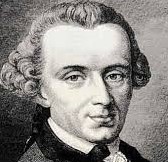
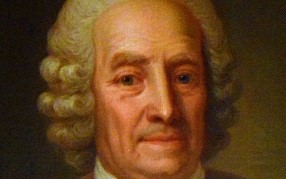
Emanuel Swedenborg (1688–1772) was a Swedish engineer, scientist, theologian, philosopher, seer and psychic. Swedenborg is best known as a reporter of encounters with spirits who had passed through an earthly existence, and as a re-interpreter of Biblical texts, which became the foundation of a New Church. Some notable psychic experiences are on record.
- Swedenborg’s most famous psychic episode was his detailed perception of the Stockholm fire while in Gothenburg.
- He claimed sustained intercourse with spirits and built from it a vast symbolic cosmology of heaven, hell and correspondence.
- In Heaven and Hell, he rejected reincarnation in the usual sense, favouring spiritual association between discarnate beings and the living.
Biography
Swedenborg’s life and works have been treated several times in the English language. The most recent and most comprehensive is a 2005 biography by Lars Bergquist, translated from the original Swedish by Norman Ryder,1Bergquist (2005). from which most of the material in this section is derived.
Swedenborg was born in Stockholm under the family name Swedberg. Through his father, a Lutheran bishop, the family was ennobled in 1719 and the family name changed to Swedenborg.The family moved to Uppsala when he was four, his father having been appointed professor of theology at the university, soon to become its rector. His childhood was harmonious and secure, despite the death of his mother and elder brother at the age of eight. His father evidently provided a background for Swedenborg’s later otherworld experiences, since he had faith in miracles and angels, and felt himself protected by heavenly messengers.2Bergquist (2005).
Emanuel’s early life was dominated by study, at which he was particularly diligent. Notable teachers were arranged for him, as his father was well-connected and wealthy. He enrolled in Uppsala University in 1699 at the age of eleven, where he developed a special interest in mathematics and science, graduating in 1709.The crown of his ten years there was a long dissertation, Selectae Sententiae (1709), a moral-psychological commentary on works of the Stoics.3Bergquist (2005).
In 1710 he sailed to London. There he associated himself with scientists (it seems he did not meet Newton), the Royal Society, and the Royal Observatory at Greenwich, where he became interested in the problem of determining latitude. He was also occupied in writing Latin poetry. He left London after two and a half years, to visit scholars and scientists in Holland, France and Germany before returning to Sweden in 1714.
There he became a journal editor on technical and practical matters. He also became an inventor, working on projects such as steam pumps, a hoist, a machine gun, canals, and a submarine.He saw his future in mathematics, mechanics and physics, and adopted a mechanical view of the world where all can be explained by motion and force.4Bergquist (2005).His association with Greenwich led to offers of professorships of astronomy and mathematics at Uppsala.
However, being more concerned with practical service to his country, he instead accepted appointment in 1716 to the Royal Board of Mines, which surveyed and controlled the important Swedish mining industry (a speech defect also decided him against a university appointment). He journeyed round northern Europe, became involved in geopolitics (which were markedly belligerent in northern Europe), and continued to be active in physics, chemistry, geology and philosophy, mainly Cartesian. In 1720 he was given a seat in the House of Nobles.
Swedenborg continued to travel extensively in Europe and eventually established himself in a small house and garden in Stockholm which he purchased in 1743. He published his first book in 1734. His thinking became increasingly focused on the relationship between matter and spirit, and this was the main focus of his work following a spiritual crisis that occurred in 1744 when he was 56.
In December 1771, staying in rented rooms in London, he suffered a stroke. He died there peacefully in March the following year and was buried in the Swedish chapel in London. When the chapel was demolished in the early twentieth century his remains were reinterred in Uppsala Cathedral.
Early Works
Swedenborg’s first significant work was published in 1734, Principia Rerum Naturalium, which presented the world as functioning like a machine, but powered by a ‘Supreme Divine’. Matter comes into being from the ‘Infinite’ as motion in the basic form of spirals, an idea gained from Descartes. Will, insight and intelligent activity were attributed to the ‘Infinite’. Philosophy was seen to be inseparable from veneration for the ‘Infinite Being’. This was standard in eighteenth century continental philosophy, and has parallels in twenty-first century thinking that envisages a ‘universal mind’ behind nature.
Swedenborg became increasingly occupied with the problem of the Infinite giving rise to the finite, similarly the connection between the soul and the body and the theological idea of God becoming man. During the years 1736 to 1740 he travelled to Italy and other countries. In the 1740s he expanded his reading of philosophy from Plato to contemporaries, writing extensive notes. He also studied anatomy and physiology, primarily, it seems, in search of the seat of the soul, and in order to identify correspondences (discussed below). He saw the soul as both material and immaterial, a material receptacle for the inflow of the divine, but capable of surviving physical death in human form.
Spiritual Visitation
A notebook translated as Dream Diary, covering the years 1743 to 1744 and published posthumously, records a radical change in Swedenborg’s life.5Bergquist (2001). Accounts of swooning, mental cleansing, religious crises, near-death feelings, ‘holy shivers’, a sense of being called, and surrender to the Divine all suggest a virtual shamanic initiation. The climax was recorded on Easter Monday 1744: an encounter with a being he took to be Jesus Christ in which he was exhorted to carry out an unspecified course of action (see below, Swedenborg and Psi). The Diary concludes with his conviction that he must write a new book on the worship and love of God – all other things being put aside (see also below, Communication with Spirits).
The divine book was to be his own work, not taking into account the notions of others. He now read nothing apart from the Bible, studied Hebrew, and in 1748 embarked on a commentary on the first two chapters of Genesis; this eventually became his eight-volume Biblical exegesis Arcana Caelestia, published between 1749 and 1756. Emphasis was on the symbolic, spiritual interpretation of purported facts. From 1745 to 1765 he kept a journal of his ‘spiritual experiences’ that included new worlds opened to his inner vision, meetings with people who had recently died, and cosmological thoughts such as Maximus Homo, discussed below. This was all combined into his best-known work, translated several times as Heaven and Hell, published anonymously in 1758 as De Caelo et ejus Mirabilibus, et de Inferno, ex Auditis et Visis.6Swedenborg (1758). Note may be taken of the subtitle ex Auditis et Visis, as heard and seen: Swedenborg remained an empirical scientist in his later work.
The Easter visitation of 1744 was for Swedenborg a divine call. His subsequent life story is largely a response to that call in the form of some twenty-two works, not all of them published in his lifetime. Publication was mainly in London, which was free of restraints imposed in most continental countries. (See below, Main Ideas.)
Swedenborg wrote that the result of his Easter visitation was that ‘from a philosopher, I became a theologian.’7Swedenborg (1769), §20. Yet writing as an other-world investigative reporter and commentator, he could be classed as an empiricist, at least in intent, his reports being ex auditis et visis. Regarded now as a mystic, theologian and moralist, he nevertheless remained a scientist to the end.
Contemporary Reception
Despite his wish for anonymity, rumours of his special gifts began to spread across Europe, reaching among others the philosopher Immanuel Kant (see below).
In the 1760s Swedenborg’s heterodox writings came under increasing attack, as did a book by Christolph Oetinger in 1765, the first ever to be written about him and his work; it was declared heretical by the Württemberg government and all copies were confiscated.8Johnson (2002). In 1768 the cathedral chapter in Gothenburg questioned the doctrinal purity of Swedenborg’s teachings, notably his rejection of the orthodox doctrine of the Trinity in favour of one indivisible God. Swedenborg’s view of works rather than faith as the path to salvation contradicted Lutheran teaching, as did also his rejection of the idea of a Last Judgement: we judge and condemn ourselves through our attitudes and actions in our worldly life.9Swedenborg (1758).
Swedenborg abandoned his customary anonymity in order to defend himself against these attacks, and in 1769 published an exposition of the doctrine of his New Church, along with a distribution of other of his works. This led to the impounding of his latest book, Conjugal Love; a commission was set up to investigate his other works, with the same purpose. Swedenborg appealed to King Adolf Fredrik for protection; he was well known to Swedish royalty, and perhaps on account of the petition the investigation merely dragged on. It had quietened down by the time of Swedenborg’s death.
His last work, published in 1771, Vera Christiana Religio (The True Christian Religion),10Swedenborg (1771). attempted a summary of his thinking, reconciled as far as possible with Lutheran doctrine The second coming of Christ, as foretold in the New Testament, was seen to be not a physical return but spread of a true (his own) understanding of Biblical text. This involved a switch from literal to symbolic interpretation of Biblical texts, a hallmark of Swedenborg’s teaching. With the second coming would be the establishment of a new church, which he believed he’d been sent by the Lord to prepare, to sow the seed of a transformed Christian vision.
Swedenborg and Psi
In 1759 several people testified to an occasion at a house party in Gothenburg where Swedenborg was much disturbed by sensing a fire raging near his house in Stockholm, some 420 kilometres distant. Eventually he appeared relieved, saying that the fire had been extinguished just three doors from his home. Later the details of his vision were confirmed.The case was carefully investigated by a physician, Emil Kleen, who thought the story ‘something other than myth’, even though he found it beyond explanation.11Bergquist (2005), 269.
Another psychic incident also apparently occurred in 1759. Swedenborg was reticent about it, possibly because it concerned Queen Louisa Ulrika and her late brother Prince Wilhelm of Prussia. Accounts vary, but generally centre on Swedenborg conversing with the spirit of the deceased prince and conveying what he had gathered to the queen. Both queen and prince had been involved in an unsuccessful coup, so the message was probably of a delicate nature. The queen was said to be convinced of Swedenborg’s ability to make contact with the dead, remarking, ‘Je ne suis pas facilement dupe’ (I am not easily fooled).12Bergquist (2005), 272.
A third well-known case also suffers from inconsistent reporting. The widow of the Dutch ambassador to Sweden was concerned that she could not find the receipt of payment for silverware, yet the maker maintained he had not been paid. In one version, Swedenborg learned from the ambassador’s spirit where the receipt was, and conveyed the information to the widow. In another version, apparently supported by Swedenborg, he had met the ambassador’s spirit and told him of his widow’s problem; the ambassador then revealed to his widow where she would find the missing document, in one account by means of a dream.13Bergquist (2005).
Alone of these three cases, that of the Stockholm fire was witnessed and studied to a degree that allows a reasonably confident acceptance. A broadly comparable case is the remote sensing from Reykjavik of a fire in Copenhagen in 1905. The case is not easily classified in current parapsychological terms: the initiation suggests some kind of crisis ESP; a form of remote viewing might be involved, or spirit communication, or out-of-body contact. At all events, the incident seems strongly indicative of psi (Kant was impressed by it, as discussed below).
Communication with Spirits
Other reports of Swedenborg’s psi ability centre on communication with the deceased. Swedenborg himself placed great importance on spirit communications; they were held to be the major source of his other-world knowledge. Questions arise of how he visualized these spirits, under what condition, and to what extent such an ability can even be conceived.
The cosmos for Swedenborg consisted of three elements: ‘the natural world’ (‘everything under the sun’), an intermediate ‘world of spirits’ which is entered after physical death, and graduated realms of ‘heaven’ or ‘hell’ which are entered from the world of spirits, or – exceptionally – directly from the natural world.14Swedenborg (1758). He claimed that his knowledge was gained by his ability to converse with spirits, and to make his own observations: ‘I have talked with spirits as a spirit myself, and also as a person in a body.’15Swedenborg (1758), §436.
Double consciousness is indicated in his statement, ‘the Lord allowed me to be in the spiritual world as regard my spirit, and at the same time in the natural world physically.’16Swedenborg (1758), §577.3 This is a condition of either secondary or tertiary separation in the classification of Michael Whiteman, who recorded and studied a range of personal experiences closely parallel to those of Swedenborg.17Poynton (2015). In Whiteman’s analysis of different kinds of out-of-body states, secondary and tertiary separation were recognized as conditions in which non-physical phenomena are perceived as from a non-physical body while awareness also resides to a lesser (secondary) or greater (tertiary) extent in the physical body. Swedenborg noted that ‘this has happened for many years now.’18Swedenborg (1758), §442.
The more commonly-reported out-of-body state involves no awareness in the physical body, classified as primary separation by Whiteman. This state appears to have been infrequent with Swedenborg; he reported being usually ‘in the spirit and in the body at the same time, and only at times out of the body.’19Swedenborg (1771), §157.
There seems no sound theoretical justification for dismissing such accounts as mere hallucinations or dreams. Reference may be made to the General Index of Reality in relation to separative experience devised by Whiteman: this takes into account factors such as continuity of memory between physical and non-physical experience, free observation, ability to compare physical and non-physical states accurately, rational communication with others, a feeling of transcendence of physical life, and awareness of higher significance. Whiteman set up a numerical scale, attributing numbers to these items. Dreaming scores zero on this scale, or close to it. Swedenborg’s accounts by contrast rate high, making them potentially of interest to psychical research.
The experiences surrounding the pivotal Easter vision have something of a shamanic, initiatory character. In the Dream Diary20Bergquist (2001). Swedenborg recorded that during the day he experienced ‘the deepest spiritual thoughts’; after going to bed ‘a shiver came over me, starting from the head and spreading throughout the body, with some rumbling, coming in waves, and I realized that something holy had befallen me.’ After a short sleep he experienced ‘strong shivering … shaking me beyond description and prostrating me. And when I was prostrated in this way, I was clearly awake and saw how I was overthrown.’ In praying to Jesus Christ ‘to come to so great a sinner,’ he ‘spoke as if awake but found that the words were put into my mouth.’ He clasped his hands and prayed; ‘a hand emerged which pressed my hands firmly.’ He continued praying; ‘In the same moment, I was sitting in his bosom and beheld him face to face, a countenance of a holy mien. All was such that I cannot describe.’ He was asked if he had a sundbetspass, which Bergstrom interpreted to mean proof that he was sane. Then he was told, ‘Well then, do!’ Grasping its meaning was ‘beyond my powers and I woke up, shuddering.’ 21Bergquist (2001), 126.
As ‘All was such that I cannot describe,’ it is barely possible to assess the experience. ‘Sitting in the figure’s bosom’ suggests an out of physical body state; being ‘clearly awake’ indicates tertiary separation in Whiteman’s classification noted above. The final statement that he ‘woke up, shuddering,’ could suggest a lapse in consciousness, but this is not indicated in the rest of the description; the experience of waking up could have been the transition from tertiary separation to a single physical state. There are elements of near-death experience, notably encountering a divine figure and profound spiritual change, but the apparent maintenance of consciousness throughout makes this interpretation doubtful. ‘Holy shivers’ were a recurrent phenomenon with Swedenborg and were taken to augur a noetic experience; this enters a wide field of consciousness and shamanic studies in which psi is an essential element.
Main Ideas
Cosmology
(This brief summary of Swedenborg’s main ideas is largely extracted from John Poynton’s recently published treatment of his cosmology.22Poynton (2018). Translations from the Latin are from KC Ryder’s translation of De Caelo (Heaven and Hell),23Swedenborg (1758). and from translations of other works.24Swedenborg (1771, 1769, 1763). Quotes are by permission of the Swedenborg Society, London.)
In Swedenborg’s view, ‘The universe in general is divided into two worlds, the spiritual and the natural.’25Swedenborg (1763), §163. This accords with the current post-materialist paradigm which recognizes ‘the existence of other levels of reality that are non-physical.’26Beauregard et al. (2014), 5. It also accords with the statement, ‘the mind can work through the brain, but is not produced by it.’27Beauregard et al. (2014), 5. As Swedenborg wrote, ‘Anyone who considers the matter correctly can see that the body does not think, because it is material, but the soul does, because it is spiritual.’28Swedenborg (1758), §452. A view that mind operates at a non-physical level is fundamental to any comprehension of Swedenborg’s work.
A difficulty to the modern mind is that, in Swedenborg’s writing, cosmology, theology and moral philosophy are inseparable. He believed that people on Earth were created by God for the purpose of populating heaven; ‘all the inhabitants of heaven, and of hell too, originate from the human race. In heaven are those whose life on earth was a life of heavenly love and faith, and in hell are those whose life was a life of hellish love and faith.’29Swedenborg (1758), §311.
Inhabitants of non-physical realms remain in human form of some kind: ‘I have had daily proof for several years that a person’s spirit after release from the body is a person, and in similar form.’30Swedenborg (1758), §456. Bodily features are similar to those on earth after entry into an intermediate ‘world of spirits’, but following a process of ‘vastation’ or ‘given full admission to their inner selves,’31Swedenborg (1758), §551. the outer self gives way to an newly exposed inner state, an individual’s core disposition developed in physical life, or ‘ruling love’.
Spirits entering heaven on the quality of their ruling love were termed angels. Angels ‘are totally like women and men as regards their form’ although they ‘cannot be seen by a person’s physical sight, but through the spiritual eyes in a person.’32Swedenborg (1758), §§75,76. For ‘material sees only material, whereas spiritual sees only spiritual.’ Therefore it is ‘completely impossible for [earthly] people with their eyes to see objects in the spiritual world, unless they are allowed to be in spirit, or when they become spirits after dying.’33Swedenborg (1758), §582.
Correspondences
In Swedenborg’s cosmology, ‘Just as everything that fits in with divine order corresponds to heaven, everything contrary to divine order corresponds to hell.’34Swedenborg (1758), §115. He maintained that ‘whatever is in a person’s natural world; that is, in the body and its senses and actions, has as its source the spiritual world, that is, the person’s mind and its understanding and intent.’35Swedenborg (1758), §478.1. A simple example of correspondence was given in facial expression: what is in the mind or spirit comes to physical actuality in the face. He asked, ‘how could anyone with any common sense or wisdom deny that any of these wonders of nature have their origin in the spiritual world, which the natural world serves by encasing in a body whatever comes from there; that is, by presenting within the effect what is spiritual in the cause?’36Swedenborg (1758), §108.
Denial of spiritual origins, as he recognized, came from materialistic theorizing. He warned against thinking of the spiritual ‘only on the basis of their worldly experience and things that are of the world, and think of a divine and spiritual human in the same way as of a physical and natural human’. Such people ‘are mightily wrong when they think this way about heaven’.37Swedenborg (1758), §85.
Swedenborg showed a detailed knowledge of functional human anatomy, but its main purpose was to illustrate correspondences. As heart and lungs form two ‘kingdoms’ in a person, so heaven is divided into two kingdoms, one ‘celestial’ which receives divinity at a deeper level, while a ‘spiritual’ receives it less deeply.38Swedenborg (1758). The celestial kingdom corresponds to the heart and everything to do with it, it is the area of volition or intent where the goodness of love rules; the spiritual kingdom corresponds to the lungs and everything to do with them, it is the area of intellect or understanding, where truth rules. The two work together ‘in every effort and action’.39Swedenborg (1758), §96. This psychological duality, corresponding with anatomical function, constantly emerges is his writings. ‘These anatomical facts are adduced with the purpose of showing the kind of conjunction existing between love or the will and wisdom or understanding.’40Swedenborg (1763), §408. Behind the idea of correspondences was the conviction of a total ‘inner connectivity’ within the cosmos.
Maximus Homo
Swedenborg developed the idea of correspondences in an arcanum that ‘The whole of heaven, in its total complexity, resembles one entire person,’ or ‘is of the same nature as a complete person.’41Swedenborg (1758), §94. ‘There is in all the heavens no other idea of God than the idea of Man … which is the idea of a Divine Human.’42Swedenborg (1763), §11. His idea of Maximus Homo seems the most conceptually difficult part of his writing. He emphasised that ‘the fact that God is a Man … cannot be comprehended by a merely natural idea, but it can by a spiritual idea.’43Swedenborg (1763), §11. He constantly maintained that what is non-physical, spiritual, can only be accessed and comprehended by non-physical, spiritual perception. What is of ‘spiritual substance’ is ‘not visible by natural light.’44Swedenborg (1763). Those who do not know the spiritual world fall ‘into stupidity, because the man still thinks, but from natural things about the spiritual, and not the other way round; consequently, idiotically, foolishly, and insanely.’45Swedenborg (1769), 1758. §4.4.
Swedenborg wrote that the arcanum of Maximus Homo was ‘not yet known on earth,’46Swedenborg (1758), §59. yet the idea had been developed in classical Indian thinking long before. This has been pointed out by Whiteman47Whiteman (1993). in comparing Swedenborg’s idea of a ‘Divine Human’ with the Indian teaching of the supreme Puruṣa. The comparison makes Swedenborg’s arcanum seem less strange. In the Rig Veda the word puruṣa developed from meaning maleness or a male personage to ‘a name for the unique divine personage, Divine Man, or the Divine Humanity, which is creatively immanent in all that exists …’48Whiteman (1993), 27-28. In the later Yoga Sutras, orientation to the supreme Puruṣa ‘is held to be the prime cause of release and the “all-oneness” (kaivalya) which is the ultimate goal in the Yoga Sutras.’49Whiteman (1993), 29. This aim of unitive transformation was not developed in Swedenborg’s writing, consequently Whiteman questioned whether Swedenborg can be classed as a fully developed mystic.50Whiteman (2006).
Heaven and Hell
Swedenborg rejected the orthodox idea of a Last Judgement: ‘The Lord casts no one down into hell; spirits do it for themselves.’51Swedenborg (1758), §449. ‘When people enter the other life they are first of all received by angels, who help them in various ways.’ But if help is refused, angels leave them, ‘and the spirits then spend time with various others, until at last they join up with those whose forms of evil are like their own.’52Swedenborg (1758), §548. ‘People who go to hell have only themselves to blame.’53Swedenborg (1758), §329.
Those in hell are not subjected to torment and suffering beyond whatever harm they inflict upon and between themselves, and ugly features are ‘how the spirits of hell look in heavenly light; among themselves they just look like people.’54Swedenborg (1758), §458. In heaven’s light ‘everything is seen as it really is. This is also why they run away from heaven’s light and hurl themselves down into their own inferior light.’55Swedenborg (1758), §553.
There can be no deception among those who, through goodness, tend towards the opposite direction, because ‘everyone in heaven speaks exactly in accordance with their thought, for what exists there is thought-speak.’56Swedenborg, 1758, §2. The heavens were said to consist of ‘innumerable communities’, ‘according to the different ways that the goodness of love and faith resides in them.’57Swedenborg (1758), §41. The picture that Swedenborg gives is of spirits ‘joining up’ according to their nature into communities either hellish or heavenly, without the imposition of some kind of external judicial authority. Like attracts like.
Swedenborg believed in mankind’s freedom to choose whether to accept God’s freely given life of love, or to appropriate life as a property of individual self. Attachment to self was seen as the root of spiritual blindness and evil. On the other hand enlightened selflessness, the giving of self, brings about release and goodness. In this connection Swedenborg placed importance on what he termed ‘equilibrium’, the result of opposing forces. The ‘whole of human life relates to goodness and evil, and intent is where the equilibrium is located.’58Swedenborg, 1758, §590.
The cosmic equilibrium between goodness and evil ‘by its very nature constitutes freedom … So the ability to intend goodness or evil, and think truth or false ideas, and choose one rather than the other, constitutes the freedom I am talking about here.’59Swedenborg (1758), §597. A wrong choice allows no correction after physical death: ‘after dying, people continue with the character derived through their way of life on earth, and for those driven by evil it can no longer be amended and changed by way of thought or understanding of truth.’60Swedenborg (1758), §508.
Reincarnation or Association?
Swedenborg’s view of an unredeemable hellish state conflicts with a substantial body of past and present opinion that individuals are given chances of correction through physical reincarnation. He evidently did recognize a kind of spirit-return to Earth, in which a spirit associates with an earthly person. He noted that ‘some ancients’ believed in a return to physical life because ‘sometimes there came to them a sort of memory of things which they had never seen or heard. What brought this about was that the spirits, who were using their own memory, flowed into the ideas composing the thought of those people.’61Swedenborg (1758), §256. He stated that ‘Present with every person there are good spirits and bad ones.’ When ‘spirits come to a person they enter the whole field of that person’s memory, and from there the whole field of his or her thought … Several years’ continual experience has taught me that this is the nature of spirits’ alliance with people. I am surer of this than of anything.’62Swedenborg (1758), §292. Shared memory with a conjoined spirit might give a person recollections of a life not his own, which could be interpreted as evidence of full reincarnation.
Following several statements in classical Indian literature, Whiteman wrote that ‘it is reasonable to admit, as possible, the return of any individual settled in a non-physical state, to the physical state—either (by partial fusion) to an existing personality, as a co-mind, or (by complete fusion) to a newly constructed personality, as individual in charge. The first of these eventualities is here called loose reincarnation, and the other, strict reincarnation.’63Whiteman (1993), 53. It seems that Swedenborg had in mind what Whiteman termed loose reincarnation. The treatment of undesirable consequences of this kind of association has been discussed by Palmer as spirit release therapy. Whether such occurrences are termed ‘association’, ‘possession’ or ‘loose reincarnation’ is a moot point. Strict reincarnation would not have seemed possible to Swedenborg, and with it the benefit of freedom to learn self-transcendence during a return to physical life.
Kant and Swedenborg
Immanuel Kant impacted on Swedenborg’s reputation in two conflicting writings. One was the publication in 1766 of a short, anonymous book, Dreams of a Spirit-Seer, which ridiculed Swedenborg and his ideas presented in Arcana Caelestia. The other was a letter of uncertain date, published posthumously in 1804, which favourably related the Stockholm fire and other events.
Kant’s attack on Swedenborg in Dreams has served to keep Swedenborg out of mainstream thinking; it also had a similar adverse effect on psychical research in general. An invaluable collection of Kant’s writings on the subject, compiled and translated by Gregory Johnson,64Johnson (2002). is a key reference. In Dreams, Kant’s principal objection to Arcana Caelestia was ‘the supply of wild and unspeakably silly forms that our enthusiast believes he sees in his daily dealings with spirits.’ He aimed to save the reader from ‘all fruitless inquiry in respect to a question that requires data from a different world than the one he senses.’ And, ‘if certain alleged experiences cannot be brought under any law of sensation accepted by most human beings and are thus only proved an irregularity in the testimonies of the senses (as it is, in fact, with the ghost stories going around), then it is advisable simply to call it quits.’65Johnson (2002), 62.
Yet the ‘law of sensation accepted by most human beings’ is no established ‘law’ but what happens to fit the climate of opinion at the time. In the Volckmann Metaphysics (c.1784) it is stated that, since spirits ‘cannot be grasped and observed by us; then neither can there be any use of reason on them at all.’66Johnson (2002), 100. Yet Swedenborg explicitly stated that, given the right state of mind, spirits can be grasped and observed, a view corroborated from classical times to the present.67Whiteman (2006). To deny this leads Kant to state that ‘even if real ghosts exist, a rational person must still not believe in them, because it corrupts all use of reason.’68Johnson (2002), 100. If ‘reason’ is held to limit what is knowable, and be placed above what may be ‘real’, then what is there to distinguish ‘reason’ from prejudice?
Underlying Kant’s criticism is the criterion of what constitutes scientific knowledge: that of verifiability. If a claim cannot be tested, then it is to be excluded from the body of science.69Popper (1972). Kant maintained that ‘data from a different world than the one he senses’ were not obtainable; it is not possible to experience anything beyond what is physically presented. Yet he did not take account of disciplined practices even in his own time that could change the limits of perception and experience, and which are now widespread in meditative techniques and various avenues of psychical research, notably the study of near-death experiences.70Kelly et al. (2007, 2015).
In this light, Kant’s criticism can be reversed. He had argued71Kant (1766/2002). that our perceptual faculties determine how the world seems to us.Put drastically, what our state is, that is what we perceive. More recently it has come to be realized how radically one’s state can be altered, so ‘data from a different world’ may be expected by bringing about altered states of consciousness.72Poynton (2015). Swedenborg was explicit that his psi experiences occurred in altered states.
Unusually for Kant, his Dreams was written in a rather ambiguous, even slightly frivolous style, which has suggested to commentators that he found much of value in Swedenborg’s comprehensive treatment of material-spiritual duality. Yet he evidently thought it prudent to disguise this, since showing support for Swedenborg’s heterodox views could ruin a career, and at the time of writing Dreams, Kant’s career was not secure.
In contrast is a letter written to Charlotte von Knobloch, in which Kant wrote, ‘Swedenborg is a reasonable, agreeable, and sincere man; he is a scholar …’73Johnson (2002), 69. Enquiries led him to the ‘singular affair’ involving Queen Ulrika, and the case of the widow’s receipt for silverware, noted above in the biography. Also included was a detailed account of the Stockholm fire, which ‘seems to me to have the greatest evidential force of all and really deprives all conceivable doubt of excuse.’74Johnson (200), 70.
The contrast in view between the letter and Dreams is remarkable. Commentators do not agree as to whether the letter preceded the publication of Dreams, or whether it was written afterwards, a situation which leads to radically different assessments.75Poynton (2004). An early Swedenborg biographer, William White,76White (1868). estimated the letter to have been written two years after the publication of Dreams, and viewed from this perspective, Kant reconsidered the whole situation presented in Dreams after obtaining good evidence of Swedenborg’s supernormal abilities. This positive assessment is continued in his lecture course Metaphysics L1 written some time later, in which he discussed relationships between the physical world and the spiritual world; he considered, ‘The thought of Swedenborg on this matter is quite sublime.’77Johnson (2002), 91.
However, this private assessment of Swedenborg is not widely cited. Essential features of Kant’s later work, several commentators have pointed out, can indeed be traced to his reading of Swedenborg.78Poynton (2018).
Is Swedenborg Relevant to Psi Research?
The development of a post-materialist paradigm, noted under Cosmology,79Beauregard et al. (2014). at least allows Swedenborg’s work to be taken constructively, starting with agreement about a distinction between what can be classified as ‘physical’ and as ‘non-physical’, and the dependence of physical actuality on non-physical causal substructure.80Poynton (2015). This is discussed at length in Irreducible Mind, a major consideration of mind in relation to psi research81Kelly et al. (2007). where Swedenborg, however, receives no mention, nor in the almost equally voluminous sequel Beyond Physicalism82Kelly et al. (2015). This might suggest that Swedenborg has little relevance to mainstream post-materialism.
It is not difficult to see why this may be. His anthropomorphic cosmology carries a flavour of medievalism, particularly as his theology and ethics are inseparable from his cosmology and general science.Nowadays his views could seem too centred on church and scripture as he conceived it; he was addressing the eighteenth-century ‘Christian world’.83Swedenborg (1758), §311. His treatment of anatomy as corresponding with mental structure hardly chimes with twenty-first century thinking. The account of the fate of spirits permanently resident in hell does not generally accord with the large literature ranging from psychical research to spiritualism, although, as noted above, he could have been open to the idea of loose reincarnation.
Nevertheless, almost any discussion of Swedenborg touches on some aspect of psi, whether it is his claim of contacts with spirits, or his fame as a psychic. Evidence from a wealth of psi research indicates that his claimed contact with spirits was neither unique nor purely hallucinatory (see for instance Postmortem Survival), while experimental data in the field of remote viewing gives a context for events such as his viewing the Stockholm fire (see also Copenhagen Fire). His ‘holy shivers’ lead into the field of shamanic studies and so connect with psi.
In conclusion, considering his large following, past and present, there is an important scientific and cultural link between Swedenborg and psi research. His message might be summarized as: treat the non-physical on its own terms, not in terms of physical concepts and processes. Those who think ‘only on the basis of their worldly experience and things that are of the world … are mightily wrong’.84Swedenborg (1758), §85.
John Poynton
Works Cited
Beauregard, M., Schwartz, G.E., & Miller, L. (2014). Manifesto for a post-materialist science. Network Review 115, 4-5.
Bergquist, L. (2001). Swedenborg’s Dream Diary. Trans. by A. Hallengren. West Chester, Pennsylvania, USA: Swedenborg Foundation Publishers.
Bergquist, L. (2005). Swedenborg’s Secret: A Biography. London: The Swedenborg Society.
Johnson, G.R. (2002). Kant on Swedenborg: Dreams of a Spirit-Seer and other writings. West Chester, Pennsylania, USA: Swedenborg Foundation Publishers.
Kant, I. (1766, 2002). Critique of Pure Reason. Trans. by J.M.D. Micklejohn. New York: Everyman’s Library.
Kelly, E.F., Kelly, E.W., Crabtree, A., Grosso, M., & Greyson, B. (2007). Irreducible Mind: Toward a Psychology for the 21st Century. Lanham, MD: Rowan & Littlefield.
Kelly, E.F., Crabtree, A., & Marshall, P. (eds.) (2015). Beyond Physicalism: Toward Reconciliation of Science and Spirituality. Lanham, MD: Rowan & Littlefield.
Popper, K.R. (1972). The Logic of Scientific Discovery (rev. ed.). London: Hutchinson.
Poynton, J.C. (2004). Long shadow over psychical research. Journal of the Society for Psychical Research 68/4, 262-68.
Poynton, J.C. (2015). Science, Mysticism and Psychical Research: The Revolutionary Synthesis of Michael Whiteman. Newcastle upon Tyne, UK: Cambridge Scholars Publishing.
Poynton, J.C. (2018). Emanuel Swedenborg: A human cosmology. In Cosmic Consciousness and Human Excellence: Implications for global ethics, ed. by M. Masaeli & R. Sneller, 40-56. Newcastle upon Tyne, UK: Cambridge Scholars Publishing.
Swedenborg, E. (1758). De Caelo et ejus Mirabilibus, et de Inferno, ex Auditis et Visis. Trans. by K. C. Ryder (2010) as Heaven and Hell. London: The Swedenborg Society.
Swedenborg, E. (1763). Sapientia Angelica de Divino Amore et de Divina Sapientia. Trans. by C. Harley & D.H. Harley (1969) as Angelic Wisdom Concerning the Divine Love and Wisdom. London: The Swedenborg Society.
Swedenborg, E. (1769). De Commercio Animae et Corporis. Trans. by J. Chadwick (2001) as The Interaction of Soul and Body. London: The Swedenborg Society.
Swedenborg, E. (1771). Vera Christiana Religio. Trans. by J. Chadwick (1988) as The True Christian Religion. London: The Swedenborg Society.
White, W. (1868). Emanuel Swedenborg: His Life and Writings (2nd ed.). London: Simpkin, Marshall & Co.
Whiteman, J.H.M. (1993). Aphorisms on Spiritual Method: The ‘Yoga Sutras of Patanjali’ in the Light of Mystical Experience. Gerrards Cross: Colin Smythe.
Whiteman, J.H.M. (2006). Universal Theology and Life in the Other Worlds. Vol. 3 of Old and New Evidence on the Meaning of Life: The Mystical World-View and Inner Contest. Gerrards Cross: Colin Smythe.