
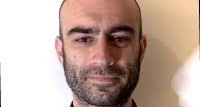
David Acunzo is a cognitive neuroscientist studying exceptional experiences through an experimental approach, using neuroimaging and phenomenological methods. His research bears on ESP performance, anomalous perception and out-of-body experiences, with an emphasis on bringing physiological precision to questions often treated as anecdotal or philosophically abstract.
- In a computerized location-guessing task with former high-scoring subject Bill Delmore, results were compatible with chance performance.
- A systematic review of seventy years of neuroimaging studies on ESP identified recurring issues in the literature, as well as promising avenues for future research.
- Acunzo’s OBE research explores not only phenomenology and veridical perception, but possible links with empathy, prosocial behaviour and the mind-brain relationship.
Life and Career
David J Acunzo was born in Sesto San Giovanni, Italy, in 1984, and grew up in Dinan, France. He trained first as an engineer, gaining a degree in telecommunications from IMT Atlantique, before moving to the University of Edinburgh (UK), where he completed a PhD in neuroinformatics in 2013. Acunzo then took up research positions at the University of Trento’s Center for Brain/Mind Sciences (Italy) and the University of Birmingham’s Centre for Human Brain Health (UK), working across a range of cognitive neuroscience topics including vision, attention and semantic processing, using EEG, MEG and fMRI. Acunzo’s exposure to parapsychology began as a student intern at the Princeton Engineering Anomalies Research (PEAR) laboratory in 2006.
In November 2023 Acunzo joined the Division of Perceptual Studies (DOPS) at the University of Virginia School of Medicine as an Assistant Professor, specifically hired to bring experimental neuroimaging approaches to bear on anomalous and extraordinary experiences — an area previously dominated at DOPS by field studies and survey-based research. Since 2024 he has directed the Ray Westphal Neuroimaging Laboratory, a state-of-the-art facility with an electromagnetically and acoustically shielded chamber allowing the concurrent recording of EEG, fNIRS and other physiological signals.1DOPS Neuroimaging Studies of Psi (n.d.).
Acunzo’s research applies advanced neuroimaging techniques to explore cognitive processes in vision and attentional processing. His work at DOPS bridges mainstream neuroscience and parapsychology, focusing on abnormal perceptions, hypnotic suggestion, and extraordinary experiences including mystical and psi phenomena. He is also interested in health and wellbeing application to psychologically-induced exceptional experiences.2Brain Institute (2024).
Parapsychological Research
PEAR Psychokinesis Research
A paper published in the Journal of Scientific Exploration in 2007 authored by Robert Jahn, Brenda Dunne and Acunzo describes a conceptual replication of René Peoc’h’s research that found that the movement of a RNG controlled robot could be influenced by conscious desire. Acunzo ran a series of experiments in which human operators attempted to influence a robot to spend more time in a designated target zone, without any physical contact. Results revealed a small but significant tendency for the robot to favour the target area when operators intended it to do so (p = 0.043), consistent with effects found in PEAR’s standard bench-top REG experiments. Furthermore, high-aim and low-aim intention conditions showed significant separation from each other and from baseline (p = 0.022). Control runs without operators present showed no significant deviation (p = 0.47). Interestingly, there was no significant correlation between operator – robot distance and robot behaviour, suggesting non-local influence over simple field effects.3Jahn et al. (2007).
Extra-Sensory Perception Abilities in Laboratory Tasks
One aspect of Acunzo’s research pertains to testing ESP behaviourally under controlled conditions.
In 2026, Acunzo and colleagues published the results of an ESP study with Bill Delmore (1948–2024), a gifted participant in parapsychological research published in the 1970s.4Lenz et al. (2026). The research employed a computerised target location task where Delmore attempted to identify a hidden dot’s position within an ellipse. At the same time a second person, termed ‘agent’, was potentially viewing the target location on a screen in a separate distant room, although in half of the trials the screen was blank. Delmore was most successful when Edward Kelly – one of the authors of the report who had tested Delmore in the 1970s – was the agent, with a score approaching significance when Kelly could see the target location on the screen (p = 0.078) but not when the agent’s screen was blank, when the results were at chance level. The overall study results were promising but not significant. EEG data was concurrently recorded but has not yet been analysed. The paper highlights that subtle biases in the target location distribution can strongly influence the outcome in this task.
Neuroimaging in Psi Research
Acunzo and coauthors conducted the first systematic and critical review of more than seventy years of ESP neuroimaging research, published in the prestigious journal NeuroImage.5Acunzo et al. (2026). The review categorised and evaluated studies using EEG, fMRI and other brain-imaging methods that looked for physiological signs of telepathy, clairvoyance and precognition. A large portion of the work was found to be limited by small sample size and methodological issues. Some experiments reported unusual brain activity patterns before or during ESP tasks, particularly in frontal and parietal regions, but results remain mixed and successful replications remain rare. While a few studies have provided very promising results, the overall evidence is not consistent. The authors call for larger, better-designed experiments and clearer theoretical models.
This work complements an earlier review of six functional neuroimaging studies of psi, with Thomas Rabeyron and Renaud Evrard, Acunzo reviewed the neuroimaging psi data.6Acunzo et al. (2013). It was found that the overall evidential base is quite high (one negative study) but marred by poor methodology.
Out of Body Experiences (OBEs)
A major part of Acunzo’s research programme is dedicated to exploring the out of body experience, its phenomenology in general and veridical aspect in particular (gaining accurate knowledge while ‘out of the body’) within a laboratory environment.
In a 2024 publication, Acunzo and coauthors explore how out-of-body experiences potentially enhance empathy and prosocial behaviour. They propose that OBEs foster empathy through ego dissolution, creating a profound sense of interconnectedness with others. This mechanism parallels the effects observed with certain psychedelic substances. The temporoparietal junction and default mode network are identified as potential neural correlates underlying this relationship.7Weiler et al. (2024).
Acunzo and Weiler critically evaluate what OBEs may reveal about the mind-brain relationship in four frameworks: as hallucinations produced by neural processes, as evidence for non-local consciousness, or of consciousness functioning independently of the brain, or of consciousness surviving brain death. Their comprehensive analysis covers neurobiological explanations, experimental studies testing non-local perception during OBEs, and striking case reports involving blind individuals and clinical settings during compromised brain function. In particular, they find a lack of neurobiological explanations able to account for verified reports of accurate perceptions during OBEs.8Weiler & Acunzo (2024).
In a 2025 publication Acunzo and colleagues investigated a novel methodology for studying OBEs. Working with three participants trained to self-induce the condition, they tested the idea that voluntary horizontal eye movements might serve as time markers for its onset. This approach adapts a technique previously used in lucid dream research. One participant consistently succeeded by performing the instructed right-left-right-left eye movement pattern at the onset of disembodiment, as was confirmed by electrooculography (EOG) recordings. The authors identified environmental factors critical for facilitating OBEs, including quiet, dim lighting, and minimal clutter.9Weiler et al. (2025).
Current Work and Future Directions
Acunzo’s current work includes psi-related projects with psychic claimants, including remote viewers, psychic dreamers, and mediums. A major line of research involves the study of remote viewing using phenomenology interviews and electroencephalography methods.
Acunzo also has ongoing research projects intending to test the potential benefits of induced exceptional and mystical-type experiences, including in the context of grief and end of life.
Selected Works
For additional works by Acunzo, see under Works Cited.
A la recherche des corrélats neuronaux du psi: Études expérimentales neuro-parapsychologiques (Searching for the neural correlates of psi: Experimental neuro-parapsychological studies) (2025). [Abstract.] In Le Grand Manuel de Parapsychologie Scientifique, ed. by R. Evrard, C. Berghmans, & P.-L. Rabeyron. Paris: Dunod.
Hypnosis and extraordinary experiences (2025). In The Routledge International Handbook of Clinical Hypnosis, ed. by J.H. Linden, G. De Benedittis, L.I. Sugarman, & K. Varga. Abingdon, Oxfordshire, UK: Routledge.
Michael Duggan
Works Cited
Acunzo, D.J., Denton, A.H., Weiler, M., & Kelly, E.F. (2026). Neuroimaging studies of extra-sensory perception: A systematic and critical review. [Full text.] NeuroImage 333, 121937.
Acunzo, D.J., Evrard, R., & Rabeyron, T. (2013). Anomalous experiences, psi and functional neuroimaging. Frontiers in Human Neuroscience 7, 893.
Acunzo, D.J., Lenz, J.E., Dunseath, R., Hanchak, E., & Kelly, E.F. (2024). The return of a high performing psi participant: Behavioural results of an ESP task with EEG. [Embedded in PDF.] Abstracts of Presented Papers of the 66th Convention of the Parapsychological Convention, Merida, Mexico, 22-25 August.
Brain Institute (2024). Meet David Acunzo, Assistant Professor in the Division of Perceptual Studies. [Full text.] UVA Brain Institute. Web page.
Jahn, R.G., Dunne, B.J., Acunzo, D.J., & Hoeger, S. (2007). Response of an REG-driven robot to operator intention. [Full text.] Journal of Scientific Exploration 21/1, 27-46.
Lenz, J.E., Kelly, E.F., Dunseath, W.J.R., & Acunzo, D.J. (2026). Assessing deviations from chance in a spatial guessing task: Analytical framework and results from a single participant. Psychology of Consciousness: Theory, Research, and Practice. Advance online publication.
Neuroimaging studies of psi (n.d.). [Full text.] Division of Perceptual Studies, University of Virginia. Web page.
Weiler, M., & Acunzo, D.J. (2024). What out-of-body experiences may tell us about the mind beyond the brain. [Full text.] International Review of Psychiatry 37/2, 120-29.
Weiler, M., Acunzo, D.J., Cozzolino, P.J., & Greyson, B. (2024). Exploring the transformative potential of out-of-body experiences: A pathway to enhanced empathy. [Full text.] Neuroscience and Biobehavioral Reviews 163/11, art. 105764.
Weiler, M., Casseb, R.F., & Acunzo, D.J. (2025). Using eye movements to signal the onset of self-induced out-of-body experiences (OBEs). [Abstract.] Journal of Consciousness Studies 32/3-4, 135-49.