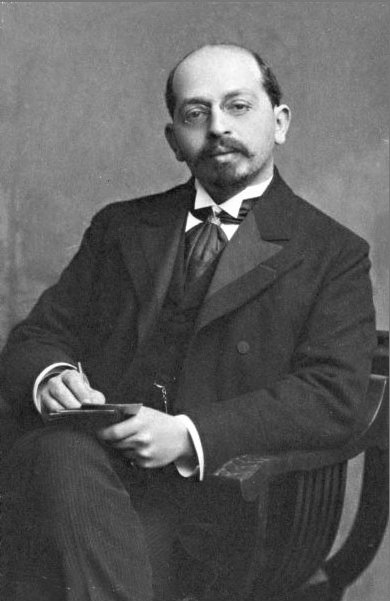
Joseph Jastrow (1863–1944) was a pioneering American experimental psychologist and critic of psychical research, briefly connected with the early American Society for Psychical Research. He argued that telepathy, mediumship and occult claims raised problems of evidence, logic, coincidence, suggestion and belief, and in the end doubted their existence.
- Jastrow was a pioneer of experimental psychology in the US and the first president of the American Psychological Association.
- His collaboration with Charles S Peirce helped establish methods for testing subtle differences in sensation.
- He treated psychical research as psychologically revealing but logically defective, emphasising belief, bias and faulty inference.
Life and Career
Joseph Jastrow was born on 30 January 1863 in Warsaw, Poland, the son of a Talmud scholar. In 1866, the Jastrow family moved to Philadelphia. Joseph was very young when he earned his BA and MA degrees from the University of Pennsylvania (1882, 1885). In 1885, he joined the Johns Hopkins University, earning a PhD in psychology three years later. His was the first doctorate degree ever conferred in the US.1This section is mainly based on Murchison (1961, 135-60) and Kurtz (1985, 551).
While at Johns Hopkins he showed an interest to combine the study of psychology with issues of logic. This occurred mainly as a result of his close interaction with the mathematician and scientist Charles S Peirce, the original creator of the pragmatist version of philosophy in America. Jastrow’s contact with Peirce’s thought was vital for the development of his own views about logic, psychology, and what he considered to be the right way to conceive the purpose and methods of scientific investigation in general.
From 1888 to 1926 Jastrow held a professorship at the University of Wisconsin-Madison. His main concern then was psychology, although he never gave up his interest in logic. He spent five years (1888–93) travelling in Europe, where he became familiar with the psychological schools of thought that were dominant at that time, notably Freudianism. In the late 1880s, he was present at the first International Congress of Physiological Psychology in Paris.
After his return to the US, Jastrow was in charge of the psychology section at the World’s Columbian Exposition in 1893. Shortly afterwards he became a charter member of the American Psychological Association, later being appointed its first secretary and, in 1900, its first president. He lectured at Columbia University in 1910 and at the New School for Social Research in New York from 1927 to 1933.
In the first decades of the twentieth century, Jastrow published practically all of his best-known works – Fact and Fable in Psychology, The Subconscious, The Psychology of Conviction and Wish and Wisdom. During that epoch he also established himself as a popular speaker in the media. He conducted a syndicated column, ‘Keeping Mentally Fit’, for a number of years and participated in radio broadcasts on psychology through the National Broadcasting Company. He delivered several public lectures and radio talks through the Philadelphia Public Ledger Syndicate, mostly on psychological subjects. He also published texts for the general, non-specialist reader in Popular Science, Cosmopolitan, Harper’s Monthly and other magazines.
Jastrow died in Stockbridge, Massachusetts, on 8 January 1944.
Contributions to Psychology
Jastrow was a pioneer of experimental psychology in the US. As a doctoral student at Johns Hopkins, he collaborated with Peirce, his teacher, on a series of tests designed to test under laboratory conditions whether subjects could note differences when presented with slight variations in stimuli. Peirce was prompted to carry out this experiment by his doubts about the main contention of psychophysics, created fundamentally by Gustav Fechner, namely, the possibility of a least perceptible difference of sensations. The major contribution was methodological and technical.2Peirce & Jastrow (1884). The results, published in 1884, are still considered a relevant contribution to the early development of experimental psychology in the US, especially for the theoretical and technical foundations of the innovative methodology applied. A brief but sufficient exposition of the case can be found here.
As a young psychologist, Jastrow was deeply influenced by the work of William James and G Stanley Hall. He was a lifelong student of abnormal psychology, convinced of its relevance for a good interpretation of ‘normal psychology’. He gave courses on that theme at the University of Wisconsin. But his ultimate concern was, perhaps, human personality as a whole. His early views about this issue owed much to the writings of FWH Myers – although he did not share Myers’s interest in the possibility of human survival after bodily death.
Jastrow believed that a deep exploration of personality demands an analysis of subconscious phenomena within normal life. In consequence, he emphasised aspects of psychoneurosis, hysteria, neurasthenia and other psychopathic states ‘because, as he put it, of their bearing on the varieties of character and disposition’, wrote Carl Murchison.3Murchison (1961), 143. In a similar manner, Jastrow understood that a clue to the ‘mechanisms involved in hypnotic and trance states’, and even the phenomenon of dual personality, can be found by enquiring into abnormal mental states. In any case, the major underlying concept to keep in sight was that of ‘subconscious operations’. This point of view was mainly imposed on him by Sigmund Freud’s theories about dreams and dreaming, as well as other canonical doctrines of Freudian psychoanalysis.4Murchison (1961), 154.
Views of Psychical Research
Early Views of ‘Occult’ Phenomena
A few years after his experimental work with Peirce, Jastrow returned to the laboratory and conducted, along with zoologist George HF Nuttall, a series of tests to confirm or deny the existence of a ‘magnetic sense’. This project came as an answer to the experiments made on GA Smith, a mesmerist and thought-reader, by the so-called Reichenbach Committee, headed by William F Barrett of the Society for Psychical Research in 1883. Jastrow and Nuttall tested whether any normal individual could really see any luminous fluid, or odic effect, when passing near an electromagnet in conditions of total darkness. Jastrow and Nuttall criticised the entire procedure of Barrett’s team, but especially their methods.
In their own experiments, Jastrow and Nuttall concentrated on avoiding coincidences and all possible sources of error. To confirm sensitivity to exposure to a magnet, the subjects exposed, including themselves, had to answer a series of questions. To minimise the risk of coincidence, their method was calculated to show that pure guesswork would result in exactly half of the answers being correct. If, in the end, the ratio of correct judgements surpassed half of the total given, this would represent good evidence that the alleged effect was real. However, this was not the final outcome. In their report, they wrote that such ‘magnetic sensibility’ could still be possible as a ‘morbid phenomenon’, but that was hardly probable since ‘faint traces of almost all abnormal manifestations are usually obtainable in normal subjects…’.5Jastrow & Nuttall (1885–89), 119-22, 125; see also Noakes (2019), 220-22; Blum (2006), 117-18.
In a brief but concise intellectual autobiography, informative in many different ways about the early history of psychology in the US, Jastrow wrote that cases like the one of the magnets show that the major concern of psychical research is ‘to test beliefs in unusual human powers’.6Murchison (1961), 137. He was a member of the first American Society for Psychical Research, organised in 1885. William James proposed him as secretary in 1887, but he declined on the grounds that psychical research was not rigorously scientific. This sentiment was shared by G Stanley Hall, who was also involved in the early ASPR. Later, they both abandoned the society.7Knapp (2017), 122; Blum (2006), 175-76; Kurtz (1985), 551. At that time, Jastrow felt that psychical research was ‘well-meaning, but logically defective’.8Puglionesi (2020), 203.
Concerning the logical and psychological status of the objects of psychical research, Jastrow wrote that psychical research embodies folklore beliefs and their ‘survivals’ and ‘revivals’, and that ‘the belief in spirit and human survival after death occupies the chief place’. In the second place came the belief in ‘powers transcending those acknowledged by psychology’, and in the third place ‘the occurrence of abnormal mental states in which such powers are exhibited’. A complement is found in ‘the story of deception by which belief in transcendent powers is maintained’. All other interests radiate from the above mentioned, he thought. But the particular scientific interest, he wrote,
centers about telepathy with its possible experimental confirmation. The popular interest goes out to mediumistic revelations. The phenomena offered in evidence (apart from revelations, premonitions, dreams, apparitions) fall into the physical appearances, typically those of the séance chamber and the mental disclosure of private affairs.9Murchison (1961), 158.
By 1900, Jastrow maintained that many findings of psychical research are relevant to psychological investigations, and ‘must be used in that way’. He also welcomed them for their value to anthropological studies, such as those promoted by Andrew Lang, EB Tylor, Edward Clodd and other authors. The combination of these two scientific standpoints is commendable to increase our familiarity ‘with the psychological conditions which produce and foster these narratives and beliefs, and with their social and traditional significance…’.10Jastrow (1900), 66. However, the paramount place must be given to logic, that ‘supreme guiding light of all the sciences … universal method of evidence and proof, of discovery and conclusion and verification’ … that builds the ‘basic concepts and processes’ with which to buttress the architectural structure of all scientific enterprises.11Murchison (1961), 281.
Jastrow thought that the study of trance, automatisms and other induced states is useful to enhance our knowledge of the inner mechanisms of psychic response, normal and abnormal. The case is different with mesmerism, astrology and clairvoyance, which are based on false personal, egotistic assumptions of having cosmic or transcendent powers. But this betrays in the believer a mistaken notion of the evidence, or, put in a little more technical way, ‘an imperfect hold on the logic of coincidence, and a general inexpertness in the handling of a problem which in this instance is capable of a scientific test’, if considered as a case of telepathy, which for Jastrow should be considered as a hypothesis or the mere product of suggestion or coincidence.12Murchison (1961), 290.
Jastrow found the very term ‘psychical research’ suspicious. For him it can be taken, basically, as the ‘technical equivalent of the trend and content of a certain type of investigation of obscure … or alleged phenomena, in most of which psychological factors are prominent’. In the end it was misleading because the investigation of its objects ‘should pursue more intrinsically psychological problems in a more truly psychological spirit’, and so this investigation requires ‘no special designation’.13Jastrow (1900), 51, 54, 77. He elaborated as follows:
If the problems of Psychical research, or that portion of the problems in which investigation seems profitable, are ever to be illuminated and exhibited in an intelligible form, it will only come about when they are investigated by the same methods and in the same spirit as are other psychological problems, [and] studied in connection with and as a part of other general problems of normal and abnormal Psychology.14Jastrow (1900), 54-55.
Even if psychical researchers are, in many cases, animated by true scientific motives, ability and ‘logical acumen’, it is also true that some ‘subscribe to illogical and pernicious conclusions’.15Jastrow (1900), 56. This is because of their inclination towards what is transcendent and mysterious, in a word, occult. Occultism is a primitive philosophy, Jastrow declared, and ‘the medium, the sensitive, the magician, the seer, the exorcist, the forecaster … [in a word, all] the associated caste of personae of the psychic occult drama, speak the folk-lore prologue to psychical research’. It prevented the emergence of ‘the single-threaded scientific view of things as they present themselves to an objective observation, detached from a personalized interpretation of the meaning of events and forces’.16Jastrow (1918), 287.
WF Prince and EC Kemble interpreted this line of skepticism as the belief that psychic research is ‘inconsistent with the general body of modern science’, and ultimately betrays in Jastrow a dogmatic ‘confidence in the immutability of present-day science’. Prince especially reproached Jastrow for his opinion that it was useless to consider minutely the circumstances of a given case, being sufficient to ‘rely on certain scientific maxims’.17Prince (1930). 96.
For centuries, the ‘Transcendent World’ emphasised the sacred belief upon medicine men, priests, prophets, seers, etc. At the beginning of the twentieth century, said Jastrow, it focused upon the medium. The notion of a special psychological transcendence ‘posits knowledge and powers’ of unusual, gifted individuals ‘beyond the recognized use of the senses and other mental ways of information, often acting without the normal consciousness or intention…’. The interest in such persons was quickened by the emergence of psychical research in 1882, with the foundation of the British Society for Psychical Research (SPR).18Jastrow (1935), 125; Prince (1930), 90-95.
However, Jastrow believed, the records and products of folklore can and must be accepted as ‘human documents of significance for evolutionary psychology, and its logic merits serious study’.19Jastrow (1918), 288. The psychology of mediumship was a legitimate subject of investigation from an evolutionary point of view, for it can disclose many things about the transcendental component in social beliefs about superhuman powers.20Murchison (1961), 159.
Still, sound logic and well-chosen scientific methodology normally show that there is hardly anything transcendent to grasp in these and other objects of study, including whole spiritistic movements or miracle-based cults which have been proved to depend on manipulation, fraud or trickery, Jastrow claimed. Notable examples of this, according to him, are Christian Science and the Theosophy of Helena Blavatsky. Jastrow reflected:
It certainly is a highly commendable function for a society [the SPR] to take upon itself the investigation of such claims as theosophy or spiritualism put forward, whenever movements of this type are likely to develop into psychic epidemics or to prove a social menace. Any authoritative body that will exhibit the absurdity of such claims, and expose the true modus operandi of the manifestations, will perform an important civic function…21Jastrow (1900), 62.
The Animus in Psychical Research
Although he dropped out of the early ASPR after a few years, Jastrow consented to join the governing Advisory Scientific Council of the ASPR under James Hervey Hyslop, when William McDougall was President, in 1921.22Mauskopf & McVaugh (1980), 19, 243.
By 1927, Jastrow, after years of examining the case for or against psychical research, defined the core of his critical position as follows. No matter its controversial aspects, the essential problems of this line of investigation were shaped by a ‘logical approach’ that is ‘intimately affected by the psychological attitude’. To this ‘joint product’ he gave the name ‘animus’.23Murchison (1927), 281. He explained:
The mind, the instrument of our logical powers, is likewise the complicated medium of our emotions, our desires, needs, motives, and their satisfaction. Our logical procedures are saturated with the trends and products of our psychological nature, and are often strangely shaped by them. Such is the story of human behavior, mental behavior, belief behavior more particularly, which is so essential to the understanding of [psychical research] and its animus. Yet the director of our … inquiry is logic … under the tutelage of psychology.24Murchison (1927), 282.
One of the most popular notions of William James’s analyses of the religious personality and of the pragmatic attitude is the ‘will to believe’. For Jastrow, such will essentially represented the ‘animus of much primitive and not a little advanced thinking’. This gave rise to a will to believe in the supernatural. The mind of man was ‘a belief-seeking rather than a fact-seeking apparatus’, and so ‘he welcomes facts and finds them and makes them to bolster his beliefs’ as long as they give him personal satisfaction.25Murchison (1927), 284, 311.
The mind ‘seeks disguises in the subtleties of its own operations; by failing to recognize their true source, it finds support for beliefs dramatically attractive’. This principle explains the regular emergence of a general disposition within a society to believe in the reality of transcendent phenomena and, hence, to inspire many of its members to throw themselves headlong into ‘psychic adventures’.26Jastrow (1935), 159. According to Jastrow, this is the same principle embodied in the Freudian ‘wish’ and his analytical tool of a principle of pleasure counteracted by a principle of reality. It is the same issue that psychiatry tackles in its studies of ‘mind’s aberrations’.27Murchison (1927), 285.
Such behaviour constitutes a fallacy in the light of psychology, writes Jastrow: it results from a predilection which ‘bends conclusions out of their orbit’ and towards beliefs cherished by emotional or aesthetic prejudices.28Murchison (1927), 300.
Views on Telepathy
As noted above, Jastrow considered telepathy as a hypothesis to be tested. He thought that it had never been fully proved, so could not be used in ‘the further explanation of baffling evidence critically reported’. There was no evidence to accept it as an extra-psychological form of communication or mental operation of some sort. At any rate, he thought, the evidence presented by researchers and others could be ‘dismissed as presumably the issue of coincidence, faulty observation, prejudice’, or something of the kind. This, he insisted, should be admitted as a probable and profitable conclusion, since there was no ‘biological possibility for the evolution of such power’ and, in consequence, no factual or even rational basis to conjecture how it could have developed in the human psyche – but, supposing that it did in some way, the question arises: how come it became an anomalous faculty that operates apparently by chance, and only in a few persons?29Murchison (1961), 159.
During the 1880s and 1890s, however, the idea that at least some form of unusual communication from mind to mind, active without the use of words in any way, was widespread among the general public. Sometimes it was even promoted by famous, influential people; Mark Twain and his belief in a far from extraordinary ‘mental telegraphy’ should be well-known and has even been commented on by modern students of parapsychology. Jastrow was among the earliest people to take Twain’s view seriously: he devoted a magazine article published in 1892 to discussing it and, in the end, rejecting it as ‘illogical’.30Jastrow (1901), 88-93; Blum (2006), 173-75.
Jastrow was among the first to know about JB Rhine’s early projects to develop a science of ESP. The two men exchanged some letters on the matter a few times, but Jastrow never showed the least disposition to encourage the younger investigator, on the contrary. He always disqualified his methods, considering an error that in Extra-Sensory Perception31Rhine (1934). Rhine had not offered a detailed presentation of his experimental procedures at the outset. In a letter to Jastrow, Rhine noted that such details were actually present, although not in a single bloc, and to find them it was only necessary to go through the pages patiently. Probably Jastrow never did this. He was also strongly critical of the first issue of the Journal of Parapsychology (1937). Apparently, he rejected Rhine’s innovations related to ESP until the end of his life, and seemed bent on discrediting psychical research when he saw attitudes towards it starting to change.32Mauskopf & McVaugh (1980), 243-44, 255, 276-77.
Jastrow, in a final assessment, became convinced that the goal of psychical research (or parapsychology) could be summarized as follows: ‘to rationalize the seemingly occult: this should be the goal of psychical research, in order to become naturalized and assimilated in the organized system of highways and byways of Psychology’.33Murchison (1927), 302. Nonetheless, despite his apparent openness to psychical research in principle, he remained what Seymour Mauskopf and Michael McVaugh called ‘unremittingly skeptical’ of ESP.34Mauskopf & McVaugh (1980), 19.
Roberto R Narváez
Works Cited
Blum, D. (2006). Ghost Hunters: William James and the Search for Scientific Proof of Life After Death. New York, New York, USA: Penguin Press.
Jastrow, J. (1900). Fact and Fable in Psychology. [Full text.] Boston, Massachusetts, USA, and New York: Houghton, Mifflin and Co.
Jastrow, J. (1906). The Subconscious. Boston, Massachusetts, USA, and New York: Houghton Mifflin.
Jastrow, J. (1918). The Psychology of Conviction: A Study of Beliefs and Attitudes. [Full text.] Boston, Massachusetts, USA, and New York: Houghton Mifflin.
Jastrow, J. (1935). Wish and Wisdom; Episodes in the Vagaries of Belief. [Full text.] New York and London: D. Appleton-Century Co. Republished in 1962 as Error and Eccentricity in Human Belief.
Jastrow, J., & Nuttall, G.H.F. (1885–89). On the existence of a magnetic sense. [Embedded in PDF.] Proceedings of the American Society for Psychical Research 1, 116-26.
Knapp, K.D. (2017). William James: Psychical Research and the Challenge of Modernity. Chapel Hill, North Carolina, USA: University of North Carolina Press.
Mauskopf, S.H., & McVaugh, M.R. (1980). The Elusive Science: Origins of Experimental Psychical Research. Baltimore, Maryland, USA: John Hopkins University Press.
Murchison, C. (ed.) (1927). The Case for and Against Psychical Belief. [Full text.] Worcester, Massachusetts, USA: Clark University.
Murchison, C. (ed.) (1961). A History of Psychology in Autobiography, Vol. 1. [Borrow PDF.] New York: Russell & Russell.
Noakes, R. (2019). Physics and Psychics: The Occult and the Sciences in Modern Britain. Cambridge, UK: Cambridge University Press.
Peirce, C.S., & Jastrow, J. (1884). On small differences of sensation. [Full text.] Memoirs of the National Academy of Sciences 3, 75-83.
Prince, W.F. (1930). The Enchanted Boundary: Being a Survey of Negative Reactions to Claims of Psychic Phenomena, 1820–1930. [Full text.] Boston, Massachusetts, USA: Boston Society for Psychic Research.
Puglionesi, A. (2020). Common Phantoms: An American History of Psychic Science. Stanford, California, USA: Stanford University Press.