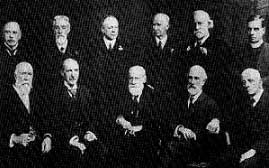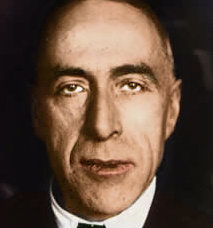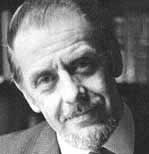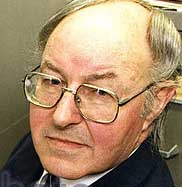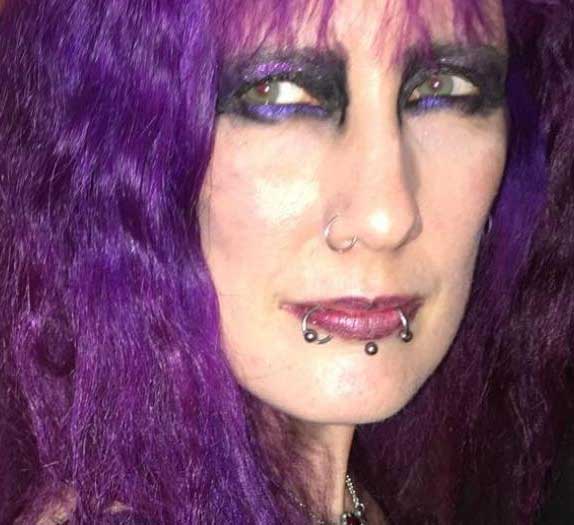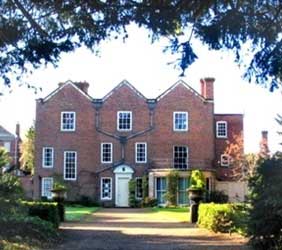
Before British parapsychology secured a university foothold, much of the field was built by clubs, societies and local investigators working outside academia. Their standards were uneven, but they preserved traditions of enquiry, public education, lively debate and case investigation that later institutional research would inherit. Such societies and clubs took on subject matter perceived as too ‘fringe’ for mainstream academia.
- The Ghost Club and the Society for Psychical Research anchored the nineteenth-century British tradition of organised paranormal investigation.
- The Association for the Scientific Study of Anomalous Phenomena developed an umbrella model, offering investigator training and conducting some of its own research, such as Project Albion.
- Professional-style fieldwork by groups such as Para.Science combined sceptical checking with lengthy, instrument-based investigations.
Informal Paranormal Research in the UK
At a national and easily recordable level it seems from the above that whilst lay paranormal research is alive and well, it appears at first glance to be limited to a few groups. There is also an overlap of people involved in the organisations listed below — however, this would not give the full picture.
Active interest in the paranormal has increased exponentially since its reintroduction into mainstream TV which began in the 1990s and gained pace in the early part of the new millennium. Such television coverage has included informative shows such as ‘Strange but True’, hosted by high-profile presenter Michael Aspel (1993–97). It has also included what is arguably ‘for entertainment only’ productions, the most famous of which likely is ‘Most Haunted’, which ran from 2002 to 2019. In more recent times, ‘Uncanny’, originally a highly successful radio show and podcast, is now a well-known TV production, perhaps rebalancing the need to combine entertainment and information.
The result of the activities has been that even by 2008 there were over 1,200 groups in the UK involved in some kind of active paranormal investigation.1Winsper & Parsons (2008). Whilst groups might have consolidated somewhat there is still, as of 2026, a great deal of activity in all UK regions. Such groups range from Devon & Cornwall Paranormal Investigators (D.C.P.I.) in the far south of England up to Highland Paranormal, covering the north of Scotland.
Some of these organisations are more biased towards ‘paranormal tourism’ (for example, fright night encounters for the general public in a reputedly haunted house). Others undoubtedly do serious research and try to be scientific and objective when it comes to their results. As there is no universally agreed central body to refer results to and no universally agreed research protocol, it is impossible to judge the merits of such endeavours. However, the following organisations are judged to be the most responsible ones.
Lay Research Societies
Ghost Club
The Ghost Club was launched ‘by a select group of London gentlemen’ with the stated intention of ‘unmasking fraudulent mediums and investigating psychic phenomena’.2Guiley (2000), 151-53; Murdie (2012). One of its first targets was the Davenport brothers, generally agreed now to have been conjurors posing as mediums. It kept few records and during the 1870s its activities ceased.
The Ghost Club was reactivated in 1882, holding secretive monthly meetings for people interested in the paranormal. It had strange traditions, such as keeping the names of deceased members on the membership roll, which was recited in full each year on All Souls Day (2 November).3Guiley (2000), 151. It attracted many famous individuals, including the poet WB Yeats. However, it was not well regarded by serious researchers: the physicist Oliver Lodge, an investigator of mediums, referred to it as a ‘superstitious body of very little importance’.4Guiley (2000), 152. It was wound up in 1936.
Two years later it was again relaunched, this time by the psychical investigator Harry Price, as a dining club for those of a more sceptical disposition. Women were admitted as members for the first time.
Meetings ceased again in 1948 following the death of Price, but were revived in 1953 by remaining members, of whom one was paranormal investigator Philip Paul. It now turned into an organisation that genuinely investigated as well as debated, a change that was reinforced when Peter Underwood took over the presidency in 1960. The club continued to be led by Underwood until 1993, when he resigned after a disagreement with colleagues and set up a rival organisation, the Ghost Club Society. Since then the club has had various Chairs (the title of president having been abolished).
Besides having an intermittent existence, the Ghost Club has varied greatly in its aims and methods. Since 1993 there has been a strenuous effort to modernise it, removing the requirement for new members to be invited, and endeavouring to attract people of all ages and backgrounds. The club retains the social and educational function of monthly speaker meetings, but also initiates numerous investigations in localities such as Ham House in London5Railton (2004). and Michelin Priory, East Sussex.6Gearing (n.d.).
In 2026 the Ghost Club continues to be a significant club where like-minded people come together to discuss topics that are considered paranormal. It is currently under the Chairmanship of trained barrister Alan Murdie, who is also a council member of the Society for Psychical Research.
Society for Psychical Research
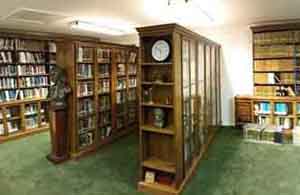
The Society for Psychical Research (SPR)7Their website is here. was founded in 1882. Unlike the Ghost Club, which functioned from private clubs, it established itself in premises in London’s Kensington district and remains in that locality today. It is funded by bequests on an occasional basis, run by a governing council of about twenty members and a full-time office manager. In its current premises in Vernon Mews it has a substantial library; its website offers online research facilities. It holds regular lectures, twice-yearly study days and an annual conference. Its Journal of the Society for Psychical Research has been published continuously since 1884, promoting the Society’s aim of examining claims of psychic phenomena ‘without prejudice or prepossession’. It also publishes a quarterly magazine, The Magazine of the SPR.
Today, the SPR mainly facilitates research by awarding grants for research projects. This is done through two funds: the General Research Fund and the Survival Research Fund. The latter was renamed in 2025, now holding the name of the Yew-Kwang Ng (黄有光) Fund for Survival Research. This was to honour a new benefactor to the SPR and to its programme of survival research: Professor Yew-Kwang Ng (黄有光), a distinguished academic at Monash University, Australia.
Senior members also engage in research on an ad hoc basis. An example of this being a high-profile study of a physical mediumship circle in Scole, Norfolk (1999), described in a detailed report by Montague Keen, Arthur Ellison and David Fontana.8Keen, Ellison, & Fontana (1999). This was a lengthy report by three senior SPR members into a series of séance room sittings in the Norfolk village of Scole. Another successful study was by Barrie Colvin, whose analysis of tape recordings made of knocks and rappings in poltergeist cases established that their acoustic resonance is entirely different from similar noises made by known means.9Colvin (2010).
Within the SPR there is also the Spontaneous Cases Committee (SCC) to which members of the public can report their experiences. The activities of the SCC have expanded in recent years post-Covid-19, and enquiries since that date run into several hundred.
Association for the Scientific Study of Anomalous Phenomena
The Association for the Scientific Study of Anomalous Phenomena (ASSAP)10Their website is here. was formed in 1981 by dissident SPR council members seeking new directions. In contrast to specialised societies that cover niche areas, they envisioned an ‘umbrella’ organization covering the entire field of scientific anomalies.11Evans (1929–2011); Pincott (2015). ASSAP’s remit covers such diverse fields as psychical research, ufology, earth mysteries and Fortean phenomena.
An early project, Project Albion,12ASSAP (n.d.-b). could be likened to an open-ended Domesday Book about the paranormal. ASSAP founder member Hugh Pincott describes it as ‘an imaginative if ambitious programme to record all known anomalies in a defined geographic area [which] over the years spawned a series of booklets in the “strange” series (Strange Pocklington, Strange Croydon, etc). Its attraction is that it is ongoing and can be undertaken by any member without the need for technical equipment’.13Pincott (2015).
Another early achievement was the past life regression experiments that began in 1984, an attempt to replicate the regression work of hypnotist David Lowe. In weekly sessions over a period of three years, an enormous amount of information was collected, although insufficient to discount or validate any of the starting theories. The most interesting past life ‘character’ to emerge in hypnotic sessions, referred to as ‘Cerdic the Saxon’, described having fought in King Harold’s army at the Battle of Hastings. The personality never spoke of matters that he could not have known about, and research verified several items of information that the hypnotised subject would have been unlikely to know by conventional means.14Ruffles (1991).
ASSAP has since developed into its founders’ conception as an ‘umbrella’ organization. It offers training for would-be paranormal investigators15ASSAP (n.d.-a). and keeps a national register of individuals who have successfully completed this training and/or satisfied other relevant criteria.
ASSAP held its Thirtieth Anniversary Conference in 2011 under the current Chair Dave Wood, and has held a number of further conferences, covering specialist areas such as vampires, possession and ghosts. These are popular and well-attended, partly because of the relatively modest entry fee. The organization runs an ongoing ‘Paranormal Olympics’, a series of basic psi tests open to all attendees, at its conferences and at other relevant events. Since the success of the 2011 event ASSAP has aimed to hold conferences more or less on an annual basis.
In 2024–25 there were public disagreements relating to various matters within the ASSAP Executive, and subsequently several Executive members w resigned. This included the (by then) long-standing Chair Christian Jensen Romer, an experienced figure in paranormal research. The current Chair of ASSAP is Steven Parsons, also an experienced figure (see Para.Science, below). His goal for ASSAP is to “continue to provide a meeting place for individuals and groups whatever their level of interest and to promote a critical thinking approach towards the subject.”16Grossman (2026).
There are plans to roll out a specialist short course ‘subject-specific’ training modules on various aspects of paranormal research. ASSAP has two publications: Anomaly, an academic journal, and Seriously Strange, a newsletter.17ASSAP (n.d.-c). Its 45th conference was held in Worcester, England, 2026.
Scottish Society for Psychical Research
The Scottish Society for Psychical Research (SSPR)18Their website is here.was founded in 1987 by Professor Archie Roy (1924–2012), an eminent astronomer sometimes referred to as the ‘Glasgow Ghostbuster’. Roy was a leading figure both in astronomy and parapsychology. In the former he was Professor Emeritus of Astronomy at Glasgow University and a Fellow of the Royal Society of Edinburgh with an inner main belt asteroid named after him ‘5806 Archieroy’. In the latter he had previously been active in the SPR and was its president (1989–1992), as well as being a winner of the prestigious SPR Myers Medal.19BBC News (2012).
The SSPR was founded by Roy ‘to provide students of his night-class “an introduction to psychical research” with further opportunities to learn about anomalous phenomena [and] to provide a “paranormal fire brigade” for members of the public distressed by their paranormal experiences.’20SSPS (n.d.).
Over the years on the educational side, the SSPR has attracted an impressive list of speakers at its normally monthly speaker events. These include Colin Wilson, Michael Bentine, Graham Hancock, Rupert Sheldrake, Maurice Grosse, Richard Wiseman and Christopher C French. It has also maintained the capacity for investigations and vigils in the same way as the SPR’s Spontaneous Cases Committee.
At its peak the SSPR laid claim to over two hundred members but perhaps through competition from other groups that were formed due to popular TV shows such as ‘Most Haunted’ (See below). This dwindled to the extent that in 2016 it appeared that the society might no longer be financially viable.21Horne (2016).
However, in a subsequent Extraordinary General Meeting the SSPR, far from winding up the society, made suitable changes such as smaller meeting venues to ensure that their continued existence was feasible.
As of 2026, Nick Kyle has returned as President having previously steered the society during the more difficult period a decade previously. It is also reported that the SSPR may be going through something of a mini revival membership numbers are going up as is attendance at talks which are now available via Zoom. The SSPR has also established a group called the Research and Investigators Group (R&I). This sounds similar to the ‘paranormal fire brigade’ principle with which Roy had established the society nearly forty years previously.
Para.Science
Para.Science, a small body with a membership of about ten, is affiliated to the ASSAP; key members also work closely with the SPR. Para.Science was founded in 1993 by Steven Parsons and Ann Winsper, who had become dissatisfied with the techniques and methods used in other groups they had previously worked with. It has gained a reputation for cutting-edge professional investigative techniques, perhaps unparalleled amongst any other British organisation. According to Parsons, its investigations are limited to ghosts, hauntings and related phenomena and ‘a special emphasis has always been placed on an unbiased approach that disregards personal beliefs as much as possible’.22Steven Parsons, personal communication, 2015.
The organisation’s particular strength lies in its understanding of equipment, which it uses not in a random way but to test out particular theories. Key cases include an (unnamed) farm in Cheshire, where investigators found a correlation between the family’s experience of paranormal events and high EMF readings caused partially by poor-quality wiring.
The majority of the reported activity – more than 80% – was found to be in the areas where the EMF levels were consistently high (above 10 mG) for large parts of each day. More than half the reports came from those areas where the EMF readings were the highest – frequently above 25 mG.23Parsons & Winsper (2004).
Another investigation, of reported phenomena in the Cammell Laird shipyard, is thought to have taken 15,000 (collective) person-hours over three years.24Steven Parsons, personal communication, 2015.
Whilst arguably Para.Science is a little less active today than in its founding decade or two, this is perhaps because its founders are also using their acquired skills to good effect elsewhere. Parsons, as of 2026, is Chair of ASSAP, where he has introduced a new training programme for potential investigators. Winsper is active on the Spontaneous Cases Committee of the SPR with a rare speciality in time slips. Both have been subsequently invited to be Members of the SPR Council on which they currently serve.
Wyrd Project /Wyrd Technologies
The Wyrd Project draws its name from the Anglo-Saxon concept of “Wyrd” — an interconnected field or web of fate/information/consciousness linking everything. It focuses on scientific exploration of consciousness, psi phenomena and interconnectedness.
The Project is an evolution of decades of international research, including 28 years of experiments run at the Princeton Engineering Anomalies Research (PEAR) laboratory and claims there is evidence that human intention and group experience impact random data streams measured by random event generators (REGs). It aims to build on the Global Consciousness Project, a parapsychology experiment started in 1998 that analysed a worldwide network of REGs to detect potential anomalies and their causes.
It housed original equipment from the PEAR lab (including devices like “Murphy” (a large random mechanical cascade/pinball-like machine)] and other random number generators. However, since April 2026 this equipment is now in the premises of the newly formed Centre for Liminal Studies (see below).
Wyrd’s primary aim is to use its own-built devices through its Wyrd Technologies division. The most prominent of these is the WyrdoScope, a REG with the potential to be influenced by people’s own consciousness stream in such places as ‘a meeting room a retreat space, a concert hall, a football stadium’.25For the consciousness researcher (n.d.). Whilst this is not part of a traditional lay paranormal investigation the techniques and equipment could be of great interest in the field. Arguably such devices could also be effective when investigating sacred sites or haunted places.
The Wyrd Project is based at Broughton Sanctuary at Broughton Hall, a 3,000-acre historic property in the Yorkshire Dales. It is very unusual among lay research groups to have such an outstanding dedicated area in which to work. Broughton also holds retreats and conferences related to the Wyrd Project. One of the most prominent is ‘Broughton Science and Consciousness –Wyrd Psi’. This is normally an annual event which started in 2021 and is normally held in the autumn.
Centre for Liminal Studies
The Centre for Liminal Studies (CLS) has recently (2026) opened at Broughton Hall Estate/Broughton Sanctuary in Yorkshire to run parallel with the Wyrd Project/Wyrd Technologies. It is a not-for-profit UK Community Interest Company set up by experienced researchers Paul Stevens, Kristy Allan and Luigi Sciambarella.
The CLS aims to rigorously study ‘Consciousness and liminal experience – those transitional spaces, times, practices, and states of consciousness where meaning emerges, boundaries shift and dissolve, and new forms of sensing, experiencing and understanding become possible.’26Kristy Allan, personal communication, 2026.
It plans both to make use of Wyrd Technologies as well as other equipment and instruments in its well-resourced research hub and to ultimately extend itself into the community through public engagements. CLS has an international network of collaborators, an Institutional Review Board for ethics, and plans to launch a peer-reviewed Journal of Liminal Studies.
Whilst CLS arguably plans an approach that in some ways is similar to university-based paranormal research, its width and independence put it into the lay paranormal sector. Time will tell if this new initiative can assist in bridging the gap between the two.
University and Non-University Interaction
There is regrettably little formal interaction between these bodies and their university-based counterparts. The main exception is the SPR, whose governing council is split evenly between both fields, and whose annual international conference includes speakers from both backgrounds. Even here, the gulf with regard to style and presentation between academic and non-academic groups is striking. If paranormal research is to progress, these two distinct areas and approaches could be mixed to a far greater extent. It is possible this may happen in the future through more joint initiatives, combined with a realisation that many types of unexplained phenomena happen spontaneously and not always within a controlled laboratory situation.
John Fraser
Works Cited
ASSAP (n.d.-a). Investigations training. [Web page.]
ASSAP (n.d.-b). Project Albion. [Web page.]
AASAP (n.d.-c). Publications. [Web page.]
BBC News (2012). Academic and writer Archie E Roy dies aged 88. [Web page.]
Colvin, B. (2010). The acoustic properties of unexplained rapping sounds. Journal for the Society of Psychical Research 73/2(899), 65-93.
For the consciousness researcher (n.d.). Wyd Experience [Web page.]
Gearing, K. (n.d.). Two investigations at Michelham Priory. [Web page.]
Grossman, W. M. (2026). Professional spoilsport: Steve Parsons, ASSAP. Skeptical Inquirer [Web Page, 29 September.]
Guiley, R.E. (2000). The Encyclopedia of Ghosts and Spirits (2nd ed.). New York: Checkmark Books.
Horne, M. (2016, 15 January). Psychical society faces giving up ghost. The Times [Web page.]
Keen, M., Ellison, A., & Fontana, D. (1999). The Scole Report. Proceedings for the Society of Psychical Research 58.
Koestler Parapsychology Unit. [Website.]
Murdie, A. (2012). A brief history of the Ghost Club. [Web page.]
Scottish Society for Psychical Research (n.d.) What we do. [Web page.]
Para.Science [Website.]
Pincott, H. (2015). Quote from e-mail by ASSAP founder member and former chair of ASSAP for purposes of this article.
Railton, L. (2004). Ham House Surrey. [Web page.]
Ruffles, T. (1991). A life in the day of Cerdic the Saxon. Psi Researcher 3, 17.
SSPS (Scottish Society for Psychical Research) (n.d.). Who we are. [Website.]
The Telegraph (2011). Hilary Evans (1929-2011) paranormal researcher and founder of the ‘Mary Evans Picture Library’. [Obituary, 26 August.]
The Telegraph (2013). Professor Archie Roy. [Obituary, 21 March.]
Winsper, A., & Parsons, S. (2008). Have the lunatics taken over the (haunted) asylum? 32nd International conference of the SPR 2008 [Abstract].