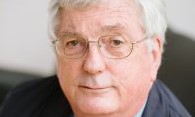
Edward F Kelly has made a career in psychical research. His work at the University of Virginia links laboratory psi, altered states of consciousness and broader critiques of physicalism. He is the editor of important books that bring together workers from various disciplines in favor of a filter model of consciousness in relation to the brain.
- Kelly favours intensive studies of gifted subjects in altered states of consciousness rather than relying chiefly on unselected subjects.
- He has conducted extensive experimental studies with gifted subjects such as Bill Delmore.
- He is the lead author of Irreducible Mind, Beyond Physicalism, and Consciousness Unbound, which all present empirical data that challenge physicalist views of consciousness as generated by the brain.
Career
Edward Francis Kelly was born on 12 June 1940 in Mt Kisco, New York. He completed a BA in Psychology at Yale University in 1962 and a PhD in psycholinguistics and cognitive science at Harvard University in 1970. His interest in parapsychology developed during graduate study, when his encounters with the parapsychological literature convinced him that psychic phenomena posed a genuine challenge to the prevailing scientific worldview that mainstream academic psychology was ill-equipped to address.1Anon. (n.d.).
Kelly has held professorial appointments in the Department of Psychiatry and Neurobehavioral Sciences at the University of Virginia School of Medicine in Charlottesville since 2002. He is a member of the department’s Division of Perceptual Studies (DOPS), which studies psychic phenomena and post-mortem survival.
Kelly previously held various conventional and parapsychological appointments, usually with an emphasis on psychophysiology research. His research work has mainly involved neuroimaging studies with gifted subjects – psychics and individuals capable of voluntarily entering altered states of consciousness such as deep meditative and hypnotic states. He is currently focused mainly on exploring implications of psi and related ‘rogue’ phenomena for a science-based picture of the world and our own place within it. Kelly is president of Cedar Creek Institute, a non-profit organization devoted to furthering psychical research, at present through support of DOPS.
In April 2024 Kelly delivered a keynote address at the 14th annual Bial Foundation symposium in Porto, Portugal, focusing on creativity and how it fits into the larger theoretical picture regarding psi research.2Anon. (2024). Later that same month, on 9 April 2024, he was presented with the Society for Psychical Research‘s Myers Memorial Medal at a ceremony held at the Royal Society in London. Kelly is the ninth recipient of the medal, which was introduced in 1995 to honour significant contributions to the field; the first recipient was DOPS founder Ian Stevenson. Kelly’s accompanying lecture was titled ‘My Tangled Path to Myers and James’ and was later published.3Kelly (2024).
Early Research
During the 1970s, Kelly and his colleagues developed a systematic psychophysiological approach to psi research, grounded in the collection, management and statistical analysis of multichannel physiological data.4Kelly et al. (1980). This programme, abandoned in the mid-1980s owing to lack of funding, has recently been re-established on a stronger technical foundation as part of the ongoing work of DOPS.5Kelly & Dunseath (2019).
In the 1970s, Kelly compared card-guessing data collected from a gifted subject (Bill Delmore) with that from a parallel visual task, finding that the subject’s systematic errors in the ESP task bore a strong resemblance to those in the visual task, and that this correlation was more pronounced in high-scoring ESP runs. Kelly interpreted these results as confirming the role of involuntary visual imagery as a ‘mediating vehicle’ for this individual’s unusually strong psi performance.6Kelly et al. (1975).
In 1978, Persi Diaconis commented on an informal demonstration by Delmore.7Diaconis (1978). and provoked responses.8e.g., Tart (1978) The research with Delmore was then discussed in the Zetetic Scholar (nos 5 and 6). John Palmer reviewed the research with Delmore in an overview of parapsychological research.9Palmer (1986). Later, GP Hansen wrote a critical overview,10Hansen (1992). which was followed by responses from Kelly and others. Richard Wiseman tested whether Delmore could have used a small mirror attached to one of his shoes and concluded that ‘it seems highly unlikely that Delmore could have cheated’ with this method.11Wiseman (1995, p. 65).
Re-Evaluations of Psi Data
In the 1920s, researchers Heymans and Brugmans, in the Netherlands, reported high levels of success in a clairvoyance test with a mathematics student. Their study employed a novel and rigorous experimental design. A detailed re-evaluation of the entire dataset by Kelly and Sybo Schouten, published six decades later confirmed and extended the original findings.12Schouten & Kelly (1978). Scott (1980) criticised the original experiment and Schouten (1980) replied.
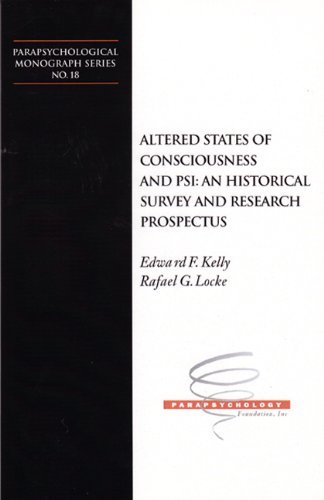
In 1980, Kelly collaborated with the cultural anthropologist Rafael Locke, Kelly sought to situate the study of psi in a larger historical and cross-cultural context, surveying early psychical research on hypnosis, mediumship and major religious traditions, including yoga and shamanism. Their monograph demonstrates that strong outbursts of psi do not occur randomly across space and time; rather, they conspicuously congregate in certain kinds of persons and ritual circumstances that often involve deliberate and pronounced alterations of consciousness.13Kelly & Locke (1981/2009). On this basis, the authors advocate that psi research be grounded in intensive longitudinal studies of persons selected for ability to enter psi-conducive altered states. An emphasis on studies with gifted subjects, in preference to unselected subjects, has been a central theme of Kelly’s career.14Kelly & Locke (1981/2009).
In subsequent research, Kelly investigated the grouping of hits obtained by six high-scoring subjects in forced-choice ESP experiments, finding significant evidence of non-random grouping for five of them. Of these, four produced long strings of hits and one produced many isolated hits. Grouping effects appeared unrelated to experimental conditions such as trial length, type of feedback or the nature of the task, but rather occurred in connection with psi-conducive altered states briefly established in these subjects. Grouping effects accounted for most of the overall evidence for psi in these experiments.15Kelly (1982).
Persistence of ESP Ability
In 2023, Kelly and his colleagues carried out a novel ESP study with Bill Delmore, the gifted subject who had initially participated in parapsychological research in the 1970s.16Lenz et al. (2026). The research employed a computerised target location task where Delmore attempted to identify a hidden dot’s position within an ellipse. At the same time a second person, termed ‘agent’, was potentially viewing the target location on a screen in a separate distant room, although in half of the trials the screen was blank. Delmore was most successful when Kelly was the agent, especially when Kelly could see the target location on the screen. The results were at chance level when the agent’s screen was blank. The overall study results were promising but not significant. (EEG data was concurrently recorded but has not yet been analysed.)17E. Kelly, personal communication, 21 June 2026.
ESP Neuroimaging Review
A recent review headed by David J Acunzo, Kelly’s successor as head of the DOPS laboratory, examined more than seventy years of neuroimaging research on ESP. The publication highlighted studies that used EEG, fMRI, and other brain-imaging methods to look for physiological signs of telepathy, clairvoyance and precognition. The review found that early work was often limited by small samples and inferior imaging, while more recent studies have used stricter controls and better methods. Some experiments reported unusual brain activity patterns before or during ESP tasks, particularly in frontal and parietal regions, but results remain mixed and successful replications remain rare. The authors note that while a few studies have provided very promising results, the overall evidence is not yet strong and consistent enough to convince mainstream neuroscientists. The authors call for larger, better-designed experiments and clearer theoretical models. The review represents one of the first systematic attempts to bring together this scattered body of research.18Acunzo et al. (2026). See also Williams (2011).
Moving Away from Physicalism
Kelly argues that the rise of physicalism over the past century has created a deep split between science and spirituality, contributing to many of the serious problems facing modern civilisation. In a wide-ranging review, he examines how leading-edge developments in philosophy of mind, consciousness studies, and psychical research are opening the way toward an expanded but still science-based picture of reality. Kelly contends that consciousness should be treated as an ontological primitive rather than a product of brain processes, enlisting support for this worldview by drawing on parapsychological research findings, near-death experiences, mystical states, and theoretical work in quantum physics and information theory. Kelly challenges the dominance of materialist assumptions, and explores alternatives such as dual-aspect monism and realist or objective idealism, suggesting that these frameworks better accommodate the full range of available evidence. Finally, Kelly calls for a more unified vision that integrates science and spirituality, one that could help address the disenchantment and destructive tendencies of contemporary culture.19Kelly (2025).
Books
Irreducible Mind
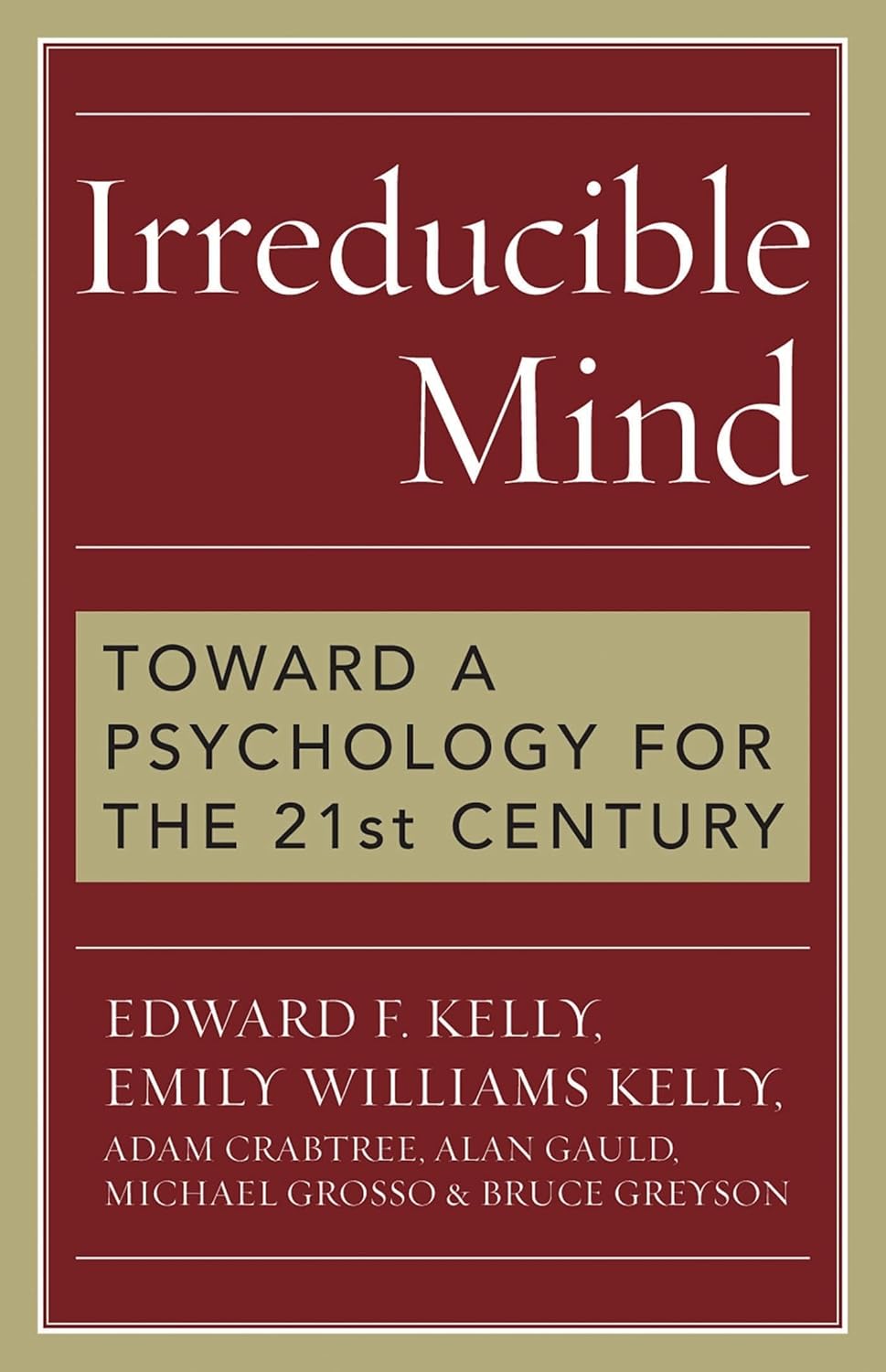
In 2007, Kelly, his wife Emily Williams Kelly and four co-authors published Irreducible Mind: Toward a Psychology for the 21st Century,20Kelly et al. (2007). a major work that highlights the challenge facing the reductionist worldview with regard to anomalous experiences appearing beyond the reach of conventional physicalist explanations. The authors marshal evidence from a wide range of phenomena, including extreme psychophysical influences such as highly specific placebo effects, stigmata, pain control, and phenomena such as unexplained properties of human memory, psychological automatisms and secondary personalities, to demonstrate empirically that classical physicalism is almost certainly false. They also cover near-death experiences (emphasising those occurring under extreme physiological conditions such as deep general anaesthesia or cardiac arrest), genius-level creativity and ‘mystical’ states of consciousness, both spontaneous, resulting from intense spiritual practices, or induced by psychedelics.
The book concludes by encouraging consideration of alternative theories of consciousness and mind/brain relations, in particular the Myers/James ‘permission’ or ‘filter’ model that treats mind and brain as functionally interdependent but perhaps ontologically distinct. Here, states of the brain are conceived as regulating the expression of normally hidden capabilities associated with a more comprehensive and possibly transcendental consciousness (the true source of mind) in the forms experienced in everyday life. Disruption of normal patterns of brain activity, whether spontaneous, resulting from intense spiritual practices, or induced by psychedelics or a close brush with death, often results in subjectively dramatic expansions of consciousness.
Beyond Physicalism
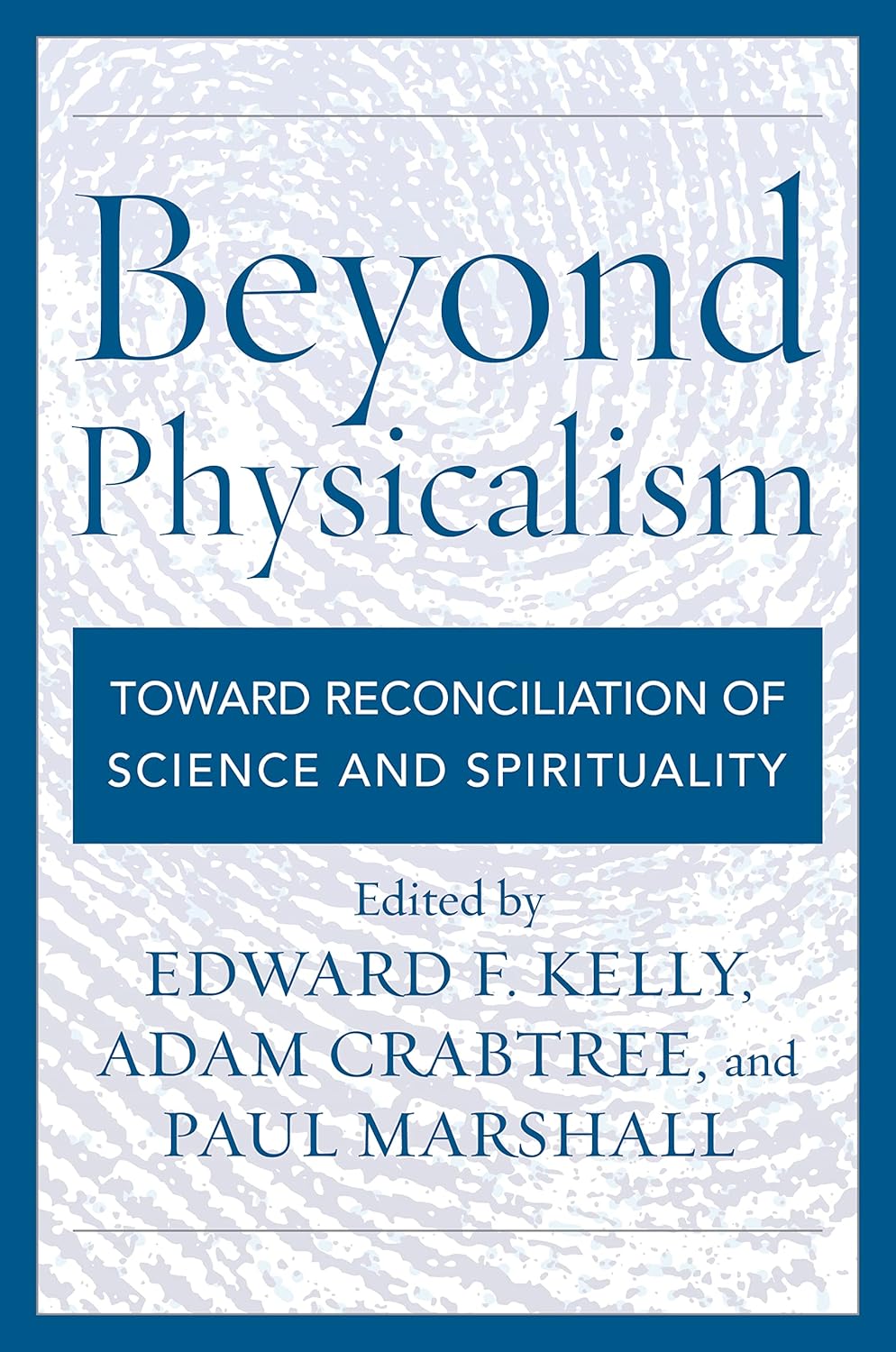
In 2015, Kelly, Adam Crabtree, and Paul Marshall produced a more theory-oriented volume, Beyond Physicalism: Toward Reconciliation of Science and Spirituality,21Kelly et al. (2015). in which they and a diverse group of colleagues, including physicists, philosophers and scholars of religion, seek to understand how the world must be constituted for the kinds of anomalous phenomena catalogued in Irreducible Mind to occur.
Consciousness Unbound
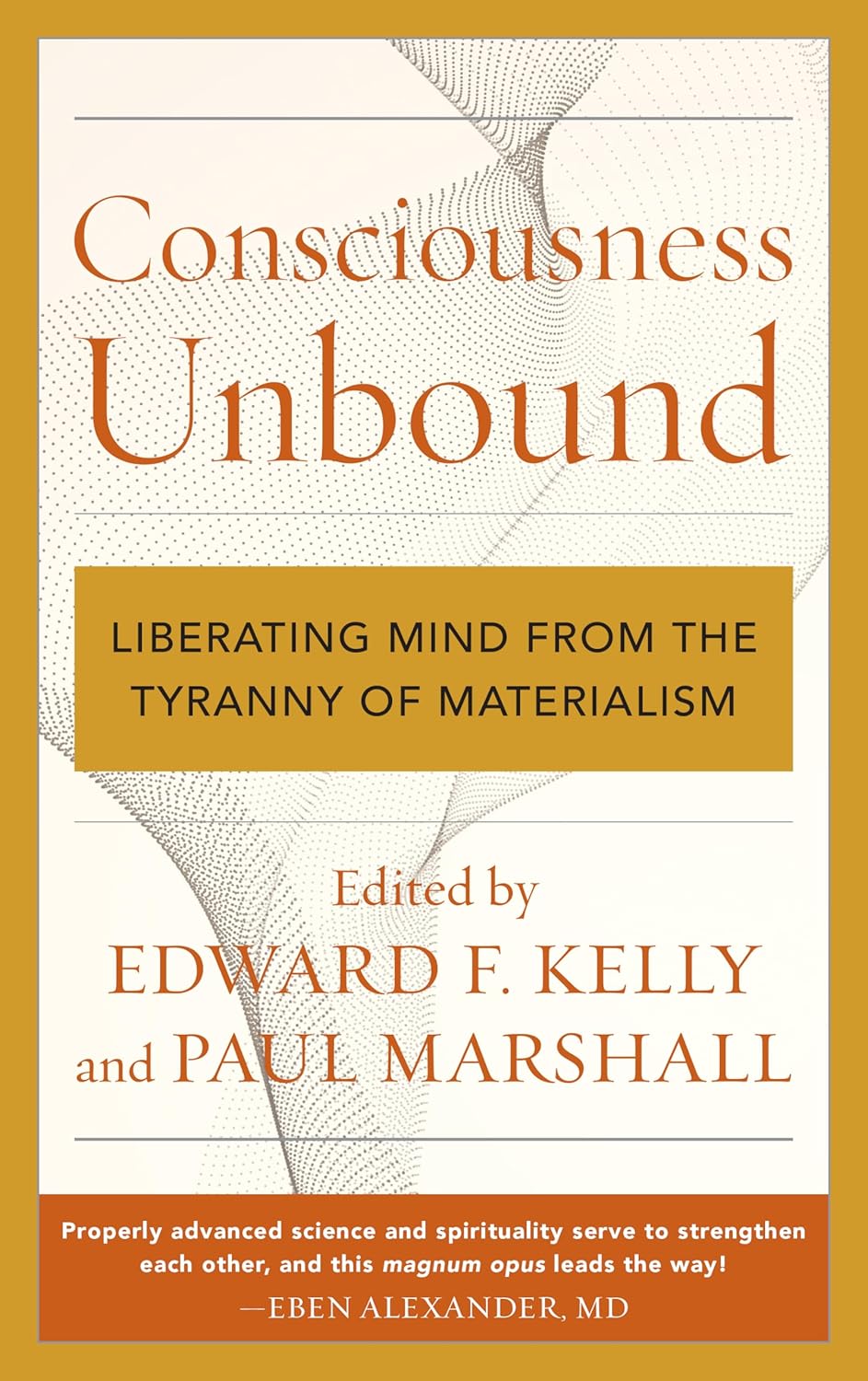
In 2021, Kelly and Marshall issued a third volume, Consciousness Unbound: Liberating Mind from the Tyranny of Materialism,22Kelly & Marshall (2021). which carries forward the main themes of its predecessors. It includes authoritative state-of-the-science reviews of research on precognition, near-death experiences, and cases suggestive of reincarnation. There are also five additional theoretical contributions and initial reflections on the implications of the three books together for consciousness research, for the future of the humanities generally, and for the current overall landscape of brain/mind theory.
The trilogy as a whole – comprising Irreducible Mind, Beyond Physicalism and Consciousness Unbound – was awarded the Parapsychological Association Book Award, in recognition of its contribution to science and to the cultural conversation about the implications of parapsychology.23Anon. (2024).
Selected Articles
On the relation between visual and ESP confusion structures in an exceptional ESP subject (1975, with H. Kanthamani, I.L. Child & F.W. Young). Journal of the American Society for Psychical Research 69/1, 1–31.
On the experiment of Brugmans, Heymans, and Weinberg (1978, with S.A. Schouten). [PDF Download.] European Journal of Parapsychology 2/3, 247–90.
On grouping of hits in some exceptional psi performers (1982). [PDF Download.] Journal of the American Society for Psychical Research 76/2, 101–42.
Spirituality and consciousness: An emerging vision for the twenty-first century (2025). [PDF Download.] Philosophy and Society 36/4, 789–810.
For a full list of publications see the DOPS staff profile for Edward Kelly.
Michael Duggan
Works Cited
Acunzo, D.J., Denton, A.H., Weiler, M., & Kelly, E.F. (2026). Neuroimaging studies of extra-sensory perception: A systematic and critical review. [Web page.] NeuroImage 120252.
Anon. (2024, 12 February). DOPS researcher Dr. Edward Kelly to receive international recognition. [Web page.] Division of Perceptual Studies, University of Virginia.
Anon. (n.d.). Edward Francis Kelly, PhD. [Web page.] Division of Perceptual Studies, University of Virginia.
Anon. (n.d.). Neuroimaging studies of psi. [Web page.] Division of Perceptual Studies, University of Virginia.
Diaconis, P. (1978). Statistical problems in ESP research. [Web page.] Science 201/4351, 131-136.
Hansen, G. P. (1992). The research with BD and the legacy of magical ignorance. [PDF Download.] Journal of Parapsychology 56/4, 307-333. [Full Text.]
Kelly, E.F. (1982). On grouping of hits in some exceptional psi performers. [PDF Download.] Journal of the American Society for Psychical Research 76/2, 101–42.
Kelly, E.F. (2024). Back to the future: Building upon Myers and James. Journal of the Society for Psychical Research 88/3, 150-173.
Kelly, E.F. (2025). Spirituality and consciousness: An emerging vision for the twenty-first century. [PDF Download.] Philosophy and Society 36/4, 789–810.
Kelly, E.F., Crabtree, A., & Marshall, P. (eds.) (2015). Beyond Physicalism: Toward Reconciliation of Science and Spirituality. Lanham, Maryland, USA: Rowman & Littlefield.
Kelly, E.F., Kanthamani, H., Child, I.L., & Young, F.W. (1975). On the relation between visual and ESP confusion structures in an exceptional ESP subject. Journal of the American Society for Psychical Research 69/1, 1–31.
Kelly, E.F., Kelly, E., Crabtree, A., Gauld, A., Grosso, M., & Greyson, B. (2007). Irreducible Mind: Toward a Psychology for the 21st Century. Lanham, Maryland, USA: Rowman & Littlefield.
Kelly, E.F., & Locke, R. (2009). Altered States of Consciousness and Psi: An Historical Survey and Research Prospectus. New York: Parapsychology Foundation. Original work published in 1981.
Kelly, E., & Marshall, P. (eds.) (2021). Consciousness Unbound: Liberating Mind from the Tyranny of Materialism. Lanham, Maryland, USA: Rowman & Littlefield.
Lenz, J.E., Kelly, E.F., & Artley, J.L. (1980). A computer-based laboratory facility for the psychophysiological study of psi. [PDF Download.] Journal of the American Society for Psychical Research 74/2, 149–70.
Lenz, J.E., Kelly, E.F., Dunseath, W.J.R., & Acunzo, D.J. (2026). Assessing deviations from chance in a spatial guessing task: Analytical framework and results from a single participant. [PDF Download.] Psychology of Consciousness: Theory, Research, and Practice. Advance online publication.
Palmer, J. (1986). An Evaluative Report on the Current Status of Parapsychology. [PDF Download.] Parapsychology Laboratory, University of Utrecht.
Schouten, S.A. (1980). Letter to the editor. [PDF Download.] Zetetic Scholar /6, 112-113.
Schouten, S.A., & Kelly, E.F. (1978). On the experiment of Brugmans, Heymans, and Weinberg. [PDF Download.] European Journal of Parapsychology 2/3, 247–90.
Scott, C. (1980). Letter to the editor. [PDF Download.] Zetetic Scholar /6, 110-112.
Tart, C. T. (1978). ESP research. [Web page.] Science 202/4373, 1146.
Williams, B. J. (2011). Exploring the psychic brain: On neuroscience and psi phenomena. Australian Journal of Parapsychology 11/2, 154-192.
Wiseman, R. (1995). Testing the notion that a “foot shiner” could have been used during the Delmore experiments. Journal of Parapsychology 59/1, 63-65.