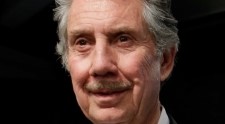
Robert Bigelow represents a modern philanthropic model in survival research: private wealth redirected towards large-scale prizes, grants and institutional support. After funding an array of parapsychological projects for decades, he turned the Bigelow Institute for Consciousness Studies into a vehicle for openly testing the evidence for post-mortem survival.
- Bigelow has supported parapsychology since the early 1990s, from journals and research centres to projects on presentiment, apparitions and alleged abductions.
- The 2021 BICS essay contest distributed $1.8 million across 29 winners for arguments about the best evidence of consciousness surviving bodily death.
- The later BICS Challenge sought real-time communication with discarnate consciousnesses and drew 140 applications before a promised paradigm shift altered its course.
Life and Career
Robert Thomas Bigelow was born on 12 May 1945 and grew up in Las Vegas, Nevada, the son of a real-estate broker. He is quoted in Forbes as saying ‘This was a unique town because it was the only place where you could stand out in your yard and watch [rocket] launches or a nuclear bomb go off’. This and a vivid UFO sighting by his grandparents triggered his interest in space and the paranormal, so he planned from childhood to make his fortune in real estate so as to finance his own aerospace development. He studied banking and real estate at the University of Nevada, Reno and Arizona State University, graduating in 1967 with a BSc in business administration.1Ewalt (2011).
Starting with a $20,000 loan, Bigelow began investing and then building rental apartment complexes, eventually founding Budget Suites of America, a chain of week-by-week apartments in the southwest USA, designed to be affordable and convenient. All told, he has built some 15,000 units and purchased 8,000 more.2Higginbotham (2013). He also has owned, co-owned and served on the boards of a savings and loan company, a commercial bank and a mortgage company.3Las Vegas High School Alumni Association (n.d.).
Bigelow founded Bigelow Aerospace (BA) in 1999, licensing technology for expandable modules from the USA’s National Aeronautics and Space Administration (NASA). BA launched two modules, Genesis I in 2006 and Genesis II in 2007, demonstrating that they were stable and could maintain air pressure. In 2013, the company contracted with NASA to build the Bigelow Expandable Activity Module (BEAM) and install it on the International Space Station. It was conveyed to the station on a SpaceX craft and installed in April and May 2016. It remains attached to the ISS to this day.4Foust (2020).
Bigelow next envisioned commercial hotels in space, and even set a schedule of prices, for example, $28.75 million for a 30-day stay.5Ewalt (2011). However, NASA, which had been planning to offer a port on the ISS for a larger BA module, instead solicited bids, and Bigelow bowed out, saying greater government subsidization was needed.
BA has also been connected with two covert Pentagon programmes researching UFOs, a longstanding interest of Bigelow’s. He holds more than fifteen US patents for inventions relating to space technology.6Las Vegas High School Alumni Association (n.d.).
In March 2020, BA was ordered to suspend operations as a non-essential business due to the COVID-19 pandemic, as a result of which Bigelow laid off all but twenty of 155 employees.7Blumenthal (2021).
Support for Parapsychology
Robert Bigelow has funded a wide variety of parapsychological initiatives in the past three decades.
In 1992, he offered a ‘challenge grant’ to support the Journal of Scientific Exploration (JSE), committing to match all subscriptions, sales and donations received by year’s end dollar for dollar up to $15,000. The amount was attained and JSE still thrives.8Haisch (1992, 1993).
He supported the Rhine Research Center, for which he had served as a director when it had been named the Foundation for Research on the Nature of Man, as well as the Institute for Parapsychology and the Journal of Parapsychology. He was named first on the Center’s Benefactors’ Roll in 1997.9Rhine Research Center (1997).
In 1993, Bigelow provided a grant to found the Center for Advanced Cognitive Science at the University of Nevada, Las Vegas, its purpose to research the role of consciousness in the physical world through laboratory investigations. Its director was leading parapsychologist Dean Radin.10Society for Scientific Exploration (1994). It later became the Consciousness Research Laboratory, a division of the university’s Harry Reid Center for Environmental Studies, until it was closed in September 1997.11Bass (1997).
In 1995, Bigelow founded a private paranormal research organization, the National Institute of Discovery Science (NIDS), which remained active until 2004. Its chief field research director was Colm Kelleher.
In 1995, NIDS purchased a 480-acre ranch near Fort Duchesne in northeastern Utah, USA, colloquially known as ‘Skinwalker Ranch’. It lies in the Uinta Basin, itself known for anomalous phenomena, and is reputed to be a particularly active area for paranormal phenomena such as poltergeist/haunting phenomena, animal disappearances, cattle mutilations and unusual aerial manifestations. NIDS staff and the family that previously owned the ranch both reported occurrences such as apparent portals in the sky, aircraft ranging in size from small to ‘several football fields’ in length that emitted light of various colours, and orbs, one of which reportedly incinerated three dogs that were chasing it. Kelleher and investigative journalist George Knapp published a book12Kelleher & Knapp (2005). on these phenomena.13McCue (2015).
Bigelow donated $3.7 million to establish the Bigelow Chair of Consciousness Studies at the University of Nevada, Las Vegas in 1997, an annual appointment. It sustained for two years and its holders were parapsychologists Charles Tart and Raymond Moody, the latter of whom pioneered research in near-death experiences.14Ruickbie (2021), 5.
Paranormal research that Bigelow has funded or helped fund includes:
- testing whether the focused attention of a group of people creates order in their environs, as measured by random number generators15Radin, Rebman, & Cross (1996).
- testing correlations between physiological states and local environmental states while subjects attempted to perceive apparitions in a psychomanteum16Radin & Rebman (1996–97).
- testing presentiment in subjects whose physiological responses to emotion were measured before and after they viewed either ‘calm’ or ‘extreme’ photographs17Radin (1997).
- testing for correlations between payout percentages at a Las Vegas casino with gravitational tidal forces, the lunar cycle and geomagnetic field fluctuations, based on previous research showing effects of these forces on human psi18Radin & Rebman (1998).
- using select physiological responses analysed by artificial neural networks to test subjects’ precognitive psi, so as to develop better techniques for psi training19Stevens (1998).
- testing electrodermal activity as a physiological response to precognition in subjects viewing ‘calm’ or ‘emotional’ pictures20Radin (2004).
- three national surveys in the USA on the prevalence of recalled experiences and signs presumed to be related to alien abduction21Hopkins, Jacobs, & Westrum (2004)
- a project to preserve key phrases on an internet database, provided by people in the hope that after death they will be able to communicate the phrase to someone who can then test its authenticity on the website, based on a protocol conceived by Susy Smith, a spirit medium 22Fontana & Moore (2001). See Smith (2001). The website appears to be defunct.
In a New York Times article, Bigelow attributed his and his wife Diane’s original interest in the afterlife to the suicide, at age 24, of their son Rod Lee in 1992. His son Rod II, then an infant, committed suicide at age twenty. Shortly after their son’s death, the couple held sittings with medium George Anderson to try to contact him, and felt comforted afterwards.23Blumenthal (2021).
Bigelow Institute of Consciousness Studies
In June 2020, about four months after Diane Mona Bigelow’s death ended his 55 years of marriage,24Blumenthal (2021). Bigelow founded the Bigelow Institute of Consciousness Studies (BICS), ‘to support research into both the survival of human consciousness after physical death and, based on data from such studies, the nature of the afterlife’, according to its website. The website continues:
Despite intriguing evidence, the number of research groups and funding devoted to investigating the survival of human consciousness beyond death is shockingly small in the Western world. Even though all 7.8 billion humans on planet Earth will eventually die, very little high quality research is being conducted on perhaps the most important and fundamental question facing our species …
One purpose of the BICS is to raise awareness among the public and within the scientific community of the importance and relevance of such an investigation. BICS hopes to provide a public service by drawing increasing attention to, and encouraging research into, this fundamental and timeless topic. We are seeking hard evidence ‘beyond a reasonable doubt’ that takes us beyond religion or philosophy and provides a body of knowledge to be brought widely into the public arena that could be partially unifying in its impact on human awareness and culture.25Bigelow Institute for Consciousness Studies (2021).
Regarding the focus on post-mortem survival, Bigelow commented: ‘We felt that it was time to shift some attention to this very, very, very, important subject of survival of consciousness and let’s focus on that, and maybe we can help the community and the researchers.’26Ruickbie (2021), 5.
Essay Contest
BICS’s first project was an essay contest, launched in January 2021, which asked entrants to answer the question ‘What is the best evidence for the survival of human consciousness beyond permanent bodily death?’ in a maximum of 25,000 words, with the added requirement of ‘proof beyond a reasonable doubt’. Of about a thousand applicants, 204 were granted permission to enter.
Initially, cash prizes of $500,000, $300,000 and $150,000 were offered for first, second and third place respectively; during the writing period, another eleven prizes of $50,000 each were added, and during the judging period another fifteen $20,000 prizes were added, at the judges’ request, for a total of 29 winners splitting $1.8 million.
The judges were Christopher C Green, Leslie Kean, Jeffrey J Kripal, Harold Puthoff, Jessica Utts and Brian Weiss, about all of whom information could be found on the BICS website’s Contest Judges page. Along with Bigelow and Kelleher, they at that time comprised the BICS Board of Directors.
The winners were announced on 2 November 2021. They were:
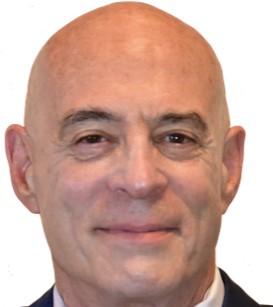
- First place: Jeffrey Mishlove, American long-time parapsychologist and host of the YouTube channel New Thinking Allowed
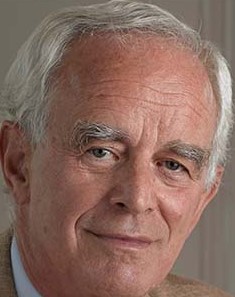
- Second place: Pim van Lommel, Dutch cardiologist and long-time NDE researcher
- Third place: Leo Ruickbie, British social scientist, paranormal investigator, author and editor
- $50,000: Michael Tymn, Stephen Braude, Nicolas Rouleau, Bernardo Kastrup, Elizabeth Krohn, Sharon Rawlette, Jeffrey Long, Michael Nahm, Julie Beischel, Alexandre Rocha et al, David Rousseau et al
- $20,000: Robert Mays et al, Chris Carter, Steve Taylor, Christopher Kerr, Bruce Leininger, Vernon Neppe, Helane Wahbeh et al, Chris Roe et al, Peter Fenwick et al, Walter Meyer zu Erpen, Akila Weerasekera and Shanaka de Silva, Greg Taylor, Nick Cook, Andreas Sommer, Sam Parnia et al
All winning essays are posted on the Bigelow website here. They present a wide variety of approaches and arguments. The awards ceremony took place in Las Vegas on 4 December 2021.27Ruffles (2021).
The Challenge
In 2022, BICS announced its second major project, ‘The Challenge’, a programme that would make available up to $1 million in grants to researchers investigating the possibilities and techniques of real-time communication with discarnate consciousnesses, ‘exclusively focused on Contact or Communication with the “Other Side”’. Preliminary proposals were accepted from 1 November 2022 to 1 February 2023; finalists had until 1 April 2023 to submit full proposals, and the winning projects were to be funded prior to 1 May 2024.28Bigelow Institute for Consciousness Studies (2022).
After review of the 140 applications received, Bigelow and his assistant Colm Kelleher announced to the applicants on 14 February 2023 that the Challenge would undertake a ‘significant paradigm shift’. Drawing on a prediction by the founder of Spiritism Allan Kardec, that all war and conflict would come to an end in 1857, Bigelow asked the applicants to concentrate their efforts on contacting the ‘Other Side’ to ask a key question: ‘Since 1857, has the Other Side failed and Mankind failed to achieve good progress in securing human spirituality? If so, are bad spirits and bad humans winning?’29Bigelow & Kelleher (2023), 4.
Five teams working with a total of 67 mental mediums were assigned to ask this and three more questions of beings on the ‘Other Side’:
2. Explain to people on Earth why the Other Side has not failed in fostering spiritual evolution.
3. What difference has the Other Side made since 1857 in influencing humans to accelerate their spiritual progress?
4. To what extent have earthbound spirits since 1857 impeded, sabotaged or distorted the progress of human spiritual evolution?30Bigelow Institute for Consciousness Studies (2026a).
The five final reports, which also addressed many follow-up questions, some predictive and some about the nature of the ‘Other Side’, were made available on a page of the BICS website. The conclusions are somewhat mixed, but common themes that clearly emerge are that the ‘Other Side’ generally denies responsibility for failing humanity as its influence is relatively slight, human spiritual evolution has not ceased as evidenced by the rise of scientific study of spirituality and consciousness starting after 1857, and incarnate humans are themselves responsible for the current state of humanity as they have free will.
Robert Ginsburg and the late Stephen Braude stated in their abstract, ‘No conclusions were reached regarding the questions that asked for predictive information, as only physical time will tell if the statements have any veracity.’31Ginsburg & Braude (2024), 1.
The Institute for the Scientific Study of Consciousness, led by Melvin Morse, concluded:
It is ISSC’s position that the spirit world inspired this current project to give mankind an urgent message. “Learn to love or be destroyed by your own technology and hate for each other.” This is placed in the context that they cannot (or will not) prevent humanity from self-extinction but can warn of impending disaster. Humanity must make the choices necessary to exist as a species; only by making those choices can humanity have the opportunity to continue its spiritual progress.32Institute for the Scientific Study of Consciousness (2024), 63.
Grant Solomon and Jane Solomon of Campion Consciousness Research, concluded:
There was consensus across the mediums that the Other Side disagrees that it has failed to promote human spiritual evolution in the 1857–2023 period. It has no corporate responsibility for doing so. Some spirits and spirit groups on the Other Side are available and able to help when asked by individual spirits incarnated in human bodies. Humans fail to progress spiritually by not asking for help and by making free will choices to do harm.33Solomon & Solomon (2024), 2.
Jeffrey Tarrant of the NeuroMeditation Institute, concluded:
Overall, the results of this study appear to refute the notion that the Other Side has failed to improve human spiritual evolution on Earth over the past 166 years. While it is often difficult to see the larger processes at work, there was a clear consensus that the Universe is working toward advancing human evolution.34Tarrant, 54.
Finally, Carol Williams wrote in the Results section of her report:
The spirits repeatedly stated they are always available and step in to make our lives better. They extend only love toward us and want to inspire and help us in any way possible. Humans must do their part as well. They must reach out to the “Other Side” and ask for help and guidance in all areas of life. The spirits are respectful of the law of free will and often cannot intervene unless asked. So mankind must realize they are there and learn to ask for the miraculous help and knowledge that is ready and waiting.
Williams added that new technology including artificial intelligence and social media will enhance the ability of the ‘Other Side’ to help solve human problems.35Williams (2024), 59-60.
Future Plans
The BICS website announces that major funding of similar projects will continue: ‘BICS is now a wholly owned subsidiary of the RT Bigelow Educational Foundation. The RT Bigelow Educational Foundation will be a huge source of funding going into the future.’36Bigelow Institute for Consciousness Studies (2026b).
Video
MysteryWire’s ‘dossier’ on Robert Bigelow contains multiple video interviews on various aspects of his career and life including BICS and the essay contest.
News3 Channel at WREG in Memphis interviews Bigelow about the contest.
MysteryWire interviews Bigelow after the contest about the winners, the impact and future plans.
KM Wehrstein
Works Cited
Bass, D. (1997). UNLV researcher baffled over his recent dismissal. Las Vegas Sun (16 September).
Bigelow, R., & Kelleher, C. (2023). The foundational letter that began the BICS Challenge program. [Web Page with downloadable PDF file.]
Bigelow Institute for Consciousness Studies (2021). About BICS. [Web page, now defunct, archived on archive.org.]
Bigelow Institute for Consciousness Studies (2022). Announcing the BICS Challenge Grants Program for 2023. [Web page, now defunct, archived on archive.org.]
Bigelow Institute for Consciousness Studies (2026a). Central questions of the BICS Challenge. [Web Page.]
Bigelow Institute for Consciousness Studies (2026b). Major Announcement. [Web Page.]
Blumenthal, R. (2021). Can Robert Bigelow (and the rest of us) survive death? He’s offering nearly $1 million if you help him figure it out. New York Times (23 January).
Ewalt, D.M. (2011). Cosmic landlord. Forbes (8 June).
Fontana, D., & Moores, J. (2001). The Afterlife Codes: Searching for Evidence of the Survival of the Soul. [Book review.] Journal of the Society for Psychical Research 65/865, 276-79.
Foust, J. (2020). Bigelow Aerospace lays off entire workforce. SpaceNews (23 March).
Ginsberg, R., & Braude, S. (2024). An examination of wisdom consistencies ostensibly communicated to accredited mediums from the spirit realm. Bigelow Institute for Consciousness Studies. [Downloadable PDF file.]
Haisch, B. (1992). Editorial: Challenge grant. Journal of Scientific Exploration 6/2, i-ii.
Haisch, B. (1993). Editorial: More is more! Journal of Scientific Exploration 7/1, 1.
Higginbotham, A. (2013). Robert Bigelow plans a real estate empire in space. BusinessWeek (May 2.) [Paywalled.]
Hopkins, B., Jacobs, D., & Westrum, R. (2004). Unusual Personal Experiences: An Analysis of the Data from Three National Surveys. [Conducted by the Roper Organization.] Las Vegas: Bigelow Holding Corporation.
Institute for the Scientific Study of Consciousness (2024). BICS Challenge final report: An investigation into the current status of the spiritual progress of humanity, as ascertained by interviewing 19 mediums. Bigelow Institute for Consciousness Studies. [Downloadable PDF file.]
Kelleher, C.A., & Knapp, G. (2005). Hunt for the Skinwalker: Science Confronts the Unexplained at a Remote Ranch in Utah. New York: Paraview Pocket Books.
Knapp, G. (2021). Las Vegas billionaire pays $1.8M in prize money for winning essays on life after death. On MysteryWire (2 November). [Web page with video interview.]
Las Vegas High School Alumni Association (n.d.). Robert Thomas Bigelow: Class of 1962. [Web page.]
McCue, P.A. (2015). The ‘Skinwalker Ranch’: A paranormal hot spot? Journal for the Society for Psychical Research 79, 201-23.
Radin, D.I. (2004). Electrodermal presentiments of future emotions. Journal of Scientific Exploration 18/2, 253-73.
Radin, D.I. (1997). Unconscious perception of future emotions: An experiment in presentiment. Journal of Scientific Exploration 11/2, 163-80.
Radin, D.I., Rebman, J.M., & Cross, M.P. (1996). Anomalous organization of random events by group consciousness: Two exploratory experiments. Journal of Scientific Exploration 10/1, 143-68.
Radin, D.I., & Rebman, J.M. (1998). Seeking psi in the casino. Journal of the Society for Psychical Research 62/850, 183-219.
Radin, D.I., & Rebman, J.M. (1996–1997). Are phantasms fact or fantasy? A preliminary investigation of apparitions invoked in the laboratory. Journal of the Society for Psychical Research 61/843, 65-87.
Rhine Research Center (1997). Rhine Research Center benefactors’ roll. Journal of Parapsychology 61, 336.
Ruffles, T. (2021). The $1.8 million Bigelow Competition. (16 November). [Blog post.]
Ruickbie, L. (2021). The $1,500,000 question: Is there life after death? The Magazine of the Society for Psychical Research 3, 4-7. [Originally published as Death: The final frontier, Fortean Times 405 (May 2021), 36-39.]
Smith, S. (2001). The Afterlife Codes: Searching for Evidence of the Survival of the Soul. Charlottesville, Virginia, USA: Hampton Roads.
Society for Scientific Exploration (1994). A new director position for SSE councilor Radin. Journal for Scientific Exploration 8, 148.
Solomon, G., & Solomon, J. (2024). Asking the other side: Employing experienced mental mediums to question discarnate wise sources. Bigelow Institute for Consciousness Studies. [Downloadable PDF file.]
Stevens, P. (1998). Techno-dowsing: Developing a physiological response system to improve psi training. Journal of Scientific Exploration 12/4, 551-67.
Tarrant, J. (2024). Repeated measures wisdom acquisition from discarnate consciousness with gifted mediums: Final report. Bigelow Institute for Consciousness Studies. [Downloadable PDF file.]
Williams, C., & Teams (2024). Milestone 8 final report: BICS Challenge. Bigelow Institute for Consciousness Studies. [Downloadable PDF file.]