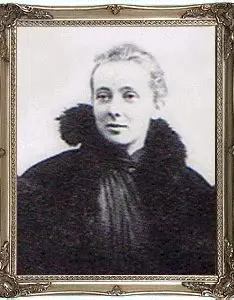
Ada Goodrich Freer, who often published as ‘Miss X’, was a controversial late Victorian clairvoyant, psychical researcher and travel writer. Her association with FWH Myers and the Society for Psychical Research led to investigations of crystal-gazing, second sight and hauntings, but the Ballechin House debacle ended her relationship with the SPR.
- Goodrich Freer joined the SPR in 1888 and became known for crystal-gazing, automatic experiences and writings under the pseudonym ‘Miss X’.
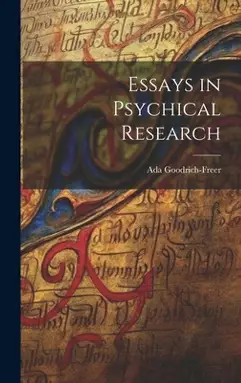
- Her 1899 Essays in Psychical Research presented a broad survey of psychical topics but included a disparaging treatment of Leonora Piper which Richard Hodgson disputed.
- The controversial Ballechin House investigation damaged her standing with the SPR and marked the end of her active involvement in psychical research.
Life and Career
General
Ada Goodrich Freer was born in Uppingham, Rutland, England, on 15 May 1857. She lived in various places in her early life before settling in London. She joined the Folklore Society and the Society for Psychical Research (SPR) in 1888, when she was 21. In 1893, she was appointed assistant editor of the Spiritualist periodical Borderland by its founder WT Stead and thereafter contributed articles to it and to SPR publications under the pseudonym ‘Miss X’.
In the estimation of Rodger Anderson, Goodrich Freer was
a gifted clairvoyant who left on record a collection of experiences of the first importance to those interested in understand the psychology of the psychic. Perceptive, discriminating, at no time inclined to a too easy belief that what a psychic “sees” is for that reason real, her recounting of personal experiences in clairvoyance, psychometry, telepathy, “ghost seeing” and crystal gazing contain some of the most intelligent and perspicacious commentary every penned by a percipient.1Anderson (2006), 73.
FWH Myers became interested in Goodrich Freer’s crystal-gazing abilities,2Hamilton (2009), 231. which she brought to the attention of the SPR in 1889,3‘Miss X’ (1889), 486-521. and she received his friendship and support, possibly financially.4Hamilton (2009), 232.
Goodrich Freer’s book Essays in Psychical Research (1899) collected her articles in Borderland and the SPR’s Journal and Proceedings, exploring such subjects as ‘Psychical Research in the Victorian Era’, ‘Haunted Houses’, ‘On the Faculty of Crystal-Gazing’, ‘The Divining Rod, or the Faculty of Dowsing’, ‘Hypnotism’, and ‘Holywell – Psychic Healing: The Welsh Lourdes’. They present a balanced history of SPR interests and display Goodrich Freer’s knowledge of a wide range of subjects within the broad field of the paranormal.
However, a note appended by her as the book was ‘passing through the press’ stated that, concerning the ‘lucubrations’ of American medium Leonora Piper, who was then making her first visit to Britain, ‘[there was] not even a single evidential statement to differentiate them from the usual twaddle of the average professional séance’.5Goodrich Freer (1899), xiv. Richard Hodgson judged her portrayal of Piper to be ‘unreliable’.6Hodgson (1899), 395-96. Guy Lambert has suggested that Goodrich Freer’s ‘violent antagonism against Mrs Piper and other mediums can be put down to her finding that [Piper’s arrival] led to her (Miss Freer) no longer being the “leading lady” of the S.P.R. stage’.7Lambert (1969), 55.
Borderland ceased publication in 1897 and Goodrich Freer’s patron, Lord John Bute, died in 1900, leaving Goodrich Freer in financial distress.8Lambert (1969), 52. In 1901, she went to Jerusalem and, in 1905, married the American Reverend Hans Henry Spoer, a scholar of ancient languages. She travelled extensively with Spoer in the Middle East and returned for extended stays in England. She wrote several books about the cultures she encountered during this period but never returned to psychical research. She died in New York City on 24 February 1931.
Highland Second Sight
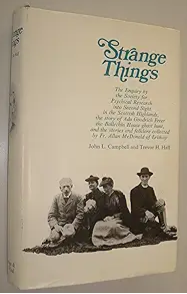
The principal controversies surrounding Goodrich Freer’s research involve two episodes, the first her participation in an enquiry into second sight in the Scottish Highlands, commissioned by the SPR in 1894. Lambert thinks she was out of her depth and unprepared for the task, having little experience in field investigations and not speaking Gaelic. She was ‘a practicing clairvoyant, a faculty that made her a suitable subject for research, rather than an investigator’.9Lambert (1969), 44. Not only did her survey not net any accounts that met the SPR’s standards of evidentiality, but in writing up her results it has been shown that she plagiarized a good deal.10Campbell & Hall (1968).
Ballechin House Investigations
Goodrich Freer’s participation in investigations at Ballechin House in Perthshire, Scotland, three years later, led to the end of her involvement with the SPR. The house was reputed to be haunted by knockings, footsteps and voices. This investigation was sponsored not by the SPR but by Lord Bute, who was informed of the alleged disturbances and decided to sponsor an examination of them. He arranged for the house to be leased ‘for several months’, with Goodrich Freer and Colonel GL le Mesurier Taylor inhabiting it, fully staffed with servants.11Lambert (1969), 51. The numerous visitors over that period included Oliver Lodge, Andrew Lang, Everard Feilding and Myers. However, it was Goodrich Freer who reported most of the phenomena:
She claimed to hear thumps, bangs and ghostly footsteps in the house. She said she had had her bedclothes torn off her by a poltergeist, seen disembodied dogs’ paws on a table, and – after following instructions given during a Ouija board session – she went to a nearby glen, where she said she had seen a ghostly weeping nun.12Hapgood (2012).
The investigation prompted a printed condemnation in The Times of London13The Times (1897). which referred to the SPR’s methods as ‘repulsive’ and was followed by claims and counterclaims: ‘The result of all this was that the senior figures in the SPR closed ranks’14Hamilton (2009), 237. to avoid further damage to their reputations and Goodrich Freer was effectively abandoned by the SPR and by Myers in particular.
At the end of the investigation, Goodrich Freer returned to London and wrote up her experiences in ‘a journal kept during the tenancy of Colonel Lemesurier Taylor’, which was published as The Alleged Haunting of B-House.15Goodrich Freer & Bute (1899). An appendix provided a ‘Conspectus of audible phenomena’ with descriptions of the type of occurrences – knockings, clangings, voices, footsteps, and so on – along with dates and the names of witnesses. The latter included not only Goodrich Freer herself, but also her friend Miss Constance Moore, Colonel Taylor, the maids, and other visitors and members of the household staff.16Goodrich Freer & Bute (1899), 245-49.
Goodrich Freer presented parts of letters from Myers to her stating that ‘It is plain that the B- case is of great interest …’. However, following his ten-day stay at the house from 12–22 April 1897, Myers decided ‘that there was no such evidence as could justify us giving the results of the inquiry a place in our Proceedings’.17Goodrich Freer & Bute (1899), 191-95.
A review of The Alleged Haunting of B-House by Frank Podmore drew attention to Goodrich Freer’s liability ‘in a quite unusual degree, to hallucinatory experience … which seriously impairs the value of her testimony’.18Podmore (1900), 99. Trevor Hall was more scathing in his section of Strange Things and his in later book, The Strange Story of Ada Goodrich Freer,19Cambell & Hall (1968); Hall (1980). although his analysis has been faulted for providing ‘too many examples of the perils of arguing from circumstantial evidence, and from negatives’.20Lambert (1969), 55.
By contrast, Nandor Fodor asserted that Ballechin House was ‘the most haunted house in England’ and that Goodrich Freer was ‘a well-known and capable investigator’.21Fodor (1964), 185-86. In any event, after the Ballechin affair, Goodrich Freer withdrew from psychical research and concentrated on folklore studies and travel in the Middle East with her husband. She died in New York City in 1931.
Selected Publications
Books
Essays in Psychical Research (1899). London: George Redway.
The Alleged Haunting of B-House (1899, with John, Marquess of Bute). London: George Redway.
Outer Isles (1902). London: Archibald Constable & Co. Ltd.
Inner Jerusalem (1904). New York: E.P. Dutton & Co.
In a Syrian Saddle (1905). London: Methuen.
Things Seen in Palestine (1913). New York: E.P. Dutton & Co.
Articles
(‘Miss X’) Recent experiments in crystal vision (1889). Proceedings of the Society for Psychical Research 5, 486-521.
(‘Miss X’) A record of telepathic and other experiences (1889). Proceedings of the Society for Psychical Research 6, 377-97.
(‘Miss X’) Psychical phenomena: A historical summary (1894). Borderland 1, 24-26.
(‘Miss X’) On the sources of messages (1894). Borderland 1, 242-45.
(‘Miss X’) Second sight in the Highlands (1895). Borderland 2, 56-60.
(‘Miss X’) A provisional account of an enquiry into second sight in the Highlands (1895). Journal of the Society for Psychical Research 7, 2-5.
(‘Miss X’) On the apparent source of subliminal messages (1895). Proceedings of the Society for Psychical Research 11, 114-44.
(‘Miss X’) Where to draw the line (1896). Borderland 3, 73-75.
(‘Miss X’) Hypnotism and the Society for Psychical Research: Why hypnotic experiments are made (1896). Borderland 3, 93-95.
(‘Miss X’) Thoughts on automatism (1896). Borderland 3, 156-72.
(‘Miss X’) Haunted houses up to date. Silverton Abbey and others (1896). Borderland 3, 284-96.
(‘Miss X’) Recent psychic phenomena in France including the story of Mdlle Couédon (1896). Borderland 3, 336-40.
(‘Miss X’) The land of faëry (1897). Borderland 4, 153-59.
(‘Miss X’) A passing note on a haunted house (1897). Journal of the Society for Psychical Research 8, 20-25.
Melvyn Willin
Works Cited
Anderson, R.I. (2008). Psychics, Sensitives and Somnambules: A Biographical Dictionary with Bibliographies. Jefferson, North Carolina, USA: McFarland.
Campbell, J.L., & Hall, T.H. (1968). Strange Things: The Story of Fr. Allan McDonald, Ada Goodrich Freer and the Society for Psychical Research’s Enquiry into Highland Second Sight. London: Routledge & Kegan Paul. [Book excerpt.]
Fodor, N. (1964). Between Two Worlds. New York: Parker Publishing Co. Inc. [Full book.]
Goodrich Freer, A. (1899). Essays in Psychical Research. London: George Redway. [Full book.]
Goodrich Freer, A., & Bute, J.P.C.-S. (1899). The Alleged Haunting of B-House. London: George Redway. [Full book.]
Hall, T.H. (1980). Miss Freer, Lord Bute, and the Clandon affair. In The Strange Story of Ada Goodrich Freer, 58-71. London: Gerald Duckworth & Co. Ltd. [Book excerpt.]
Hamilton, T. (2009). Immortal Longings: FWH Myers and the Victorian Search for Life After Death. Exeter: Imprint Academic. [Book excerpt.]
Hapgood, S.J. (2012). Miss Ada Goodrich Freer and the (alleged) haunting of Ballechin House. [Web page.]
Hodgson, R. (1899). Review of Essays in Psychical Research by A. Goodrich Freer. Proceedings of the Society for Psychical Research 14, 393-96. [Abstract.]
Lambert, G.W. (1969). Stranger things: Some reflections on reading Strange Things by John L. Campbell and Trevor H. Hall. Journal of the Society for Psychical Research 45, 43-55. [Abstract.]
‘Miss X’ (1889). Recent experiments in crystal vision. Proceedings of the Society for Psychical Research 5, 486-521.
Podmore, F. (1900). Review of The Alleged Haunting of B-House. Proceedings of the Society for Psychical Research 15, 98-100. [Abstract.]
The Times (1897, 8 June). On the trail of a ghost.