
In a long-running series of experiments, Haakon Forwald sought to test whether his willed psychokinesis could deflect thrown objects. The apparatus he devised was ingenious and his results were striking, and although the methodological weaknesses were real, he left an historically important body of work that remains difficult to dispense with.
- Forwald’s strongest scoring came almost entirely from the first release in each target sequence, with later releases contributing little or nothing to the effect.
- The claim that different cube materials responded differently to PK is much weaker than the underlying evidence for unexplained lateral deviation.
- Later mechanical-cascade work at the Princeton Engineering Anomalies Research laboratory echoed Forwald’s approach, but on a much smaller scale and without comparable scoring.
Background
Haakon Forwald was born on 21 August 1897 in Mandal, Norway. He was raised in Norway but for most of his later life lived in Ludvika, Sweden, where he was a prominent engineer with the Swedish General Electric Company. He held several hundred national and international patents, mostly on high-power circuit-breaker technology.1Johnson (1979).
Forwald’s first foray into parapsychology was table-tilting, much used earlier by mediums: the standard reference was published in 1857.2de Gasparin (1857). A group of fellow engineers rested their hands lightly on a table and observed its surprising movements. Forwald’s involvement with table-tilting was not made public and these experiences were never published fully. Decades later Diana Robinson collected and reported on some of them in the long-defunct periodical Theta.3Robinson (1984).
Forwald was of the opinion that there was more to table-tilting than just unconscious muscular action and in 1950 wrote to the doyen of parapsychology, JB Rhine. Rhine seems to have replied gently — all very well, but hardly science. He recommended that Forwald instead try the ‘cutting edge’ psychokinesis technology of the day — dice — and, more specifically, the willed placement of thrown dice, a recent interest in Rhine’s own laboratory.4Cox (1951); Pratt (1951); Rhine (1951b); Rhine (1951a).
Forwald’s Placement PK
Forwald took Rhine’s advice to heart and spent the next two decades on psychokinesis (PK) research with cubes. He built on earlier work, but with better engineered apparatus. Cubes, six at a time, were released electro-mechanically, impacted a sloping ramp and ran down that onto a horizontal table, while Forwald attempted mentally to deflect the cube trajectory to the left or right. His set-up was permanently situated in the basement of his home. At first he counted only the number of cubes which ended up left or right of a taut metal string (Figure 1),5Forwald (1952). but shortly he marked the baseboard with a centimetre grid and used this to measure the final coordinates for each cube.6Forwald (1954b); Forwald (1959b). There were an equal number of releases for each target side (A or B). A simple t-test was used to compare the side deviations for the equally frequent targets A and B: if apparatus bias is the same for both A and B, it cancels out.
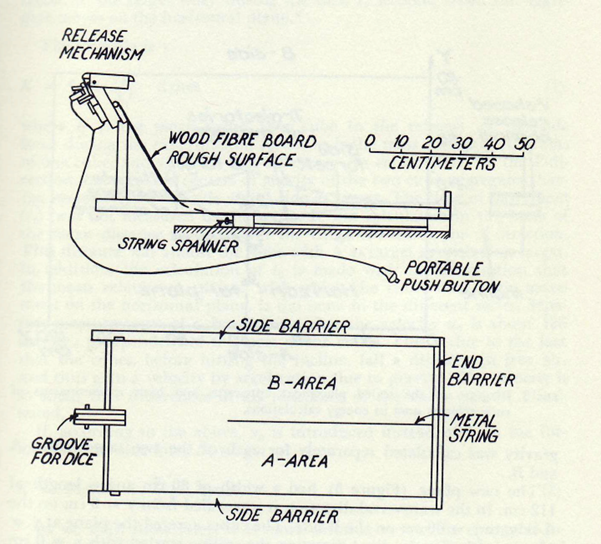
Figure 1. Diagram of Forwald’s initial apparatus
A standard experimental session consisted of ten releases (five with target A and five with target B) of six cubes each, as shown in Figure 2. The great bulk of the scoring turned out to be concentrated in the first release for both target A and target B; the remaining four releases for each side contained practically no psi. From the total of ten releases, only two (one A, one B) were first releases, so only 20% of the data were taken into account; the remaining 80% were discarded. Forwald persisted in this apparently inefficient design year after year because he was convinced that a standard rhythm was essential to get PK to manifest at all.

Figure 2. Experimental session structure
Forwald’s standard series was five such sessions. The first releases correspond to thirty cube positions for target A and thirty for B. He reported remarkably high scores. However, he was working alone, at his home in Sweden. Could his findings be confirmed when supervised by experienced researchers in their own laboratory?
JB Rhine invited Forwald to come to his lab in Durham. This turned out to be a rather rushed affair, with Forwald together with an assistant rapidly hammering together an improvised apparatus. Forwald seemed to succeed only with a couple of experimenter/co-subjects in various pilot trials. As a matter of necessity, he was involved not only in preparing the apparatus but also in determining the experimental conditions, which considerably weakens precautions against trickery, conscious or unconscious. Additionally, a formal experiment was run under the supervision of one of the successful lab personnel (PM, a lab secretary and general factotum, rather than an experienced parapsychologist). The plan was to get supervised and independent records of the end positions of the cubes. In somewhat of a rush to return home, only two standard series were carried out — nevertheless, the results were about as successful as in Sweden.
Rhine was eager to disseminate the news as fast as possible and assigned this task to his faithful assistant JG Pratt, with Forward as a rather nominal co-author.7Pratt & Forwald (1958). It is amusing to read Rhine’s prefaced editorial comments in which he stressed confirmation of PK but failed to mention Forwald’s contention that physical aspects of the cubes are important: for Rhine, PK was ‘non-physical’. The paper later excited the interest of another parapsychologist, RA McConnell, a biophysicist in Pittsburgh, Pennsylvania. McConnell went through Pratt’s report with a fine-tooth comb, but found no critical errors.8McConnell & Forwald (1967a).
McConnell brought a new level of expertise to the investigations. He published diagrams (scatter-plots) of the individual cube end positions, which, before the days of computers, were laboriously drawn by hand. Forwald did not adopt this innovation as routine, presumably because of the prohibitive amount of labour involved. McConnell also arranged photographic recording of the end positions of the cubes, to check for recording errors, and introduced analysis of variance (ANOVA), then a shiny new statistical technique, to analyse the results in more detail than Forwald’s t-test. McConnell went on to build and investigate various cube-releasing devices. He also arranged a visit of Forwald to his own lab, but Forwald produced no PK effect there.9McConnell & Forwald (1967a); McConnell & Forwald (1967b); McConnell & Forwald (1968).
Evidence of a slight machine bias towards side A appeared throughout the placement work. Furthermore, the PK effect was asymmetric, with the deviation towards the A side something like twice that for the B side. Apart from the Rhine lab data, McConnell published scatter-plots for six Swedish series (for both targets A and B), so it is possible to gain some visual impression of the data.10McConnell & Forwald (1967b). A digitized version of the composite six series is presented as Figure 3. The half-separation between A and B is 5.7 cm. A t-test gives t(358) = 7.93, with 2P less than 10^-14, far from chance.
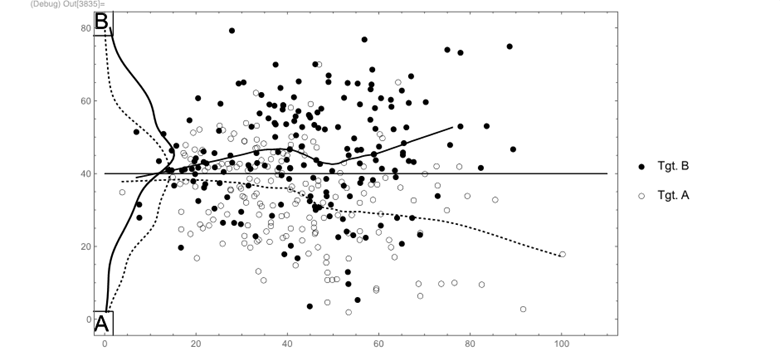
Figure 3. Composite of six Swedish Forwald placement PK series
In Figure 3 the y distribution can clearly be seen to be shifted as a whole. Of particular interest is an estimate of the deviation effect along the x-axis (average trajectory), calculated by LOESS local regression. The two LOESS estimates diverge with x and the difference accelerates. Furthermore, this smooth divergence seems to be perturbed by some factor common to A and B: starting at circa x = 40 cm, both target A and target B cubes are sharply drawn towards A. This anomaly may be a clue to the action of Forwald’s PK, or it could be something minor, e.g. unevenness in the table surface or just statistical noise. Forwald was habitually located at side A. Apart from this unexplained effect, the curve looks very like the quadratic equation for distance travelled by a point mass (or a rolling sphere) under the accelerating influence of a constant force. Though LOESS is not very sensitive to sudden changes, it does not look like a quantum effect much later proposed, which ‘switches on’ abruptly after a critical distance is travelled.11Burns (2002); Walker (1975).
Critique and Appraisal
These experiments were done in the early days of parapsychology, before more sophisticated methods were developed, so a ‘shopping list’ of methodological imperfections is inevitable.
Physical Interaction
Some critics wondered if the systematic displacement might be caused by air currents (unconscious blowing). However, Forwald had professional expertise in this area and effectively scotched the argument.12Forwald (1954a). Nonetheless, a useful modification would have been a transparent barrier between Forwald and the table. Normal air currents are ruled out, but no one seems seriously to have considered the ‘psychic breezes’ often reported at table séances.
The actual release of six cubes was done electrically by pressing a switch at the end of a long flexible cable, a part of which rested on the floor. This appears secure, but on each and every release Forwald had to ‘feed’ the machine manually while he knew what the following target side would be. Cubes were collected and replaced in the ‘vee’ of the release arm and this was raised and clicked into place to reset it to the starting position. Forwald had years of table-tilting and his unconscious muscular action was arguably well developed: What would be more natural than that he should use these skills in the new setting of placement PK? It may have been possible for him to work on the inevitable ‘play’ in the pivot and ‘give’ in its wooden support arm, unconsciously pressing one way or the other, depending on the target.
In another, much later, experiment, a single ball was used instead of cubes, and it turned out that the differences between successive trajectories disappeared when the initial angular position of the ball was fixed. Forwald openly reported this and conceded that this ‘PK’ result may have been due to unconscious skilled placing of the ball; but, by then an old man, he still considered PK the more likely cause.13Forwald (1978). Today, ‘hacking’ is a more open concern and one of the best ways to ensure security is to get potential hackers to try it. With the Forwald research, there were no attempts reported to ‘finesse’ the apparatus, like a pinball machine. Forwald preferred working alone and a useful addition might have been a vibrator device to ‘relax’ induced stresses in the starting configuration after feeding but before cube release.
Randomization
The target order was nearly always the same {AAAAA, BBBBB}. Today, this would be randomized, especially when using ANOVA: most conveniently, the order might instead be {BBBBB, AAAAA} half the time. It seems Forwald occasionally did this, but only when the spirit moved him, a ‘researcher degree of freedom’. However, non-random assignment of targets is likely more of a ‘beauty-fault’ here than anything of real importance.
Reporting
Despite Forwald’s detailed reports on his then-current interests, there is no systematic series-by-series overview.
Blinding
Forwald’s first controversial claim was that different cube materials are more or less susceptible to PK influence.14Forwald (1955); Forwald (1957); Forwald (1959a). This was something other parapsychologists had conspicuously failed to find. The different cube types were mostly made from thicknesses of metal foil wrapped around a wooden cube as core; a couple were solid, one was hollow and one was made from compressed powder (hexamethylene tetramine, for its high nitrogen content). The cubes look crude, if apparently adequate (Figure 4a).
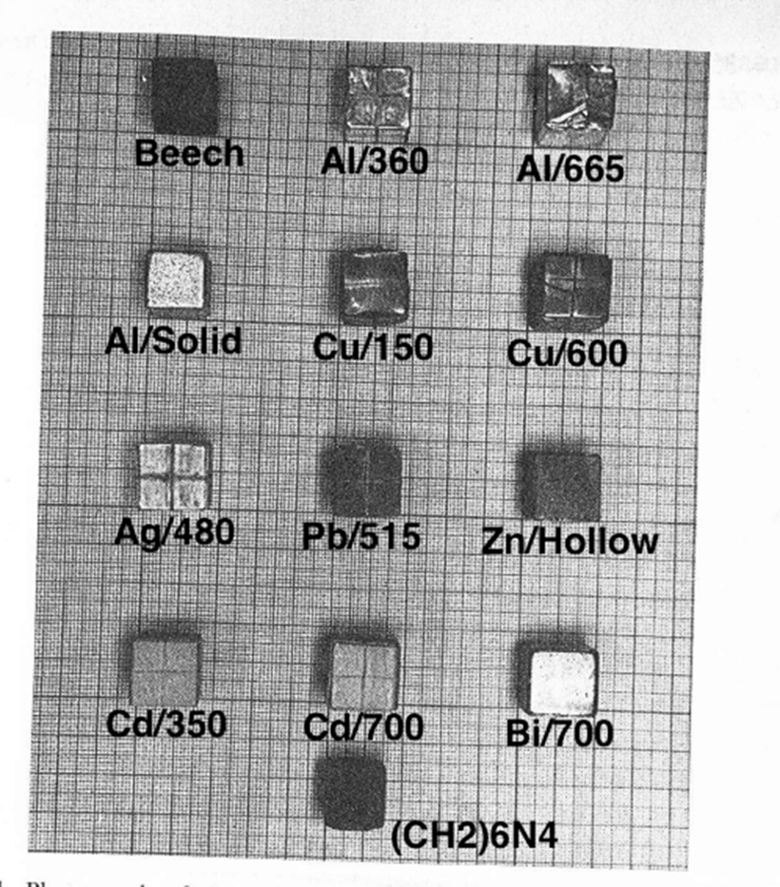
Figure 4a. Forwald’s thirteen cube types
Forwald was not blind to the types of cubes used; he could have been when using this kind of ‘hands-on’ set-up. As time went on, the cube deviations increased (correlation between series order and deviation r(12) = 0.62, P = 0.02). At the same time, Forwald progressed to more and more ‘exotic’ cube materials. The unanswered question is whether Forwald was really progressively learning what materials were best: Any physical differences were confounded by Forwald’s rising expectations. It is unclear whether the differences were truly physical or were due to psychology in disguise.
Forwald plausibly assumed there are real differences between the side deviations for different cube types and Figure 4 certainly suggests that. Such impressions can, however, be grossly misleading. Forwald did not apply a formal statistical test and subsequent workers have uncritically inherited his opinion. Forwald cannot be blamed for his omission, since the idea that a statistical test must be applied for each specific hypothesis was not yet standard. The test can, however, still be done today on the basis of the published data for the thirteen principal cube types Forwald used.15Millar, unpublished data. The error bars are surprisingly large, so that the half-deviation presented to two decimals as 3.29 centimetres for beech may in fact have a confidence interval between one and six centimetres.
An ANOVA reveals no convincing significant differences between cube types. This casts a shadow upon the work of EH Walker, who much later laboriously fitted an equation to what may be non-existent differences.16McConnell & Forwald (1967a). It is, however, possible that there really are differences, but too small to be detected against the powerful background of statistical noise. The data for twelve of the cube types are only from two standard series and one is from a single series. This is adequate to get impressive significances for the deviation of each cube type from zero, but not for smaller differences between cube types. ‘Middle of the road’ cubes merely dilute results and a number might usefully have been omitted on the basis of preliminary trials. Concentrating on the few remaining, more series (eight or so) could have been performed to increase sensitivity to differences. But Forwald’s emphasis was exploring a wide range of materials, rather than measuring a select few in depth.
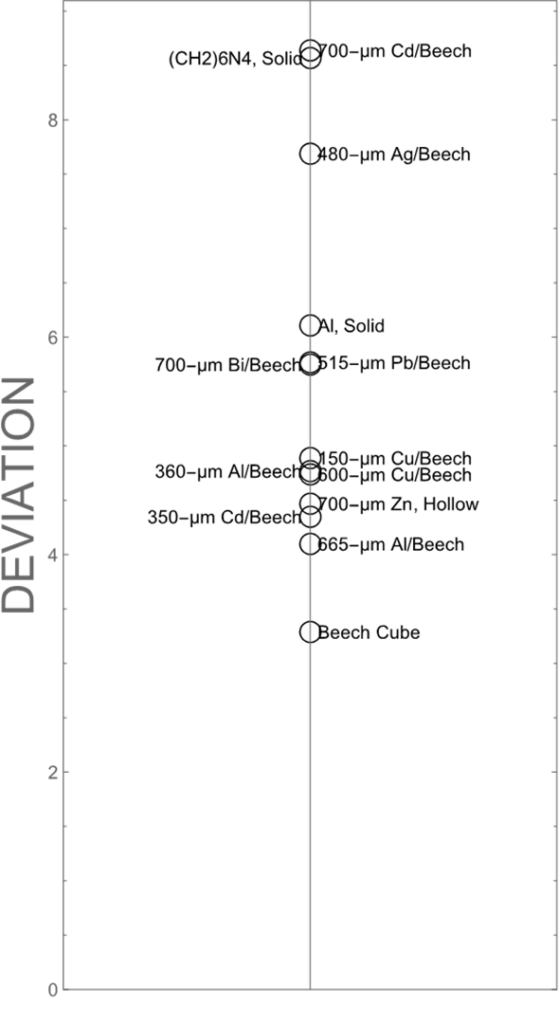
Figure 4b. Deviations for Forwald’s thirteen cube types
Math and Physics
Forwald usefully imagined the average cube trajectory as a kind of invisible pointer, or flexion beam, which registers the forces acting on it. He wanted to investigate the force and energies in the usual units of physics; for example, how much work is done by PK in moving the cube? To do so, he developed an equation for the sideways PK force, using a nice piece of calculus.17Forwald (1954b). Although the math is unexceptionable, the physical model upon which it is based is not even discussed. The cube starts with a given amount of energy from the drop and this is gradually lost until it comes to a halt — a dissipative system. Forwald took it that the mechanism of energy loss is rolling friction. His conceptual model is for a ball rolling on a plane. The corners of the cube, which give it its characteristic zig-zag motion, are in effect ‘cut away’ and the trajectory becomes smooth. Forwald likely considered rolling friction to be an averaged-out version of the exact treatment of impacts at a lower level. He went too far and ignored rotational motion altogether, so that his published equation applies only to a theoretical point mass, rather than a ball.
Having once derived his equation, one might have thought that an investigation would follow into its applicability to the real world. To what extent Forwald did this is not clear. No attempt seems to have been made to measure the hypothetical coefficient of rolling friction for the different cube types, though he mentions, in passing, trying a tilted table-top to explore the effect of a side force empirically.
It is now known that in a whole range of impact physics the major energy dissipation is not friction, but rather ‘restitution’.18Stronge (2000). Compress a spring slowly and it springs back completely; use a hammer instead and the metal bends permanently. The pressure involved in even a low-speed collision can easily be tons on a pinpoint area of contact and a substantial fraction of the energy is lost in permanent internal deformation. The coefficient of restitution (COR) is much bandied about for sports equipment such as club/racquet//ball in golf or tennis. Although CORs were not measured for Forwald’s cubes, the values can be very crudely estimated on the basis of available material properties. When this is done,19Millar, unpublished data. COR does appear to have had a major influence on side deviation.
Forwald was struck by the serendipitous observation that an aluminium cube which had become oxidized gave a smaller side deviation than previously. He began to consider the importance of the surface and proposed that the effect involved the penetration of radiation, like a light beam in a murky pond. He presented some evidence of a similar exponential relationship between PK effect and thickness of the foil coating; but again, this is merely graphically suggestive and not backed by hard statistical analysis.
Forwald believed that he had looked at the most important bulk characteristics of the cubes, overlooking COR, and went on to investigate nuclear properties of the surface material using his dubious energy estimates. The upshot was his theory that an unknown radiation from Forwald himself caused an unknown nuclear reaction at or near the cube surface. His first thought was that the propulsive force was caused by recoil of emitted particles from a conventional nuclear reaction. But Forwald did not suffer radiation burns from handling the ‘hot’ cubes and no trace of ionizing radiation could be detected with laboratory instrumentation. Forwald theorized a heroic remedy — a hypothetical new kind of nuclear reaction which produces a horizontal gravitational field. This field was held to be the proximate agent which causes the cubes to deviate.20Forwald (1959a); Forwald (1959b). Even today there is no nuclear reaction known which produces a gravitational field and there are weighty theoretical reasons to reject the possibility.
Discussion
If Forwald’s claim that physically different cubes yield different side deviations is supported by insufficient evidence, then his findings relating to nuclear properties of the surface materials are tenuous indeed. What remains strong is that Forwald produced unexplained deviations in the trajectory of cubes in his placement experiments. Qualified scientists and engineers, who examined the device, gave it a clean bill of health and the hypothesis of motor automatism working on some weakness in the apparatus is late armchair critique. Forwald’s results may reasonably be ascribed to PK, whatever that may be, although the high level of scoring and remarkably long duration are unique.
In the 1960s, the Rhine school maintained that only psychological variables are relevant in psi research, a stance today widely considered quite implausible. Undeterred, Forwald pursued physical variables in his pioneering work. Very little on placement PK has appeared in the literature since and Forwald’s experiments have never been repeated and his results replicated. The general impression is that the apparatus for placement PK is inconveniently bulky and weighty – roughly one hundred kilograms – as well as finicky in operation. Moreover, in other hands, it does not seem to produce exceptional scoring.
The legacy of Forwald lives on. In spite of its great theoretical importance, research into macro- or near-macro-PK has been singularly neglected by modern parapsychology, partly because of the level of engineering support required. A new-generation piece of work closely related to Forwald’s is the ‘Random Mechanical Cascade’ built by the Princeton Engineering Anomalies Research (PEAR) laboratory (Figure 5).21Dunne, Nelson, & Jahn (1988). During development, the device became known as Murphy, from the eponymous law which states that if something can go wrong it will go wrong. The set-up goes back to the Victorian polymath and eccentric Francis Galton, who dropped balls through a regular lattice of nails (quincunx) to illustrate that the sum of sufficient random errors results in a normal distribution.
In the Forwald set-up, the ‘teeth’ are on a cube’s corners, whereas for Murphy they are pegs on the board. This can easily be turned into a PK test by having someone wish for right or left deviation and, in fact, this had earlier been done on a small scale by PK pioneers such as Ed Cox. Murphy, an electronically controlled and monitored giant Galton board, eventually came to occupy a wall in the lab (Figure 5). The team claimed evidence for a PK effect, although very much smaller than Forwald did with his apparatus.
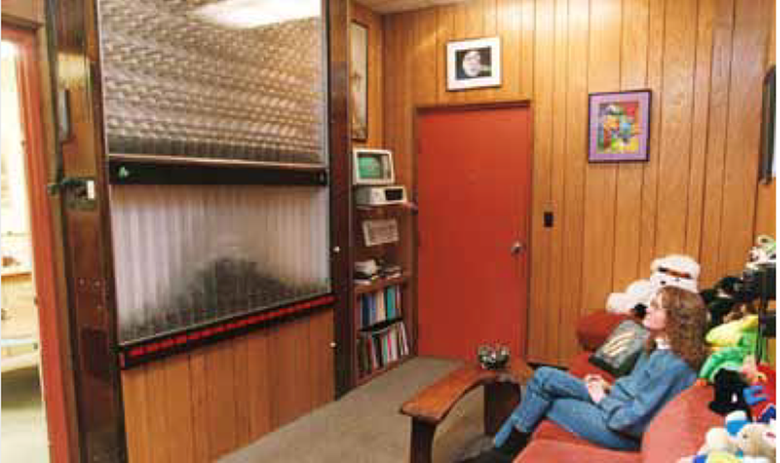
Figure 5. The PEAR laboratory’s Random Mechanical Cascade
Forwald was accustomed to ‘talking’ tables and he approached his cube experiments in a similar way: The play of a toy car in the desired target direction produced a short-lived improvement in the results. Forwald was a transitional figure, somewhere between shaman with a slide-rule and modern PK researcher. According to Adrian Parker, after his death Forwald’s house was said to be haunted.22Personal communication from A. Parker, who was told by a relative of Forwald that his house was perceived to be haunted after his death.
Forwald is an unsolved historical mystery and is likely to remain so. No doubt he compiled extensive notebooks, but these seem not to have survived. Perhaps they will as yet turn up; meanwhile, the application of modern methods might just shed light on the enigma that was Forwald.
Brian Millar
Works Cited
Burns, J.E. (2002). The effect of ordered air molecules on a tumbling cube. Noetic Journal 3/4, 330-39.
Cox, W.E. (1951). The effect of PK on the placement of falling objects. Journal of Parapsychology 15, 40-48.
Dunne, B.J., Nelson, R.D., & Jahn, R.G. (1988). Operator-related anomalies in a random mechanical cascade. Journal of Scientific Exploration 2/2, 155-79.
Forwald, H. (1952). A further study of the PK placement effect. Journal of Parapsychology 16, 59-67.
Forwald, H. (1954a). PK placement and air currents (letter). Journal of Parapsychology 18, 41-42.
Forwald, H. (1954b). An approach to instrumental investigation of psychokinesis. Journal of Parapsychology 18, 219-33.
Forwald, H. (1955). A study of psychokinesis in its relation to physical conditions. Journal of Parapsychology 18, 133-54.
Forwald, H. (1957). A continuation of the study of psychokinesis and physical conditions. Journal of Parapsychology 21, 98-121.
Forwald, H. (1959a). An experimental study suggesting a relationship between psychokinesis and nuclear conditions of matter. Journal of Parapsychology 23, 97-125.
Forwald, H. (1959b). Mind, Matter and Gravitation: A Theoretical and Experimental Study (Parapsychological Monographs 11). New York, USA: Parapsychology Foundation.
Forwald, H. (1978). A PK experiment with a single ball rolling on a decline. European Journal of Parapsychology 2, 4-14.
Gasparin, A. de (1857). Science vs. Modern Spiritualism: A Treatise on Turning Tables (2 vols). New York: Kiggins & Kellogg.
Johnson, M. (1979). Haakon Forwald (1897-1978). European Journal of Parapsychology 2/4, 333-36.
McConnell, R.A., & Forwald, H. (1967a). Psychokinetic placement: I. A re-examination of the Forwald-Durham experiment. Journal of Parapsychology 31, 51-69.
McConnell, R.A., & Forwald, H. (1967b). Psychokinetic placement: II. A factorial study of successful and unsuccessful series. Journal of Parapsychology 31, 198-213.
McConnell, R.A., & Forwald, H. (1968). Psychokinetic placement: III. Cube-releasing devices. Journal of Parapsychology 32, 9-38.
Pratt, J.G. (1951). The Cormack placement PK experiments. Journal of Parapsychology 15, 57-73.
Pratt, J.G., & Forwald, H. (1958). Confirmation of the PK placement effect. Journal of Parapsychology 22, 1-19.
Rhine, J.B. (1951a). The Forwald experiments with placement PK. Journal of Parapsychology 15, 49-56.
Rhine, L.E. (1951b). Placement PK tests with three types of objects. Journal of Parapsychology 15, 132-38.
Robinson, D. (1984). The table-tipping experiments of Haakon Forwald. Theta (Spring Issue).
Stronge, W.J. (2000). Impact Mechanics. Cambridge: Cambridge University Press.
Walker, E.H. (1975). Foundations of paraphysical and parapsychological phenomena. In Quantum Physics and Parapsychology, ed. by L. Oteri, 1-88. New York: Parapsychology Foundation.