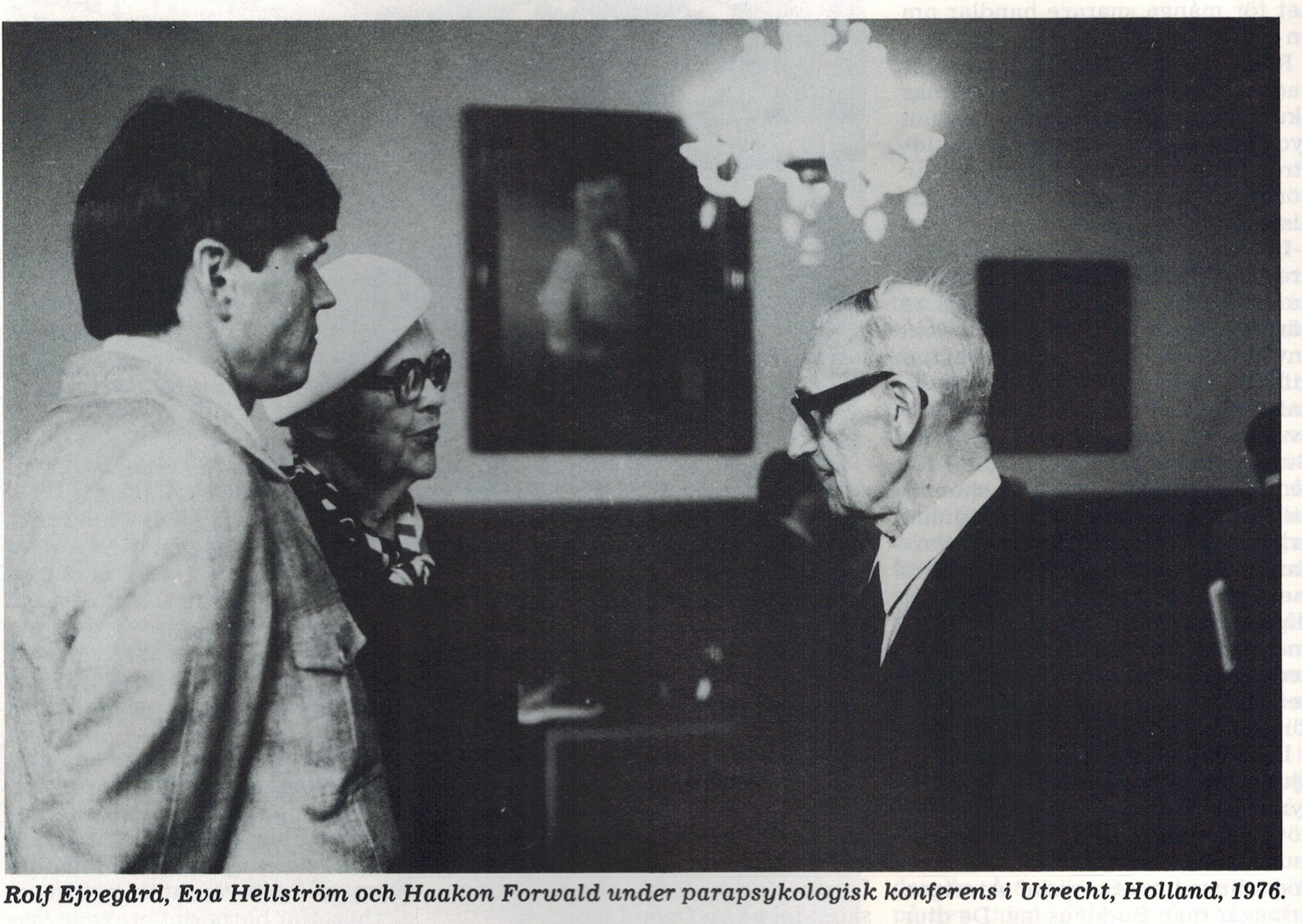
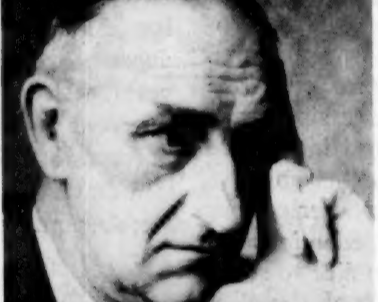
Haakon Forwald was a Norwegian-born Swedish engineer and inventor who became active in experimental psychokinesis research after table-tipping séances in the late 1940s. After corresponding with JB Rhine, he conducted placement-effect experiments with dice and other cubes, for which he received the William McDougall Award in 1959.
- Forwald trained as an engineer, worked for ASEA in Ludvika and registered more than a hundred patents.
- After table-tipping séances in 1948–50, he concluded that he might be the source of the phenomena.
- Forwald constructed the devices that he used to test himself in the cellar of his house.
Life and Career
Haakon Forwald was born in Mandal, Norway, on 21 August 1897. He grew up in Oslo and, after his initial studies, underwent military service. Forwald served as a pilot from 1918 to 1923, becoming a lieutenant. After studying in Gdańsk, Poland, he qualified as an engineer in 1925. He then worked and continued his studies in Zürich, Switzerland, and in Stockholm, Sweden. In 1935, he was employed at the Allmänna Svenska Elektriska Aktiebolaget (General Swedish Electrical Joint-Stock Company, ASEA), a predecessor of the ABB, in Ludvika, Sweden. Forwald remained in Ludvika for the rest of his life. He worked at ASEA for about thirty years and became chief of construction. Forwald was also an inventor who published technical articles and registered more than a hundred patents.
Forwald married Birgit Steffenburg in 1932 and they had three children: Astrid, Bergljot and Kåre. Rolf Ejvegård, who knew Forwald, described him as a very capable man with an interest in music.1Ejvegård (1980); Jacobson (1998). Some details in the following are drawn from notices in the Swedish newspaper Dagens Nyheter.
Psychokinesis Research
Forwald began holding irregular table-tipping séances in 1948, which continued until 1950. In total, 61 sessions were held, with varying results. Forwald came to believe that he was the source of the phenomena, since strong effects could occur when he found himself in ‘a drowsy state of mind’. Sometimes it felt as if the table resisted attempts to press it down.2Robinson (1984).
Forwald wrote to JB Rhine, and they began to correspond. Following Rhine’s suggestion that he conduct psychokinesis (PK) experiments with dice,3Covered by Robinson (1981) and Rhine (1970). Forwald started to conduct a series of experiments (described in Placement Effects in Psychokinesis Tests). He was usually both the experimenter and the test subject for these experiments, which he conducted in his own cellar. Forwald was particularly interested in the energy that he felt must be involved in PK and whether it could be measured.4Johnson (1979)
Forwald published the results of his research in the Journal of Parapsychology and presented his work at the first international conference arranged by the Parapsychology Foundation in 1953. The Parapsychology Bulletin included a biographical sketch of him and his research in 1958.5Mr. Haakon Forwald (1958). The following year he was the third recipient of the William McDougall Award for Distinguished Work in Parapsychology, for an article co-authored with JG Pratt.6The third William McDougall Award (1959). After receiving the award, Forwald held a table-tipping séance in Durham, North Carolina. Rhine received a noise complaint the next day and was asked not to allow further séances.7Feola (2013).
Forwald summarised his research and ideas in the monograph Mind, Matter, and Gravitation, reviewed by Joseph Rush.8Rush (1971). Forwald died on 16 September 1978, aged 81. After his death, Martin Johnson noted that Forwald had either been unable or unwilling to seek much publicity for his ideas. Johnson described him as modest, friendly and somewhat reserved. However, Rolf Ejvegård noted that Forwald received admiration and respect wherever he went.9Jacobson (1998).
Selected Publications
The following publications are listed in chronological order.
A further study of the PK placement effect (1952). Journal of Parapsychology 16/1, 59-67.
An approach to instrumental investigation of psychokinesis (1954). Journal of Parapsychology 18/4, 219-33.
Confirmation of the PK placement effect (1958, with J.G. Pratt). Journal of Parapsychology 22/1, 1-19.
Psychokinetic placement: I. A re-examination of the Forwald-Durham experiment (1967, with R.A. McConnell). Journal of Parapsychology 31/1, 51-69.
Mind, Matter, and Gravitation: A Theoretical and Experimental Study (1969). New York: Parapsychology Foundation. [PDF Download.]
Nemo C Mörck
Works Cited
Ejvegård, R. (1980). Haakon Forwald in memoriam. Sökaren 1, 15-16.
Feola, J.M. (2013). Scientist and Psychic. Buenos Aires, Argentina: Editorial Antigua.
Jacobson, N.-O. (ed.) (1998). Svensk Parapsykologi (Swedish Parapsychology). Stockholm: John Björkhem Memorial Foundation.
Johnson, M. (1979). Haakon Forwald 1897–1978. European Journal of Parapsychology 2/4, 333-336.
Mr. Haakon Forwald (1958). Parapsychology Bulletin 44, 1-2.
Rhine, L.E. (1970). Mind over Matter: Psychokinesis. New York: Macmillan.
Robinson, D. (1981). To Stretch a Plank: A Survey of Psychokinesis. Chicago, Illinois, USA: Nelson-Hall.
Robinson, D. (1984). The table-tipping experiments of Haakon Forwald. THETA (Spring), 7-11.
Rush, J.H. (1971). Review of Mind, Matter, and Gravitation: A Theoretical and Experimental Study by H. Forwald. Journal of the American Society for Psychical Research 65/2, 223-27.
The third William McDougall Award (1959). Parapsychology Bulletin 48, 1.