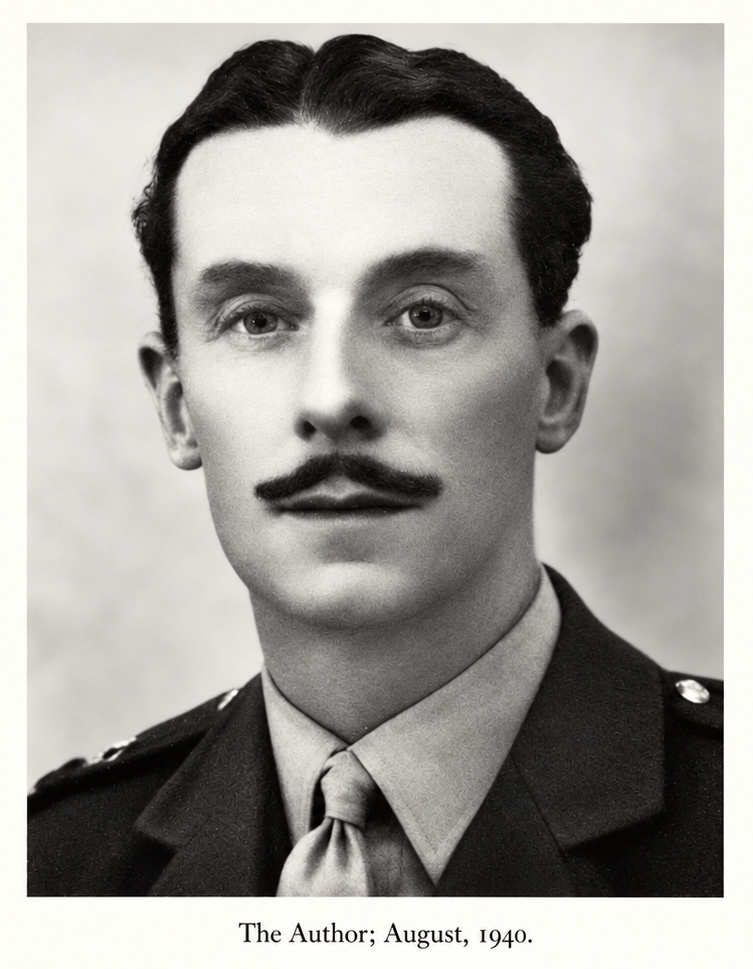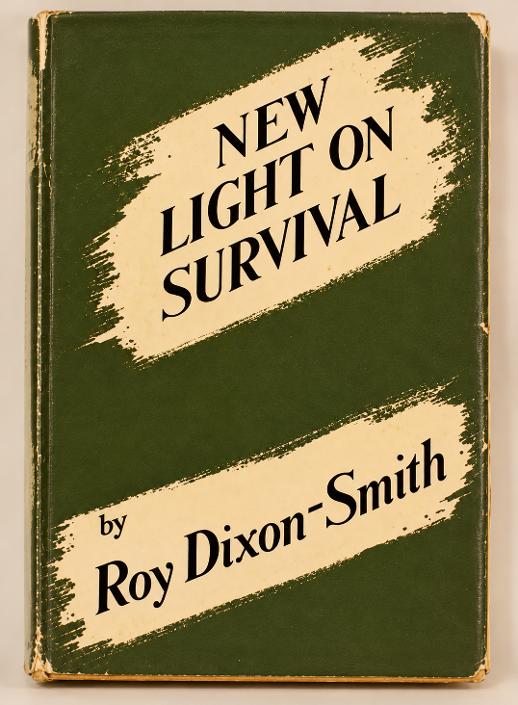
Harold Roy Dixon-Smith (1895–1966), a British Army officer and artist, became a psychical investigator after the death of his wife Betty in 1944. His search for evidence of survival took him from home circles and automatic writing to direct voice and materialisation mediums, experiences recorded in his book, New Light on Survival.
- After Betty’s death, Dixon-Smith sought verifiable communications through mediums and Spiritualist circles in Britain and India, while recording both encouraging and inconclusive results.
- His investigations included sittings with Leslie Flint, materialisation séances in Scotland, the Saturday Night Club and an Aberdeen circle that reported direct writing and physical phenomena.
- In New Light on Survival, Dixon-Smith combined personal bereavement with sustained investigation, asking whether consciousness, personality and loving relationships can continue after bodily death.
Overview
Harold Roy Dixon-Smith (1895–1966), a British Army officer, married Ethel Margaret ‘Betty’ Fisher Craigie in 1939. After Betty’s death five years later, Roy sought to contact her through both mental and physical mediums in India and Britain, while recording both encouraging and inconclusive results. His investigations included Rishi automatic writing, sittings with direct voice medium Leslie Flint in London, materialisation séances in Scotland, the Saturday Night Club with Minnie Harrison in North Yorkshire, and an Aberdeen sitter group that reported direct writing and other physical phenomena.
In New Light on Survival, Roy combined personal bereavement with sustained investigation, asking whether consciousness, personality and loving relationships can continue after bodily death. Perhaps because he apparently never associated with the Society for Psychical Research (SPR), his investigative approach was sometimes naïve and his analysis does not always fully consider alternative explanations (G, 1952). Nonetheless, his book documents an extraordinary variety of evidently veridical communications from a single individual (Betty) in association with several mediums and Spiritualist circles.
Early Life and Military Career
Harold Roy Dixon-Smith was born on 30 September 1895 in Sutton, Surrey, England. Known as Roy, he served in the British Army and subsequently the British Indian Army, attaining the rank of lieutenant-colonel. His military career included service with the Essex Regiment and Machine Gun Corps during World War I, followed by postings in India.
Roy was an accomplished artist. He studied drawing at Heatherleys School of Fine Art and produced portraits and scenes reflecting his military experiences and travels. His known works include Penhurst (1931), Portrait of a Wazir Malik (1932),1This may be viewed in a 2016 auction listing here. and A Khassadar on the North West Frontier, India (c. 1935). The last is held by the National Army Museum.2Accession 2000–08–81. Penhurst was mentioned in a contemporary review in Truth in 1931.3Anon. (1931).
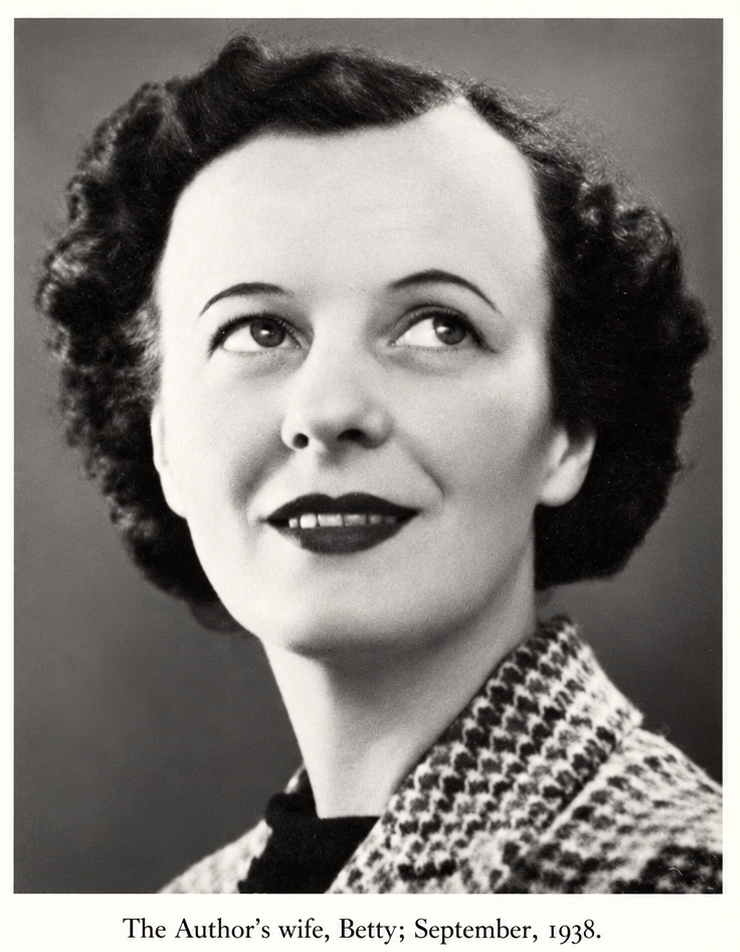
In 1934, while living in India, Roy met Ethel Craigie, known as Betty, a nickname she acquired in India. Born on 10 February 1906 in Laurencekirk, Kincardineshire, Scotland, Betty was then living in India with her first husband and their two children, John and Judy. Following her husband’s death in 1937, Betty returned to Scotland with her children. Roy and Betty later renewed their acquaintance in Scotland, and their relationship developed into romance. They married in Perth on 3 May 1939 and spent their honeymoon at the Dunblane Hydro in Scotland.4Dixon-Smith (1952), 23.
Roy and Betty later travelled back to India, where they intended to establish a family home and eventually bring John and Judy to join them. However, the outbreak of World War II disrupted these plans, and the children remained in Scotland as wartime conditions made the journey unsafe. Roy and Betty’s daughter, Valerie Cherry Dixon-Smith, affectionately known as Cherry, was born on 14 February 1940 in Hyderabad, Sind (then British India, now Pakistan).
Betty died of endocarditis in Bombay (now Mumbai) on 23 August 1944, aged 38, and is buried in Sewri Christian Cemetery, Mumbai. Her death marked a turning point in Roy’s life and led him to investigate psychic phenomena. His book, New Light on Survival (1952), recounts his search for evidence of life after death while reflecting his enduring love for Betty and his hope of reconnecting with her.
This article follows Roy’s account in that important but now-scarce book. Key events were described in a series of articles in Psychic News, listed in the Addenda column to the right. They may be viewed here.
Investigations
The Search Begins
About ten days after Betty’s death, while watching Cherry sleep in her cot, Roy reported sensing Betty’s presence so vividly that she seemed physically real to him. Although the experience brought comfort, he considered whether grief or hallucination might explain it. Nonetheless, this experience brought him to begin asking whether consciousness and personality might survive physical death. Rather than accept the incident as proof of survival, however, he sought further experiences that he hoped could be assessed more objectively.5Dixon-Smith (1952), 35-38.
Roy contacted Psychic News for advice on reputable mediums and approached Spiritualist societies for guidance. He subsequently attended private sittings, recording messages he believed might originate with Betty. He was particularly interested in communications containing personal information that he thought could not have been obtained by ordinary means.6Dixon-Smith (1952), 39–93.
Home Circles in Aberdeen, 1945
Roy and Cherry returned to Scotland in 1945, reaching Aberdeen on 15 February. Betty’s children, John and Judy, were living there with their aunt, Betty’s sister, whom Roy identified in his book only as ‘S’ to protect her privacy.
On 18 February 1945, Roy attended a Spiritualist service at the A.O.S. Hall in Aberdeen. Through the local Spiritualist community, he met a married couple, Bob and Annie, and a medium named Mary. All three became important figures in his investigations. Roy reported communications he interpreted as originating with Betty, including familiar personal references and physical sensations he found difficult to explain.7Dixon-Smith (1952), 94–98.
Roy attended a home-circle sitting with Bob and Annie on 20 February and a private sitting with Mary on 6 March. During the latter, Mary reportedly entered a trance and delivered communications Roy attributed to Betty. He also described an apparent change in Mary’s facial appearance, which he interpreted as a resemblance to his late wife. Roy wrote:
Gradually the medium’s features blurred and a mist formed over them from which Betty’s features emerged, and she smiled at me in the way I know so well.
Even I, who am not in the least clairvoyant up to date, could see the change quite plainly. It looked to me as if a nebulous mask in the likeness of Betty had been put over the medium’s face.8Dixon-Smith (1952), 101.
An incident at a 15 March sitting with Mary particularly impressed Roy. His niece Joan had attended a private sitting with a medium in London earlier that evening. According to Roy, both produced references to 26 March in connection with travel by water. He stated that he did not receive official movement orders until 23 March, when he learned he was to depart by ship for India on 26 March.9Dixon-Smith (1952), 94-109.
After Roy returned to India, Mary continued sitting with Bob and Annie, who corresponded with him and passed on further communications attributed to Betty. Roy recorded, for example, that a visiting Glasgow medium on 22 April 1945 reportedly gave the names ‘Betty’ and ‘Ethel’. Bob knew the name Betty but, according to Roy, he did not know that Ethel was her given name. The communication also referred to Stuart, Betty’s first husband, whose identity Roy believed was unknown to Bob and Annie. A further message was too personal for Roy to include in the book.10Dixon-Smith (1952), 119-20.
Roy wrote that he had debated whether or not to exclude the name ‘Aberdeen’ from his manuscript since, if included, his identity and those of the other local characters would be quite apparent to the Aberdeen Spiritualist community. While still uncertain on this point Roy received a letter from Bob with a message from Betty through the medium Mary saying that Betty approved of the manuscript and to ‘tell Roy not to leave Aberdeen out of the book’. Roy regarded this as a personal and evidentially significant response.11Dixon-Smith (1952), 120.
The song ‘I’ll Walk Beside You’, which Roy and Betty had heard during their honeymoon, became especially meaningful at this time. Roy wrote an additional verse and arranged for Annie to sing it at an Aberdeen sitting near Christmas, with flowers placed in the room. Bob later reported a communication through Mary that referred to Roy’s verse and challenged its suggestion that Betty no longer walked beside him.12Dixon-Smith (1952), 121-23.
These Aberdeen friendships provided Roy not only with experiences he found persuasive but also with companionship and support during bereavement.
The Rishi Sittings in Bombay, 1945
Upon returning to India, Roy contacted the Spiritualist VD Rishi and his wife, Prabhavatibai, in Bombay, having previously read about them in Psychic News. He initially withheld personal information, hoping to assess any communications against facts he believed the couple did not know.13Dixon-Smith (1952), 112.
During sittings involving automatic writing and a Ouija board, he recorded messages that he interpreted as originating with Betty.14Dixon-Smith (1952), 115-18. Among the responses were references to people and places associated with Betty’s life. Roy also asked questions about recent events that he believed the mediums could not have known about, regarding the answers as particularly significant. The following exchange, with Betty through a Ouija board controlled by the Rishis, comes from Roy’s last sitting with them, on 3 May 1945.
“Give my love to ‘S’ and John, and Judy, and our baby Cherry.”
The nickname of my sister-in-law was correctly spelt. My pleasure at this flow of names seemed to increase the power and clear the atmosphere, and the board now commenced to work smoothly and decisively.
“Do you know whom I was talking to before coming to this sitting?” was my next question.
“Yes, Jock Herd,” came the answer.
“Were you with us when we were talking together?”
“Yes, for about five minutes.”
“Did you overhear any of our conversation?”
“You joked with him about my coming to you.”
“Can you see me and my surroundings?”
“Yes, I can see you all.” A slight pause. “My photograph was not good.”
“Do you mean one of those in the leather frame?” I asked, thinking of a more recent portrait that I had substituted for the earlier one and had coloured during my last leave. This had been taken at Quetta in 1940.
“Yes,” was the reply.
“What don’t you like about it,” said I, feeling a trifle hurt as I thought my colouring effort was a fair success.
“I like it, but it is not done properly. You see on my right side, and you will know.”
It then occurred to me that my question was ambiguous and that the photo referred to might be either of the two in the frame, so I asked which one she meant.
“The one taken in nineteen thirty-eight. The one in the leather frame. My right eye is a little small.”
On my return to Kalyan, I examined the portrait closely and found the comment to be correct, though I had never noticed this point before.
I called in a friend, and asked his opinion, and he agreed that the photo did give this illusion.15In a footnote, Roy observes that the photograph of Betty referred to is the one in the frontispiece of his book, reproduced under Addenda on the right side of this article page. He wrote: ‘The effect is obviously due to slight distortion of perspective always present in a photographic close-up.’
The power was beginning to run down, so I asked a final question.
“Betty,” I said, “I’m going to ask you what may be a very difficult question. Please do your best. Where were we at this very moment six years ago?”
I turned my head aside, and Mr. Rishi repeated the letters as they were indicated:
“D U N B L A N E”
And so we were, as you have read in Chapter I.
The board was now beginning to crawl lamely about. We had already been sitting for over an hour. It made a last spurt and said farewell.
“Bye-bye till we meet again.”16Dixon-Smith (1952), 116-17.
Roy regarded these responses as more than expressions of comfort; they offered information he could compare with his own memories and, in some instances, examine afterwards. The experiences strengthened his belief that Betty remained aware of his life and encouraged him to continue his investigations.17Dixon-Smith (1952), 112-18.
Dr Simha and the Jamshedpur Posting, 1945
Just days after his May 1945 meeting with the Rishis in Bombay, Roy was disheartened to learn that he had been posted across India to Jamshedpur in the east of the country. Shortly after arriving there, he received an unexpected visit from an Indian physicist and doctor of philosophy identified in the book only as Dr Simha, whom he had not previously met.
Simha was familiar with occultism, Theosophy and Spiritualism and had travelled widely in Europe. Roy was already working on the manuscript that became New Light on Survival, seeking to explore evidence for post-mortem survival principally from a scientific perspective, including possible relationships between atomic physics and what he understood as physical and etheric or astral planes.
Over approximately three months, Simha visited Roy three or four times weekly, often for several hours, discussing with him these ideas and lending scientific texts. In his book, Roy states that physicists were uncommon in India at that time and that meeting one with practical experience of Spiritualist phenomena was rarer still. He valued the unexpected collaboration with Dr Simha and regarded their meeting as more than coincidence.18Dixon-Smith (1952), 118-19.
In September 1945, Roy was transferred from Jamshedpur to Dehra Dun, in northern India. While stationed there, his application for retirement on compassionate grounds was approved, allowing him to return permanently to Britain in July 1946.19Dixon-Smith (1952), 119.
The Buckie Materialisation Séances, 1948
In a letter headed ‘Materialisation?’, published in Psychic News,20Dixon-Smith (1948). Roy appealed for an opportunity to witness what Spiritualists described as visible, tangible human materialisation. He stated that he had experienced many forms of alleged mental and physical phenomena but not this one, and offered to protect the identity of any medium who preferred their name not be published. His appeal led to an invitation from Mr and Mrs Patterson of Buckie, Scotland, who were hosting two sittings with a ‘professional materialization medium, well known in Spiritualistic circles’, whom Roy identified only as Mrs ‘D’.21Dixon-Smith (1952), 208.
Before the first sitting, Roy spent time getting to know Mrs D. He considered it important to record how different she looked and sounded from Betty, believing this would matter when assessing the materialised figures he later described. He apologised for the personal nature of his observations before describing her in his book.
Mrs.‘D’ is extremely stout, her features in no way resemble Betty’s, her hands accord with her build and with one who has had to work with them, her hair is of a different colour, texture, and quantity, she is some three or four inches shorter; her age is around the fifty mark. Her voice is rather deep and her accent broadly Scottish.22Dixon-Smith (1952), 208–9.
The séances took place in the Pattersons’ living room. Roy examined the room and helped arrange the plain black curtains belonging to Mrs Patterson, which formed the medium’s cabinet. The room was illuminated by a dim red light. He subsequently included a diagram of the arrangement in New Light on Survival, showing the positions of the participants, the cabinet, and the entrances. 23Dixon-Smith (1952), 208-10.
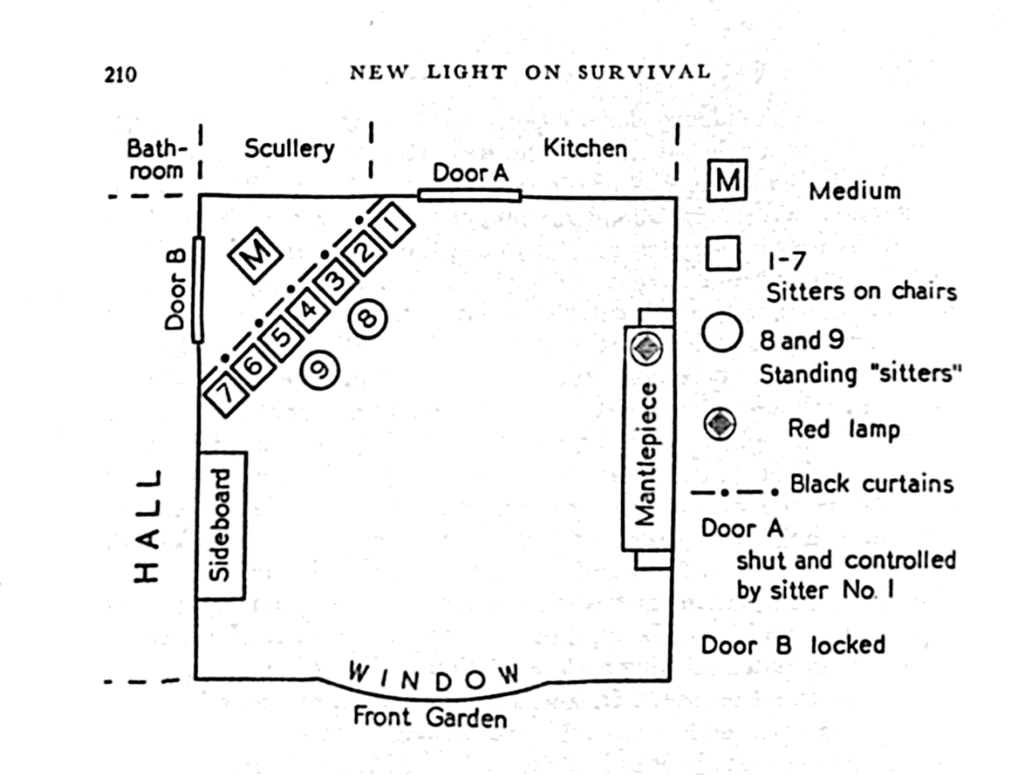
Figure 1. Roy’s sketch of the Pattersons’ living room in Buckie, Scotland, at the time of the séance he attended.24Dixon-Smith (1952), 210.
The First Séance — 31 July
‘The weather was very hot, to the great discomfort of the medium, but she was in a home that she liked visiting and so the conditions were mentally harmonious’, Roy wrote of his first sitting with Mrs D.25Dixon-Smith (1952), 208.
Roy had brought a dark red rose from his garden along with Betty’s wedding ring, which he had altered by adding a pearl in a clasp setting. Mrs Patterson initially placed the rose amongst other flowers without directing Mrs D’s attention to it. Just before the séance commenced, Mrs Patterson moved the rose to the edge of the sideboard beside the cabinet curtain.
After Mrs D had taken her seat behind the curtains, a male voice described as her ‘guide’ addressed the sitters. Roy reported several figures appearing, dressed in white, muslin-like coverings. Some spoke to sitters before apparently sinking towards the floor as they withdrew.
A tall, slender female figure emerged, picked up Roy’s rose and threw it into his lap. When he stood to examine her face, Mrs Patterson warned him not to touch her. The figure responded in a voice and accent he considered identical to Betty’s, then drew back the covering to reveal dark hair. Roy thought the figure’s build and hand differed greatly from Mrs D’s while resembling Betty’s, but acknowledged that the hair might have been a wig. Unable to recognise the face clearly, he did not regard the appearance as conclusive evidence that the figure was Betty, however.26Dixon-Smith (1952), 209-11.
The Second Séance — 1 August
‘A sea mist had rolled up overnight which reduced the temperature and improved Mrs. ‘D’s’ temperamental and physical conditions’, Roy wrote of his second séance with her.27Dixon-Smith (1952), 211.
After Mrs D was seated and the curtains closed, Roy discreetly placed Betty’s altered wedding ring on the sideboard; a hand-torch (flashlight) lay nearby. Early in the sitting, the guide was asked to appear beside the medium. Roy reported hearing the guide instruct Mrs D to stand up and, when the curtains opened, he saw a white-clad figure approximately seven feet tall standing next to Mrs D, who was dressed in black. Behind them was nothing except the chair. Roy regarded their simultaneous appearance and differing heights of Mrs D and her guide as important. His account does not, however, establish that Mrs D remained visible during the later appearance of the figure he identified as Betty.
The sitters were then asked to sing Betty’s ‘signature tune’, ‘I’ll Walk Beside You’. The same slender female figure reportedly emerged and tried to retrieve the ring, accidentally knocking the torch to the floor. When she struggled to find the ring, Mrs Patterson located it and handed it to her. The figure declared, ‘Thank you. It’s my wedding-ring’, and placed it on Roy’s little finger. He described the touch as warm and natural. She also reportedly instructed him to keep the ring for their daughter until she was seventeen or eighteen.
The figure then withdrew behind the curtain, saying, ‘I want to show you my face. Stay where you are.’ Another sitter retrieved the torch and passed it to the guide who had extended his hand from the left edge of the curtain. The guide was heard speaking with Betty before her figure subsequently emerged with the torch and shone the light onto her own face for about fifteen seconds.
Standing inches away, Roy examined the features closely. He wrote, ‘My critical faculties dominated my emotion.’ He described the figure’s head and neck as covered in ‘white muslin-like ectoplasm’, extending down the forehead and around the ears and chin, while leaving much of the face visible. He believed the nose, mouth and expression resembled Betty’s and differed from Mrs D’s. The guide behind the curtain asked the sitters to ‘note the squareness of the chin’.
The apparent squareness of the chin initially troubled Roy, but after returning to Aberdeen, he checked photographs and concluded that Betty’s chin had indeed been square. Before withdrawing, the figure extended an arm and hand that Roy considered like Betty’s. She then appeared to sink through the floor, the torchlight went out, and Roy heard the torch fall with a crash.
For Roy, the Buckie séances marked a significant turning point, deepening his conviction that he had once again encountered Betty.28Dixon-Smith (1952), 211-15.
Leslie Flint and Direct-Voice Mediumship, 1946–1948
Roy’s experiences with Leslie Flint (1911–94) had begun two years before the Buckie séances. He first visited the London direct-voice medium on 27 September 1946, one month after returning from India, following a brief letter of enquiry. While they were talking in Flint’s reception room, Flint warned that conditions were unfavourable and a sitting might be unsuccessful. Nonetheless, during this ordinary conversation, Roy and Flint were startled by a high-pitched voice which appeared to come from just behind Flint’s head. The voice identified itself as Mickey, Flint’s spirit guide, and invited Roy to attend a private circle meeting that evening.29Dixon-Smith (1952), 198.
Roy attended further sittings with Flint in 1946 and 1947. He reported hearing a feminine voice resembling Betty’s in tone and accent, initially struggling to speak but becoming clearer.
Following closely on Micky’s introduction, I heard a painful gasping sound as of someone very agitated and trying to get her breath.
A sitter offered words of encouragement, and gradually the voice developed, passing through a phase of breathless excitement and emotion and gathering volume and composure until it became as clear and as normal in all respects as that of any ordinary living person. Mr. Flint has a typical male voice; the one that spoke to me was feminine, quite unstrained and resembled Betty’s in tone and accent, so never for a moment had I any doubt that it was hers, although she has no distinctive vocal traits, mannerisms, or brogue to help me to identify her on that score alone.
At first, she seemed to have great difficulty in articulating and her voice was faint and the words not easy to hear, so the chairman of the circle and the sitter on my left tried to help by repeating certain of her remarks that were, however, quite intelligible to me; so this discounts any possible suggestion that the voice emanated from my own subconscious mind or was induced by hypnosis, auto-suggestion, or any other sort of hallucination.
She exclaimed repeatedly, “How wonderful it is to be able to talk to you like this,” and explained that she felt confused and bewildered by the ‘conditions’ in what they call ‘the box’ because the ectoplasmic apparatus through which they speak reminds them of a public telephone box.
As soon as she had calmed down, she made appropriate references to Cherry and John, to Annie and to a friend of mine in London, all by name. She described the hotel bedroom which Cherry and I were then occupying, adding that she did not like keeping me away from her for so long but the opportunity was too good to miss. She talked about our holiday together at Bournemouth in 1938, naming the town and discussing incidents that happened there, and other first-class evidential matter relating to our lives together. She answered all my remarks correctly and appropriately throughout our conversation which I estimate to have lasted about ten minutes, never once introducing anything incongruous. All the evidence that I have outlined above was given spontaneously and without hint or prompting.
The thrill that this dramatic experience gave me can well be left to the reader’s imagination.
Several weeks later at a small home circle of personal friends at Aberdeen, I asked Betty, when controlling the medium, to give me some evidence in confirmation of our conversation at the above described voice seance, and she replied with a verbatim quotation of a certain very evidential passage from it that I had repeated to no one.30Dixon-Smith (1952), 198-99.
At a private sitting with Flint on 5 October 1948, Roy reported that conditions were poor and the voice he identified as Betty’s was barely audible. Betty reportedly referred, without prompting, to her earlier materialisation at Buckie. Roy then took her altered wedding ring from his pocket and held it up in the darkness, asking whether she could see what he was holding. She replied that she could not distinguish it clearly.
Roy proceeded to question Betty about the materialisation. When asked how he had seen her face, she initially referred to a bright light before identifying a torch, explaining that she had held it in her hand to illuminate her face. Roy then asked about the object he was holding. Betty described something she had worn at the time of her death and eventually identified it as her wedding ring, adding, ‘I put it on your finger’.
When Roy questioned why her recollection appeared uncertain, Betty explained that his questions caused the medium to begin guessing, which confused her thoughts. Roy noted that Flint was not in a trance and could therefore hear the conversation between him and Betty.
Roy also reported that Betty discussed the photographs intended for his book, expressed approval of their inclusion, and correctly referred to his earlier hesitation about publishing them. She reportedly described both photographs, including the fact that Roy’s portrait showed him in uniform.
Roy regarded these references as significant because they appeared to connect the experiences he had reported at Buckie with a later sitting conducted through a different medium. He considered the additional details about the photographs further evidence of Betty’s continued awareness of his activities.31Dixon-Smith (1952), 215-16.
He found the similarities between these separate sittings particularly convincing, further strengthening his belief that he was communicating with Betty.
Roy’s account suggests that he held Flint in considerable regard. He described a medium who was generous with his time and willing to help, even when conditions were uncertain. Roy valued the opportunity to attend both private and group sittings, some of which provided experiences he found deeply convincing. The experiences he reported with Flint left a lasting impression on him, offering him not only further encouragement in his investigations but also moments of personal comfort and reassurance in his continuing search for Betty.32Dixon-Smith (1952), 197-201, 215-16.
Minnie Harrison and the Saturday Night Club, 1948
The Saturday Night Club was established on 6 April 1946 at the Middlesbrough home of Sydney and Gladys Shipman, with Minnie Harrison as its physical medium. Following Roy’s appeal in Psychic News, Sydney Shipman invited him to attend a sitting on 9 October 1948.
Roy withheld personal details before the sitting, hoping to strengthen the evidential value of what occurred. He helped erect the curtained cabinet. The first phase took place in darkness and involved reported direct-voice phenomena through a luminous-banded trumpet. Roy stated that a guide described Betty’s height, slimness and beauty, information he believed unknown to the other sitters. A voice he identified as Betty’s eventually said, ‘I am your Betty.’ He also reported the appearance of fresh pink carnations, one for each sitter.
For the materialisation phase, a bright red light was switched on and Minnie Harrison sat behind the curtain. Roy described several white-draped figures emerging, conversing with sitters and offering their hands. One elderly female figure reportedly had a wrist with a strong, regular pulse, although Roy found her foot unusually spongy when he touched it.
The guide then announced Betty, and the sitters sang ‘I’ll Walk Beside You’. Roy reported that a tall, slender figure appeared during the song.
I rose from my chair and walked up to the figure, taking the extended hand in mine. I examined the hand, and it was just like Betty’s and quite unlike the medium’s. I stared into the face, and recognized my wife. We spoke to each other, though what we said I cannot remember, for I was deeply stirred and so was she and her voice was incoherent with emotion.
“Can he kiss you?” someone asked, and Betty murmured, “Yes”.
I then kissed her on the lips which were warm, soft, and natural. Thereupon she bent her head and commenced to weep, and in a moment or two she sank. I watched her form right down to the level of the floor at my feet where it dissolved, the last wisp of it being drawn within the cabinet.33Dixon-Smith (1952), 219.
During the sitting, the circle’s guide announced another visitor for Roy, introducing him as ‘John Fletcher’, a clergyman said to have helped inspire his book. This reminded Roy of an earlier sitting through the Marylebone Spiritualist Association on 26 January 1945, when a male medium had spoken of a clergyman guide assisting with his writing. Roy had been distinctly sceptical at the time, later remarking that had the medium predicted he would one day shake the clergyman’s hand, he would probably have burst into laughter.
Roy described Fletcher as a tall, black-bearded figure who greeted him with a ‘very powerful hearty grip’ and spoke about his manuscript, declaring that his work was now complete. Although Roy could not be certain that Fletcher was the guide mentioned in January, he found the apparent connection particularly significant.34Dixon-Smith (1952), 76-77, 219.
For Roy, the Harrison sitting was memorable not only for the apparent visual and verbal communications, but also for the physical contact he believed he had experienced.35Dixon-Smith (1952), 216-20.
Tom Harrison discussed Roy’s visit to Minnie in his book about his mother’s mediumship, Life After Death: Living Proof.36Harrison (2008), 158-64. Sydney Shipman also recalled the sitting in Tom Harrison’s documentary, Visitors from the Other Side,37duffavvids (2011), 50:34–51:55). in which he showed his copy of Roy’s book.
Valerie Middleton and the Aberdeen Development Circle, 1948–1950
During the later stages of his investigations, Roy became involved in a private home circle in Aberdeen, where he recorded a variety of physical phenomena between 1948 and early 1950.
The circle began meeting in January 1948. During its early months, Roy reported movements of a séance trumpet, unexplained sounds, touches, the appearance of lights and objects apparently moving around the room. In June 1948, the original medium withdrew and the circle was reorganised. An eighteen-year-old medium, Valerie Middleton, joined the group, alongside her parents, Mr and Mrs Middleton, and her sister Constance. The circle continued meeting regularly, with Roy documenting its progress.38Dixon-Smith (1952), 266-70.
Following the reorganisation, Roy described further phenomena, including direct-voice communications, materialised hands and apparent physical manifestations. He reported hearing voices he associated with Betty and other communicators, as well as witnessing objects move under conditions of darkness or dim red light.39Dixon-Smith (1952), 271-75).
Particularly significant to Roy were experiments in direct writing, in which messages and signatures reportedly appeared on paper without anyone visibly writing them. These included signatures attributed to Betty, which Roy compared with examples of her handwriting from life and found them to be similar.40Dixon-Smith (1952), 279.
Another remarkable case involved writing attributed to Mr Middleton’s deceased father. Roy described receiving a lengthy personal message, written in a distinctive style, which was subsequently compared with surviving examples of the man’s handwriting. According to Roy, a handwriting expert with over forty years’ experience working with the police examined the material and provided a signed opinion supporting the similarity.41Dixon-Smith (1952), 279-80.
The circle also reported other phenomena, including the appearance of flowers, coins, jewellery and small objects, as well as materialised hands that members believed they could touch.42Dixon-Smith (1952), 271-78.
Roy’s account is valuable for its record of the circle’s membership, changing conditions and reported phenomena over time. Rather than describing one extraordinary evening, he documented experiences shared by a small group of regular participants.
His personal account of these investigations concludes on 9 January 1950, the fifth anniversary of his first recognised reunion with Betty, as he described it. By this point, Roy considered the experiences of the Aberdeen circle an important part of the evidence he had gathered during his search for survival after death.43Dixon-Smith (1952), 282.
New Light on Survival
In 1952, Roy published New Light on Survival through Rider & Co. in London. The book brings together two strands of Roy’s life: his grief following Betty’s death and his determined search for evidence that life and consciousness continue beyond bodily death.
The book is introduced by Shaw Desmond (1877–1960), an Irish-born writer, journalist and Spiritualist who shared Roy’s interest in the question of post-mortem survival.
By the time he published New Light on Survival, Roy had reached a firm personal conviction that human personality survived bodily death. He regarded the accumulated evidence from his investigations, particularly the communications containing recognisable personal details and the reported physical phenomena, as convincing support for this belief. Although he continued to examine alternative explanations and acknowledged the difficulties of psychical research, his conclusion was that Betty’s individual personality had survived. His final reflections returned to the personal meaning of his search, expressing his belief that love endured beyond death.44Dixon-Smith (1952), 261.
For Roy, the investigation of life after death was never simply an intellectual pursuit. It began with the loss of Betty and developed into a determined search for evidence that their connection might continue beyond death. Throughout his book, his affection for her remained as evident as his desire to understand the phenomena he encountered.45Dixon-Smith (1952), 328.
In February and March 1954, Psychic News published a four-part series based on New Light on Survival, covering Roy’s experiences with Leslie Flint, the Buckie materialisation séances, the Aberdeen direct-writing experiments and the Saturday Night Club.46Anon. (1954a, b, c, d). These articles have been scanned and may be viewed here.
Lectures and Public Advocacy
The publication of his book did not end Roy’s discussion of his contacts with Betty. In a letter headed ‘Lecture Tour’, published in Psychic News in March 1953,47Dixon-Smith (1953). he announced plans to lecture around Britain, discussing the evidence for survival he had accumulated, rather than promoting Spiritualism as a religion.
In May 1953, Psychic News reported that Roy had delivered a series of three lectures at Brighton Psychic Centre on ‘Science and after life’.48Anon. (1953). Using charts and diagrams, he had sought to relate nuclear physics to psychical research and described phenomena he regarded as genuine. Advertisements for the Marylebone Spiritualist Association in London subsequently listed him as a speaker on ‘Science and the After Life’ on 2 September 1953 and ‘Science Proves Survival’ on 10 January 1957.49Marylebone (1953a, b; 1957).
His speaking engagements also included Cheltenham, Gloucestershire. In a 1982 retrospective, EM Percival recalled Roy as a visiting speaker to the Cheltenham branch of the Churches’ Fellowship for Psychical and Spiritual Studies, describing him as a retired Army officer who had written about his experiences following his wife’s death.50Percival (1982), 14.
These records show that Roy continued to promote his belief in survival and share his experiences of psychical investigation publicly for several years after the publication of his book.
Later Years and Legacy
Roy died on 19 January 1966 in Hastings, Sussex, aged seventy. Although his name is not widely remembered today, New Light on Survival remains a detailed first-hand account of Spiritualist mediumistic practices during and after World War II.
Roy’s investigations brought him into contact with home circles in Aberdeen, the Rishis in Bombay, materialisation séances in Buckie, Leslie Flint in London, Minnie Harrison in Middlesbrough, and Valerie Middleton back in Aberdeen. The investigations involved an unusual number of different manifestations of a single person, through regular séance messages, communications through a Ouija board, direct voice, direct writing and full-form materialisations, involving both mental and physical mediumship.
Roy left us a record not only of well-known mediums such as Leslie Flint and Minnie Harrison, but of people who might otherwise have been forgotten, including Dr Simha; Mary, Bob and Annie; Valerie Middleton; and all the families who opened their homes him in the course of his investigations.
As a retired lieutenant-colonel, Roy was prepared to put his name to experiences that many people might have been reluctant to discuss publicly. He believed that these experiences deserved to be investigated and taken seriously. His book is not only a record of the Spiritualist movement of his time, but also the story of a man trying to understand the loss of someone he loved. Why he did not associate himself more with the SPR is not known. It is clear from his book that he was trying to undertake serious investigations, but some of his undertakings and his speculations about processes fall short of the standards of psychical research in his day, leaving more questions open than he appears to have realised.51G (1952).
Roy’s search began with Betty. Whatever conclusions readers draw from the phenomena he described, his account raises a wider question: whether the process of investigating, questioning and seeking understanding may itself offer meaning and consolation, independently of any definitive answer. In this sense, his work remains both a record of psychical investigation and a deeply human response to bereavement.
Archival Resources
Relevant material includes military service records, entries in The London Gazette, contemporary military newspapers, family records and the Scottish statutory marriage register for Roy and Betty’s marriage in Perth on 3 May 1939. The National Army Museum holds his drawing A Khassadar on the North West Frontier, India (c. 1935), accession 2000–08–81.
Archival materials pertaining to Roy’s life and activities include the following: National Records of Scotland, Statutory Registers of Marriages, Perth, 1939, district 387, entry 102 (Roy and Ethel’s marriage, 3 May 1939). Military evidence: British Library India Office Records IOR/L/MIL/14/2742 (transcription); First World War medal index card; London Gazette, 5 January 1915, p. 161, and supplement, 12 July 1918, p. 8165; Civil & Military Gazette notices (1928, 1929 and 1936).
Jennifer Mason
Note: Ethel Margaret ‘Betty’ Dixon-Smith was Jennifer Mason’s maternal grandmother’s aunt. This article draws on family documents and records, in addition to New Light on Survival.
Works Cited
Anon. (1931, 14 October). Pictures by Army officers. Truth, 591.
Anon. (1953, 16 May). News from the societies. Psychic News, 7. [Brighton Psychic Centre report].
Anon. (1954a, 20 February). He had no doubt dead wife spoke to him. Psychic News, 5.
Anon. (1954b, 27 February). Her square chin puzzled him. Psychic News, 4.
Anon. (1954c, 6 March). Psychic writing was same as her earthly script. Psychic News, 4.
Anon. (1954d, 13 March). He felt pulse of materialised figure. Psychic News, 4.
Dixon-Smith, H.R. (1948, 10 July). Materialisation? Psychic News, 9.
Dixon-Smith, H.R. (1952). New Light on Survival. London: Rider & Co.
Dixon-Smith, H.R. (1953, 21 March). Lecture tour. Psychic News, 7.
duffavvids (2011). Visitors from the “Other Side” [Video.] YouTube.
G., K.A. (1952). Review of New Light on Survival by R. Dixon-Smith. Journal of the Society for Psychical Research 36, 628-30.
Harrison, T. (2008). Life After Death: Living Proof. Saturday Night Press Publications.
Marylebone Spiritualist Association (1953a, 22 August). Lecture notice. Psychic News, 3.
Marylebone Spiritualist Association (1953a, 5 September). Lecture notice. Psychic News, 3.
Marylebone Spiritualist Association (1957, 5 January). Lecture notice. Psychic News, 3.
Percival, E.M. (1982, Winter). Early days of the Fellowship. [Embedded in PDF.] The Quarterly Review of the Churches’ Fellowship for Psychical and Spiritual Studies 114, 14-15.