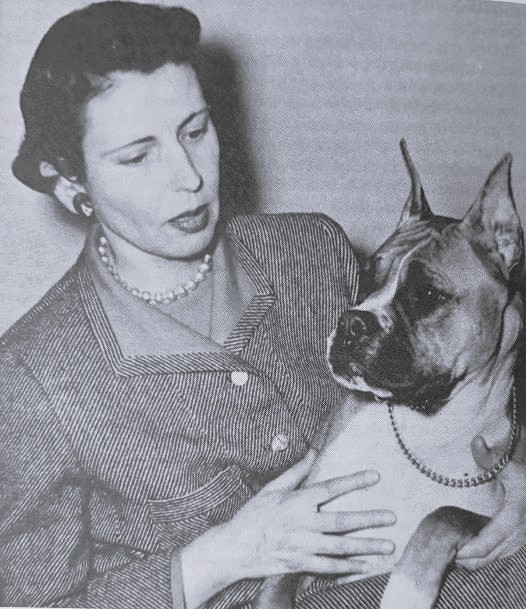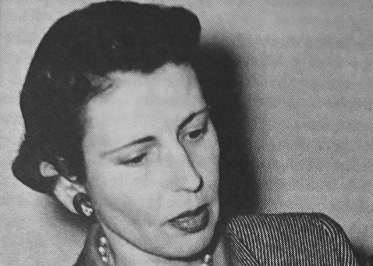
Laura A Dale (1919–1983) was a central figure in American parapsychology for four decades. She carried out investigations in the laboratory, with spontaneous cases and on post-mortem survival; edited the Journal of the American Society for Psychical Research; and co-created major bibliographic and reference resources for the field.
- Dale’s early research included the decline effect, psychokinesis, telepathy and anomalous dreams, alongside rigorous proxy sitter experiments with Eileen Garrett.
- As long-serving editor of the ASPR’s Journal, she helped shape the field’s research standards, publication record and institutional direction.
- Dale co-authored major bibliographic and glossary resources, helping researchers locate, classify and interpret the rapidly expanding literature of parapsychology.
Life and Career
Laura Abbot Dale was born on 22 August 1919 in Cornwall, New York, to a prominent New England family. Her parents’ acquaintances included such figures as Theodore Roosevelt and Calvin Coolidge.1Berger (1988), 239. Her family’s wealth allowed her to attend prestigious educational institutions in New York City and the Sorbonne in Paris.2Pleasants (1964), 74. Dale was engaged to be married in the 1930s to a musician named Hans, but he died unexpectedly, possibly from a brain tumour. She subsequently married a man whose surname was Dale and kept his name following a divorce.3Berger (1988), 240.
Dale’s interest in parapsychology arose from a series of poltergeist-like events in a home where she was living and working as a pianist after her divorce. These phenomena led her to seek out the guidance of Gardner Murphy in 1941. Murphy introduced her to the American Society for Psychical Research (ASPR), where she began to attend weekly meetings from which the society’s ‘Medical Section’ developed. The aim of the Medical Section – members of which included Jan Ehrenwald, Jule Eisenbud and Montague Ullman – was to adapt clinical techniques to parapsychology. Dale was ‘its secretary, its critic, and its “catalyst”.’4Berger (1988), 241.
Dale was an editorial associate at University Books in New Hyde Park, New York, 1960–61,5Pleasants (1964), 74. and a clinic assistant in the Department of Psychiatry at Maimonides Hospital in Brooklyn, New York, under Ullman, 1961–62.6Shepard (1984), vol. 1, 294. However, she is best known for her tenure at the ASPR.
When she reached the ASPR, ‘it was as if she left her old world behind’, in the words of Arthur Berger.7Berger (1988), 241. As Secretary of the Publications Committee from 1944 to 1959 and again from 1963 to 1982, she was de facto editor of the ASPR’s Journal and Proceedings.8Dale was preceded as editor of JASPR by Lydia Allison and succeed by Rhea White. With Rhea A White, she made important bibliographic contributions. In addition, she conducted laboratory research on extrasensory perception (ESP), studied spontaneous cases of psi, and explored mediumship.
Dale was an avid tennis player, enjoyed playing the cello, and, perhaps most of all, had an immense fondness for dogs – owning many and even working as a licensed judge in dog shows.9Berger (1988). She died on 2 February 1983 on Long Island, New York.
Psi Research
Laboratory Studies
At Maimonides, Dale engaged primarily in research on anomalous dreams – in fact, she worked with Ullman on his first dream telepathy trials prior the Maimonides dream telepathy research, which began in 1964.10Berger (1988).
Dale was among the first to investigate the decline effect in experimental parapsychology, which for her was linked to an experimenter effect. In a 1943 article entitled ‘The Midas Touch in Reverse,’ Dale and Ernest Taves report that:
We might with reason say that many investigators have been afflicted with the “Midas touch in reverse.” The touch of the present writers, for example, when functioning as experimenters, appears likely to transform the gold into dross…[t]he results of our experiments, to put it bluntly, are usually at first positive; their then follows an inevitable decline to chance scoring.11Taves & Dale (1943), 57.
Dale conducted laboratory studies on a variety of other phenomena as well, including the paranormal cognition of drawings,12Taves, Murphy, & Dale (1945). psychokinesis,13Dale (1946); Dale & Woodruff (1947). and the psychogalvanic response in relation to ESP.14Woodruff & Dale (1952). She also reported on an informal test of psychometry with an American medium.15Dale (1944).
In an article in The New Yorker, journalist Kevin Wallace described Dale’s participation in psi tests. Dale told Wallace that during a transatlantic telepathy experiment ‘managed by some people in England’, she had acted as what was called the ‘agent’ – that is, she had tried to send thoughts to two ‘percipients’ (receivers) in the UK.16Wallace (1959), 133. She went on to comment on a 1950s survey on beliefs in psi, saying:
I was interested to notice not long ago that a survey of fellows and associates of the American Psychological Association found that five percent of them regarded psi as established, from twenty-five to thirty-five thought it a likely possibility, and a good majority felt that it was a legitimate scientific study, even if it didn’t make sense. 17Wallace (1959), 134.
Spontaneous Cases
Dale was interested not only in laboratory investigations, but in unusual experiences (of ESP or PK) manifesting in the waking state or dreams.18e.g., Dale (1946a, 1951). With White and Murphy, she carried out a survey of spontaneous ESP experiences in the early 1960s.19Dale, White, & Murphy (1962).
Mediumship
Perhaps owing to the death of her fiancé Hans, Dale sat with mediums, including Chester Grady, with whom she carried out a psychometry experiment.20Dale (1944). Ever the investigator, she would try to get mediums to give her material that was unusual and specific. To that end, Berger was told, rather than placing flowers before a picture, as many grieving widows did, she put an apple in that position. Unfortunately, these attempts produced no ‘hits’.21Berger (1988), 243.
Dale sat in for other persons in proxy sittings with Eileen Garrett. On her website Paranormal Women: A Hidden History, Allison Jornlin notes that:
Laura’s rigorous protocols in these proxy experiments helped address some of the methodological critiques commonly leveled against mediumship research. Her work with Garrett—herself a controversial but influential figure in psychical research—demonstrated Laura’s willingness to engage directly with the phenomena rather than limiting herself to theoretical analysis or editorial commentary.22Jornlin (2025).
Editorial and Bibliographic Contributions
In Lives and Letters in American Parapsychology, Arthur Berger observes that ‘[a]lthough Laura Dale will be remembered for her research, it was to the ASPR Journal that she was dedicated. In the words of a colleague at the ASPR, it was her “magnificent obsession”.’23Berger (1988), 243. Dale was equally committed to the ASPR Proceedings and had an essential role in preparing Ian Stevenson’s Twenty Cases Suggestive of Reincarnation for its first edition appearance in 1966.24Matlock (2024).
With Rhea White, Dale co-authored Parapsychology: Sources of Information in 1973, providing over three hundred pages of bibliographic references on parapsychological topics.25White & Dale (1973). In 1977, Dale and White compiled a glossary of terms used in psychical research and parapsychology for the Handbook of Parapsychology,26Dale & White (1977). for which she, Ullman and Gertrude Schmeidler were associate editors.
Dale assisted Murphy in composing Challenge of Psychical Research.27Murphy (1961). In his preface to that book, Murphy acknowledged that his ‘degree of my indebtedness to her is far greater than can ever be expressed, despite many specific references to her work, her ideas, and to her collaboration.’28Murphy (1961), xv. He went on to highlight the ways she had contributed to the field of parapsychology:
In addition to what has been said about the help given me through all these years by Mrs. Dale, I wish expressly to thank her for the constant assistance given as to the best materials to sue, the pitfalls to be warned against, the clarifications necessary.29Murphy (1961), xvii.
According to Karlis Osis, Dale had a hand in editing works by J Gaither Pratt and Montague Ullman, in addition to those of Murphy and Stevenson and her work with the Handbook of Parapsychology.30Osis (1973), 412.
Legacy
In a September 1957 article in the Journal of Parapsychology, Murphy recalled that:
The American Society for Psychical Research had undergone a palace revolution in 1941, and the newly elected trustees, of whom I was one, supported a vigorous research program. I ‘moved down’ to the A.S.P.R., working there five or six mornings a week. The most important thing about the revolution was that it had brought into play the full intelligence and energy of Laura A. Dale, who became, and has ever since remained, the primary research worker of the organization, to whose imagination, energy, and skill most of its effective contribution since that time has been due.31Murphy (1957), 173.
Osis, who was associated with the ASPR in the 1970s and 1980s, similarly wrote:
A real spark, and a hard-worker for the ASPR from those early days of the Murphy era, was Laura A. Dale. The ASPR publications of those days reflected a very positive attitude toward a wide range of research, such as experimentation on ESP and PK, surveys and individual case studies, work with mediums, a review the survival research of J. F. Thomas (Dale, 1941), theoretical papers. Laura Dale’s enthusiasm and productivity as a researcher in this early period was very high; as she herself implied, she had a “Midas touch” (Taves & Dale, 1943; Taves, Dale, & Murphy, 1943). The 1943 annual report of the research committee alone lists three studies with mediums: Eileen Garrett, Chester Grady, and a “Philadelphia group,” in all of which Laura Dale was involved.32Osis (1985), 506.
Wallace informs us that Dale was:
[full] of crisp vivacity, working at a large desk at one end of a room and guarded by a skeptical-looking boxer … named Mozart Cadenza [and that] she welcomed me cheerfully, asked me to sit down, and passed over a handful of Society Journals for me to scan while she finished her task of the moment – ‘checking through an unsolicited manuscript, eighty pages of automatic writing,’ as she described it.33Wallace (1959), 131.
Publications
Dale’s more important articles are included in Works Cited. For a comprehensive list of her publications, see Bibliography of Works by and about Laura A. Dale.
Courtney M Block
Works Cited
Berger, A.S. (1988). Laura Abbot Dale: A cameo. In Lives and Letters in American Parapsychology: A Biographical History 1850–1987, 239-50. Jefferson, North Carolina, USA: McFarland.
Dale, L.A. (1941). Dr. John F. Thomas (in memoriam). [Embedded in PDF.] Journal of the American Society for Psychical Research 35/1, 1-8.
Dale, L.A. (1944). An informal experiment with Mr. Chester Grady. [Embedded in PDF.] Journal of the American Society for Psychical Research 38/4, 202-21.
Dale, L.A. (1946a). Spontaneous experiences reported by a group of experimental subjects. [Embedded in PDF.] Journal of the American Society for Psychical Research 40/2, 55-93.
Dale, L.A. (1946b). The psychokinetic effect: The first A.S.P.R. experiment. [Embedded in PDF.] Journal of the American Society for Psychical Research 40/3, 123-51.
Dale, L.A. (1951). A series of spontaneous case in the tradition of Phantasms of the Living. [Embeded in PDF.] Journal of the American Society for Psychical Research 45/3, 85-101.
Dale, L.A., White, R.A., & Murphy, G. (1962). A selection of cases from a recent survey of spontaneous ESP phenomena. Journal of the American Society for Psychical Research 56/1, 3-47.
Dale, LA.., & Woodruff, J.L. (1947). The psychokinetic effect: Further A.S.P.R. experiments. [Embedded in PDF.] Journal of the American Society for Psychical Research 41/2, 65-82.
Jornlin, A. (2025). Laura Dale: Editorial force behind American parapsychology. [Full text.] Paranormal Women: A Hidden History.
Matlock, J. G. (2024). The composition of Ian Stevenson’s Twenty Cases Suggestive of Reincarnation. [Download PDF.] Journal of Scientific Exploration 38/3, 380-98.
Murphy, G. (1957). Notes for a parapsychological autobiography. Journal of Parapsychology 21/3, 165-78.
Murphy, G. (1961). Challenge of Psychical Research: A Primer of Parapsychology. [Borrow PDF.] New York: Harper.
Osis, K. (1981). In memory of Laura A. Dale. [Embedded in PDF.] European Journal of Parapsychology 4/4, 411-12.
Osis, K. (1985). The American Society for Psychical Research 1941–1985: A personal view. Journal of the American Society for Psychical Research 79/4, 501-29.
Pleasants, H. (ed). Dale, Laura A(bbott). In Biographical Dictionary of Parapsychology, 74-75. New York: Helix Press.
Shepard, L. (1984). Encyclopedia of Occultism and Parapsychology (2nd ed.). New York: Gale.
Taves, E, & Dale, L.A. (1943). The Midas touch in psychical research. [Embedded in PDF.] Journal of the American Society for Psychical Research 37/2, 57-83.
Taves, E., Dale, L.A., & Murphy, G. (1943). A further report on the Midas touch. [Embedded in PDF.] Journal of the American Society for Psychical Research 37//3, 111-18.
Taves, E., Murphy, G., Dale, L.A. (1945). American experiments on the paranormal cognition of drawings. [Embedded in PDF.] Journal of the American Society for Psychical Research 39/3, 144-50.
Wallace, K. (1959, 14 March). A reporter at large: Looking into psi. The New Yorker.
Wolman, B.B. (ed.) (1977). Handbook of Parapsychology. [Borrow PDF.] Associate editors L.A. Dale, G.R. Schmeidler, & M. Ullman. New York: Van Nostrand Reinhold.
Woodruff, J.L., & Dale, L.A. (1952). ESP function and the psychogalvanic response. [Embedded in PDF.] Journal of the American Society for Psychical Research 46/2, 62-65.