
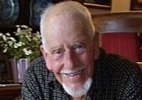
Peter Underwood (1923–2014) was a British paranormal researcher and author, long associated with the Ghost Club Underwood is remembered for popularising ghost-hunting through books, broadcasts and investigations. He remains a significant but debated figure in twentieth-century psychical research, especially in Britain.
- Underwood served as president of the Ghost Club from 1960 to 1993.
- He wrote or co-wrote more than fifty books on hauntings and ghost-hunting.
- Underwood’s legacy combines popular authorship, witness collection and disputed investigative methods.
Life and Career
Overview
Peter Underwood (1923–2014) was an investigator of haunting, apparition and poltergeist phenomena who was president of the venerable Ghost Club1See Lay Paranormal Research in the UK. from 1960 to 1993. He is remembered as Britain’s best-known ghost-hunter in the latter half of the twentieth century, thanks to authoring or co-authoring more than fifty popular book sand participating in numerous television and radio programmes about hauntings. His achievements from the perspective of psychical research are still debated, however.
Underwood joined the Society for Psychical Research (SPR) in 1946 and the Ghost Club in 1947. He was active in several other London-based social clubs and organisations. For some years, he was Honorary Librarian of the Constitutional Club and a member of the Qualifications Committee of the Savage Club.2Wikimedia Foundation (2010). For a while, he was Vice-President of the Unitarian Society for Psychical Studies.3Williams (2014). In 1973, Underwood was elected Fellow of the Royal Society of Arts (RSA).4See here. The RSA, founded in 1754, comprises individuals (Fellows, FRSA) who align with ‘its mission of advancing arts, industry, and commerce for societal progress’.
Underwood began to devote himself full-time to paranormal research in 1971, following the publication of A Gazetteer of British Ghosts.5Williams (2014). This book was succeeded by others in what became an extensive Ghost Guides series covering various regions and cities in the United Kingdon. Underwood also took great interest in the haunting of Borley Rectory and wrote about it extensively. His final book, Ghost Hunting with Peter Underwood, appeared in 2014. He died on 26 November of that year, in Haslemere, Surrey.
Early Life and Experiences
Underwood was born on 16 May 1923 in Letchworth, Garden City, Hertsfordshire. His father was an elder in the Plymouth Brethren and his family were very religious.6Underwood (1983), 13.
Underwood was nine when his father died. That night he had his first apparitional experience, as he related in his autobiography, No Common Task:
I was taken into my mother’s bed to sleep with her and in the middle of the night I suddenly found myself wide awake. There, standing bathed in moonlight, stood my father at the bottom of the bed. I sat up with a jerk, my eyes wide and unbelieving, and then I nudged the sleeping form of my mother. ‘Mum . . . 7Underwood (1983), 18.
Underwood’s maternal grandparents lived for a time at Rosehall, a seventeenth century Hertfordshire house which was purportedly haunted, having a bedroom in which guests claimed to have seen the figure of a headless man.8Adams (n.d.); Williams (2017).
At the start of WWII, Underwood joined the publishing firm Dent & Sons but had to leave in 1942 when he was called up for military service. Shortly thereafter, he collapsed on a rifle range and was diagnosed with a serious heart condition that made him illegible for the military. Whilst convalescing at Rushbrooke Hall, he was awoken one night at 2 am by the sound of a window swinging open, apparently of its own volition, on what was a still night.9Underwood (1983), 37, 40.
Upon release from the infirmary, Underwood returned to work for Dent & Sons, which whom he remained employed until 1971. He married Joyce Davey in July 1944 and with her had two children, a son and a daughter, born in 1946 and 1949, respectively.10Adams (n.d.)
Underwood was struck by Harry Price‘s The End of Borley Rectory, which he read immediately when it was published in 1946. He began corresponding with Price and conducing his own investigations at Borley. Through this association, Price became Underwood’s mentor in his ghost investigations.11Underwood (1983), 45.
The Ghost Club and Ghost Club Society
Harry Price invited Underwood to join the Ghost Club, of which he was the longtime president, nine months before his death of a heart attack in March 1948. The club remained inactive from then until 1952, but when it recommenced, Underwood became fully engaged in it and, upon the passing of Felix Steward in 1960, was elected its new president.12Underwood (2010), 19.
From its founding in Victorian times, the Ghost Club had been an intellectual and social focal point for people of similar interests, rather than an investigative body, like the SPR. Underwood gradually increased investigations as a feature of the club, although (with few exceptions) these were to famous historic buildings with a reputation for haunting – such as Curry Mallet Manor, Gosling Hall, The Mermaid Inn and Berry Pomeroy Castle – rather than to relatively unknown places of recently reported high activity.13Underwood (1994).
The style of these set-piece investigations tended to involve darkness sessions, trigger objects (relevant objects circled with chalk of flour to see if any paranormal force would move them) and the occasional séance. As a social and intellectual gathering point, the Ghost Club went from strength to strength under Underwood’s presidency, signing up celebrity members such as the writer Denis Wheatley, actors Peter Cushing and Peter Sellers, celebrity cook Fanny Cradock and round-the-world yaughtsman Sir Francis Chichester.14Underwood (2010), 23.
Besides the summer visits to haunted houses, changes introduced by Underwood included ‘refreshments at meetings [and] an annual dinner with celebrity guests’.15Underwood (1983), 157). What the club possibly did not have, however, was a sense of inclusion for its ordinary members. There was also no real formal way of holding the President to account. In 1993, after an argument on the Ghost Club council, Underwood resigned as President and, gaining sympathy from a large number of members, formed a rival club the Ghost Club Society, with himself as president.16Ferre (2017).
Whilst a significant number of members were to stay with the continuing Ghost Club, Underwood’s new club gained most of the celebrity members. Author Colin Wilson served as vice president. Other members included Rosemary Brown, who claimed to transmit music from deceased composers; psychical researcher ARG Owen’ and Dame Jean Conan Doyle, a daughter of Sir Arthur Conan Doyle.17Ferre (2017). The continuing Ghost Club was to keep many members of the committee, including the former Chair, Tom Perrott.18Anon. (2012).
Membership for the Ghost Club Society was by invitation as opposed to what some would see as a more modern and inclusive system, that of filling in a detailed application form. Joseph Goodman served as the first chairman of the Ghost Club Society, with Underwood as president. However, the organisation proved not to have the lasting power of the Ghost Club. It was disbanded by 2005,19Ferre (2017). whilst the Ghost Club has continued, having modernized its procedures. and stopped being a ‘by invitation only’ club. Having been President of the Club for about forty years, Underwood’s thoughts after the split were that:
Things were never the same which is a pity because the world of psychical research is in need of a serious conscientious scientific and properly run friendly organisation.20Underwood (2010), 33.
Ghost Hunting
Both within and outside the Ghost Club and Ghost Club Society, Underwood investigated many interesting cases in addition to Borley Rectory. Examining some of them provides insight into his ghost hunting style.
Underwood’s first major investigation was of the Langenhoe church in Essex, conducted on and off for the better part of twelve years until its demolition in 1959. There had been many reports of phenomena such as apparitions, the church bell ringing for no reason, and doors locking on their own. Underwood held only one overnight vigil there, with his colleague John Denning, but on that occasion took with him quite an impressive set of instruments, much in the tradition of Harry Price.21Underwood (1994), 219. These instruments included apparatuses for measuring temperature, humidity, and magnetic and electric fields, as well as sensitive recording devices. Unfortunately, the night’s investigation took place in a raging thunderstorm whose noise and atmospheric changes would have made much of this equipment otiose.
Underwood may have simplified his later investigations because of his experience at Langenhoe. He collected detailed witness statements over the whole period and in his research discovered there had been a partial demolition of the building during a severe earthquake in 1884,22 Underwood (2010), 23, 202.rendering the mix of structures likely unstable and providing the potential for strange noises and movements. Underwood also managed to track down a photograph of the church after the 1884 earthquake, yet before repairs had been made, and found there was an old door where an apparition had been seen walking through a wall.23Underwood (1994), 212.
A second example comes from a ‘cry for help’ haunting, defined as a case in which ‘you have the genuine fears of people to contend with’.24Fraser (2010), 122. This investigation, which included Dennis Bardens amongst others, involved the investigation of a Nottingham Council House in which previous residents refused to set foot because of their experiences there. Ultimately, they were persuaded to stay over the night of the investigation. One of the former residents, Sandra, thought she saw a ghostly man and broke down in hysterical sobbing. The investigators then decided to hold a séance where a man communicated and declared his love for (the unfortunate) Sandra.25Underwood (1994), 273-83.
Nearly all responsible societies these days would exclude such an experiment with a vulnerable person around and it is a shame that common sense did not prevail in one of the few ‘cry for help’ cases that Underwood studied. However, one of Underwood’s investigators tracked down an elderly lady whose surname had come through in the séance. The lady had had a son who had died by suicide after being paralysed in an accident – his old bedroom being the one that had most phenomena had been reported. Taking Underwood’s account at face value, this was an investigation with incorrect protocols but also a fine piece of background research.
The final example of interest is Underwood’s examination of a photograph taken by the Reverend RW Hardy and his wife, appearing to show a phantom or possibly two phantoms climbing the stairs of the Queens House in Greenwich.26Underwood (1994), 305-18. Underwood consulted with Kodak and determined that the photograph had not been tampered with and was not a double exposure. He then did more extensive investigations, studying old pictures to try to find the age of the rings that appeared on the left hand or hands of the figure or figures. However, he does not seem to have been aware of the implications when Hardy told him that the picture had been shot with a high length of exposure to compensate for the lack of flash light. Of this, researcher Ian Wilson pointed out,
One telling feature is the two left hands each with a ring on their third finger that are visible at two different levels on the stair-rail. The hands and the rings look rather too alike not to belong to the same person.27Wilson (1995), 30.
Wilson went on to explain that what seems to be the figure’s hooded head is likely to be a repeating shoulder of the same person blurred into several images as he hurried up the stairs. This shows that however enquiring and sharp Underwood’s mind was, his unwillingness to fully cooperate with others more skilled in the use of equipment could sometimes bring a significant weakness to his conclusions.
After many years of investigations, Underwood concluded that 98% of ghost stories had normal explanations. These could be things like mistaken identity, seeing things that aren’t there, or jokes. He was most interested in the remaining 2% that he thought might be real.28Underwood (1983), 11.
Legacy
When Underwood passed away at age 91, Ghost Club Chair Alan Murdie described him as ‘the last of the Great British ghost hunters’.29Murdie (2015), 323. What Murdie likely meant by this was that Underwood was the last of an older school of paranormal investigators who had little time for unproved gadgets and preferred ghost hunting in a style that the lay man could understand – equipped with camera, tape recorder, notebook, eyes and ears.
Dame Jean Conan Doyle described Underwood as the ‘the Sherlock Holmes of psychical research’ who represented ‘the middle-ground between scepticism and uncritical belief’30Anon. (2014). and it is possible that through his long career his real strength was not in actually ‘hunting’ ghosts in the effort to create new data sets, but in working as a researcher and author and try to gather information and make sense of the sense data already existing. If this view is correct, it likely applies to Underwood’s contemporaries, Dennis Bardens and Andrew Green as well.
Whilst Underwood may very well be Britain’s most famous ghost hunter of the second half of the twentieth century, many of his investigations, especially with the Ghost Club, were based on spending a short time in well-known houses of haunted reputation. This can be contrasted with longer investigations in more active cases such as the Enfield Haunting that were happening at the same period, and which Maurice Grosse and Guy Playfair spent many months investigating.
This is not to say that Underwood did not make significant contributions to the subject. When he finally got A Gazetteer of British Ghosts published in 1971, he possibly presented as comprehensive a documentation of ‘true’ ghost stories as had been produced at least since Harper’s 1907 Haunted Houses.31Harper (1907). Whilst the format has been repeated many times since, it was Underwood’s initial writings as a paranormal author that provoked the interest of the next generations of lay paranormal researchers. By often including a correspondence address in his books – normally that of ‘The Savage Club, Berkely Square, London’ – he also presented a very useful and well-known point of contact for those who wished to report inexplicable events. This increased his own records of eye-witnessed incidents, both for existing and new potential ‘hauntings’ and provided more grist for future publication.
As much evidence in the subject of ghosts involves eye-witness testimony, the collection of similar facts and evidence can arguably in itself be a key contribution. Alan Murdie, a qualified barrister, has pointed out that such evidence if sufficient to put a person to jail should not be discounted as evidential of the paranormal.32Fraser (2020), 18-19.
Underwood’s strengths in good, methodical research and logical thought (as opposed to a night of high-tech investigation) are also starting to make a comeback. A report by Dave Wood, Chair of the Association for the Scientific Study of Anomalous Phenomena (ASSAP),33See Lay Paranormal Research in the UK. and parapsychologist CJ Romer, criticized the overuse of equipment and stated that ‘the more fruitful line of enquiry might be to rationally rule out the experiences of original eye witnesses in order to try to identify unexplainable events’.34Wood & Romer (2014). Perhaps, then, the most appropriate characterization of Underwood would be a successful ‘Author and Paranormal Researcher’ who just happened from time to time to take part in ghost hunting?
Selected Books
A full list of Underwood’s books may be found on his website, here. The following selection includes only certain key items. Other volumes are included under Works Cited.
Gazetteer of British Ghosts (1971)
Haunted London (1973)
The Ghosts of Borley (1973, with Paul Tabori)
Ghosts of North-West England (1978)
Ghosts of Wales (1978)
Ghosts of Devon (1982)
Ghosts of Cornwall (1983)
Ghosts of Somerset (1999)
Ghosts of Hampshire & The Isle of Wight (1982)
Ghosts of Kent (1984)
Ghosts of Dorset (1988)
Borley Postscript (2001)
The Borley Rectory Companion (2008, with Paul Adams and Edie Brazil)
John Fraser
Works Cited
Adams, P. (n.d.). Peter Underwood (1923- ). Harry Price website. [Web page. Full text, retrieved 2 December 2015.]
Anon. (2012). The Ghost Club. [Web page. Full text.]
Anon. (2014, 26 December). Peter Underwood – obituary. Daily Telegraph. [Web page. Full text.]
Anon. (n.d.). Underwood, Peter (1923-). Encyclopedia.com. [Web page. Full text.]
Ferre, L. (2017). Ghost Club Society. Occult World. [Web page. Full text.]
Fraser, J. (2010). Ghost Hunting: A Survivor’s Guide. Stroud, UK: History Press.
Fraser J. (2020). Poltergeist! A New Investigation into Destructive Hauntings. Winchester, UK: 6th Books.
Guiley, R.E. (1992). The Encyclopedia of Ghosts and Spirits. New York: Facts on File.
Harper, C.G. (1907). Haunted Houses: Tales of the Supernatural, with Some Account of Hereditary Curses and Family Legends. London: Cecil Palmer. [Internet Archive. Download PDF.]
Underwood, P. (1983). No Common Task: The Autobiography of a Ghost Hunter. London: Harrap. (Available in print-on-demand from Underwood Publishing and online in a version edited and illustrated by his grandson, Adam Underwood.) [Web page. Full text.]
Underwood, P. (1994). Nights in Haunted Houses. London: Headline.
Underwood, P. (2010). The Ghost Club: A History. Luton, UK: Limbury Press.
Wikimedia Foundation (2010). Peter Underwood (parapsychologist). [Web page. Full text.]
Williams, M. (2014, 17 December). Peter Underwood obituary. The Guardian. [Web page. Full text.]
Wilson, I. (1995). In Search of Ghosts. London: Headline.
Wood, D., & Romer, C.J. (2014). Where do we go from here? The future of ghost investigation. Journal of Research into the Paranormal 47, 11-23. [Academia.edu. Full text.]