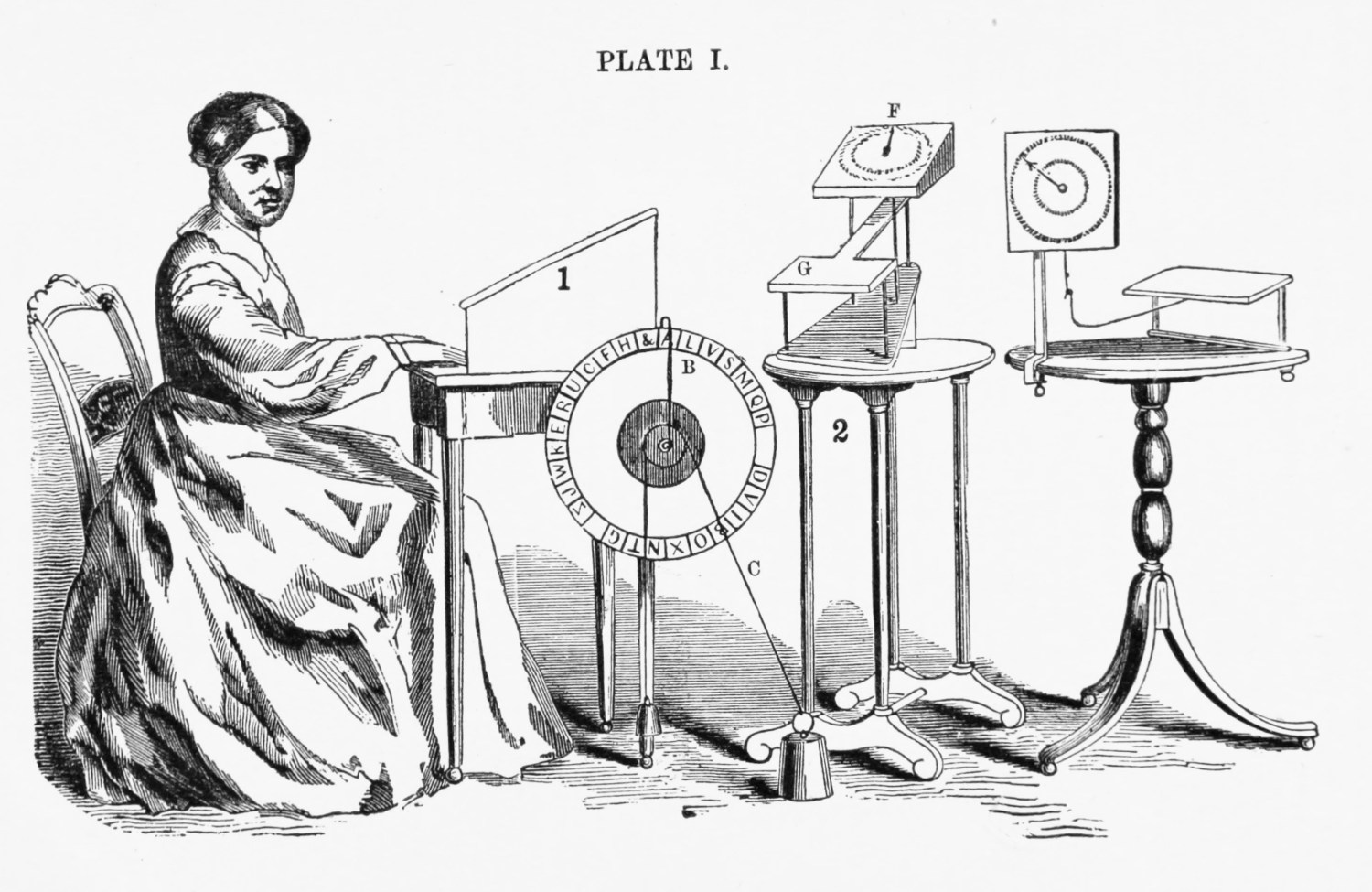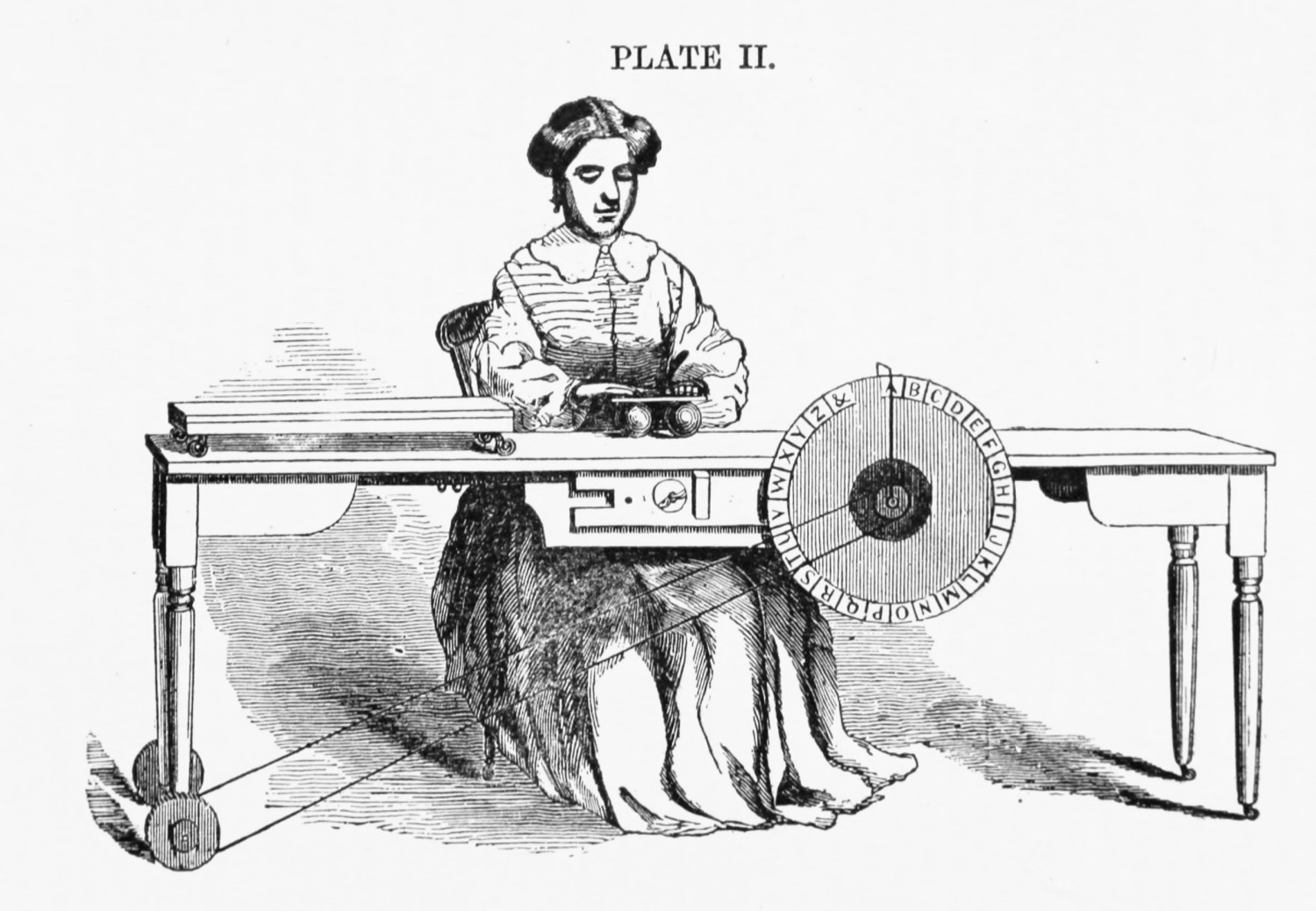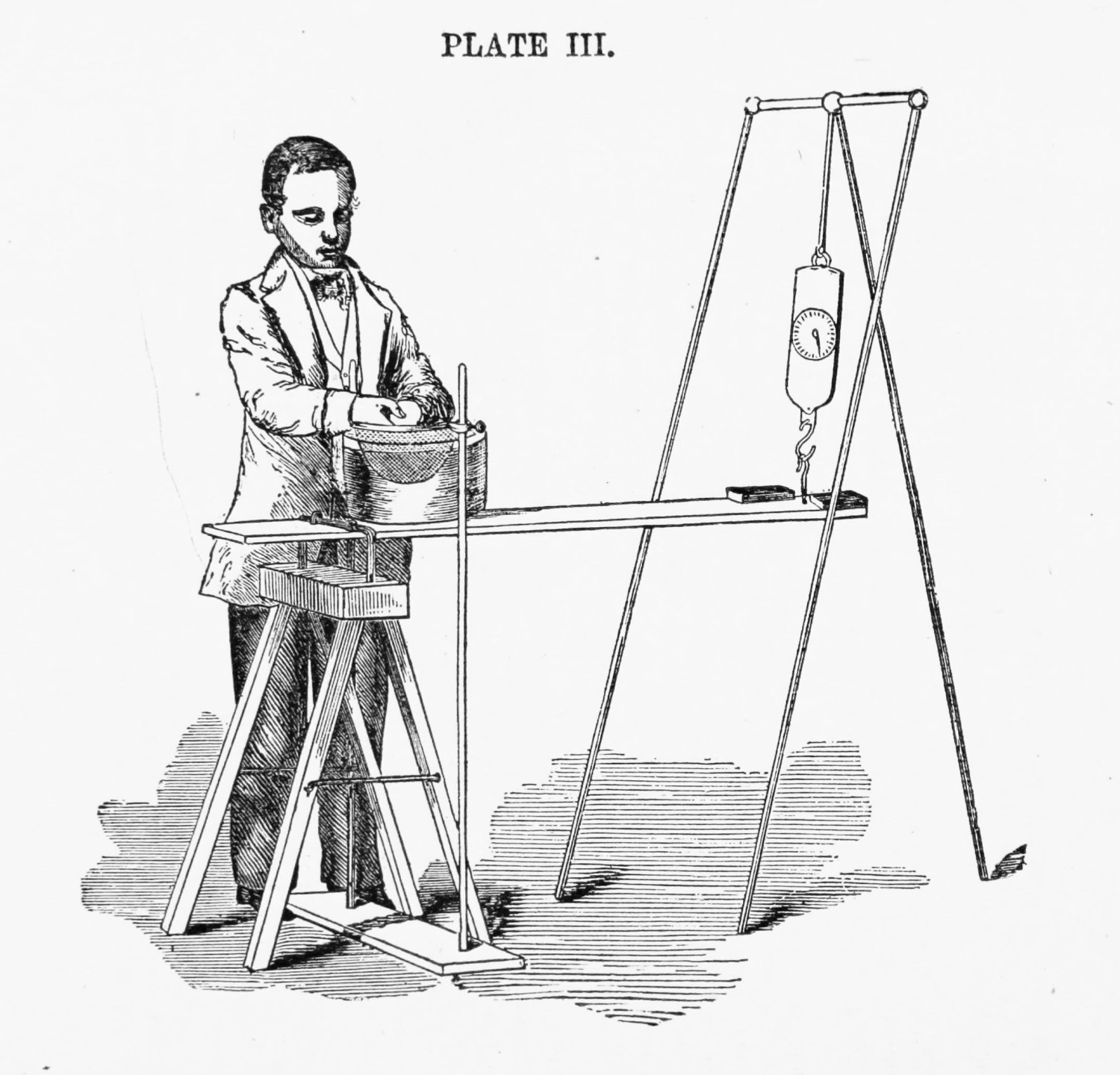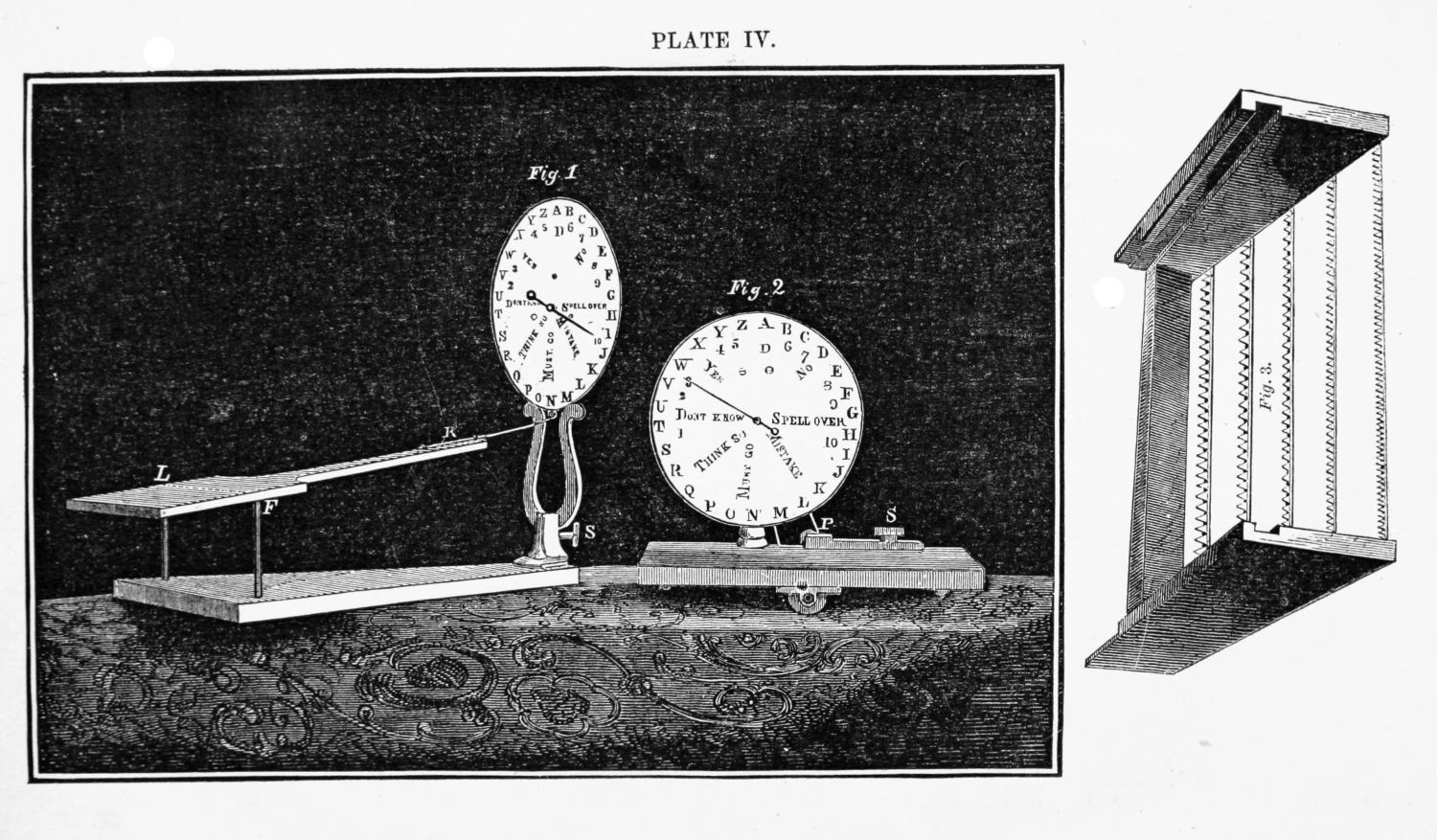
Organised psychical research is usually dated from the founding of the Society for Psychical Research (SPR) in 1882, but systematic enquiry into alleged paranormal events long preceded it. This article describes the research of ten pioneers in the investigators of Spiritualist mediums whose activities helped prepare the ground for the SPR.
- The SPR’s founders sought a more organised, systematic inquiry into mesmeric, psychical and Spiritualistic phenomena, while also navigating tensions over physical mediumship and survival evidence.
- The Hydesville events of 1848 and the Fox Sisters helped launch a rapid expansion of Spiritualism in the United States, Britain and Europe.
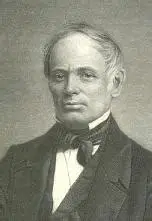
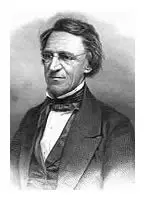
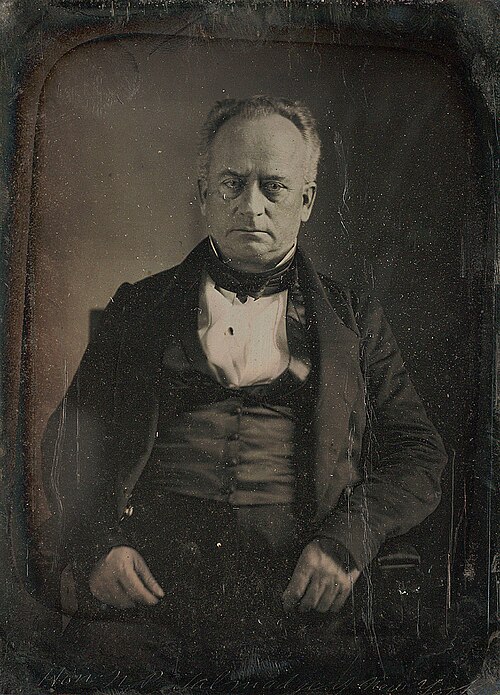
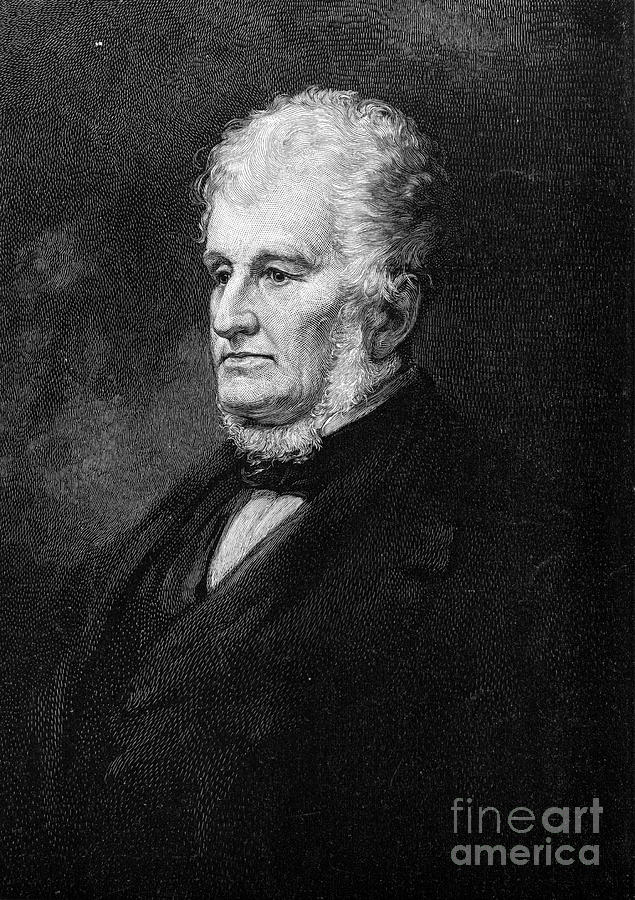
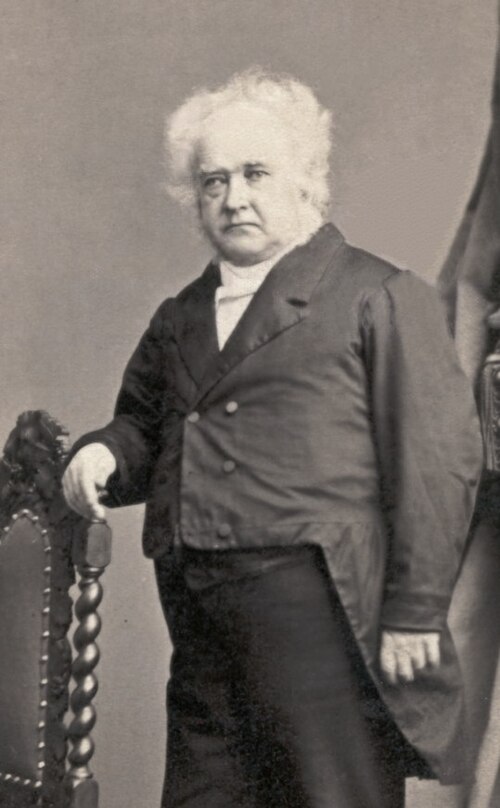
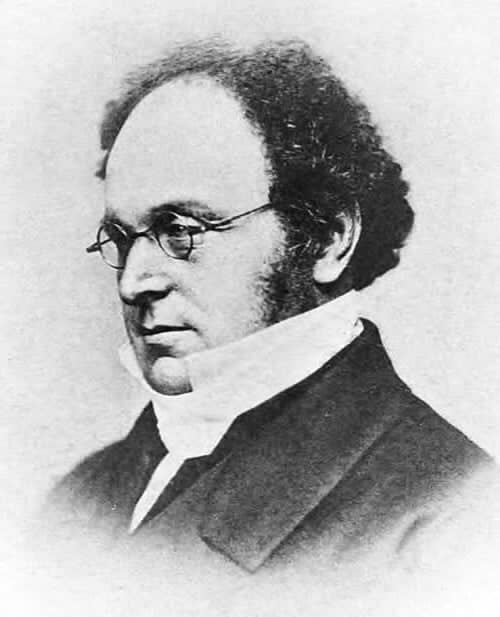
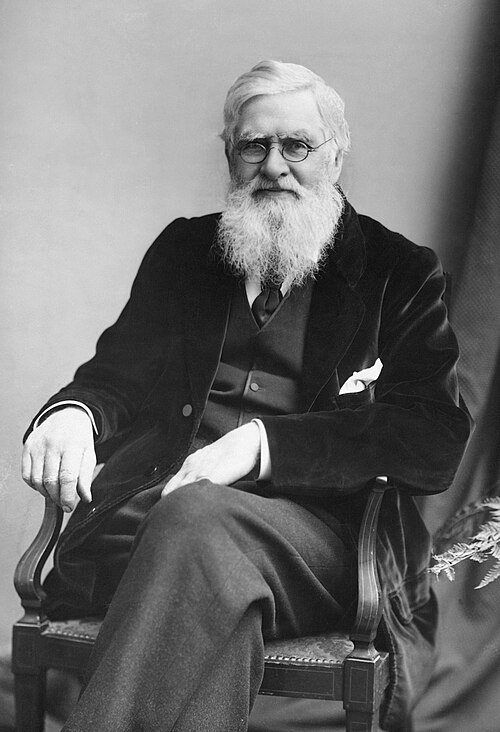
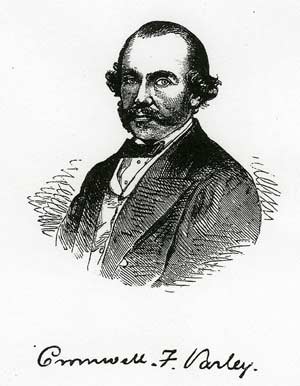
- Early investigators such as Adin Ballou, John W Edmonds, Nathaniel P Tallmadge, Robert Hare, James Jay Mapes, Augustus De Morgan, Alfred Russel Wallace, Cromwell Fleetwood Varley, William Crookes and William F Barrett examined séance phenomena before the SPR existed.
Introduction
The formation of the Society for Psychical Research (SPR) in England during 1882 is often cited as the birth of psychical research, now generally called parapsychology. However, under other names, psychical research is much older. It is well documented that enquiries, some taking the form of systematic investigations, were made of miracles, necromancy, sorcery, witchcraft and other matters classified as supernatural or paranormal long before 1882, although the extent to which they followed the scientific method is rarely, if ever, evident.
If we include the inquisitions carried out by the Catholic Church when ‘miracles’ were alleged, we can date psychical research back to at least the eleventh century CE. The term ‘The Devil’s Advocate’ (Advocatus Diaboli) is said to have originated with the Catholic Church during the early sixteenth century. The Devil’s Advocate attempted to gather evidence against sainthood for someone who had been so nominated.1See here.
In the broadest sense of the term, Emanuel Swedenborg, the eighteenth-century Swedish scientist and inventor turned mystic and seer, was a ‘psychical researcher’, in that he personally investigated the spirit world by means of altered states of consciousness and then reported on his findings. However, Swedenborg’s research did not involve assessing the experiences of others in an empirical fashion.
The seminal event that gave rise to modern psychical research occurred on 31 March 1848 just outside of Rochester, New York, USA, in the hamlet of Hydesville. Shortly after moving into a small house there on 11 December 1847, the family of John D Fox, including daughters Margaret, 14, and Kate, 8 (the Fox Sisters), began hearing strange raps, but it was not until 31 March of the following year that the girls realized they could interact with the raps by snapping their fingers.
Upon learning of this, Mrs Fox instructed the raps to respond to queries by giving two raps for yes and silence for no. She then asked whether a human being were responsible for the raps. No response was forthcoming. When Mrs Fox asked if it were a spirit, she heard two raps. Neighbours were summoned and dozens of questions put to the ‘spirit’. By this means it was determined that it was a man who had been murdered in the house five years prior, well before the Fox family had moved in, and that his body had been buried beneath the floor of the building. Digging commenced and at a depth of five feet, human remains were discovered.2Capron (1885); Todd (1905).
It was soon determined that the Fox sisters were able to make contact with other spirits – they were mediums. Some amazing phenomena produced by their spirit controls were witnessed by some eminent men and women, including Horace Greeley, J. Fenimore Cooper, and William Cullen Bryant. 3Capron (1855), 172-80.
In spite of the limited mass media in those days, the story of the ‘Rochester knockings’ spread rapidly and turned into an epidemic of spirit communication. Mediums began developing in all parts of America as well as in England and in continental Europe. The phenomena progressed from rapping and tapping to table tilting, turning and levitation. Table phenomena usually involved sitters placing their hands on the table and it lifting off the floor, although there were many observations of table movements independent of touch. The spirit communicator would respond to questions by raps or tilts of the table. In addition to the simple ‘yes’ and ‘no’ method employed by the Fox family, spirits would tap out letters of the alphabet (one tap for ‘A’, five taps for ‘E’, etc.) or would respond with a tap when the alphabet was recited by someone present, thereby slowly spelling out words and sentences. This madness came to be called ‘Spiritualism’.
If the spirits who communicated in the years immediately after the Hydesville events are to be believed, there was a plan behind it all – a plan that resulted from a growing loss of faith and spiritual values in an increasingly materialistic world. A few years before the Rochester knockings, Andrew Jackson Davis, a young New York man, began receiving profound messages purportedly coming from high spirits, but few paid attention until the spiritualist epidemic was well underway. Numerous books of wisdom flowed from the pen of this uneducated man, who came to be known as ‘the Poughkeepsie seer’. Some years passed before an entry was discovered in Davis’s journal for 31 March 1848. It read: ‘About daylight this morning a warm breathing passed over my face and I heard a voice, tender and strong, saying, “Brother, the good work has begun – behold a living demonstration is born”. I was left wondering what could be meant by such a message’.4(Doyle (1926), 57.
According to messages received by the Rev William Stainton Moses during the 1870s, the rapping method was invented by Benjamin Franklin, supported by Swedenborg, in the spirit realm. It also became increasingly clear that spirits have as many obstacles to overcome in communicating with us as we have in communicating with them.5Moses (1942), 78.
The spiritualist epidemic gave rise to considerable fraud, although indications are that some of it was deemed fraud because it did not fit into a materialistic paradigm or could not be explained by known science. Researchers found that even the best mediums frequently failed to produce phenomena when conditions were not harmonious, or that phenomena were weak when conditions were not perfect. Like athletes, mediums had their good days and their bad days, but such failures often suggested fraud to impatient researchers and those intent on debunking mediums. Some mediums apparently felt obligated to produce phenomena for observers and turned to trickery when their powers failed them. They were referred to as ‘mixed’ mediums — producing genuine phenomena at times and resorting to tricks at other occasions. Research in this field was far from being an ‘exact’ science.
Beginning around 1850, investigations of séance phenomena were carried out by some very esteemed men. Adin Ballou was a Unitarian minister. John Edmonds was the Chief Justice of New York’s highest court. Nathaniel Tallmadge was Governor of the Territory of Wisconsin. Robert Hare, James Jay Mapes, and Sir William Crookes were acclaimed chemists and renowned inventors. Augustus De Morgan was a celebrated mathematician and logician. Alfred Russel Wallace was co-originator with Charles Darwin of the natural selection theory of biological evolution. Cromwell Farley was an electrical engineer instrumental in laying the first trans-Atlantic cable. Sir William Fletcher Barrett was a pioneering researcher in spectroscopy, cathode rays, and vacuum tube technology.
These pioneers did not come to hasty conclusions based on limited data. They observed many different mediums and recorded detailed observations. From their published reports, it is clear that they were fully aware of the tricks practiced by charlatans and that they approached their research with the same diligence they employed in their regular professional and scientific undertakings. And yet, all were ignored or ridiculed by their peers and the mainstream media when they announced that some of the phenomena they witnessed were not the result of legerdemain – that there existed genuine mediums capable of relaying messages, seemingly from spirits of the dead.6This article is drawn in part from Tymn (2011), which has a larger treatment of the topic.
The Pioneers
Adin Ballou
Unitarian minister Adin Ballou (1803–90) is remembered principally as an influential pacifist and abolitionist. Less well known are his writings on mediumship. In his book An Exposition of Views Respecting the Principal Facts, Causes and Peculiarities Involved in Spirit Manifestations Together with Interesting Phenomenal Statements and Communications (1852) he described having observed ‘raps’, ‘taps’ and movements of furniture without direct contact. He also ‘witnessed the asking of mental questions by inquirers, who received prompt and correct answers as when the questions were asked audibly to the cognition of the Medium’.7(Ballou (1852), 49.
In one sitting, a spirit asked if Ballou had chosen his subjects of discourse for the next Sunday service. Balou replied that he had selected one topic and asked the spirit if he wished to suggest another. The spirit replied that he did and spelt out the word ‘the’, then abruptly stopped. Another spirit announced itself and informed Ballou that the spirit giving the message had been called away but would resume upon his return. Within fifteen minutes, the first spirit re-appeared and continued imparting his suggestion, which turned out to be, ‘The second chapter of First Corinthians; the twelfth and thirteenth verses’. Neither Ballou nor anyone else in the room could recall what this Bible passage addressed, but upon checking, Ballou found that it had to do with spirit communication, stating in part, ‘Which things we also speak, not in the words which man’s wisdom teacheth, but which the Holy Ghost teacheth….’ 8Ballou (1852), 52.
John W Edmonds
Another person to take up a long-term investigation of mediumistic phenomena after 1848 was John W Edmonds (1799–1874), at one point Chief Justice of the New York State Supreme Court. During January 1851, shortly after his wife’s passing, Edmonds was persuaded by friends to attend a séance. In a letter to the New York Herald on 6 August 1853, he wrote that he attended with the presumption that the proceedings were fraudulent and with the intention of exposing them as such but, after observing things that puzzled him, decided upon further investigation. Over a period of 23 months, he witnessed several hundred manifestations in various forms. He kept detailed records, accumulating some 1,600 pages of manuscript. ‘I resorted to every expedient I could devise to detect imposture and to guard against delusion,’ he wrote. ‘I felt in myself, and saw in others, how exciting was the idea that we were actually communing with the dead, and I labored to prevent any undue bias of my judgment. I was at times critical and captious to an unreasonable extreme’.9Edmonds & Dexter (1853), vol. 1, 9-11.
Edmonds teamed with New York physician George T Dexter on a study of mediumship that included the experiences of their own circle, in which Dexter was a medium. Dexter relayed spirit communications in writing and later through trance speech. Edmonds noted that Dexter’s trance writing not only was different from his own handwriting, it changed from communicator to communicator. Moreover, the messages were taken down with a rapidity greater than Dexter could manage when not entranced and the ideas they expressed were often in conflict with Dexter’s own thinking or were outside his conscious knowledge. The publication of their two-volume book Spiritualism in 185310Edmond & Dexter (1853). led to attacks on Edmonds by the press, clergy and politicians. Critics portrayed him as basing his judgments from the bench partly on information relayed by spirits, forcing him to resign from the New York Supreme Court and return to his personal law practice.11Carpon (1855), 427-38.
Nathanial P Tallmadge
Among those standing to defend the judgement and integrity of Judge Edmonds was Territory of Wisconsin Governor Nathaniel P Tallmadge (1795–1864), a former New York lawyer and senator. Tallmadge said that before he became aware of Edmonds’ interest in spiritualistic phenomena, he had heard of the ‘Rochester knockings,’ but he had considered them a delusion that would soon pass away. However, after Edmonds made his beliefs known, Tallmadge decided it was a subject worthy of investigation.
At sittings with a number of mediums, Tallmadge received communications purporting to come from the spirit of an old friend, John C Calhoun, former vice-president of the United States, who had died in 1850. When Tallmadge wanted proof that it was he, the spirit asked to be provided a pencil and paper for direct writing (via an instrument held by an invisible hand) and wrote ‘I’m still here’. The handwriting appeared to be a perfect facsimile of Calhoun’s. Tallmadge showed it to friends who had many private letters from Calhoun. They too pronounced the penmanship to be Calhoun’s and observed that the terse writing style was very much his, including the fact that he tended to use the contraction ‘I’m’ in preference to ‘I am’. 12Edmonds & Dexter (1853), vol. 1, 430.
In 1854, Tallmadge became president of a group calling itself The Society for the Diffusion of Spiritual Knowledge, the objective of which was to disseminate information on the phenomena and principles of Spiritualism as well as to defend and protect believers against opposition and oppression. ‘We believe that spirituality is a heaven-born truth’, Tallmadge said in his first address to the society, on 10 June 1854. ‘We profess to know that angels from heaven – that the spirits of good men progressing toward perfection – have come here upon the earth we stand on, and talked with us face to face, and uttered words to us bearing the impress of divine origin’.13Hare (1855), 35-36. Amongst the organisation’s officers were Judge Edmonds, Chief Justice Joseph Williams of Iowa, Judge Willie P Fowler of Kentucky, Judge RP Spaulding of Ohio, Judge Charles Larrabee of Wisconsin, The Honourable Warren Chase of Wisconsin, Dr George Dexter of New York, Dr David Cory of Illinois, and General Edward Bullard of New York.
Robert Hare
In a letter of 27 July 1853 to the Philadelphia Inquirer, Robert Hare (1781–1858), emeritus professor of chemistry at the University of Pennsylvania, denounced the ‘popular madness’ being called ‘spiritualism’ by the American press. He asserted that the raps and taps and the tilting, turning and levitating tables purportedly bringing messages from the deceased were either hallucinations or unconscious muscular actions of the mediums with whom these occurrences were associated.14Hare (1855), 35-36.
Shortly after Hare’s letter appeared in the Inquirer, he was challenged to make a scientific investigation, not simply to presume that all was fabricated. Hare agreed that this was the proper thing to do. It did not take him long to change his mind. ‘I sincerely believe that I have communicated with the spirits of my parents, sister, brother, and dearest friends, and likewise with the spirits of the illustrious Washington and other worthies of the spirit world; that I am by them commissioned, under their auspices, to teach truth and to expose error’, Hare wrote. He completely recanted his earlier statements, admitting that he had not properly investigated the phenomena and had simply assumed they could not be true as they were contrary – or at least seemed so – to the laws of science.15Hare (1855), 15.
Hare reported his findings and discussed his change of mind about séance phenomena in his 1855 book, Experimental Investigation of the Spirit Manifestations. The reception from the scientific community was not what he might have hoped. Those who had previously embraced him scoffed at his reports and made every attempt to distance themselves from him.16Hare (1855), 23, 125-36.
James Jay Mapes
Another distinguished scientist converted to a belief in spirits after setting out to rescue friends who were ‘running to mental seed and imbecility’ over mediumistic phenomena was James Jay Mapes (1806–66). Mapes was a professor of chemistry and natural philosophy at the National Academy of Design in New York as well as a renowned inventor of agricultural products. After Mapes’ daughter (her age unfortunately is not stated) informed him that she had become a writing medium, he asked her to demonstrate her powers to him. She took a pen and wrote a message that appeared to come from Mapes’ father. When Mapes asked for proof of identity, his daughter’s hand wrote: ‘You may recollect that I gave you, among other books, an encyclopedia; look at page 120 of that book, and you will find my name written there’. Mapes had not seen this book for 27 years, as it had been stored in a warehouse. Retrieving it, he found his father’s name written on page 120.17Doyle (1926), 134.
Mapes went on to study several of the great mediums of the day, including Kate Fox and Cora LV Scott Richmond. He was especially taken with Richmond, whom he first visited in 1854, when she was fourteen. For three years, she had been going into trance and lecturing on subjects far beyond her education, experience and exposure. She would accept questions as well. Mapes asked her to speak on ‘primary rocks’, to which she replied with a discourse on geology that left Mapes awestruck. ‘I am a college educated man, and have been all my long life an investigator of scientific subjects and associated with scientific men, but I stand here this afternoon dumb before this young girl’.18H.D. Barrett (2010), 70.
Mapes witnessed other intriguing events while sitting with the Davenport Brothers and DD Home. He summed up his observations thus:
The manifestations which are pertinent to the ends required are so conclusive in their character as to establish in my mind certain cardinal points. These are: First, there is a future state of existence, which is but a continuation of our present state of being…Second, that the great aim of nature, as shown through a great variety of spiritual existences is progression, extending beyond the limits of this mundane sphere…Third, that spirits can and do communicate with mortals, and in all cases evince a desire to elevate and advance those they commune with.19Britten (1970), 199.
Augustus De Morgan
Augustus De Morgan (1806–71) was a British mathematician and logician remembered for coining the term ‘mathematical induction’, whose underlying principles he formalized. He was appointed Professor of Mathematics at London University in February 1828 at the age of 21 and, apart from five years away in the 1830s, remained there until 1866. The principal sources on his investigations in Spiritualism are two books by his wife Sophia Elizabeth De Morgan, From Matter to Spirit (1863) and the Memoir of Augustus De Morgan (1882).20De Morgan (2005, 2025).
The De Morgans used pseudonymous initials in the first edition of From Matter to Spirit and only later acknowledged their authorship. In that book, Sophia observed that alleged spirit manifestations had faced much scepticism but argued that they represented a little-understood phenomenon that merited scrutiny. Her book describes the experiments, studies and observations of both De Morgans in clairvoyance, clairaudience, automatic writing, deathbed phenomena and even near-death experiences, beginning as early as 1853.
Sophia explained how she and Augustus became engaged in these investigations, among the first in Britain to do so.
When a strange tale reached us, twelve years ago, of noises which had been heard in America, and attributed to spirits, everybody laughed. As the stories multiplied, a few persons in England began to think they must have some origin at least, and to wonder why, if spirits could rap in the United States, they did not do so in our country…and at length curiosity was still further excited by the appearance of a medium in London. Mrs. [Maria] Hayden became the wonder of the day; but people fancied that they could detect imposture, and, though none was ever fairly proved, the interest flagged and the ‘medium’ returned to America, having sown the seed of a tree the extent of whose growth has yet to be measured.21De Morgan (2025). For other accounts of Mrs Hayden’s 1852-53 visit to England, Ireland, and France, see Hayden (2020) and Carmack (2020).
Alfred Russel Wallace
The naturalist Alfred Russel Wallace (1823–1913) conceived of the theory of ‘survival of the fittest’ independently of Charles Darwin. He was on an expedition to what are now Singapore, Malaysia and Indonesia between 1854 and 1862, the years during which the spiritualist craze took hold in Britain. Upon his return to England, in 1865 he began investigating mediums at the home of a friend. He concluded from more than a dozen sittings that ‘there is an unknown power developed from the bodies of a number of persons placed in connection by sitting around a table with all their hands upon it’,22Shepard (1978), vol. 3, 1425. although he continued to be sceptical of postmortem survival.
Wallace went on to study phenomena associated with some of the most renowned practitioners of the day, amongst Agnes Elisabeth Guppy, William Eglington, spirit photographer Frederick Hudson and slate-writer Henry Slade. Wallace’s observations of physical phenomena such as apports, levitations, materialisations, music emanating from unknown sources and the like led him to give up his scepticism regarding postmortem survival. He posited the existence of ‘preterhuman intelligences’, which, albeit invisible and intangible, could act upon matter and influence embodied human minds.23Fodor (1934), 401-3; Wallace (2016).
As a participant in investigations by a committee of the London Dialectical Society (LDS) in 1869, Wallace observed a variety of psychokinetic phenomena under test conditions.24(Shepard (1986), vol. 3, 1425. The LDS committee decided that genuine psychic phenomena exist, a conclusion not well received by the society as a whole. Wallace’s colleagues were so outraged that he was forced to live two separate lives, one devoted to his mainstream scientific endeavours, the others to his spiritualistic pursuits,25Berger & Berger (1991), 460. although he brought them together in his 1875 book On Miracles and Modern Spiritualism: Three Essays26Wallace (2016). and in his 1908 autobiography, My Life: A Record of Events and Opinion,27Wallace (2017). where he proposed a spiritual dimension to biological evolution.28For more about Wallace’s engagement in Spiritualism, see Slotten (2004). Wallace et al. (1878/1883). defended the spiritualist perspective on psychic phenomena against the sceptical charges of W.B. Carpenter.
Cromwell Fleetwood Varley
Remembered primarily as a British electrical engineer who made significant contributions, including inventions dealing with submarine cables, to the success of the Atlantic telegraph cable, Cromwell Fleetwood Varley (1828–83) participated in early psychical research. These extended back to at least an 1860 investigation of DD Home and later, in 1873, to experiments with Kate Fox.29Berger & Berger (1991), 452.
Varley’s interest in Spiritualistic phenomena and psychical research was said to have been preceded by his study of mesmerism. When told by medical men that his wife had less than three months to live because of some chest disease, he mesmerized his wife and was surprised to hear a voice speaking through her. He asked who was speaking and the reply came: ‘We are spirits, not one, but several. We can cure her if you will observe what we tell you.’ Varley was then given detailed remedial instructions that he carried out over the next few weeks, leading to her recovery and later giving birth to children. Varley’s wife claimed to know nothing about the remedies coming through her mouth while she was entranced.30Robertson (1908), 188-89.
In an 1873 investigation of medium Florence Cook by chemist Sir William Crookes, Varley arranged for a weak electrical current to detect movement by Cook, seated in a cabinet, while the manifestations were going on. The cabinet was necessary to protect the ectoplasmic substance exuded by the medium from harmful light rays, he theorized. While the materialized spirit known as Katie King was being examined by Crookes, Miss Cook remained ‘perfectly quiescent’ for nearly an hour, thereby convincing Crookes that she was not in any way participating in a hoax.31Sargent (1976), 100.
Varley was a member of the Institution of Civil Engineers and a Fellow of the Royal Society. He became convinced that ‘we are not our bodies’ and that our spirit can act as an independent force.32(Noakes (1999), 437-39.
William Crookes
Augustus De Morgan’s open-minded approach to séance phenomena and the LDS report of the research in which AR Wallace participated are said to have influenced Sir William Crookes (1832–1919) to undertake his investigations of DD Home and Florence Cook in which Cromwell Varley participated.33Barrett (1917).
A Fellow of the Royal Society, Crookes studied and taught at the Royal College of Chemistry before becoming a meteorologist at Radcliffe Observatory, Oxford. In 1861, he discovered the element thallium. He later invented the radiometer, the spinthariscope and the Crookes tube, a high-vacuum tube which contributed to the discovery of the X-ray. Knighted in 1897 for his scientific work, he was not someone easily duped or a fabricator of strange tales. But like Ballou, Edmonds, Tallmadge, Hare, Mapes, De Morgan, Wallace, Varley and others, Crookes was brought to change his views.
During 28 sittings with Home beginning in 1871, Crookes observed a range of striking events, including spirit messages, materialised hands, levitations of people and of furniture, a floating accordion playing music, and objects flying about the lighted séance room from one person to another. As Crookes came to understand it, the levitations were a result of invisible spirits lifting people or objects. When he enquired of the spirits why they engaged in so much tomfoolery, he was told that they were just learning how to manipulate matter and were carrying out experiments of their own.34Medhurst (1973).
All sittings with Home were held at Crookes’ home or at the homes of his friends, never at Home’s residence. When Home was being levitated by the spirits, Crookes ran his hands under Home’s feet and over his head to rule out any kind of invisible wires, whose presence had been proposed by sceptics. Crookes proceeded to another series of investigations of Florence Cook in 1874.35Medhurst (1973); Shepard (1986), vol. 1, 265. ‘To reject the recorded evidence on this subject is to reject all human testimony whatever; for no fact in sacred or profane history is supported by a stronger array of proofs’, wrote Crookes, who took every possible precaution to rule out fraud.36Crookes (1922), 39. In response to attacks from his scientific colleagues, Crookes declared, ‘I never said it was possible, I only said it was true.’37Crookes (1922), 14. For a consideration of the influence of the séance investigations on Crookes, see Brock (2008).
William F Barrett
William F Barrett (1844–1925) was born in Kingston, Jamaica, where his British father, Congregationalist minister William Garland Barrett, was a missionary. His parents unable to afford his formal higher education, he nevertheless attended lectures on chemistry and physics, following which he was invited by physicist John Tyndall to become an assistant in his laboratory. Barrett left Tyndall’s employ in 1866 to take the position of science teacher at London International College, then physics lecturer at the Royal Naval School of Architecture, which allowed him more time to pursue private scientific studies. He was appointed to a Chair in experimental physics at the Royal College of Science for Ireland in Dublin in 1873, where he remained until 1910. Among other achievements, he developed Stalloy, an alloy made from silicon and iron that became extensively used in early telecommunications technology. He was elected to the Royal Society in 1899 and knighted for his contributions to physics in 1912.
Barrett first made known his interest in Spiritualism in 1875, after his appointment to the Royal College of Science for Ireland. He had been so impressed by Crookes’ reports on Home and Cook that he decided to conduct his own research. Barrett observed séance phenomena, including materialisations, levitations, and spirit communication. In one instance, he saw a table levitated about eighteen inches off the floor. No one was touching it and when he tried to force the table down, was unable to move it. He continues,
Then I climbed up on the table and sat on it, my feet off the floor, when I was swayed to and fro and finally tipped off. The table on its own accord now turned upside down, no one touching it, and I tried to lift it off the ground, but it could not be stirred. It appeared screwed down to the floor. [When Barrett stopped trying to lift the inverted table from the floor, it righted itself on its own accord, everyone else in the room standing well clear of it.] Numerous sounds displaying an amused intelligence then came, and after each individual present had been greeted with some farewell raps the sitting ended.38W.F. Barrett (1917), 48.
Barrett was broadly interested in psychic experiences, at various times studying telepathy, dowsing, and deathbed apparitions as well as séance phenomena. In 1876, he submitted a paper to the annual convention of the British Association for the Advancement of Science describing a telepathy experiment he had undertaken. This was rejected by the Biological Committee and presented before the Anthropological Sub-section only after the intercession of AR Wallace.39Shepard (1986), vol. 1, 134.
Origins of the SPR
Estimates of the number of adherents to nineteenth-century Spiritualism vary widely, ranging from a ‘few million’ to as many as eight million in the United States and Great Britain by around 1890. However, those figures are likely small in comparison to the number of people who had abandoned conventional religion and adopted a nihilistic worldview as science and its concomitant, rationalism, gripped the educated world. Darwinism, which took root during the 1860s, significantly hastened the changing worldview, which had begun with the eighteenth century ‘Age of Reason’.
As Frederic WH Myers saw it, there was a ‘deep disquiet’ in the civilised world in the years leading up to the formation of the SPR, which was organised in part in response to this feeling. ‘In about 1873 – at the crest of perhaps the highest wave of materialism which has ever swept over these shores – it became the conviction of a small group of Cambridge friends that the deep questions thus at issue must be fought out in a way more thorough than the champions either of religion or of materialism had yet suggested’, Myers wrote early in his great posthumous work, Human Personality and its Survival of Bodily Death.40Myers (1961), 22-23.
While Myers and the other founders of the SPR were undoubtedly aware of the efforts of the pioneers introduced above, they seem to have ignored them, probably because they were not always carried out under controlled conditions or if they were, were not documented or assembled in a manner acceptable to the scientific community or to the public most in need of spiritual uplifting. Even Crookes, a world-renowned scientist, left many questions unanswered in his investigation of Home in the early 1870s.
Moreover, some of the pioneers, such as John Edmonds and French educator Allan Kardec, were more focused on recording ‘truths’ or ‘teachings’ given to them by the ‘spirits’ than in documenting veridical communication that would more directly lend itself to proof of a spirit world. The fact that the truths or teachings often went well beyond the education, experience and sometimes even the beliefs of the mediums who transmitted them was indirect evidence of a world beyond, but it was far from conclusive.
There was also the problem of distinguishing genuine mediumistic phenomena from the fraudulent activity of charlatans, especially in the area of physical mediumship. Many of the phenomena were outside the scope of known science, as was the spirit hypothesis. When sceptical theories were advanced as to how a certain phenomenon ‘might have’ or ‘could have’ been produced by chicanery, materialistic science preferred that explanation to that of spirits. Sceptics dismissed all claims of physical phenomena as fraudulent rather than acknowledging the possibility of mixed cases.41In relation to mixed cases of physical mediumship, see Anderson (2006).
Moreover, later researchers discovered that certain ‘synchronistic’ movements by an entranced medium, previously seen as deception by the medium, were unconsciously performed, but while the researchers recognized the spiritistic claim that ‘unseen intelligences’ were directing the movements, it remained beyond scientific analyses, where it remains today.
Among those initially scoffing at the reports of Home’s mediumship was the Rev. William Stainton Moses, an Anglican minister as well as English Master at University College, London. He dismissed the reports as the ‘dreariest twaddle’ he had ever come across. Yet not long after making this statement, Moses found himself levitated by spirits and producing other phenomena similar to that of Home. Moses struggled to accept this development as some of it was contrary to his Christian convictions and he feared that it was demonic in origin. However, he gradually came to believe that advanced spirits were communicating through him and controlling him.42Moses (1976), 1-8.
On 9 May 1874, Myers visited Moses along with Cambridge scholar Edmund Gurney. Myers reported that during one sitting a heavy table rose and moved with such force that he was pressed or pinned against the wall.43Myers (1893–94); (1961), 371-76. Myers and Gurney and were so impressed that they resolved to explore the subject further. Their interest, along with that of Professor Henry Sidgwick, apparently resulted in the formation of the Cambridge Society for Psychical Research, a forerunner of the SPR, in 1879.44Gauld (1968).
Another impetus for the SPR’s creation came from Barrett, who in 1880 began a series of telepathy experiments with the Creery sisters. Barrett realized it would be good to involve other researchers in this project. ‘But such an investigation lay outside the scope of any existing scientific society; it therefore seemed essential to form a new Society to carry on the inquiry.’45Barrett (1911).
When Barrett met Moses and Spiritualist Edmund Dawson Rogers late in 1881, he was ready to move forward. After consulting with Myers, Gurney, Sidgwick and other interested parties in Cambridge, he convened a meeting, with the result that in January 1882 the SPR was formed with the mission to make ‘an organized and systematic attempt to investigate that large group of debatable phenomena designated by such terms as mesmeric, psychical, and Spiritualistic’.46Anon. (1882–83). The new society’s first collective project was continued work with the Creery sisters.
Barrett wanted the SPR to examine phenomena associated with physical mediumship and poltergeist-type episodes as well, as potentially strong evidence of psychic phenomena and survival of death. But Myers, Sidgwick and other key figures in the early years of the SPR opposed becoming too concerned with spiritualist phenomena, fearing that this would alienate it from the scientific audience they wished to reach. Despite the experience of Myers and Gurney with Moses, they were suspicious of physical mediums, believing them to be largely fraudulent, and criticised what they considered to be Barrett’s overly credulous attitude. As a result, Barrett made relatively few contributions to the Society’s literature and tensions grew to the point where he considered forming a rival organisation, although he never did so.47Noakes (2004), 452-53. These tensions resulted in a schism within the SPR in which Moses and other spiritualistically inclined members withdrew, and the SPR turned its attention to mental as opposed to physical mediumship as evidence for survival of death.48Gauld (1968).
Michael Tymn
Works Cited
Anderson, R.I. (2006). Psychics, Sensitives and Somnambules: A Biographical Dictionary with Bibliographies. Jefferson, North Carolina, USA: McFarland.
Anon. (1882–83). The Society for Psychical Research: Objects of the society. Proceedings of the Society for Psychical Research 1, 3.
Ballou, A. (1852). An Exposition of Views Respecting the Principal Facts, Causes and Peculiarities Involved in Spirit Manifestations, Together with Interesting Phenomenal Statements and Communication. London: H. Bailliere. [Internet Archive. Download PDF.]
Barrett, H.D. (2010). Life Work of Cora LV Richmond. Oakland, California, USA: InterFarFacing Publishing. (Originally published 1895 by National Spiritualist Association of the United States of America.) [Internet Archive. Download PDF.]
Barrett, W.F. (1911). Psychical Research. New York, USA: Henry Holt & Co.
Barrett, W.F. (1917). On the Threshold of the Unseen. New York, USA: Dutton & Co.
Berger, A.S., & Berger, J. (1991). The Encyclopedia of Parapsychology and Psychical Research. New York, USA: Paragon House.
Brock, W.H. (2008). William Crookes (1832–1919) and the Commercialization of Science. Burlington, Vermont, USA: Ashgate.
Britten, E.H. (1970). Modern American Spiritualism: Twenty Years’ Record of the Communion between Earth and the World of Spirits. New Hyde Park, New York, USA: University Books. (Originally published 1870 by Emma Hardinge.) [Internet Archive. Download PDF.]
Capron, E.W. (1855). Modern Spiritualism: Its Facts and Fanaticisms, Its Consistencies and Contradictions. Boston, Massachusetts, USA: Bela Marsh; New York, USA: Partridge and Brittan. [Internet Archive. Download PDF.]
Carmack, S.DeB. (2020). In Search of Maria B. Hayden: The American Medium Who Brought Spiritualism to the U.K. Salt Lake City, Utah, USA: Scattered Leaves Press.
Crookes, W. (1922). Researches into the Phenomena of Modern Spiritualism (4th ed.). Los Angeles, California, USA: Austin Publishing Co. [IAPSOP. Full text.]
De Morgan, S.E. (2005). Memoir of Augustus De Morgan, by His Wife Sophia Elizabeth De Morgan with Selections from His Letters. Adamant Media Corporation. (Originally published 1882 by Longmans, Green, and Co., London.)
De Morgan, S.E. (2025). From Matter to Spirit. Hutson Street Press. (Originally published 1863.)
Doyle, A.C. (1926). The History of Spiritualism (2 vols.). New York, USA: George H. Doran Company. [Project Gutenberg Australia. Full text.]
Edmonds, J.W., & Dexter, G.T. (1853). Spiritualism (2 vols.). New York, USA: Partridge & Brittan Publishers.
Fanning, W. (1911). Promotor Fidei. In The Catholic Encyclopedia. New York, USA: Robert Appleton Company. [Web page. Full text.]
Fodor, N. (1934). Encyclopedia of Psychic Science. London: Arthur’s Press.
Gauld, A. (1968). The Founders of Psychical Research. London: Routledge and Kegan Paul.
Hare, R. (1855). Experimental Investigation of the Spirit Manifestations. New York, USA: Partridge & Brittan. [Project Gutenberg. Full text.]
Hayden, W.R. (2020). Seven Years with the Spirits: Being a Narrative of the Visit of Mrs W.R. Hayden to England, France and Ireland (ed. by M. Demarest from articles in Banner of Light, 1857). CreateSpace Independent Publishing Platform.
Medhurst, R.G. (ed.) (1972). Crookes and the Spirit World: A Collection of Writings by or Concerning the Work of Sir William Crookes, O.M., F.R.S., in the Field of Psychical Research. Marlboro, New Jersey, USA: Taplinger.
Moses, W.S. (1942). More Spirit Teachings (5th ed.). Manchester, UK: Two Worlds Publishing.
Moses, W.S. (1974). Spirit Teachings (10th ed.). London: Spiritualist Press.
Myers, F.W.H. (1893–94). The experiences of W. Stainton Moses. Proceedings of the Society for Psychical Research 9, 245-353.
Myers, F.W.H. (1961). Human Personality and its Survival of Bodily Death (abridged ed.). New Hyde Park, New York, USA: University Books. (Originally published 1903 in two volumes by Longmans, Green, London.)
Noakes, R. (1999). Telegraphy is an occult art: Cromwell Fleetwood Varley and the diffusion of electricity to the other world. British Journal for the History of Science 32/4, 421-59. [Web page. Abstract.]
Noakes, R. (2004). The ‘bridge which is between physical and psychical research’: William Fletcher Barrett, sensitive flames, and Spiritualism. History of Science 42, 419-64. [Web page. Abstract.]
Robertson, J. (1908). Spiritualism: The Open Door to the Unseen Universe. London: L.N. Fowler & Co.
Sargent, E. (1876). The Proof Palpable of Immortality. Boston, Massachusetts, USA: Colby & Rich.
Shepard, L. (ed.). (1986). Encyclopedia of Occultism and Parapsychology (2nd ed., 3 vols.). Detroit, Michigan, USA: Gale.
Slotten, R.A. (2004). The Heretic in Darwin’s Court: The Life of Alfred Russel Wallace. New York, USA: Columbia University Press. [Web page. Summary.]
Smith, C.H. (1999). Alfred Russel Wallace on Spiritualism, man, and evolution: An analytical essay. (Lightly revised from 1992 publication in pamphlet form.) [Web page. Full text.]
Todd, T.O. (1905). Hydesville: The Story of the Rochester Knockings, which Proclaimed the Advent of Modern Spiritualism. Sunderland: Keystone Press. [Project Gutenberg. Full text.]
Tymn, M. (2011). The Afterlife Explorers, Volume One: The Pioneers of Psychical Research. Guildford, UK: White Crow Books.
Wallace, A.R. (2016). On Miracles and Modern Spiritualism: Three Essays. Victoria, Australia: Leopold Classic Library. (Originally published 1875 by James Burns, London.)
Wallace, A.R. (2017). My Life: A Record of Events and Opinion. CreateSpace Independent Publishing Platform. (Originally published 1908 by Chapman & Hall, London.)
Wallace, A.R., Buchanan, J.R., Darius, L, & Epes, S. (1878/1883). The Psycho-Physiological Sciences, and their Assailants. Boston, Massachusetts, USA: Colby & Rich. [Internet Archive. Full text.]