
George P Hansen is a parapsychologist, magician and critic of both believers and sceptics of psi phenomena. His work ranges from laboratory research to fraud, liminality and the sociology of the paranormal. He is best known for developing Trickster Theory, an attempt to explain the instability and elusiveness of psi phenomena.
- Hansen combined laboratory experience, conjuring knowledge and sceptical critique in a distinctive career spanning research, fraud detection and the social study of the paranormal.
- His Trickster Theory links psi with instability, liminality and social disruption, offering an explanation for why paranormal effects so often resist orderly replication.
- His publications range from dowsing and psychokinesis to scepticism, deception, ghosts, magic and the legacy of neglected figures such as D Scott Rogo.
Contents
Career
George Hansen spent eight years in parapsychology laboratories: Three at the Rhine Research Center (RRC) in Durham, North Carolina, and five at the Psychophysical Research Laboratories (PRL) in Princeton, New Jersey. His research portfolio ranges from remote viewing to card guessing, ganzfeld ESP, electronic random number generators, séance phenomena and ghosts. Active in psychic, UFO and New Age circles, he also helped establish a sceptics group. His journal publications address mathematical statistics, fraud detection, scepticism, the role of conjurors in parapsychology and the exposure of hoaxes. He is a member of the International Brotherhood of Magicians.
Hansen occupies a distinctive position in parapsychology as both researcher and sceptic. He has criticized experimental methods, including Princeton Engineering Anomalies Research (PEAR) laboratory remote-viewing experiments, while concentrating increasingly on the social context of the paranormal and the reasons for its persistent controversiality. His critiques extend not only to believers but also to sceptical organizations such as the Committee for the Scientific Investigation of Claims of the Paranormal (CSICOP) and to figures such as Ray Hyman and Martin Gardner.
Trickster Theory
Following the closure of PRL in 1989, Hansen began intense reading which included the book Synchronicity: Science, Myth, and the Trickster by Allan Combs and Mark Holland1Combs & Holland (1990)., in which a connection is made between paranormal phenomena (synchronicities) and the Trickster – an archetypal character who represents disruption and mischief. After reading William Braud’s work indicating more labile systems are linked to psi and drawing on personal experience of improved psi hitting when the testing environment was in a state of flux during the final days of the PRL, Hansen began to develop his Trickster Theory that posits that a confluence of factors: instability, uncertainty and a connection to psychic phenomena are important ingredients for the manifestation of psi and which provides an explanation for the difficulty in ESP replication.
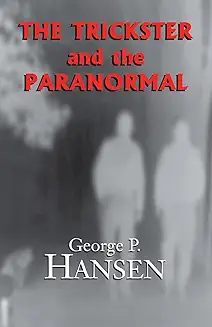
Hansen was also involved in exploring Fortean and UFO phenomena and worked with psychic groups – quite a rarity among parapsychologists. These experiences informed the development of Trickster Theory which Hansen eventually published as a book in 2001.2Hansen (2001). The Trickster debate returns in a 2024 publication, in which psychologist James E Kennedy describes strategies and options for dealing with the Trickster effect, such as developing models accommodating unconscious conflicting psi influences.3Kennedy (2024).
Selected Research
Dowsing
Hansen presents a comprehensive review of experimental research on dowsing – the practice of locating underground water or objects using instruments like forked sticks or pendulums. He covers the early research by the Society for Psychical Research, which explored both physical and psychical explanations for dowsing abilities. The biophysical investigations are examined, with studies by researchers like Solco Walle Tromp, Yves Rocard and Zaboj Harvalik4See biographies of Tromp, Rocard, and Harvalik., testing whether dowsers can detect weak electromagnetic fields or magnetic anomalies. Results were inconsistent, with some studies finding significant sensitivity and others finding no effects. Physiological studies consistently found changes in skin potential when dowsers crossed “dowsing zones”, suggesting a physiological response. Parapsychological experiments tested for extrasensory perception (ESP) abilities in dowsing, with mixed results and some methodological weaknesses. The paper also discusses controversies around the cause of dowsing rod movement, with some evidence suggesting unconscious muscular action and other cases hinting at psychokinesis.5Hansen (1982).
Cooperation in PK influence
In a rigorous experiment conducted with pairs of subjects engaged in computer-simulated horse races, Hansen investigated whether psychokinetic (PK) influence is additive, i.e., is greater among cooperative groups than competitive groups. Twenty-five pairs of subjects were recruited, each contributing eight races, split evenly between cooperation and competition conditions. The experiment was meticulously designed to ensure methodological integrity, with participant blind to the experimental conditions. Surprisingly, the results contradicted initial predictions: cooperation scores were found to be lower than competition scores (p = 0.01), challenging the hypothesis of additive PK influence.6Hansen (1990a).
D Scott Rogo
Hansen discusses the life of D. Scott Rogo, a prominent figure in parapsychology who left a profound impact on the field through his prolific writing and scientific investigations. Despite his untimely death in 1990, Rogo’s contributions continue to be celebrated. Beginning his career as a teenager, Rogo quickly rose to prominence with his early publications and continued to expand his reach with numerous articles and books covering a wide range of paranormal phenomena. Notably, Rogo was not only a writer but also an active scientific investigator, conducting experiments and field investigations on topics such as psychokinesis and hauntings.7Hansen (1991).
Ghosts and Liminality
In a 2005 essay, Hansen drew attention to the phenomena of ghosts, with their enigmatic existence, that have puzzled humanity for millennia, blurring the lines between life and death, fact and fiction, natural and supernatural. Anthropologists propose the concept of liminality, describing states of ambiguity and transition, as a lens through which to comprehend these elusive entities. Liminality, derived from “limen,” meaning threshold, underscores the condition of being betwixt and between. While unfamiliar to many in parapsychology, this anthropological theory sheds light on paranormal phenomena. Hansen reveals how rites of passage, like puberty and death, serve as fertile ground for psychic experiences across cultures. Ghost research, often marginalized, confronts institutional skepticism and societal taboos, yet liminality theory offers a framework to navigate these challenges.8Hansen (2005).
Statistical Discussion
In a 1987 publication, Hansen and statistician Jessica Utts described the use of sum of ranks, a technique that utilizes partial hits and direct hit as measures in psi research. The discussion explores methods such as standardized ratings and binary hits. The choice of statistical measure hinges on understanding how psi phenomena manifest, which may vary based on factors like personality and target pool composition. Multiple measures are advocated to accommodate diverse manifestations of psi, with a proposed method enabling simultaneous analysis of direct hits and sum of ranks without sacrificing statistical power. This approach offers flexibility in determining experiment significance while addressing concerns of methodological rigour.9Hansen & Utts (1987).
CSICOP
In a comprehensive analysis of CSICOP’s endeavours, the article scrutinizes its approach to debunking paranormal claims. It reminds readers of contentious incidents, such as derogatory remarks about French science and legal battles stemming from accusations made by prominent skeptics like James Randi. The text explores CSICOP’s involvement in academia, including protests against courses promoting pseudoscience and efforts to instill skeptical views through education. It also examines the organization’s expansion into topics beyond the paranormal, such as opposition to creationism and engagement in medical debates. Highlighting the rise of the New Age movement, the article suggests that CSICOP’s adversarial stance may inadvertently fuel skepticism towards science itself. Overall, it offers a critical appraisal of CSICOP’s methods and their potential impact on scientific inquiry and public perception of the paranormal.10Hansen (1992a).
Magic and Psi Research
In a 1990 publication11Hansen (1990b)., Hansen explores the intricate relationship between parapsychological research and the world of magic, highlighting the significant benefits of consulting with magicians. From addressing the challenges of subject deception to overcoming barriers in communication, Hansen emphasizes the crucial role of integrating knowledge of conjuring into parapsychological investigations. Hansen underscores the necessity for researchers to possess a certain level of familiarity with magic, akin to consulting a statistician for complex experiments.
Participant Deception
In his critique of parapsychology, Hansen examines the field’s occasional susceptibility to deception and the failure to address it adequately. Focusing on key figures like Gertrude Schmeidler and John Beloff, Hansen brings attention to those times when researchers overlooked suspicious behaviour and endorsed research without proper scrutiny. Schmeidler’s acceptance of papers featuring subjects like Olof Jonsson and Ted Serios, both with dubious backgrounds, and Beloff’s unfounded endorsements, such as those of Bill Delmore’s experiments, underscore the importance of maintaining vigilance within the discipline. The consequences extend to students, who may lack guidance on detecting trickery. Hansen urges researchers to prioritize issues of potential deceit in all aspects of the field.12Hansen (1992b).
SORRAT
The Society for Research on Rapport and Telekinesis (SORRAT), was a group founded by John G. Neihardt, that ran psychokinesis experiments using targets sealed in transparent boxes. Hansen questioned the experimental rigour, noting deficiencies in security measures and controls. Compared to contemporaneous psychokinesis studies, there was a dearth of detailed documentation and potential breaches in security. While some parapsychologists have supported SORRAT, others such as Dick Bierman expressed doubts about the methodology.13Hansen (1985).
Works
Key items of Hansen’s published works are listed under Works Cited. A more comprehensive list may be found here.
Michael Duggan
Works Cited
Combs, A., & Holland, M. (1990). Synchronicity: Science, Myth, and the Trickster. Paragon House. [Reprinted 2000 as Synchronicity: Through the Eyes of Science, Myth and the Trickster. New York: Grand Central Publishing.]
Hansen, G.P. (1982). Dowsing: A review of experimental research. Journal of the Society for Psychical Research 51/762, 343-67.
Hansen, G.P. (1985). A critique of Mr. Cox’s mini-lab experiments. Archaeus 3, 17-24.
Hansen, G.P. (1990a). A cooperation-competition PK experiment with computerized horse races. Journal of Parapsychology 54/1, 21-33.
Hansen, G.P. (1990b). Deception by subjects in psi research. Journal of the American Society for Psychical Research 84/1, 25-80.
Hansen, G.P. (1991). D. Scott Rogo and his contributions to parapsychology. Anthropology of Consciousness 2/3-4, 32-35.
Hansen, G.P. (1992a). CSICOP and the skeptics: An overview. Journal of the American Society for Psychical Research 86/1, 19-63.
Hansen, G.P. (1992b). The research with B.D. and the legacy of magical ignorance. Journal of Parapsychology 56/4, 307-33.
Hansen, G.P. (2001). The Trickster and the Paranormal. Philadelphia, Pennsylvania, USA: Xlibris.
Hansen, G.P. (2005). Ghosts and liminality [Web page, 14 June].
Hansen, G.P. (n.d.). tricksterbook.com. [Web page.]
Hansen, G.P., & Utts, J. (1987). Use of both sum of ranks and direct hits in free-response psi experiments. Journal of Parapsychology 51/4, 321-33.
Kennedy, J.E. (2024). Coming to terms with the psi-trickster. Journal of Scientific Exploration 38/1, 110-21.